Author: admin

  • New cars in Europe will have to cut carbon emissions by a third

    New cars in Europe will have to cut carbon emissions by a third

    EU to introduce 95g CO2/km limit by 2020 and bring it even lower to push manufacturers to make hybrid cars mainstream

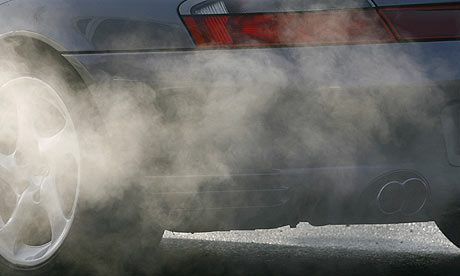
    Car exhaust

    The new limit would save European drivers approximately €25bn (£20bn) a year in fuel costs. Photograph: Alexandra Beier/Reuters

    Carmakers will have to slash the carbon emissions of new cars sold in Europe by a third by 2020, according to leaked European Commission documents seen by the Guardian.

    The EC proposals would be legally binding and the document plans for even stricter emissions targets for 2025 and 2030, which could only be met if hybrid or electric vehicles become mainstream.

    Greg Archer, of campaign group Transport & Environment, said: “Tighter CO2 standards for cars will be welcomed by drivers across Europe who will save €500 per year at the petrol pump on average if this proposal is adopted.”

    But car manufacturers warned that tough regulation could harm an industry already struggling with the economic crisis and foreign competition.

    New car registrations in Europe are forecast to fall by 7% in 2012, and Volkswagen was the only major manufacturer in Europe that did not lose money in 2011.

    “Regulation, rigid by nature, too often adds undue complexity and costs, or limits flexibility,” said ACEA, the European Automobile Manufacturers’ Association, in a statement calling for “smarter” regulation.

    The EC document is expected to be published in July and later approved by the European parliament and the Council of Europe over the next year. Transport exhaust fumes contribute roughly a third of the continent’s greenhouse gas emissions and rose by 26% between 1990 and 2008. Measures to cut carbon dioxide from transport are essential if Europe is to meet its targets for tackling climate change.

    The EC wants to limit the average emissions of vehicles sold in 2020 by a manufacturer to 95 grams of CO2 per kilometre travelled. It is currently about 140g CO2/km and there is already a binding limit of 130g CO2/km set for 2015.

    Manufacturers failing to comply would face fines of €95 (£76) for every gram over target per vehicle. The commission’s impact assessment states the 95g CO2/km limit would save European drivers approximately €25bn a year in fuel costs.

    The commission document states it would be “desirable” by the end of 2014 to set even tougher targets for 2025 and 2030, in order to “provide longer term certainty for the automotive industry to invest and innovate.”

    But Archer said good intentions were not enough and that the commission had to commit to specific targets after 2020. “There is a real danger that Europe is going to lose its competitive edge in low-carbon vehicles if suppliers don’t get the investment certainty needed to develop advanced technologies,” he said, noting that the EC had considered a target of 70g CO2/km for 2025 in 2010.

    Archer pointed out that past claims that efficiency regulations would make cars unaffordable had been proven wrong, adding: “Car prices came down in real terms and consumers have benefited considerably from improved fuel efficiency. There is no doubt that legislation provides a massive boost to innovation, and costs fall over time.”

    Jean-Marc Gales, chief executive of the European auto suppliers’ association CLEPA, supported the low-carbon regulations: “Europe’s industry is considered a world leader. We need regulation to keep that advantage.”

    Trade union leaders also backed the EC proposals. “Our past experience has shown that only strict legal frameworks will push the industry into the right direction,” said Wolf Jäcklein, from IndustriAll European Trade Union. “For us trade unions, that’s the only way we can ensure a future for Europe’s automotive industry and continued quality jobs for millions of workers here.”

  • Could Super-Volcano Eruptions Lead To World’s End?

    Could Super-Volcano Eruptions Lead To World’s End?
    Kozmedia News
    New research indicates catastrophic eruptions of super-volcanoes, could make thermonuclear war or global warming seem trivial, spewing untold tons of ash into the atmosphere to block sunlight. The result would be many years of frigid temperatures,
    See all stories on this topic »

  • Unions slam plan for NSW public job cuts

    Unions slam plan for NSW public job cuts

    Updated: 09:52, Friday June 8, 2012

    Unions slam plan for NSW public job cuts

    A plan to cut 10,000 NSW public service jobs will swamp police, teachers and nurses with paperwork, the state’s peak union body says.

    NSW Treasurer Mike Baird is expected to confirm the job losses on Tuesday as he hands down his second state budget.

    The cuts will come over a four-year period and be achieved by binding government departments to a 1.2 per cent annual cap on labor expense – saving $2.2 billion.

    Nurses, police and teachers will be shielded from the axe wielding.

    But Unions NSW says those frontline workers will end up doing paperwork previously carried out by colleagues lost in the job cuts.

    ‘The government’s argument that these jobs will not affect police, nurses and school teachers is an absolute furphy,’ Unions NSW secretary Mark Lennon said in a statement.

    ‘These cuts will drown nurses, police and other frontline public sector workers in paperwork and stop them doing the jobs they were employed to do – serving the community.’

    Next week’s cuts come on top of 5000 public service job losses last year.

    It will lead to a demoralised workforce and a growth in casual labour, Mr Lennon said.

    Mr Baird is also expected to crack down on public sector leave balances.

    Speeding fines will rise by 12.5 per cent, Fairfax newspapers reported on Friday.

    The Public Service Association (PSA) said school assistants, motor registry employees, park rangers, scientists, land and water management specialists and health and education policy experts will be axed under the plan.

    It anticipates further cuts from NSW’s community services, primary industries, environment and education departments over the next 12 months.

    ‘The people of NSW will feel these cuts every time they try to get served in a motor registry, when they seek support for their disabled child, when they try to enjoy our national parks,’ PSA general secretary John Cahill said.

  • NASA Discovers Unprecedented Blooms Of Ocean Plant Life

    You are subscribed to Earth News for NASA. This information has recently been updated, and is now available.

    06/07/2012 12:00 AM EDT

    Scientists have made a biological discovery in Arctic Ocean waters as dramatic and unexpected as finding a rainforest in the middle of a desert.

    Bookmark and Share

    This e-mail update was generated automatically based on your subscriptions. Some updates may belong to more than one category, resulting in duplicate notices.

    Click this link to sign up instantly to receive Science & Tech updates as well as the award winning newsletter from our partners at USA.gov or click this link to see all available options from USA.gov. USA.gov logo

    NASA Questions? Contact Us
    STAY CONNECTED:
    Visit us on YouTube Visit us on Facebook Visit us on Twitter Visit Our Blogs Visit us on Flickr Sign up for email updates


    SUBSCRIBER SERVICES:
    Manage Preferences |  Unsubscribe |  Help


    This message has been sent by NASA Headquarters · Washington, DC 20546 Powered by GovDelivery

  • Risks from nuclear power and weapons are on the rise

    Risks from nuclear power and weapons are on the rise
    Ars Technica
    The article attributes this increasing risk, at least in part, to emerging nuclear powers that may have insufficient measures in place to keep nuclear weapons or civil nuclear reactors safe, secure, or properly regulated. Finally, as if preempting the
    See all stories on this topic »

  • Forget peak oil, the global water crisis will shake humanity to its core

    Forget peak oil, the global water crisis will shake humanity to its core
    Financial Post
    Close to 1.4 million people in Athibohol, North East of Nairobi, are in dire need of relief food, as a result of the prolonged drought. You don’t hear much about the water crisis in the United States. Water is still cheap here and our borders contain a
    See all stories on this topic »