Author: admin

  • In Japan, Evacuation-Aid Pleas Dismissed

    In Japan, Evacuation-Aid Pleas Dismissed
    Voice of America
    Anti-nuclear activists have joined skeptics of the government’s safety pledges in alleging a conspiracy of lies and cover-ups about the danger posed by radiation from the Fukushima nuclear plant. Environmental group Greenpeace International says
    See all stories on this topic »
    Over 1300 Tubes Damaged at Ailing Cal Reactors
    ABC News
    More than 1300 tubes that carry radioactive water inside the San Onofre nuclear plant in Southern California are so damaged that they will be taken out of service, the utility that runs the plant said Tuesday. The figures released by Southern
    See all stories on this topic »
    Europe’s bad mood: Does Obama need to worry?
    KEYC TV
    The elections that drove Nicolas Sarkozy out of power in France and left Greece scrambling to build a coalition government pose a financial threat to the United States. The utility that runs the San Onofre nuclear power plant in California says over
    See all stories on this topic »
    The Death Of A Nuclear Inspector In Iran Is Ripe For Conspiracy Theories
    Business Insider
    The war on Iran would thus be backed by all peace loving UN nations and the US military could be given the go ahead to bomb, invade, occupy and eliminate Iranian nuclear scientists and officials in charge of the illegal bomb making plants the Iranians
    See all stories on this topic »

    Business Insider
    Government is a negative influence on energy fuel policy
    Brainerd Daily Dispatch
    Wind and solar combined provided about 1 percent of US total energy in 2011. One of the most important low emission energy sources is nuclear fission as practiced in over 400 worldwide power reactors. They operate night and day, wind or calm,
    See all stories on this topic »


    Tip: Use a minus sign (-) in front of terms in your query that you want to exclude. Learn more.

    Delete this alert.
    Create another alert.
    Manage your alerts.

  • Benefits for aged and people with chronic illnesses in last nights budget

    The budget, with the introduction of Dental Care, a Greens initiative,and the NDIS Scheme are of great benefit to aging people. The increase in pension payments to compensate for the cost of living is also most appreciated.

    Working hard to build better nation in very difficult times

    0

    IN AN uncertain and fast-changing world, we walk tall – as a nation confidently living within its means.

    This budget delivers a surplus, on time, as promised, and surpluses each year after that, strengthening over time.

    It funds new cost-of-living relief for Australian families.

    It helps businesses invest, compete and adapt to an economy in transition. And it finances bold new policies to help Australians with a disability, the aged, and those who can’t afford dental care.

    It does these things for a core Labor purpose: To share the tremendous benefits of the mining boom with more Australians.

    To create more wealth, prosperity and jobs; spread more opportunity; and advance the living standards of millions of families and pensioners on modest incomes.

    The deficit years of the global recession are behind us. The surplus years are here.

    Surpluses built on some difficult savings which avoid vulnerable Australians and frontline services

    and don’t compromise our investments in productivity.

    Surpluses that provide a buffer against global uncertainty, and continue to give the Reserve Bank room to cut interest rates for families like it did just last week.

    Since this government came to office we have stared down a global financial crisis and created more

    than three quarters of a million jobs, while weaker economies shed millions of jobs.

    Every Australian can be proud we have one of the lowest unemployment rates in the developed world. Economic growth is expected to be stronger than every single major advanced economy over the coming two years.

    By mid-2014 our economy is expected to be more than 16 per cent bigger than it was before the global financial crisis, again outstripping the major advanced economies.

    Our budget strategy is custom-built for this combination of strengths and for an economy returning to more normal rates of growth.

    A surplus provides our best defence against dramatic changes in the global economy.

    For too many Australians this feels like someone else’s mining boom. Someone else’s prosperity.

    So, from the firm foundations of a surplus budget, we announce new policies to spread the benefits of

    this boom.

    These new measures are good for low- and middle-income families because they will help them make ends meet and get ahead.

    And it is good for our economy because it will help struggling manufacturers, retailers and other businesses that risk being left behind because of the high dollar.

    We understand the pressures Australians face paying for electricity, housing, groceries, petrol or even a simple family outing.

    That’s why we’ve gone into bat for working families by providing help with the cost of raising children through our paid parental leave scheme and child care rebate.

    That is why families and pensioners are receiving further assistance through higher payments and tax cuts to help transition to a clean energy future.

    The government has always been committed to sharing fairly the benefits of the resources boom. And every step of the way we have been opposed by the Coalition.

    For example, our company tax cut has been rejected in full by the Liberals and Nationals, and in part

    by the Greens.

    We will not allow this parliamentary gridlock to deny Australians the benefits they deserve. So in this budget the funds for company tax cuts have been redirected to families in a way that also helps the economy, including small businesses.

    At the core of this package is $1.8 billion in extra support for families through more generous payments from July next year.

    More than 1.5 million families will benefit from increases to family tax benefit part A, with nearly half taking home an extra $600 a year.

    We will also invest $1.1 billion in a supplement of up to $210 a year for students, jobseekers and parents with young children and on income support. Our multi-speed economy is also putting pressure on businesses that aren’t in the fast lanes.

    Our $714 million loss carry-back scheme will support businesses in need — to help them compete.

    And I am proud to announce funding for the historic first stage of a national disability insurance scheme — the most fundamental social policy reform since Medicare.

    An NDIS will ensure people with disabilities get the individual care and support they need. More than 400,000 Australians live with a significant and permanent disability and are among the most deserving of our support. Under this government, they will start to receive it.

    This budget commits $1 billion over four years to roll out the first stage of an NDIS, which is expected to cover 10,000 people from 2013-14 and 20,000 people from 2014-15.

    Our historic national health reforms will provide an additional $19.8 billion in Commonwealth funding for the nation’s public hospitals by 2019-20.

    The budget provides another $101 million to support the government’s skills agenda.

    It provides an additional $225 million for the highly successful jobs, education and training childcare fee assistance program, which helps remove barriers for people with young children who want to get back into study or work.

    And we’re investing $1.5 billion over five years on a new remote jobs and community program that will provide new employment services for remote Australia.

    We’re also delivering in this

    budget $54 million to encourage maths and science studies at school and university.

    And, over the next four years, we will be investing $38.8 billion in higher education, with extra support for students from poorer backgrounds.

    As well as investments in education and training, building a stronger, more competitive and more productive economy requires investments in critical infrastructure.

    The national broadband network is transforming our economy, and our $36 billion nation-building programs are improving our road, rail and

    port networks.

    In coming years no first-world, first-rate economy will succeed without cleaner sources of energy.

    So part of the broader transformation of our economy involves moving to a clean energy future, and helping Australian businesses and households make

    the change.

    The price on carbon pollution that begins this year will only be paid by Australia’s biggest emitters.

    It will not be levied on Australian families.

    But to help with any price increases, the government is cutting income tax and increasing payments to Australian pensioners, families and recipients of allowances beginning this month.

    As well as spreading the benefits of the boom, this budget makes targeted savings to get back to surplus and make room for our priorities.

    Of $33.6 billion of savings, about half are reductions in spending.

    It’s this fiscal discipline that has earned us a AAA-rating from all three major ratings agencies for the very first time in our history.

    This budget supports workers and parents and helps businesses prosper.

    It’s why we are boosting super and skills, aged care and dental care — and building an insurance scheme for the nation’s most vulnerable.

    All good Labor policies — with one purpose: To create more wealth, and turn our remarkable economic success into a stronger, fairer community as well.

    4 comments on this story

  • South Africa to use Oceanic Currents for 24/7 Uninterrupted Renewable Energy

    South Africa to use Oceanic Currents for 24/7 Uninterrupted Renewable Energy

    Posted: 07 May 2012 09:46 PM PDT

    Renewable power faces a number of hurdles in gaining wide-scale acceptance.The first is the world’s commitment to “traditional” power sources, in which trillions of dollars have been invested – coal, hydrocarbons, and for the past five decades, nuclear.This fixation leave many renewable energy projects starved for investment, though as oil prices continue to rise and technology improves, the picture is slowly changing.The final and perhaps most significant hurdle however, is renewable energy’s inability to provide…

    Read more…

  • Aquifer storage hopes for Murray water supplies

    Aquifer storage hopes for Murray water supplies

    Posted May 08, 2012 14:42:45

    Scientists say there is growing interest from industry and governments in proposals for aquifer storages, as a way to ensure Australia’s future water security.

    Four rivers in three states have been identified as having the potential to test the concept of underground storage.

    Principal investigator with the National Centre for Groundwater Research and Training, Alan Curtis, said the Murray-Darling Basin was losing about 4,000 gigalitres annually to evaporation and another 1,000 GL dried up from dams on private properties.

    He said, to put that loss in context, a city the size of Adelaide drew about 250 GL annually from the Murray.

    Mr Curtis said potential aquifers for storage had been identified along the Murray-Darling system, including in northern Victoria, where shallow storage could minimise the costs of pumping water in and retrieving it later.

    He said there was also great storage potential from boosting the connections between wetlands and aquifers.

    The scientists are keen for wider research to be done.

    They say there are also issues to be resolved over such things as ensuring farmers retain rights to their unused water after its storage and retrieval from an aquifer.

    – ABC Bush Telegraph

    Topics:water, murray-darling-basin, dams-and-reservoirs, rivers, environment, community-and-society, water-supply, water-management, government-and-politics, federal—state-issues, research, research-organisations, irrigation, rural, sa, vic, nsw, australia, wagga-wagga-2650, adelaide-5000, renmark-5341, mildura-3500, wodonga-3690, albury-2640

  • 70 percent of beaches eroding on Hawaiian islands Kauai, Oahu, and Maui

    70 percent of beaches eroding on Hawaiian islands Kauai, Oahu, and Maui

    Posted: 07 May 2012 01:56 PM PDT

    An assessment of coastal change over the past century has found 70 percent of beaches on the islands of Kaua»i, O»ahu, and Maui are undergoing long-term erosion, according to new results.

    Endangered species, languages linked at high biodiversity regions

    Posted: 07 May 2012 12:41 PM PDT

    Biodiversity hot spots — the world’s biologically richest and most threatened locations on Earth — and high biodiversity wilderness areas — biologically rich but less threatened — are some of the most linguistically diverse regions on our planet, according to a team of conservationists.

  • Toyota Prius revamped with solar power roof

    This is in place with many cars overseas. Imagine returning to your car in hot weather and finding the interior nice and cool. What a pleasure this would be.

    Toyota Prius revamped with solar power roof

    Latest model, launched in August, features new generation of eco-innovations including using panels to run cooling fans

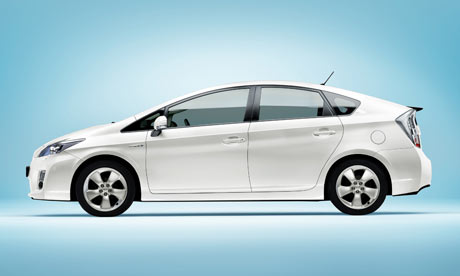
    The 2009 Toyota Prius

    The new Toyota Prius, due to launch in the UK for summer 2009. Photograph: PR

    Nowhere is the greenhouse effect more noticeable than inside a car on a hot day. But the new Toyota Prius comes with new green technologies including cooling fans run by optional solar panels on the roof.

    Even when the car is off and locked, these fans whir around, so when you step back into it you don’t need to crank up the power-hungry air conditioning. And the air-con system on the 2010 Prius (which confusingly was released in Japan last month and is due for release in the UK on 1 August) is more efficient to boot.

    So far, so clever, but unlike the core concept of the car – the frugal hybrid drive – it is unlikely that the cost will ever be recouped by the owner. In fact, at £1,450 for the solar upgrade it is rather more than unlikely.

    To sugar-coat the pill Toyota, recently trumped by Volvo to a greenest car award, has packaged it with remote-controlled air conditioning. This can be switched on a few minutes before you climb in, but the price will doubtless still leave a bitter taste for most.

    For those whose environmental concerns are stronger than their bank balance, foregoing air conditioning altogether and suffering through hot days may be the only option.

    Those early adopters who were first in line for a Prius years before most had heard of hybrid drives will happily pay. One day the feature will filter down to each and every car on the market, shrinking in price and becoming more powerful as it goes.

    But even if the option doesn’t sell well at first, Toyota should be praised for bringing it to market –

    and it is already looking into the possibility of trickle-charging the car’s battery.

    The solar panels may be grabbing the most attention of all the Prius’s new features, but there are plenty more to be had on even the basic £18,370 model, in the face of increasing competition from the electric car market. It is now the most aerodynamic production car in the world, for example, allowing it to reach the same speed while using less energy.

    There are also more efficient headlights, which save 17% of the power used by the old model.

    These small tweaks may not make a huge difference to an individual car, driving an individual mile, but Toyota has sold more than a million, and they have collectively covered 37 billion miles.

    On that sort of scale, every bit counts.