Author: admin

  • Not a normal day. 350org

    Not a normal day.

    Inbox
    x

    Bill McKibben – 350.org organizers@350.org
    11:06 AM (21 minutes ago)

    to me
    Images are not displayed. Display images below – Always display images from organizers@350.org


    Greetings!

    For some people on our email list, dawn has arrived on Saturday and Climate Impacts Day has already begun.

    So this is a short reminder that 5/5 is no normal day — it’s the day that people around the world are coming together to Connect the Dots about climate change. I’ve just heard that the very first action, in the Marshall Islands in the Pacific Ocean where the sun rises first, was a great success: people there dove down for an underwater rally on their threatened coral reef. So even if it’s raining where you are, know that some people have already gotten entirely wet to sound the alarm!

    Here’s the place to find the nearest action — and when you’re done go back to the computer to watch the images scroll in from around the planet (and make sure to upload your own photos).

    This is like a giant seminar on the topic: What does global warming look like in its early stages? And if we can put a human face on climate change it will help immeasurably in all our campaigning in the years ahead. You’re that human face.

    Thanks so much for heading out to help.

    Bill McKibben

    P.S. Don’t forget to upload your photos from your events to ClimateDots.org! There are full instructions on the website, but the basic idea is to attach your single best photo and email it to photos@350.org — and make sure to put the location of the photo in the subject line and the the story behind the photo as the text of the email.


    350.org is building a global movement to solve the climate crisis. Connect with us on Facebook and Twitter, and sign up for email alerts. You can help power our work by getting involved locally and donating here.

    What is 350? Go to our website to learn about the science behind the movement.

    To stop receiving emails from 350.org, click here.

  • Post-flood renovators at risk of lead poisoning

    Post-flood renovators at risk of lead poisoning

    By Ian Townsend for Background Briefing, ABCMay 4, 2012, 10:02 pm
    Angry... Michael Valance and Cathy Mason at their Ipswich home.

    ABC © Enlarge photo

    Environmental scientists are worried that a rush to renovate old homes after the Queensland floods may have exposed hundreds of people to harmful amounts of lead.

    Research from the US has shown that what were once considered small and safe exposures to lead can damage the brains of young children, shaving off IQ points and changing behaviour in some cases.

    There have already been cases of lead poisoning in children after parents sanded paint from old flood-damaged homes without taking precautions.

    “The effects are insidious,” said Professor Mark Taylor, an environmental scientist at Macquarie University.

    “Often, the children don’t present with any clinical signs, and problems may not really arise until maybe children start entering school and they’re struggling in school, for example, with their reading and writing abilities.”

    Homes with old paint in good condition or buried under layers of other paint are not considered a big risk.

    The risk comes when old paint weathers or is damaged by water, and is then scraped or sanded, and there are children around who might eat the paint chips, crawl on the floor and lick their fingers, or inhale the dust.

    “You probably will start seeing [high levels of lead in blood lead] now if you started to measure children’s blood,” says Dr Bruce Lanphear, a professor of environmental health at the Simon Fraser University in Vancouver.

    New research coming out of the US is showing that low levels of exposure can cause brain damage in children, but there is a debate about how significant that research is to Australia.

    Toxicologist and emeritus professor Michael Moore, who is on Australia’s National Health and Medical Research Council’s lead working group, says the effects seen in big, population-wide studies cannot be applied to individuals, and the magnitude of the problems associated with lead in paint is probably less than people imagine.

    “The fact is that over the last 30 plus years there’s been a concerted program of de-leading of a whole range of things in our general living environment,” he said.

    However, in the US, a committee of the Centres for Disease Control has already recommended halving the blood-lead intervention level from 10 micrograms per decilitre to five. The World Health Organisation is considering doing the same.

    Government to blame?

    After the floods last year, Cathy Mason and Michael Valance renovated their Ipswich house and discovered both of their boys had lead poisoning.

    One recorded a level 22 micrograms per decilitre – more than twice the current limit – and the other recorded a level of 15 micrograms.

    “When we found out, I was actually a bit angry at the Government for not warning us,” said Cathy Mason.

    “When it flooded, everyone in the media pushed about, ‘Be careful of the mud’ because the water is diseased, ‘Be careful of the asbestos’ because we all know about that. But nothing was said about lead.”

    Queensland Health would not talk to Radio National’s Background Briefing program, but released a statement saying the information on lead was readily available.

    “Queensland Health’s post-flood focus was on the issue of asbestos debris and contaminated water problems as these were the issues of key public health concern,” the statement said.

    “Information for the public in relation to dealing with lead in paint during home renovation and restoration work was already available and accessible to renovators and contractors.”

    Ipswich painter Nigel Gorman, who now runs a lead paint advisory service, says he has seen unsafe practice in action.

    “I’ve been driving past watching people grinding off their houses … that was the scariest part. And not just home owners, but painters.”

    Standards review

    Last October, a panel of scientists on the US National Toxicology Program said there was “sufficient evidence” that lead levels even under five micrograms per decilitre could harm children and adults.

    The Australian National Health and Medical Research Council’s Lead Working Group is now considering the evidence, and whether to halve its blood-lead standard.

    Environmental scientist Professor Mark Taylor says if Australia’s spread of lead exposure was similar to the US, there would be at least 100,000 Australian children already over that lower level.

    The parents of just about all of them remain unaware of the risks.

    “As a whole will we have failed. The public health community has failed and physicians have failed to warn families of these problems,” said Professor Bruce Lanphear, one of the scientists on the US National Toxicology Program panel.

    – Listen to “Lead Poisoning: A Silent Epidemic” on Background Briefing, ABC Radio National, Sunday 6th May at 8.00am.

  • What Nuclear-Free Japan Means For Us

    What Nuclear-Free Japan Means For Us
    Business Insider
    As the Fukushima Daiichi disaster showed, the country’s vulnerability to earthquakes and tsunamis poses a serious danger. Just last month, the nation’s nuclear watchdog, the Nuclear and Industrial Safety Agency, revealed that a nuclear power plant in
    See all stories on this topic »

  • New Propulsion System cuts Fuel Consumption of Cargo Ships by 75%

    New Propulsion System cuts Fuel Consumption of Cargo Ships by 75%

    Posted: 03 May 2012 10:39 AM PDT

    I recently wrote an article about a hybrid propulsion system for cargo ships which used giant sails along with traditional diesel engines. International transport via shipping is very popular, and also very polluting. The hybrid design, using diesel engines and wind power, managed to reduce fuel consumption by 30%; a decent amount, and one which could reduce shipping costs, potentially reducing the price of many imported goods.However a group of engineers, from Gamma Light and Heavy Industries Ltd. claim that they have discovered a new method of…

    Read more…

    Kenyan Energy Companies sign Multimillion Dollar Geothermal Energy Deals

    Posted: 03 May 2012 10:36 AM PDT

    Kenya currently receives most of its renewable power from erratic hydroelectric sources, which struggle to meet the nation’s energy demand, and supply varying levels of electricity to the grid.Now, two government-owned companies exploring the geothermal potential in Kenya have signed multimillion dollar deals to develop geothermal power plants in an effort to boost the country’s clean, reliable energy.Kenya Electricity Generating Company (Kengen) and Geothermal Development Company (GDC) have been exploring geothermal sources, mainly…

    Read more…

  • Last Japanese reactor in outage

    Last Japanese reactor in outage

    04 May 2012

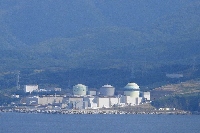
    Japan will find itself without nuclear power for the first time since 1970 as the last of its currently operating nuclear reactors prepares to go offline.

    Tomari (Mugu-shisai)_200
    Hokkaido Electric’s Tomari plant (Image: Mugu-shisai)

    Hokkaido Electric’s Tomari 3 will shut down for a scheduled periodic inspection outage on 5 May. The inspection itself will take about 71 days, but when the 912 MWe pressurized water reactor can expect to return to operation remains unknown. Following the Fukushima Daiichi nuclear accident of 2011, the Japanese government required all of its nuclear plants to undergo two-phase ‘stress tests’ to verify their ability to withstand extreme events. The first phase of test must be carried out while the reactor is offline during its first regularly scheduled outage.

    In normal operations, Japan’s nuclear power plants are taken offline for safety inspections every 13-18 months, so nearly 14 months on from the Fukushima Daiichi accident, all of Japan’s reactors have now reached their prescheduled maintenance outages. Although the tests have been completed at some of them, no reactor has yet been given the final go-ahead to restart. The end result is a nuclear power hiatus for a country that normally relies on its reactors to supply around 30% of its energy.

    The findings of the stress tests results for two of Kansai’s reactors, Ohi 3 and 4, have already met with approval from Japanese nuclear regulators and the government has voiced its approval for the units to restart. However, approval for restarts at the local level has not yet been secured.

    Without its nuclear plants, Japan is having to turn to other sources of power. According to figures from the Japanese Atomic Industry Forum, the country faces a 12% shortage of electricity in summer 2012. Meanwhile additional fossil fuel imports are costing it about $40 billion, or $333 per person, per year while its carbon emissions have risen some 14% above 1990 levels.

    Researched and written
    by World Nuclear News

  • RPT-COLUMN-Peak oil move over – now solve CO2: Gerard Wynn

    RPT-COLUMN-Peak oil move over – now solve CO2: Gerard Wynn
    Reuters
    The world may have found a sticking plaster, at least, to peak oil with rising production of offshore crude, onshore tight oil, shale gas and tar sands, but increased output of such fossil fuels conflicts with the goal of limiting climate change.
    See all stories on this topic »
    REVIEW: Basic Message of Water-Shortage Doc Last Call at the Oasis? We’re Screwed
    Movieline
    Aside from times of drought, water never seemed as urgent a problem as climate change, peak oil, deforestation and the other issues on our path to world destruction. But Last Call at the Oasis makes a convincing case that we’re on the verge of both
    See all stories on this topic »