Author: admin

  • What triggers a mass extinction ?

    ScienceDaily: Earth Science News


    What triggers a mass extinction? Habitat loss and tropical cooling were once to blame

    Posted: 10 Apr 2012 11:59 AM PDT

    The second-largest mass extinction in Earth’s history coincided with a short but intense ice age. Although it has long been agreed that the so-called Late Ordovician mass extinction was related to climate change, exactly how the change produced the extinction has not been known. Now, scientists have determined that the majority of extinctions were caused by habitat loss due to falling sea levels and cooling of the tropical oceans.

    Has the Dead Sea used up its nine lives? Dead Sea almost dried up over 100,000 years ago

    Posted: 10 Apr 2012 10:08 AM PDT

    Scientists say that recent drilling into the sediment of the Dead Sea indicates that it has recovered from several periods of dryness and very little rainfall in the ancient past, but warns that there’s still cause for concern.
    You are subscribed to email updates from ScienceDaily: Earth Science News
    To stop receiving these emails, you may unsubscribe now.
    Email delivery powered by Google
    Google Inc., 20 West Kinzie, Chicago IL USA 60610
  • Vicious words mark the war between pro and anti-nuclear environmentalists

    Vicious words mark the war between pro and anti-nuclear environmentalists

    The dispute is getting personal and much closer to the political bone with the fallout potentially damaging the whole idea of ‘environmentalism’

    Read the email exchange between George Monbiot and Theo Simon

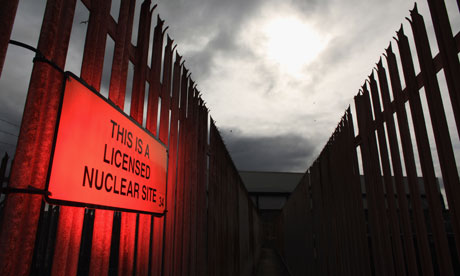
    Damian blog : security fence at Heysham Nuclear Power Station

    Heysham nuclear power station. The nuclear debate that has rumbled on for a few years has so far been largely technocratic and conducted with political and personal respect. Photograph: Christopher Furlong/Getty Images

    The war of words between the pro- and anti-nuclear environmentalists shows no sign of ending, with those writers in favour – George Monbiot, Mark Lynas, Fred Pearce and Stephen Tindale – now slugging it out with those campaigning against – Jonathon Porritt, Tom Burke, Tony Juniper and Charles Secrett. Everyone is pretending to be quite grown-up, polite and cool, but actually it’s getting vicious.

    Apart from a few gratuitous insults on either side, the dispute that has rumbled on for a few years has so far been largely technocratic and conducted with political and personal respect. In the latest skirmishes, the four former heads of Friends of the Earth (FoE) politely wrote to the prime minister advising him to drop nuclear power on cost and other grounds; whereupon the hacks also wrote to No 10 saying this advice undermined government climate change policy. Over the next month Porritt, Burke & co will issue four or five more intellectual blasts, and will convene a press conference, and we can expect the hacks to respond.

    Until now it has been a classic “fundi” and “realo” split with the pros’ (the realos) desperation to address climate change set against the antis’ (the fundis) conviction that nuclear takes too long, is too expensive and won’t actually work.

    But now, the dispute is getting personal and much closer to the political bone with the fallout potentially damaging the whole idea of “environmentalism”. First we have Lynas suggesting that nuclear protesters are not really environmentalists at all, then Monbiot doubted Burke’s commitment to the environment – despite his 40 years’ active service. Now, in an extraordinary exchange of emails between Monbiot and Theo Simon – who is one half of the renowned radical protest band Seize the Day – all opponents of nuclear power are said to have made their arguments “with levels of bullshit and junk science”.

    Here’s part of Monbiot’s letter, sent to Simon even as he was occupying a farmhouse in protest against the way that EDF were going about the works at Hinkley:

    The uncomfortable fact is that the opponents of nuclear power (among whom I numbered until recently) have justified their position with levels of bullshit and junk science very similar to those used by the climate change deniers, and Stop Hinkley is no exception. When I wrote to Katy Attwater [a Stop Hinkley spokeswoman], expressing my concerns about the quality of the scientific evidence on their site, she told me ‘I have no faith in the scientific peer review process as it currently works.’ Just like James Delingpole, David Bellamy etc when it comes to climate science.

    Monbiot then begs Simon to give up his protest, which he says is both “wrong” and dangerous:

    We need you too much for the battles that need to be fought. God knows there are enough of them. But the inevitable result of this one, if it succeeds, will be to raise our greenhouse gas emissions, help threaten life on earth and compromise the life chances both of future generations and of people living now in countries poorer than our own. That is not what you or any of us began campaigning for. But as the results of both the German and Japanese experiments demonstrate, it’s now clear that this will be the legacy of anti-nuclear campaigning. Please think again before you counteract all the good work you’ve done on other issues.

    You can imagine how this appeal from the heart went down with Simon, who last month was given a conditional discharge of six months for the Hinkley protest and has been putting himself on the physical frontline for years. Describing Monbiot’s email as “patronising”, he waited a few days and then wrote back with a series of points that the pro-nukers have not so far addressed – like the assertion that the technology demands a stable and continuous technocratic society to exist for centuries, and entrenches power in the hands of a state-protected, unaccountable and ruthless elite.

    Here’s some of his letter:

    We need more than ever to champion a vision of the kind of creativity which a democratic revolution would rapidly liberate. Nuclear … can give no ultimate assurance of it’s safety or its costs. Neither can it demonstrate the kind of long-term resilience which may prove necessary if runaway climate change does, in spite of our efforts, develop. Resilience is to my mind something which we should be designing into our energy production plans now, as the future is so uncertain for our children. Nuclear requires a stable and continuous technocratic society to exist for centuries.

    He goes on:

    [Monbiot and other writers’] public promotions of nuclear have disorientated and disheartened the green movement and the left, while finding a willing audience among the broader middle-class who welcome a chance to salve their guilt about energy-intensive lifestyles with the reassuring news that ‘apparently nuclear’s OK now, and it’s the only way to solve climate change’. You can’t really be surprised – or even dismayed – that so many people respond emotively to your propagandising for nuclear. From their point of view you seem to have become a one-man pro-bono PR company! In the letter you just co-authored to Cameron you suggest that nuclear would be a lot cheaper and better by now if Porritt and FoE etc hadn’t ‘devoted decades’ to fighting it. Well they did. Lots of people did. Personally I’m proud of it, even if I regret that our political naivety, coupled with the defeat of working-class representation in that decade, meant that capitalism and it’s appetites continued unabated. If we had moved in a more rational direction back then, renewables and other energy options could also have been a lot further developed by now, and the fabled ‘energy gap’, which you say we need nuclear to fill, might look a lot smaller.

    Monbiot, who is offline until April 16 after becoming a new father, has yet to reply.

    We are starting to get to the heart of what it means to be green today. One vision can justify a corrupt and odious state if it can make an odious technology work to overcome a terrible danger. The other argues that there are far better ways to achieve the same end without the resulting damage to society and the long-term dangers that the technology entails. The questions raised are profoundly difficult and need to be debated, but personal attacks are inflammatory and really help no one.

  • Iceland volcano: and you thought the last eruption was bad

    News 10 new results for volcanoes
    Iceland volcano: and you thought the last eruption was bad…
    Telegraph.co.uk
    Since then, there have been erratic movements of the surface of the volcano, measured by precise GPS instruments, and bursts of high earthquake activity beneath Katla’s caldera. These observations imply that magma has risen to shallower depths.
    See all stories on this topic »

    Telegraph.co.uk
    Mystery Volcano Photo #45
    Wired News
    By Erik Klemetti I was planning to catch up on some of the bits and pieces of volcano-related news today, but my springtime allergies have caught up with me (ever try to blog with a forehead that wants to be removed?) Anyway, I thought I’d at least
    See all stories on this topic »
    Five-a-day: Football, books and volcanoes
    STV Local
    As part of the Edinburgh International Science Festival, the Edinburgh Skeptics will go even further back in history than the city walls, with a talk on volcanoes and their connection with Scotland. Fire and Ice: Icelandic Volcanoes, and their links to
    See all stories on this topic »

    STV Local
    The pit-chains of Mars – a possible place for life?
    Space Ref (press release)
    The latest images released from ESA’s Mars Express reveal a series of ‘pit-chains’ on the flanks of one of the largest volcanoes in the Solar System. Depending on their origin, they might be tempting targets in the search for microbial life on the Red
    See all stories on this topic »

    Space Ref (press release)
    Visit Nicaragua Facebook Page Launches With Sweeps
    AllFacebook
    The new $3 million tourism marketing campaign by Nicaragua includes the giveaway of three trips for two to the “land of lakes and volcanoes” via the newly launched Visit Nicaragua Facebook page. The Cities and Nature trip, to be drawn Wednesday,
    See all stories on this topic »

    AllFacebook
    Tour features some of the rarest birds on Earth (April 16)
    Hawaii 24/7 (press release)
    The Friends of Hawaii Volcanoes National Park (FHVNP) is offering a tour of KBCC, which isn’t open to the general public. The tour is 9-11 am Monday, April 16 The alala, or Hawaiian crow, is a critically endangered species that is extinct in the wild.
    See all stories on this topic »
    Courtesy of Nicaragua Tourism Board
    Orlando Sentinel (blog)
    The Nicaragua Tourism Board is launching a new US Facebook page with a contest that will give away three trips to the Central American nation, known for its lakes, volcanoes and beaches. First prize is the “Cities and Nature” trip, which includes
    See all stories on this topic »
    Earth As Art: Swirling Ice Floes
    Our Amazing Planet
    During the winter, the peninsula, and its numerous volcanoes, are blanketed in snows, while sea ice forms on the Pacific coastline. As these ice floes grind against each other, they produce smaller floes that can be moved by wind and currents,
    See all stories on this topic »
    Home improvement with Jordan Hoffart
    ESPN (blog)
    Recently, after taking inspiration from Pontus Alv’s “In Search of The Miraculous” video, Hoffart bought a house in San Diego and began renovating his new purchase into a skate-able work of art, complete with indoor volcanoes, bowled corners and what
    See all stories on this topic »

    ESPN (blog)
    Rugby player hunk relishes controversy
    Inquirer.net (blog)
    Philippine Volcanoes member Arnold Aninion clearly relished being portrayed as a bad guy in the just-concluded GMA 7 reality show “Survivor Philippines: Celebrity Doubles Showdown.” Undaunted by intrigues that pitted him against the other hunks on the
    See all stories on this topic »

    Inquirer.net (blog)
  • Climate Change News NY TIMES

    Alert Name: CLIMATE CHANGE NEWS
    April 11, 2012 Compiled: 1:07 AM

    By MARK SCOTT (NYT)

    The hunt for new oil and gas reserves is heading into Africa and other unexplored territories as subsidies for alternative energy are cut and as a result of the nuclear crisis in Japan last year.

    By JAD MOUAWAD (NYT)

    An energy revival in the United States has upended expectations and calculations about the country’s future, including its foreign policy and economy.

    About This E-mail

    You received this e-mail because you signed up for NYTimes.com’s My Alerts tool. As a member of the TRUSTe privacy program, we are committed to protecting your privacy.

  • WORLD POPULATION CLOCK

    • Click this site to access the World Population Clock and a host of other streaming Info
    • Live world statistics on population, government and economics, society and media, environment, food, water, energy and health. Interesting statistics with world population clock

      www.worldometers.info
  • Aged – care homes might face Budget hit

    Aged-care homes might face Budget hit

    0

    THE aged-care sector could be facing a $2 billion hit in the Federal Budget as a result of the Gillard Government’s determination to achieve a surplus.

    The Government reportedly is considering options to cut back on $7 billion in taxpayer-funded subsidies.

    One option is a five per cent cut in subsidies to nursing homes to cover costs of employing staff to help residents eat, bathe and go to the toilet, The Australian Financial Review said today.

    Finance Minister Penny Wong, while refusing to speculate on budget decisions, sought to reassure elderly Australians of the Government’s commitment to the sector.

    “We’re a Labor Government, we have a strong track record of responding to those in need,” she told ABC Radio.

    The Government has earmarked aged-care reform as a priority, although it still has to respond to the recommendations of a Productivity Commission inquiry.