Author: admin

  • Poles apart: satellites reveal why Antarctic sea ice grows as Arctic melts

    Poles apart: satellites reveal why Antarctic sea ice grows as Arctic melts

    US military satellite data exposes complexity of climate change and impact of changing wind patterns on polar regions

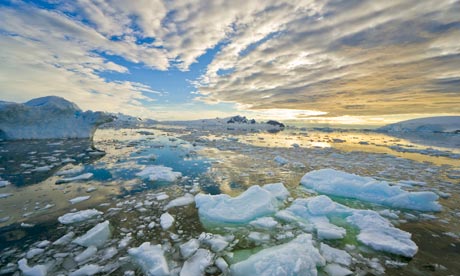
    Antarctic sea ice

    Changing wind patterns around Antarctica, above, have led to an increase in sea ice, as cold winds off the continent blow ice away from the coastline. Photograph: Corbis

    The mystery of the expansion of sea ice around Antarctica, at the same time as global warming is melting swaths of Arctic sea ice, has been solved using data from US military satellites.

    Two decades of measurements show that changing wind patterns around Antarctica have caused a small increase in sea ice, the result of cold winds off the continent blowing ice away from the coastline.

    “Until now these changes in ice drift were only speculated upon using computer models,” said Paul Holland at the British Antarctic Survey. “Our study of direct satellite observations shows the complexity of climate change.

    “The Arctic is losing sea ice five times faster than the Antarctic is gaining it, so, on average, the Earth is losing sea ice very quickly. There is no inconsistency between our results and global warming.”

    The extent of sea ice is of global importance because the bright ice reflects sunlight far more than the ocean that melting uncovers, meaning temperature rises still further.

    This summer saw a record low in Arctic sea ice since satellite measurements began 30 years ago. Holland said the changing pattern of sea ice at both poles would also affect global ocean circulation, with unknown effects. He noted that while Antarctic sea ice was growing, the Antarctic ice cap – the glacier and snow pack on the continent – was losing mass, with the fresh water flowing into the ocean.

    The research on Antarctic sea ice, published in Nature Geoscience, revealed large regional variations. In places where warm winds blowing from the tropics towards Antarctica had become stronger, sea ice was being lost rapidly. “In some areas, such as the Bellingshausen Sea, the sea ice is being lost as fast as in the Arctic,” said Holland.

    But in other areas, sea ice was being added as sea water left behind ice being blown away from the coast froze. The net effect is that there has been an extra 17,000 sq km of sea ice each year since 1978 – about a tenth of a percent of the maximum sea ice cover.

    Antarctica is a continent surrounded by an ocean, whereas the Arctic is an ocean surrounded by a continent. For that reason, said Holland, sea ice was not able to expand by the same mechanism in the Arctic as at the southern pole, because if winds pushed the ice away from the pole it quickly hit land.

    Holland did the research with Ron Kwok at Nasa‘s jet propulsion laboratory in California, where maps of sea ice movements were created from more than 5m individual daily measurements collected over 19 years. The maps showed, for the first time, the long-term changes in sea ice drift around Antarctica.

    Kwok said: “The Antarctic sea ice cover interacts with the global climate system very differently than that of the Arctic, and these results highlight the sensitivity of the Antarctic ice coverage to changes in the strength of the winds around the continent.”

  • ACCC asks for comments on NBN pricing plan

    ACCC asks for comments on NBN pricing plan

    AAPUpdated November 12, 2012, 1:01 pm

    The competition regulator has called for public consultation on the latest plan by the national broadband network (NBN) builder on wholesale broadband pricing.

    The Australian Competition and Consumer Commission (ACCC) released its first consultation paper on the special access undertaking (SAU) lodged by the network’s builder, NBN Co, on September 28.

    The undertaking sets out the terms of conditions and access to the NBN’s fibre, wireless and satellite networks until 2040, while providing the framework for NBN Co to deliver wholesale broadband prices across Australia.

    ACCC chairman Rod Sims said the ACCC would assess the SAU before it could determine whether it was reasonable and promoted the long-term interests of retailers and consumers.

    “The consultation paper seeks the views of consumers and industry and is the first step in what will be a thorough assessment by the ACCC of the undertaking,” Mr Sims said in a statement on Monday.

    A spokeswoman for NBN Co said it looked forward to the outcome of the ACCC’s consultations.

    “NBN Co has pledged to freeze the wholesale price of its key consumer and business products for five year, and to peg any future rises to below the rate of inflation.

    Under the government’s $37.4 billion project, NBN Co is charged to deliver high-speed fibre optic cable broadband offering speeds up to 100 megabits a second to 93 per cent of Australian homes, schools and businesses by June 2021, with the remaining seven per cent to receive services by fixed wireless and satellite technologies within three years.

    AAPUpdated November 12, 2012, 1:01 pm

    The competition regulator has called for public consultation on the latest plan by the national broadband network (NBN) builder on wholesale broadband pricing.

    The Australian Competition and Consumer Commission (ACCC) released its first consultation paper on the special access undertaking (SAU) lodged by the network’s builder, NBN Co, on September 28.

    The undertaking sets out the terms of conditions and access to the NBN’s fibre, wireless and satellite networks until 2040, while providing the framework for NBN Co to deliver wholesale broadband prices across Australia.

    ACCC chairman Rod Sims said the ACCC would assess the SAU before it could determine whether it was reasonable and promoted the long-term interests of retailers and consumers.

    “The consultation paper seeks the views of consumers and industry and is the first step in what will be a thorough assessment by the ACCC of the undertaking,” Mr Sims said in a statement on Monday.

    A spokeswoman for NBN Co said it looked forward to the outcome of the ACCC’s consultations.

    “NBN Co has pledged to freeze the wholesale price of its key consumer and business products for five year, and to peg any future rises to below the rate of inflation.

    Under the government’s $37.4 billion project, NBN Co is charged to deliver high-speed fibre optic cable broadband offering speeds up to 100 megabits a second to 93 per cent of Australian homes, schools and businesses by June 2021, with the remaining seven per cent to receive services by fixed wireless and satellite technologies within three years.

  • For better transport, listen to the commuters

    For better transport, listen to the commuters

    Date
    November 12, 2012
    Category
    Opinion
    • 29 reading now

    Amanda Tattersall

    I was lucky enough to go to a Sydney selective high school. To get there I had to walk, catch a train and then a bus. It took time, and on the days that I had school band rehearsal, I left home at 6am. It was brilliant. The trains came no more than 15 minutes apart (usually between five and eight minutes) and the buses were the same. I had a school pass and that one ticket got me where I needed to go.

    For six years, I lived and breathed what is now the vision for public transport of the citizens’ coalition I lead. At the Sydney Alliance, we describe this vision in a formula – 400:15:1 SCA2. Public transport should be 400 metres from where you work or live (so you can walk to it) and come every 15 minutes (so you don’t need a timetable). You should be able to use it on one ticket (so it’s not complicated). It should be safe (S), clean (C), affordable (A) and accessible (A2).

    It’s a straightforward formula that has been enthusiastically embraced by our massive diverse coalition of 52 civil society organisations. In the Sydney Alliance, we bring together Catholics and construction workers, nurses and Cancer Council volunteers, Jews, Baptists and union leaders with one thing in common – we all agree that we need to make Sydney a better place to live.

    When we listened to 6500 people across our collective membership, transport was one of the top issues that brought us together. The vision we settled on was about making transport close (400) and, very importantly, frequent (15).

    In the maps by our transport chairman, Dr Kurt Iveson, a senior lecturer in urban geography at the University of Sydney, that were published by Fairfax Media on Sunday, you can see much of Sydney is out of reach of close and frequent public transport. The 500,000 or so people in the 52 partner organisations involved in our alliance believe this needs to change.

    This year the alliance has lobbied state and local governments to make our interchange train stations safer. Next year, we want to engage with the government’s master plan and look at affordable ways in which we can enhance the city’s transport system. We are pragmatic and ambitious in the solutions we are seeking.

    For years now in Sydney, the public transport debate has been dominated by proposals for competing infrastructure projects. The North West Rail Link, the Sydney light rail extension, metros, tunnels – all of these projects with their own relative merits and multibillion-dollar price tags.

    All are or were supposed to be the answer to our public transport problems. But at that price we want to be sure of what these projects are aiming to address.

    With two big reports on transport – one from Transport for NSW and one from Infrastructure NSW- our politicians look divided on the future of transport. In contrast, the Sydney Alliance plans to bring into this debate what has been missing – the commuters who do the daily grind by train and bus passengers stuck in peak traffic on the M2, often referred to each morning as a car park. Not advisory groups, committees, or current or former politicians.

    We know good public transport contributes to social inclusion. We know it is environmentally sound. And we know our city is clogged with cars, and that thousands of us spend hours stuck in traffic every day.

    For that reason, we should be working to provide public transport that offers a genuine alternative to driving, no matter where you live, what you do or when you do it.

    How do we make this happen? Fixing our public transport system is not all about multibillion-dollar investments that take decades to complete.

    Don’t get us wrong, some judicious infrastructure investment can go a long way. But we could also be doing a lot better with what we already have.

    The Sydney Alliance plans to bring into this debate the voices of citizens – the public transport users – who need to be at the centre of the discussion about the transport system, not stuck on the fringes. We are working together to fill in the gaps in the maps.

    Amanda Tattersall is the founding coalition director of the Sydney Alliance.

    Read more: http://www.smh.com.au/opinion/politics/for-better-transport-listen-to-the-commuters-20121111-296b6.html#ixzz2ByEJPSmW

  • ‘Brace yourselves’: scope widened in corruption probe

    ‘Brace yourselves’: scope widened in corruption probe

    Date
    November 12, 2012 – 11:20AM
    • 228 reading now

    Video settings

    Please Log in to update your video settings

    Video will begin in 5 seconds.

    Video settings

    Please Log in to update your video settings

    Obeid to face second stage of ICAC enquiry

    The Independent Commission Against Corruption moves on to the second potentially explosive stage of the Eddie Obeid inquiry. Kate McClymont reports.

    The Independent Commission Against Corruption is widening the scope of its explosive investigation into a series of coal leases issued by the disgraced former resources minister Ian Macdonald.

    “Brace yourselves,” Geoffrey Watson, SC, counsel assisting, has warned the ICAC hearing of his formal opening and the explanation of the corruption it is about to expose: “This could take most of the day.”

    The Commissioner, David Ipp, QC, earlier gave notice to the widening, which means the inquiry will now also examine how it was that the Obeid family and its associates purchased a series of farms in 2007 and 2008 which were in the vicinity of a key coal licence area.

    Ian Macdonald

    Former minister … Ian Macdonald. Photo: James Brickwood

    Mr Watson has begun outlining the complex and extensive corrupt network that allegedly disguised its operations to secure profits worth “hundreds of millions of dollars”. Its principals are allegedly ALP kingpin Eddie Obeid and the disgraced former resources minister, Ian Macdonald.

    Mr Watson told the inquiry this morning that just one of a number of coal deals being examined by the ICAC, dating from 2008 and 2009, was designed to secure $60 million profit for the Obeid family, which had invested just $200,000.

    “In all, decisions taken or influenced by Ian Macdonald may have enabled Eddie Obeid and his family to acquire profits in the order of $100 million,” Mr Watson said.

    ICAC inquiry into fromer NSW ALP Minister. Photo: Peter Rae. Former Goverment Minister, Edie Obeid ariives at the inquiry.

    Labor kingpin … Eddie Obeid. Photo: Peter Rae

    Mr Ipp said the inquiry would also examine whether Mr Macdonald or his staff “provided confidential information … to members of the Obeid family”, and whether they then used that information to their own benefit.

    Mr Obeid has declared he will be found innocent of the allegations of corruption levelled against him and his family by a big corruption inquiry.


    Read more: http://www.smh.com.au/nsw/brace-yourselves-scope-widened-in-corruption-probe-20121112-2978v.html#ixzz2ByD6JfQ1

  • GET-UP Subject: VIDEO: how to protect the Great Barrier Reef

    From: GetUp! <info@getup.org.au>
    Date: Mon, Nov 12, 2012 at 10:20 AM
    Subject: VIDEO: how to protect the Great Barrier Reef
    To: nevilleg729@gmail.com

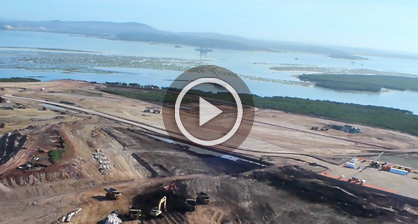
    We just got back from filming this video in Northern Queensland, and we can’t believe what we saw. The damage being done to the Great Barrier Reef World World Heritage Area will shock the country. Check it out here: https://www.getup.org.au/campaigns/mining/gladstone/watch-this-video-now

    Dear NEVILLE,

    The Great Barrier Reef is already under great pressure from climate change. But to make things worse, the Australian Government is giving Gina Rinehart and others the green light to build the world’s biggest coal export facility, right on the edge of the Reef.

    They’re literally cutting channels through the seafloor for huge coal ships in a practice known as dredging. It releases toxins trapped in sediment which then find their way into our food chain. Locally, the effects are clear: fishers are bringing in catch that are so sick it’s not safe to sell. Globally, we are losing one of the natural wonders of the world, and doing it so we can export more coal to warm the planet. It’s absolutely crazy!

    There’s something we can do about it. Environment Minister Tony Burke keeps saying publicly that he wants to save the Reef. He’s trying to walk both sides of the street – saying he’ll save the Reef but at the same time approving massive new coal and coal seam gas terminals – and so far he’s getting away with it, because only locals know what’s really going on. Together, we’re going to change that, and show both major parties that voters will know what they doing to the reef:

    In our new ad, new footage and scientific interviews show Australia what’s really going on. Please watch and join the campaign now.

    https://www.getup.org.au/campaigns/mining/gladstone/watch-this-video-now

    Here’s the plan: there’s an election not far away. Queensland is full of important marginal electorates. The Great Barrier Reef employs 10 per cent of the population of Gladstone and adds $5 billion to the State’s tourism economy annually – we’re talking major economic ramifications, not just conservation – and politicians know it.

    That’s why we’re kicking this campaign off by blanketing cinemas across Queensland. If we raise enough we’ll screen it in Tony Burke’s electorate too. Are you able to help this thing go big?

    https://www.getup.org.au/campaigns/mining/gladstone/watch-this-video-now

    Our Environment Minister Tony Burke and his government really don’t want destroying the Reef to become their legacy. Neither do we.

    Thanks for standing up for the Reef,
    the GetUp team.


    GetUp is an independent, not-for-profit community campaigning group. We use new technology to empower Australians to have their say on important national issues. We receive no political party or government funding, and every campaign we run is entirely supported by voluntary donations. If you’d like to contribute to help fund GetUp’s work, please donate now! If you have trouble with any links in this email, please go directly to www.getup.org.au. To unsubscribe from GetUp, please click here. Authorised by Sam Mclean, Level 2, 104 Commonwealth Street, Surry Hills NSW 2010.

  • Global Warming Could Wipe Out Government

    Global Warming Could Wipe Out Government

    CORRUPTION CHRONICLES

    The Washington D.C. area and surrounding government infrastructure will be virtually destroyed by global warming over the next century, according to the latest study financed by American taxpayers.

    At the very least climate change will cause billions of dollars in damage to city and federal property in the District of Columbia, say researchers at the public institution, the University of Maryland, that disclosed the alarming news this week. This disaster will occur as a result of long-term sea level rise caused by global warming.

    It gets worse, according to the esteemed academics that conducted the in-depth probe. “Potential for significant damage will be even greater in the event of extreme weather like Hurricane Sandy,” they reveal in a press release announcing their findings. Over the next 100 years, continuing sea level rise could cause damages of more than $24.6 billion to Washington’s commercial property, museums, and government agencies.

    This is based on trends and predictions that suggest the nation’s capital is likely to face flooding and infrastructure damage caused by sea level rise linked to thermal expansion of the oceans and melting of global ice sheets caused by global warming. “Climate change not only results in increasing the sea level but also the annual rate and intensity of storms,” claims one of the university researchers.

    To stop this tragedy from occurring, they recommend that the government get involved. “Decisions must be made in the near future by lawmakers or city planners on how to reduce the impact of and adapt to sea level rise,” they say. “Cost-effective methods to deal with sea level rise should be developed, and long-term solutions that extend well into this millennium are necessary.”

    Exactly how this can be accomplished likely requires more taxpayer-funded research, so stay tuned. Under President Obama, the government has dedicated substantial resources to expose the ills of global warming and the doom it will bring if humans don’t adapt a “green” mentality. In fact, the Maryland study is simply the latest of many publicly-financed projects that aim to accomplish this.

    In the last few years Uncle Sam has paid for a variety of studies warning that global warming will make food and water dangerous, cause mental illness, cancer and threaten national security. In fact, a consortium of Obama Administration scientists from several government agencies—including the Centers for Disease Control and Prevention, the State Department and National Institute of Environmental Health Science—have confirmed that global warming is one of the “most visible environmental concerns of the 21st century.”

    Last fall a separate government agency came out with an alarming report saying that global warming is much worse than previously imagined because the ocean actually masks the true rate of damage for periods as long as a decade. In this version, the sea is storing the heat that damages the earth, making it appear as if there is a sort of hiatus in global warming when there really isn’t.

    Not surprisingly, the Obama Administration has determined that people from low socioeconomic backgrounds and those living in urban areas (if you read between the lines this means ethnic minorities) are more “susceptible” and “vulnerable” to diseases exacerbated by climate change. That can only mean one thing; taxpayer dollars will inevitably be allocated to further study this phenomenon.


    Used with the permission of Judicial Watch.