Enhanced melting of Northern Greenland in a warm climate
Posted: 09 Nov 2012 05:40 AM PST
Scientists show how the northern part of the Greenland ice sheet might be very vulnerable to a warming climate.
Enhanced melting of Northern Greenland in a warm climate
Posted: 09 Nov 2012 05:40 AM PST
Scientists show how the northern part of the Greenland ice sheet might be very vulnerable to a warming climate.
US military warned to prepare for consequences of climate change
The Guardian
An expert report, prepared for the intelligence community by the National Academy of Sciences, warns that the security establishment is going to have start planning for natural disasters, sea–level rise, drought, epidemics and the other consequences of …
See all stories on this topic »
The Guardian
An expert report, prepared for the intelligence community by the National Academy of Sciences, warns that the security establishment is going to have start planning for natural disasters, sea–level rise, drought, epidemics and the other consequences of …
See all stories on this topic »
Worry about the grandchildren? Then stop global warming, but don’t pretend deficit reduction by slashing pensions is for them


Updated
Two Canberra scientists believe they have made a major breakthrough in how to best produce hydrogen which can be used as a clean and renewable energy source.
Professors Rob Stranger and Ron Pace from the Research School of Chemistry at the Australian National University (ANU) have used computer modelling to reveal the molecular structure of the photosynthesis reaction site in plants.
Professor Pace says the discovery takes a leaf out of nature’s handbook, for the first time identifying the specific water molecules in a plant’s photosystem that are converted into oxygen.
“Nature very early on in the evolutionary process on Earth figured out how to do this particular piece of chemistry with close to 100 per cent efficiency,” he said.
Professor Stranger says the work offers clues as to how scientists can create alternative fuel.
“The part of the plant’s photosystem that is important to this process is called the oxygen-evolving-complex (OEC),” he said.
“If we can steal nature’s secrets and understand how the OEC performs its chemistry, then we can learn to make hydrogen much more efficiently, and hydrogen is the fuel for a totally renewable fuel future.”
Professor Pace says that while scientists know the OEC contains four manganese atoms and a calcium atom, they have been trying for decades to determine the exact structure of the system and how it works.
“Our work confirms the OEC structure and means researchers can progress new fuel developments based on photosynthesis,” he said.
Scientists have been splitting water molecules to create hydrogen gas for decades, but the process requires electricity.
Professor Stranger says the current system of using electricity from other sources to create hydrogen is wasteful and not ideal.
“This has been a very big challenge for chemists and scientists,” he said.
“We did computer modelling to try and rationalise [how photosynthesis does it] and try and make sense of it.
“So did a lot of other people worldwide, but they didn’t get anywhere with it, but we were able to.”
Professor Pace says other scientists had less luck because they underestimated nature’s creativity.
“It turns out that nature very cleverly doesn’t charge the process up more than is absolutely necessary,” he said.
“That’s what’s confused our colleagues because they believed that the chemistry wasn’t quite that clever.
“We can see now that you don’t need to use as much electric charge as was previously thought, which is very important.
“The more you do that, the more dangerous you make this reaction, which is already the most dangerous reaction in nature.”
The next step for the two scientists is to publish their findings before handing it over to a laboratory to try and mimic the process of photosynthesis, something they believe will be a reality within five years.
But Professor Pace is quick to ease thoughts the future will involve leaving a car in the sun and fuelling it up with a garden hose.
“If I was a shonk I’d tell you yes,” he said.
“But in fact that’s not the way I see it sensibly happening.”
Topics:earth-sciences, alternative-energy, energy, act, canberra-2600
First posted
Scientists analysing climate models warn we should expect high temperature rises – meaning more extreme weather, sooner
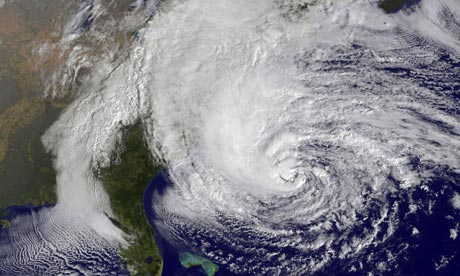
Climate change is likely to be more severe than some models have implied, according to a new study which ratchets up the possible temperature rises and subsequent climatic impacts.
The analysis by the US National Centre for Atmospheric Research (NCAR) found that climate model projections showing a greater rise in global temperature were likely to be more accurate than those showing a smaller rise. This means not only a higher level of warming, but also that the resulting problems – including floods, droughts, sea level rise and fiercer storms and other extreme weather – would be correspondingly more severe and would come sooner than expected.
Scientists at the NCAR published their study on Thursday in the leading peer-reviewed journal Science. It is based on an analysis of how well computer models estimating the future climate reproduce the humidity in the tropics and subtropics that has been observed in recent years. They found that the most accurate models were most likely to best reproduce cloud cover, which is a major influence on warming. These models were also those that showed the highest global temperature rises, in future if emissions of greenhouse gases continue to increase.
John Fasullo, one of the researchers, said: “There is a striking relationship between how well climate models simulate relative humidity in key areas and how much warming they show in response to increasing carbon dioxide. Given how fundamental these processes are to clouds and the overall global climate, our findings indicate that warming is likely to be on the high side of current projections.”
Extreme weather has been much in evidence around the globe this year, with superstorm Sandy’s devastating impact on New York the most recent example. There has also been drought across much of the US’s grain-growing area, and problems with the Indian monsoon. In the UK, one of the worst droughts on record gave way to the wettest spring recorded, damaging crop yields and pushing up food prices.
The new NCAR findings come just weeks ahead of a crucial UN conference in Doha, where ministers will discuss the future of international action on greenhouse gas emissions. The ministers will have to take the first steps to a new global climate treaty, to kick in from 2020, but so far have shown little sign of urgency.
The next comprehensive study of our knowledge of climate change and its effects will come in 2014, when the Intergovernmental Panel on Climate Change publishes its fifth assessment report. Before that, next September, the first part of the report will deal with the science of climate change and predictions of warming.
There has already been increasing evidence of a warming effect this year – the Arctic’s summer ice sank to its lowest extent and volume yet recorded, and satellite pictures showed that surface ice melting was more widespread across Greenland than ever seen in years of observations. Experts have predicted that the Arctic seas could be ice-free in winter in the next decade.
The International Energy Agency warned earlier this year that on current emissions trends the world would be in for 6C of warming – a level scientists warn would lead to chaos. Scientists have put the safety limit at 2C, beyond which warming is likely to become irreversible.
Given this year’s extreme weather, the results of the NCAR may not surprise some. But for scientists, narrowing down the uncertainties in climate models is a key activity. “The dry subtropics are a critical element in our future climate,” Fasullo says. “If we can better represent these regions in models, we can improve our predictions and provide society with a better sense of the impacts to expect in a warming world.”
| Study: 5-meter rise in sea level would flood 23 federal buildings in … Fierce Homeland Security Even though 5 meters exceeds the likely amount of sea–level rise for the next 100 years, the study (.pdf) says that level could be reached during storms. Affected buildings would include the FBI, the Internal Revenue Service, the Justice Department … See all stories on this topic » |
||
|
||
|
 Email
Email

