Grover Norquist Discussion
Inbox
x
Inbox

|
|
12:40 PM (1 hour ago)
 |
|
||
|
||||
|
|
Inbox
|
x |
|
|
12:40 PM (1 hour ago)
|
|
||
|
||||
|
  |
|||||||||||||||||
|
|||||||||||||||||
|
Renewable energy is real and happening – and we can persuade industry to find better ways than fracking

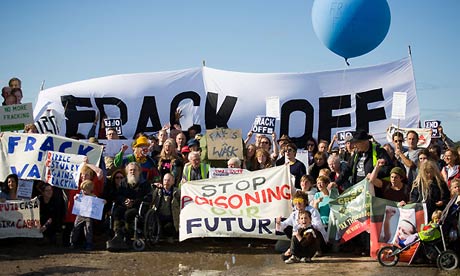
Recently, I joined a movement called Frack Free Colorado, helping to educate all of us energy consumers on the ease of moving to renewables like wind and solar, and away from the more toxic oil, gas and coal. I’ll be speaking on Tuesday, on the lawn of the Colorado state capitol, along with others like Leilani Munther, known as the “Carbon-free Girl” race car driver, actor and environmental activist Daryl Hannah, scientist Sandra Steingraber, musicians Jakob Dylan and Rami Jafee of the Wallflowers, and a Colorado favorite, Elephant Revival.
It’s the right event at the right time, and what I love about Frack Free is that we’re challenging our audience to be part of the change as they learn and dance to celebrate the future we want to see. Part of that change is looking at how we build our own nest and commit to personal action. There’s nothing worse than finger-pointing – when we walk in and turn on natural gas to cook our food, or heat our house.
Here at the Willingway, our retreat center near Malibu, my partner Bobby and I have been growing our own food and putting solar to work on our roof. It feels great to watch the meter feeding energy into the grid, instead of just pulling it out.
With my focus on health and wellness, and “greening up the inner world” with healthy eating habits, yoga, and meditation, I see our interconnectedness to the earth just by looking at the human body. We are made up of mostly water, so it is imperative that we don’t pollute our water sources.
The hydraulic fracturing process utilizes large amounts of toxic chemicals – 10,000-40,000 gallons per well. Science has shown that it ends up in the water we drink, the water that’s used on our food, and the water that nourishes fish, animals, birds, and plants. It’s important that we find a cleaner way to power our lives.
Partnerships are so important and we’re working to partner with the leaders in the energy industry to work toward 100% renewable. That’s conscious leadership, and it’s always been my belief that if I let go of my complaining about what’s broken, and roll up my sleeves to help fix it, change happens faster than we can ever imagine.
I invite everyone who cares about our earth, energy, and what we leave behind for future generations to join me at Frack Free Colorado, Tuesday from 3-7pm (MT) at Civic Park on Capital Hill in Denver, or check out our website to find out more about fracking and to see what’s possible with renewable energy today. If we have “power in numbers”, we’ll send a message to the world that even the largest consumer of energy in the world can change for the better.
Frack Free Forever!

Solar flair: The CSIRO wants to be able to predict the flow of energy from domestic solar installations.
We may be a nation of sun-worshippers but when it comes to forecasting where the sun shines longest, Australia’s energy authorities are stuck in the dark ages.
The CSIRO is hoping to fill that information void with a lot more riding on it than the best place to get that tan. Energy energy suppliers – current and future – need the data to predict how much solar electricity is likely to flow through the nation’s power grids.
For potential developers of large-scale solar power plants, radiation records are needed to bolster investment certainty as they try to secure finance from bankers or government agencies. The real urgency for hard numbers, though, is coming from the rapid take-up of solar photovoltaic (PV) panels, with the total now approaching 900,000 across the country.
“It’s essentially an unknown quantity what those cities full of roof-top PV are producing and we’d like to be able to forecast it,” said Peter Coppin, the senior renewable energy researcher leading CSIRO’s bid.
The Australian Solar Institute, due to be rolled in to the larger Australian Renewable Energy Agency (ARENA) at the end of the year, has earmarked funds for solar resource forecasting techniques.
The ASI funding will be announced within weeks with CSIRO and its partners’ bid seen likely to succeed. The institute co-sponsored a talk yesterday by Dr Coppin at the Sydney offices of law firm Baker & McKenzie.
The Australian Energy Market Operator (AEMO), a member of the bid consortium along with the Bureau of Meteorology, installed an advanced forecasting system for wind four years ago to help it manage a big increase in wind farms.
Capacity reached
Dr Coppin said the wildfire spread of solar PV is already straining the power grids of some regional areas, with so-called “hosting capacity” being reached.
WA’s government-owned Horizon Power, for instance, is restricting new capacity in some towns such as Carnarvon where the grid can’t cope with the intermittent supply that comes with solar power.
‘‘There’s been a huge up-take of solar in Carnarvon,’’ a Horizon Power spokeswoman said.
The problem is not just one of ageing grids initially built to carry power only from the utility to the consumer, but also the amount of solar energy being generated, Dr Coppin said.
“If you’ve got a lot of intermittent generation on an electricity grid, you really have to know when it’s coming to officially schedule the rest of the generation,” he said.
The ASI has alone invested $150 million in 60 solar projects around the country and there are at least two more large-scale solar projects approved, as the emerging technology takes hold across the sunnier regions of the country.
Earlier this month, First Solar, the world’s biggest maker of thin-film panels, officially opened its 10-megawatt Greenough River project in Western Australia, the nation’s first large-scale solar plant. The solar project, owned by General Electric and Verve Energy, may quadruple capacity.
According to AEMO’s 2012 report on national forecasting, rooftop PV will supply 3.4 per cent of annual energy generation by 2021 – although tumbling panel prices may see that tally exceeded. A separate recent government report tipped solar PV and onshore wind to have the cheapest generation costs by the mid-2030s.
The funding bid, which also includes the Bureau of Meteorology, universities and German and American groups, would aim to deliver the new mapping system by the end of 2014, Dr Coppin said.
“By two years’ time, when we’ve got something in place, it will be just in time,” he said.
With Bloomberg.
The Next Euro Crisis: Aging Populations
The Fiscal Times (blog)
As these “seniors” figure over 1/3 of the overall European population the arithmetic simply doesn’t work. A scholarly paper already several years old, “Ageing and Fiscal Sustainability in Europe” by Dr. Werner Roger put it simply and clearly, “An …
See all stories on this topic »
Posted: 22 Oct 2012 06:31 AM PDT
| You are subscribed to email updates from ScienceDaily: Earth Science News To stop receiving these emails, you may unsubscribe now. |
Email delivery powered by Google |


 Email
Email
