Author: admin

  • Bottled water ban’saves town $2.5m”

    Bottled water ban ‘saves town $2.5m’


    By Lynne Warren


    Posted 4 hours 55 minutes ago
    Updated 4 hours 31 minutes ago


    Bundanoon put itself on the map recently when the community announced it was banning bottled water.

    Bundanoon put itself on the map recently when the community announced it was banning bottled water. (ABC News)


    The New South Wales town which recently banned bottled water is set to save $2.5 million a year because of the move, an environmental campaigner says.


    Earlier this month the southern highlands town of Bundanoon became the first community in the world to ban bottled water.


    In an opinion piece for ABC News Online, Clean Up Australia chairman Ian Kiernan says government stalling on environmental issues is forcing communities to take action.


    “Bundanoon’s move is a sign of things to come … communities are going to start taking matters into their own hands,” he said.


    Clean Up’s analysis says people can save themselves up to $1,000 a year by using tap water instead of bottled water.


    And Mr Kiernan says Australia uses more than 300,000 barrels of oil in polyethylene terephthalate (PET) bottle production per year.


    “The manufacture of every tonne of PET produces around three tonnes of carbon dioxide,” he said.


    Besides the cost of transporting bottled water around the globe, Australia’s thirst for bottled water is driving a dramatic rise in plastic rubbish, Mr Kiernan says.


    “Australians purchase about 118,000 tonnes of plastic drink bottles a year but only recycle 35 per cent of them,” he said.


    “The 76,700 tonnes left behind either goes to landfill or ends up in our environment as rubbish.”


    But Australasian Bottled Water Institute chairman Geoff Parker says plastic water bottles are recycled at the same rate as glass bottles, and the focus should really be on increasing recycling rates.


    “It’s not the product’s fault that it might end up not being recycled – a PET bottle is 100 per cent recyclable,” he said.


    “The industry acknolwedges that it’s got a role to play.


    “Government certainly know that they’ve got a role to play and the consumer has a role to play.


    “We have just this week written to all government ministers at the federal and state level to open dialogue as to how we can all work together to increase the recycling rate.”


    Tags: environment, land-pollution, recycling-and-waste-management, water, australia, bundanoon-2578

  • Human activity is driving Earth’s ‘sixth great extinction event’

    Human activity is driving Earth’s ‘sixth great extinction event’


    Population growth, pollution and invasive species are having a disastrous effect on species in the southern hemisphere, a major review by conservationists warns


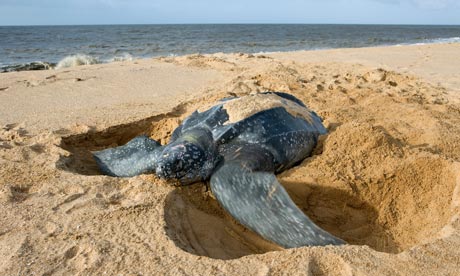
    A leatherback turtle in Surinam

    The leatherback turtle is endangered – but scientific reports expose worrying signs of mass extinctions among other wildlife species. Photograph: Frans Lemmens/Getty Images


    Earth is experiencing its “sixth great extinction event” with disease and human activity taking a devastating toll on vulnerable species, according to a major review by conservationists.


    Much of the southern hemisphere is suffering particularly badly, and Australia, New Zealand and neighbouring Pacific islands may become the extinction hot spots of the world, the report warns.


    Ecosystems in Polynesia, Micronesia and Melanesia need urgent and effective conservation policies, or the region’s already poor record on extinctions will worsen significantly.


    Researchers trawled 24,000 published reports to compile information on the native flora and fauna of Australasia and the Pacific islands, which have six of the most biodiverse regions on the planet. Their report identifies six causes driving species to extinction, almost all linked in some way to human activity.


    “Our region has the notorious distinction of having possibly the worst extinction record on Earth,” said Richard Kingsford, an environmental scientist at the University of New South Wales in Sydney and lead author of the report. “We have an amazing natural environment, but so much of it is being destroyed before our eyes. Species are being threatened by habitat loss and degradation, invasive species, climate change, over-exploitation, pollution and wildlife disease.”


    The review, published in the journal Conservation Biology, highlights destruction and degradation of ecosystems as the main threat. In Australia, agriculture has altered or destroyed half of all woodland and forests. Around 70% of the remaining forest has been damaged by logging. Loss of habitats is behind 80% of threatened species, the report claims.


    Invasive animals and plants have devastated native species on many Pacific islands. The Guam Micronesian kingfisher is thought to be extinct in the wild following the introduction of the brown tree snake. The impact of invasive species is often compounded by pollution and burgeoning human populations on the islands, which have outstripped their capacity to deal with waste. Plastics and fishing gear are an ongoing danger.


    The impact of humans on wildlife is likely to increase in Australasia and the Pacific islands. By 2050, the population of Australia is expected to have risen by 35%, and New Zealand by 25%, while Papua New Guinea faces a 76% increase and New Caledonia 49%.


    More than 2,500 invasive plant species have colonised Australia and New Zealand, competing for sunlight and nutrients. Many have been introduced by governments, horticulturists and hunters. In addition, the report says, average temperatures in Australia have increased, in line with climate change predictions, forcing some species towards Antarctica and others to higher, cooler ground.


    The report highlights several studies that point to serious threats from diseases such as avian malaria and the chytrid fungus, linked to declines in frog populations. An infectious facial cancer is spreading rapidly among Tasmanian devils and populations of the world’s largest marsupial predator are believed to have fallen by more than 60% as a result.


    Plants have also fared badly: a root fungus deliberately introduced into Australia has destroyed several species.


    The report sets out a raft of recommendations to slow the decline by introducing laws to limit land clearing, logging and mining; restricting deliberate introduction of invasive species; reducing carbon emissions and pollution; and limiting fisheries. It raises particular concerns about bottom trawling, and the use of cyanide and dynamite, and calls for early-warning systems to pick up diseases in the wild.


    “The burden on the environment is going to get worse unless we are a lot smarter about reducing our footprint,” said Kingsford. “Unless we get this right, future generations will surely be paying more in quality of life and the environment. And our region will continue its terrible reputation of leading the world in the extinction of plants and animals.”


    Dead and buried


    Cretaceous-Tertiary 65m years ago, the dinosaurs were wiped out in a mass extinction that killed nearly a fifth of land vertebrate families, 16% of marine families and nearly half of all marine animals. Thought to have been caused by asteroid impact that created Chicxulub crater in the Yucatan.


    End of Triassic About 200m years ago, lava floods erupting from the central Atlantic are thought to have created lethal global warming, killing off more than a fifth of all marine families and half of marine genera.


    Permian-Triassic The worst mass extinction took place 250m years ago, killing 95% of all species. Experts disagree on the cause.


    Late Devonian About 360m years ago, a fifth of marine families were wiped out, alongside more than half of all marine genera. Cause unknown.


    Ordovician-Silurian About 440m years ago, a quarter of all marine families were wiped out by fluctuating sea levels as glaciers formed and melted. again.

  • CHP Electricity Powers cars 22 Times Farther Than Ethanol

    July 27, 2009

    CHP Electricity Powers Cars 22 Times Farther Than Ethanol!


    Cheap fossil fuel has allowed us to waste the majority of our energy, filling the planet with pollution and waste heat. Our car engines are only 25% efficient and coal power plants are not much better. Corn ethanol is one of the worst wastes of biomass: An acre of corn produces about 330 gallons/year if you cook it using fossil fuel.


    Use the ethanol as a heat source and the net yield drops to 214 gallons/year.  Car gas mileage is 30% lower with ethanol. At 25 miles/gallon we can only drive 25 X 214 = 5350 miles per year on an acre of corn.


    If we take that same acre of corn and burn it to make electricity to charge an electric car, we will be able to drive the car 22 times as far!  About 117,096 miles per year!


    • The energy content of dry corn biomass is about 7000 Btu/lb or 4100 kWh/ton
    • With an 85% efficient CHP plant the net power out is .85 X 4100 = 3485 kWh/ton
    • An acre of corn yields about 8.4 dry tons/yr or 8.4 X 3485 = 29,274 kWh per year
    • The Tesla electric car goes 4 mi/kWh (EPA) 4 X 29,274  =  117,096 miles!      

    We don’t have very many 85% efficient Combined Heat and Power (CHP) biomass power plants in the U.S.  In fact, only 8% of our power plants are CHP plants. But Denmark has 53%, Holland 39% and Finland 38%. CHP plants are extremely efficient with many exceeding 90% efficiency! The secret of CHP is to locate the plant near where heat is needed.  The waste heat from electricity generation is then sold along with the electricity so the only real waste is the heat that escapes into the air or past the heat exchangers in the stack.


    CHP requires a different way of thinking. You must look first for places you can sell heat.  Electricity is easy to distribute but heat is harder so location and sizing of plants must follow the heat demand. Mammoth gigawatt-scale power plants cannot do CHP unless they are built adjacent to a mammoth cement plant, kiln or steel plant. Most mammoth plants today dump about 2/3rds of their power into a stream or ocean just to get rid of it. A horrible waste!


    High-rise buildings, hospitals, industrial parks, shopping centers, apartments, housing tracts and hotels are all excellent candidates for CHP power. Hot water, heat and cooling needs are generally comparable to electric power needs so 50% efficient electrical generators are a perfect fit: The wasted heat from the generator is simply used as heat. Fortunately, the needed technology is appearing just on schedule. Fuel cells can generate electricity with 50-60% efficiency from natural gas or syngas from biomass.  One of the reasons mammoth power plants were built in the past was that only very large turbines were efficient. The other reason was pollution control. Neither reason applies today, as gas and biomass burn clean, particularly in a fuel cell.


    Fortunately, we have a glut of natural gas from new shale bed discoveries. Gas is very convenient in cities, while biomass can generate carbon free power in more rural areas. Switching from coal power to CHP gas power has a massive impact on greenhouse gas emissions. Natural gas produces only 55% as much carbon as coal. CHP plants are three times as efficient (85% vs. 28%) so the resulting emissions are only .33X.55= 18% of a coal plant producing equivalent power! That’s a better improvement than the planned 40% CO2 output of Futuregen and we don’t have to wait decades for it to happen. With 3X better fuel economy, natural gas is way cheaper than coal and we won’t run out of natural gas for a long time.


    Giant power plants are custom designed and take 10 years to build. Smaller, modular CHP plants can be based on standard pre-approved designs with components built on mass-production lines like cars. The capital cost can be much lower than large plants. There are several mass-produced home-sized CHP units coming on the market now based on fuel cells. Honda already shipped 50,000 of their Ecowill units in Japan. These units are 85.5% efficient by using generator-wasted heat to make hot water.


    What we need now are standard CHP generator designs in the 1-MW to 5-MW size that can run on natural gas or biomass. A biomass unit could be used on a farm to heat greenhouses, cold storage, fish ponds or brick production. Burning 2 MW of biomass would produce 1 MW of heat and 1 MW of electricity.  1 MW of electricity is 8,760,000 kilowatt-hours per year, worth about $876,000 per year. The heat is worth about 1/3 as much. Carbon credits and Renewable Energy Credits add to the income.


    To feed a 2-MW gasifier with corn, the farmer would need only about 68 acres of land.  Other, more prolific feedstocks like elephant grass could probably get by with only 23 acres. In Germany they have straw bale gasifiers that simply require the farmer to throw in a new bale periodically. The control microcomputer rings the farmer’s cell phone with a text message whenever a new bale is needed.


    This decentralized free enterprise approach could revolutionize our power structure in short order.  Denmark changed their utility laws in 1990 and within 10 years 45% of ownership of power generation had shifted to consumer owned and municipality-owned CHP plants (25%) and wind turbines (20%). Ironically, ten years is about the time it takes to build one giant nuclear or “clean coal” plant. Distributed power eliminates the need for massive expansion of our power grid to connect old-style monster power plants.  Distributed power also reduces power transmission losses since power is consumed near where it is generated.


    The U.S. is way behind in efficient power generation because our utilities laws encourage massive inefficient power plants. If we can change that legal environment we can unleash a revolution that will dramatically reduce pollution and global warming, create good jobs and reduce our heat and power costs. The problems are political, not technical!

  • Climate change clouds fate of ancient Polish woods

    Climate change clouds fate of ancient Polish woods


    Reuters July 29, 2009, 10:16 am


    BIALOWIEZA, Poland (Reuters) – Europe’s last ancient forest, home to its largest herd of bison, faces an uncertain future because of climate change, but residents worry that tougher conservation efforts will damage the local economy.


    The 150,000-hectare (380,000-acre) Bialowieza Primeval Forest, which straddles the border between Poland and Belarus, is one of the largest unpopulated woodlands remaining in Europe. It has been a UNESCO World Heritage Site since 1979.


    On the Polish side of the border, residents oppose plans to extend the protected zone of this unique habitat, which is under threat from rising temperatures and declining rainfall.


    Encouraged by international conservation agencies, Warsaw wants to enlarge the area’s national park, which occupies less than a fifth of the Polish part of the forest.


    It has offered up to 100 million zlotys (20.6 million pounds) to be shared among the nine communities that would be affected by broader regulations protecting wildlife.


    However, the region is among the poorest in Poland and residents of Bialowieza district (population 2,400) are sceptical, fearing it would discourage investment, cause job losses and reduce the community’s tax revenues.


    “You may think we are fools not willing to take the money,” Mayor Albert Litwinowicz told Reuters. “But it will only go for green investments, while we need roads.”


    Forests occupy more than 80 percent of the Bialowieza administrative district and provide a significant part of the its income, thanks to government cash.


    Revenues come mostly from woodland and other subsidies from the central government, plus grants and other state aid, Litwinowicz said.


    Income would be halved if the whole area were incorporated into the national park and most of about 50 forestry workers, responsible for maintaining the woodland as well as for cutting the timber, could be laid off, he added.


    Bialowieza district would be fully incorporated into the national park under the current proposal.


    “Building anything in the middle of a national park with strict conservation rules would be almost impossible and we want to develop better transport … and other infrastructure,” Litwinowicz said.


    SIGNS OF CLIMATE CHANGE


    There are no major industrial centres nearby. Every year 150,000 people visit Bialowieza but tourism accounts for only a 10th of the district’s revenue.


    However, unemployment in Bialowieza is almost non-existent, partly because a quarter of the population has left since 1990, moving to cities or, like many other people from eastern Poland, seeking better jobs in wealthier Western Europe.


    Signs of climate change that could threaten the forest have become more evident.


    “The average annual temperature has risen by 0.8 degrees Celsius over past 50 years. This is a lot for a primeval forest,” Elzbieta Malzahn of the Forest Research Institute told Reuters. “That’s enough time to call it a change to climate.


    “There is less rain in the summer, winters are milder and end sooner, prompting vegetation to start earlier.”


    National park officials say the level of ground water has fallen by 50 cm (20 inches) in the past three decades.


    “Spruce roots are very shallow and they just run out of water. We are observing falling number of spruce,” said park employee Mateusz Szymura.


    Bialowieza is home to 800 wild European bison, the continent’s heaviest land animals weighing up to 1 tonne each and standing up to two metres (more than six feet) high.


    So far, the changes have not endangered the bison because mammals adapt easily to a changing environment, scientists say.


    They say Bialowieza had undergone many changes over the centuries and the forest had adjusted to new conditions.


    “The problem, is, however, if the changes we are now causing are too fast and too unpredictable and leave nature little chance to catch up,” Malzahn said.


    BORDER FENCE


    Political arguments between Belarus and Poland have stifled joint efforts to safeguard the forest. Since Poland joined the European Union in 2004, the bloc’s eastern border runs through the forest, marked by a fence built by Belarus years ago.


    The barrier prevents bison from each side from intermingling.


    However, they remain genetically similar since the species was regenerated using just a few animals — and only two males — that survived in a Polish zoo after they had vanished from the wild in the 1920s as a result of hunting and poaching.


    To extend the protected area on the Polish side, the government needs the approval of local authorities and says the scheme would cost between 1.5 million and 3 million zlotys.


    “For years local people have opposed plans to enlarge the park and we are now presenting a programme that shows they can go on operating with an enlarged park,” Deputy Environment Minister, Janusz Zaleski, told Reuters.


    “We also hope this money would create jobs in the region and help improve it.”


    Mayor Litwinowicz did not seem convinced. He said he was considering holding a referendum among residents on the enlargement scheme.


    “If where we live is so unique for the whole of Europe, why shouldn’t the residents benefit rather than suffer?,” he said. “Personally, I am against it, but the people will decide.”


    (Editing by Andrew Dobbie)

  • Wind Power: the silent majority must speak out, says Miliband

    Wind power: the silent majority must speak out, says Miliband


    To tackle climate change we must end public apathy – and widen our leaders’ focus beyond their pet policies.


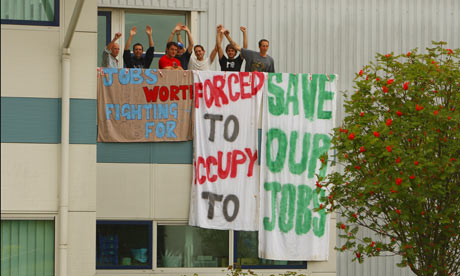
    Vestas Wind Systems turbine workers stage jobs fight sit-in, Newport, Isle of Wight

    Staff members stage a sit-in the Vestas Wind Systems factory in Newport, Isle of Wight. Photograph: Chris Ison/PA


    Last night I went to hear Ed Miliband, the secretary of state for energy and climate change, speak in Oxford Town Hall. About 800 people turned up, a lot of them determined to challenge him.


    It started badly. His spin doctor tried to get the organisers to take down the polite banners people were holding in support of the workers at the Vestas wind turbine factory on the Isle of Wight. I asked her why she wanted them removed. She replied that it was a public meeting, not a protest. Why couldn’t it be both?


    “It’s just my opinion; I don’t like them.”


    The banners stayed up.


    Though I didn’t agree with everything he said, and though he’s no orator, Miliband was good. He never tried to duck a question. He listened, answered directly, never insulted the intelligence of the audience: he appeared, in other words, to be the opposite of a New Labour politician. If the government were composed of people like him and Hilary Benn, I would vote Labour again. But what poor company they keep!


    He began by responding to one of the Vestas workers (there were several in the hall). He said that he had asked Vestas whether its decision to move its plant to the US “was about money. They said no. Would [government] money make a difference? No.” It was about the credit crunch and the planning system. He was trying to address both problems: by putting £1bn into wind developments and by changing the planning laws.


    “But the biggest thing we can do for people like David [the Vestas worker] and his colleagues is to change people’s minds about onshore wind. … There’s a big, big persuasion job we’ll have to do on people: that the biggest threat to the countryside is not the wind turbines; it’s climate change. … The truth is that a vocal minority has stopped them going ahead and the silent majority has not done enough to ensure they go ahead. We’re doing all the government can do, I hope people will also do their bit.” (Well we tried, but his spin doctor wanted us to take down the banners.)


    This was his major theme. He ended his talk by saying “We don’t have enough of a global campaign around Copenhagen [climate talks this December] at the moment. I hope you will take part in it.” It’s not the first time that Miliband has pressed people to give the government a harder time, and he’s right: we can’t sit on our butts and expect polticians to do more than the public is demanding.


    His responses to the questions were interesting, though they betrayed the strangely narrow view that cabinet ministers – so focused on the complexities of immediate policy – now seem obliged to possess. He was asked, for example, about how the UK will implement the findings of IAASTD‘s report that relate to global warming. This is the vast global assessment of agricultural science which was overseen by a British civil servant and published last year. It was roughly the equivalent of the Intergovernmental Panel on Climate Change’s assessment reports: it is one of the most important environmental documents ever published. But Miliband had no idea what she was talking about. Agriculture belongs to another department, so even though it’s responsible for a substantial portion of our greenhouse gases, he doesn’t have to know anything about it.


    There was a similar gap when I asked him about the stonking contradiction at the heart of his new, low-carbon transition paper. There’s plenty of good in it, and for the first time it provides a clear road map for achieving the government’s inadequate targets for cutting emissions. But while it spells out the means by which we might minimise our consumption of fossil fuels, it also demands that we maximise their production. This is what it says:


    “The government’s approach is to maximise the economic exploitation of the UK’s own oil reserves, to work with other countries to ensure a well-functioning global oil market, and to improve UK fuel infrastructure.”


    and


    “[We will] maximise the economic production of oil and gas from the North Sea”.


    The government has the same policy for coal. The 2007 Energy White paper says that it intends to “maximise economic recovery of the oil and gas from the UK Continental Shelf (UKCS) and from remaining coal reserves.” (page 107).


    He appeared to be unaware of the coal policy, denying it while I was asking the question. Has the policy changed? If so, when was this announced? And why are opencast coal mines still being given planning permission? Or could his civil servants have shielded him so effectively from the government’s dodgier energy policies that he has never been exposed to this contradiction before?


    In any case, he decided to concentrate on gas.


    “The less we produce from the North Sea, the more we will import. Gas is a transition technology and it’s a long transition. I agree that we have to wean ourselves off fossil fuels, but it is a transition and gas is part of the transition.”


    Maximising production doesn’t look like weaning ourselves off it; nor does his explanation make sense of the government’s policy on coal and oil. This is one I won’t drop.


    I agreed with what he said about population, however.


    “There’s no question that population growth is part of the reason why we have growth in carbon emissions… but I’m not sure that there’s an easy or necessarily desirable solution once you’ve stated that fact.”


    Here’s what he said in response to a question about flying:


    “Domestic flights have got to become more expensive. There are perverse incentives. We have argued strongly for aviation to be included in the European Emissions Trading Scheme. Personally I think aviation is undertaxed. We are the only country in the world to have said we will keep carbon levels from aviation to current levels by 2050. But here’s a difficult thing about aviation: we have an 80% reduction target. If we cut aviation emissions by that by 2050, we’d go back to 1974 levels of flying. But the world is getting closer together, not further apartt… we will have to do a lot more in other areas if we’re going to carry on flying.”


    What this means of course is that we’ll have to make cuts of greater than 80% in emissions from heating, electricity, other forms of transport and farming in order to accommodate current levels of flying. Where’s the vision here? Why can’t the government announce a study, for example, on how it might best phase out business flights, replacing them with enhanced video conferencing and all the other brilliant virtual technologies we now enjoy?


    The other thing that struck me about the meeting was the great enthusiasm for wind farms. The Vestas people were cheered to the rafters, and even the government’s draconian new planning laws were popular. On this issue Miliband is right: the surveys show that there really is a silent majority in favour of onshore wind, but we’ve failed to mobilise in its defence.


    www.monbiot.com

  • A force of nature: our influential Anthropocene period.


    A force of nature: our influential Anthropocene period


    What humanity does has important consequences, so we must manage our global life-support system


    We live in epoch-making times. I mean this literally, rather than as a tool to dramatise the global economic crisis or latest political scandal. An epoch describes a geological time period. The end of the last glaciation, some 11,000 years ago, saw the transition from the cool Pleistocene to the warmer Holocene. This relatively stable epoch saw humans turn to agriculture and our population rise considerably. Now geologists, ecologists and climate scientists, myself included, are reporting we have entered a new and much less stable geological epoch: the Anthropocene.


    Just as changes to the Earth’s orbit, volcanic eruptions and asteroid impacts in the distant past have set the world on radically new courses, humanity itself has now become a collective force of nature, with far-reaching consequences. But what does this startling discovery – that humanity has become a globally significant geophysical force – mean for society, solving environmental problems, and perhaps more profoundly, how we see ourselves?


    People have always had an impact on the environment. The difference now is that rather than influencing only local environments in limited ways, humanity is having planet-wide impacts on the Earth’s workings. The best known global change is the rise in atmospheric carbon dioxide and resulting climatic changes. Some of the CO2 in the atmosphere dissolves into the oceans, making them more acid, which is degrading marine ecosystems. To put this in context, the oceans are more acidic today that they have been for at least 800 millenia. The atmospheric CO2 increase has also boosted plant growth in some places, changing the world’s forests and grasslands. In short, the global cycling of carbon has been significantly altered.


    The impacts of human activity on the other great global chemical cycles are similarly profound. To increase crop yields, more nitrogen is added to ecosystems through fertiliser use, than is added by all natural processes combined. But fertiliser run-off leads to ‘dead-zones’ of low-oxygen water that currently affect 245,000 sq km of the world’s ocean.


    Furthermore, scientists estimate that each year humans move more rock, sediment and soil than all natural processes , that at least three times as much fresh water is held in reservoirs than in rivers, and at least a third of all land has been appropriated for human use.


    The heavy hand of humanity reaches into the living world too. Each year, we extract 7m tonnes of bushmeat from tropical forests, 95m tonnes of fish from the oceans, and raze 80,000 sq km of forest. The result: we are at the leading edge of the sixth mass extinction in Earth’s history. Extinction rates today are at least 100 times higher than ‘background’ rates. Previous extinctions, such as that which wiped out the dinosaurs 65m years ago, are joined by a human-induced loss of life.


    Many of these trends look set to continue or accelerate, with potentially dire consequences. Recent events may provide a taste of what’s to come: in 2007 and 2008 food protests erupted across three continents, in part because of the switch of some land from food to biofuel production. In the same period, about 1% of humanity had their homes damaged or destroyed by extreme weather events. Interlinked feedback loops amongst political, economic and environmental spheres could lead to grave problems without foresight and planning.


    The big question in the Anthropocene is: can we learn to manage our own global life-support system and avoid crossing dangerous thresholds? The answer so far, if progress in 14 years of UN climate change talks is a measure, is probably no.


    But perhaps there are grounds for cautious optimism. The word “Anthropocene”, coined by Nobel prize winner Paul Crutzen, has greatly assisted researchers in understanding how the Earth and human society function together. Perhaps pushing the concept into wider usage would enable politicians, business leaders, social movements and NGO’s to similarly benefit from thinking along integrated, quantitative and evidence-based lines.


    Of course, scientific knowledge itself cannot set goals for society. Choosing how to manage our life support system is within the realm of politics. Scientists can identify the likely (and unlikely) outcomes of choices we face. For instance, humanity’s impact on the environment has been greatest over the last 50 years. In this time human numbers have doubled and the global economy increased more than fifteen-fold. Our socio-economic system and the fossil fuels that power it lie at the heart of understanding how humans have become a force of nature, and therefore how to alter our future impacts.


    Big ideas from science are often discomfiting. The Anthropocene is no exception. There is a temptation to see humanity as “bad” for despoiling the environment, or to deny the evidence through fear of acknowledging the need for profound changes. I see it as an update on how we view our place in the universe. First, Copernicus discovered that the Earth revolves around the sun, and humanity is not at the centre of the universe. Then, Darwin established that we are not even at the heart of life on Earth. Now Crutzen has reversed this trend by naming a new human-dominated geological epoch. . The future direction of the only place in the universe where we know life exists is in our hands. Suddenly, after almost 500 years, humanity is centre stage again. Let’s not blow it.