Author: admin

  • Wind farms on the bog of Ireland could provide UK electricity

    Wind farms on the bog of Ireland could provide UK electricity

    Company behind the £5bn proposals hopes to build more than 700 turbines and transport power in cables beneath Irish Sea

    Wind farms on the bog of Ireland could provide UK electricity

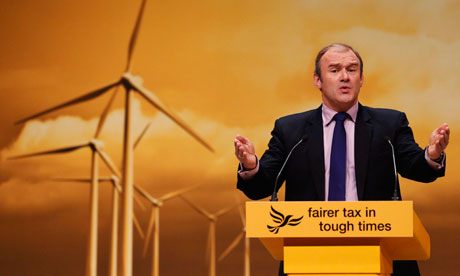
    Ed Davey, the secretary of state for energy and climate change, is considering the proposals. Photograph: Luke Macgregor/Reuters

    Hundreds of wind farms could be built on the great bog of Ireland to generate electricity exclusively for the UK’s national grid under plans being considered by ministers.

    Element Power, the company behind the £5 billion proposals, hopes to build more than 700 turbines and transport power through two dedicated undersea cables across the Irish sea.

    Company executives met Ed Davey, the cabinet minister in charge of climate change, and civil servants to discuss the plans this summer.

    The plans have been discussed among the coalition and appear in theory to appease both political parties. Liberal Democrats wish for an increase in green energy but have concerns over the high price of building wind farms offshore. Conservative ministers are worried about the backlash in some rural communities as wind turbines have become more common in Britain.

    To proceed, the Irish project would need access to the subsidies currently given to UK wind power, but the difficulty for ministers in setting a precedent – which could mean any foreign energy projects can get UK subsidies – means the project face major challenges.

    Mike O’Neill, the president of Element Power, said the project would solve a number of thorny problems for the British government. “Our experience is that it is easier to get planning permission in the Republic of Ireland, if you do it in a sensible and sensitive way,” he said.

    Britain’s electricity suppliers are obliged to provide an increasing percentage of their electricity from renewable sources, to help the UK meet its legally binding targets for cutting the carbon emissions that drive climate change.

    Costs for onshore wind power are currently estimated to be half that of offshore wind power. Element Power claims its project, entitled Greenwire, will provide electricity at two-thirds of the cost of building a big offshore wind farm, which will reduce the amount that needs to be charged to the UK consumer by £7 billion over 15 years.

    The company says its proposed investment would be €8 billion – two-thirds for the wind turbines and a third for the two big sub-sea cables that would take the electricity to the UK. It says the project could provide 3GW of electricity capacity and employ thousands of workers.

    O’Neill said the project could start generating power from 2018, if the subsidy obstacle could be overcome. Another hold-up were the delays in the government setting the actual level of the subsidy, so the project can proceed. O’Neill said energy company EDF was getting special treatment from the government over the price that will be guaranteed for nuclear power and that Greenwire should get the same.

    There are more than 1,100 turbines in operation in Ireland, mostly at 176 onshore windfarms with a further seven offshore. Element Power hopes to expand in Meath, Westmeath, Kildare, Laois and Offaly but says that its project will not prevent the Republic of Ireland meeting its own carbon target of a 40% cut by 2020.

    Coalition tensions over green issues have increased since September’s reshuffle. Owen Paterson, who has campaigned against wind farms in his own constituency, is believed to have clashed with Davey, the Lib Dem secretary of state for energy and climate change.

    Davey appeared to see off Conservative ministers’ attempts to slash the subsidies for onshore wind farms, instead sticking with a smaller cut previously agreed with the industry.

    The row began after more than 100 Conservative backbenchers wrote to the prime minister earlier this year demanding he “dramatically cut” the £400m in annual subsidies paid to onshore wind developers.

    The energy secretary said the new changes to subsidies for renewables, which also include reducing offshore wind payments and more than doubling support for tidal, stream and wave power, would boost clean electricity while curbing the cost to consumers.

  • AVAAZ One woman steals the hope of millions

    One woman steals the hope of millions

    Inbox
    x

    Jamie Choi – Avaaz.org
    8:26 AM (19 minutes ago)

    to me

    Dear friends,

    One powerful woman is threatening the future of millions of others — using her power as the Prime Minister of Bangladesh to destroy the one bank has helped more women out of poverty than any other. But if we stand together now we can save it and end this attack on the poor:

    One powerful woman is threatening the future of millions of others. But if we all weigh in right now we can rescue the people-powered bank that’s an inspiration to the world.

    The Grameen Bank has enabled millions of women to lift themselves out of poverty by giving them tiny loans to buy animals or equipment to start earning money. But Bangladesh’s jealous Prime Minister, Sheikh Hasina, has fired its Nobel Prize winning founder Muhammad Yunus and now wants to seize control of the bank, all to silence a political rival. This takeover could break the bank and destroy millions of people’s hope.

    Hasina has been mired in a series of scandals at home — if we can add a giant global backlash to her list of worries, we can force her to back down. When 1 million of us come together, Avaaz will kickoff a media firestorm in Bangladesh and around the world, shaming her into ending this vengeful attack. Sign the urgent petition now:

    http://www.avaaz.org/en/save_the_world_best_bank/?bhPqncb&v=18483

    The Grameen Bank is very different from the big giants of Wall Street. They loan money to 8.4 million people, mostly women from the poorest villages in Bangladesh, so they can buy assets like cows or sewing machines and start earning money. These women borrowers also run the bank — they are not only the majority shareholders, 9 out of 12 seats on the board are held by village women in saris.

    But PM Hasina wants to end Grameen Bank as we know it. She first stripped Dr. Yunus’ position as the bank’s managing director, and now just passed a law that would allow the government to bypass the people-elected board and handpick his successor. And they fear that the government may use its newfound power to manipulate millions of members for votes in next year’s election.

    Grameen’s downfall would be a disaster for Bangladesh and the larger microcredit movement that is working to improve lives across the globe. Sign the urgent petition to PM Hasina, and together, let’s save the bank that’s revolutionizing the war on poverty:

    http://www.avaaz.org/en/save_the_world_best_bank/?bhPqncb&v=18483

    Avaaz members have come together time and time again to fight grave injustice and corruption. Over 2 million people rallied to pass the strongest anti-corruption law in Brazilian history, and half a million members successfully helped freeze Egyptian dictator Hosni Mubarak’s stolen assets when he tried to flee Egypt. It’s time for people power to shine in Bangladesh…. and win back the world’s best bank.

    With hope and determination,

    Jamie, Kya, Caroline, Meredith, Emma, Ricken, Maria-Paz, and the rest of the Avaaz team

    Sources:

    Women Hurting Women (New York Times)
    http://www.nytimes.com/2012/09/30/opinion/sunday/kristof-women-hurting-women.html?_r=0

    George Shultz, Madeleine Albright Join Growing Groundswell of Concern over Possible Government Takeover of Grameen Bank (MoneyLife)
    http://www.moneylife.in/business-wire-news/george-shultz-madeleine-albright-join-growing-groundswell-of-concern-over-possible-government-takeover-of-grameen-bank/32559.html

    Bangladeshi Politics and the Grameen Bank’s Uncertain Future (Council on Foreign Relations)
    http://blogs.cfr.org/coleman/2012/09/05/bangladeshi-politics-and-the-grameen-banks-uncertain-future/

    Microfinance Pioneer Grameen Bank Weakened by Bangladeshi Government Meddling (Huffington Post)
    http://www.huffingtonpost.com/eliot-daley/microfinance-pioneer-grameen-bank_b_1793025.html

    US reiterates concern for GB (The Financial Express)
    http://www.thefinancialexpress-bd.com/more.php?news_id=142492&date=2012-09-07

    An Attack on Grameen Bank, and the Cause of Women (Opinionator — NY Times)
    http://opinionator.blogs.nytimes.com/2012/08/22/an-attack-on-grameen-bank-and-the-cause-of-women/

    Support the Avaaz Community!
    We’re entirely funded by donations and receive no money from governments or corporations. Our dedicated team ensures even the smallest contributions go a long way.


    Avaaz.org is a 16-million-person global campaign network
    that works to ensure that the views and values of the world’s people shape global decision-making. (“Avaaz” means “voice” or “song” in many languages.) Avaaz members live in every nation of the world; our team is spread across 19 countries on 6 continents and operates in 14 languages. Learn about some of Avaaz’s biggest campaigns here, or follow us on Facebook or Twitter.

    You are getting this message because you signed “Save our dying planet!” on 2011-12-08 using the email address nevilleg729@gmail.com.
    To ensure that Avaaz messages reach your inbox, please add avaaz@avaaz.org to your address book. To change your email address, language settings, or other personal information, https://secure.avaaz.org/act/index.php?r=profile&user=6be3e9aa63582c9b1397464fcc49baa9&lang=en, or simply go here to unsubscribe.

    To contact Avaaz, please do not reply to this email. Instead, write to us at www.avaaz.org/en/contact or call us at +1-888-922-8229 (US).

  • FOLLOW US TO THE FIGHT (OXFAM)

    Arms Trade Treaty
    Forward to a Friend
    Can’t read this email?
    Arms Trade Treaty Follow us on Twitter Join us on Facebook
    Follow us to the fight
    Dear Neville,
    Thanks to supporters like you, after nearly ten years of campaigning, a global Arms Trade Treaty (ATT) came close to being agreed in July.

    And today sees the next step forward in the campaign, as world governments meet again at the United Nations for the UN General Assembly. Keep updated on the treaty.

    Governments will be putting forward a resolution to set a further ATT conference in March 2013.  This is good news and shows the commitment to continue working for a treaty.

    However, we think it’s important that they don’t hold this new conference under the same veto rule as they did in July. We’re concerned that this would make it harder to close the loopholes in the current Treaty text, and could again lead to the Treaty being blocked by a small group of countries.

    The ATT is too important to be blocked, so the new conference should not be on the same veto rule as July.

    Loopholes in the current draft must also be closed to ensure we get a Treaty that’s bulletproof and will save lives and livelihoods.

    Control Arms Campaigners outside the UN in a graveyard with headstones that read “2,000 people killed by arms every day”.

    We’ll be at the General Assembly throughout October, pushing governments to work toward a strong treaty. We’ll let you know if we need your support during the month ahead – we couldn’t have succeeded this far without you.

    Join us on Facebook.
    Follow us on Twitter
    .

    Best wishes,

    Anna MacDonald
    Oxfam Head of Arms Control
    Oxfam What we do Get involved Shop Donate
    Join Oxfam online Facebook Twitter YouTube Flickr Google+
    Privacy Policy |  Unsubscribe |  Add us to your address book

    Visit us at www.oxfam.org.uk

    Questions or feedback?

    Email us at campaigning@oxfam.org.uk

    Oxfam
    Oxfam is a registered charity in England and Wales (no 202918) and Scotland (SC039042) and a company limited by guarantee registered in England No 612172 at Oxfam House, John Smith Drive, Cowley, Oxford OX4 2JY.
    Oxfam GB is a member of Oxfam International.

  • 6 island nations threatened by climate change

    6 island nations threatened by climate change
    Mother Nature Network
    Global sea levels are rising and the world’s land ice is disappearing. The Environmental Protection Agency notes that sea levels have risen 6 to 8 inches in the past 100 years, while NASA points out that Antarctica has been losing more than 100 cubic
    See all stories on this topic »

  • Exclusive: Julian Assange speaks directly to GetUp members

    Exclusive: Julian Assange speaks directly to GetUp members

    Inbox
    x

    GetUp!
    11:07 AM (40 minutes ago)

    to me

    Dear NEVILLE,

    We just returned from London where we shot an exclusive interview with Julian Assange — his first Australian interview since he sought asylum in the Ecuadorian embassy.

    Many GetUp members have been emailing with questions they wanted Mr Assange to answer, so we put your questions to him directly.

    Click below to be the first to see this exclusive interview:

    Click here to see the exclusive video

    www.getup.org.au/free-speech

    GetUp will always stand up for the rights of a democratic, free society; including freedom of speech, freedom of information and the right to a fair trial. That’s why we campaigned to bring David Hicks home after five years of detention and allegations of torture inside Guantanamo Bay. That’s why when members of Congress and the US media started labelling Assange a terrorist and calling for blood, more than 90,000 GetUp members chipped in to publish a full-page statement in The New York Times, headlined: “Wikileaks are not terrorists.”

    Now Julian Assange is wanted for questioning concerning an alleged sexual assault in Sweden – allegations he must address, but can’t. Instead, he’s holed up inside the Ecuadorian embassy in the UK. If he steps out the door he fears he’ll simply be arrested and handed over to the US, where he faces life in prison and even the death penalty.

    Wikileaks is a media organisation, but Mr Assange now faces the prospect of military prison in the United States for publishing information governments didn’t want heard. When our Government fails to take a stand for Mr Assange, they’re actually failing to fight for the freedom of our press.

    Watch the exclusive interview, and add your name to our new petition.

    www.getup.org.au/free-speech

    Mr Assange’s fears that Sweden will hand him over to the US are not unfounded. Media reports have revealed that the US have already made plans to charge Mr Assange with espionage, in a military court — the same military system that has now detained Bradley Manning without charge for over 800 days.

    Swedish authorities could simply interview Mr Assange where he is, but forcing him to go back to Sweden means he will be incarcerated instantly. He could then could be extradited under a bilateral agreement to the US, before he’s had a chance to even deal with the allegations of sexual assault. In this interview, Mr Assange says he wants to defend himself in relation to the Swedish allegations.

    Whatever happens – we know where we stand. We campaign not to be the judge of someone’s innocence or guilt, but to defend the bedrock laws and values that underpin freedom and justice for everyone. These are the very rights that separate us from petty dictatorships around the world – where the act of publishing information the government doesn’t want seen gets you thrown into jail, or worse.

    When we first published our NY Times statement, we promised that we would “continue to fight for free speech, a free press and freedom of information in a global, modern and interconnected world“; and that we would, “continue to stand up for the rule of law, due process and the democratic values that are often threatened in times of uncertainty.

    That hasn’t changed. Thank you for being part of this: www.getup.org.au/free-speech.

    In hope,
    the GetUp team.


    GetUp is an independent, not-for-profit community campaigning group. We use new technology to empower Australians to have their say on important national issues. We receive no political party or government funding, and every campaign we run is entirely supported by voluntary donations. If you’d like to contribute to help fund GetUp’s work, please donate now! If you have trouble with any links in this email, please go directly to www.getup.org.au. To unsubscribe from GetUp, please click here. Authorised by Sam Mclean, Level 2, 104 Commonwealth Street, Surry Hills NSW 2010.

  • Warm North Atlantic ocean causing UK’s wet summers, study shows

    Warm North Atlantic ocean causing UK’s wet summers, study shows

    Data points to link between warmer oceans and the change in weather, and the possibility of a rapid reversal to drier climate

    Wet summer

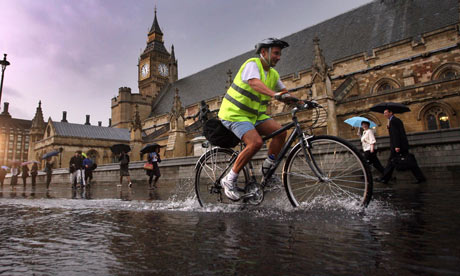
    Wet summers are becoming common but they could rapidly switch back to dry pattern, study says. Photograph: Lewis Whyld/AP

    The UK’s dismal recent summers can be blamed on a substantial warming of the North Atlantic ocean in the late 1990s, according to new scientific research. The shift has resulted in rain-soaked weather systems being driven into northern Europe, increasing summer rainfall by about a third.

    The pattern is likely to revert to drier summers and may do so suddenly, according to Professor Rowan Sutton, at the University of Reading, who led the work. “I can’t guarantee it but it is likely,” he said. “However we are not sure of the timing, which is what every one wants to know – but we are working on this now.” Sutton added that when the switch occurs, it could happen as rapidly as over two to three years.

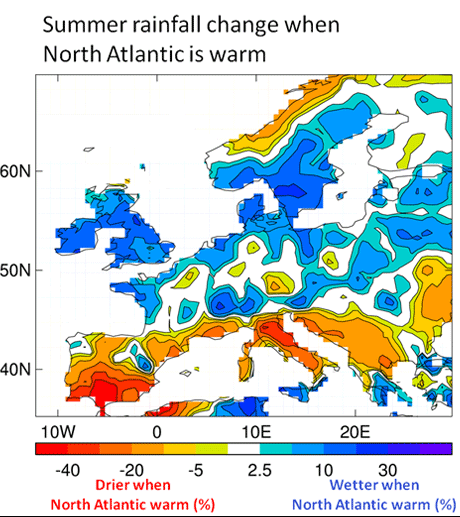
    The summer of 2012 was the wettest in a century and follows a series of above average years for summer rainfall. Sutton’s team, who published their study in Nature Geoscience, examined over a century of data and found that the temperature of the North Atlantic remains above or below the long term average for decades at a time. The periods of warmer temperature, the latest of which started in the late 1990s, were found to correlate with wet summers in Northern Europe and hotter, drier summers in the Mediterranean. The team used existing detailed climate simulations to demonstrate a causal link between the warmer oceans and the change in the weather.

    Sutton said these shifts have been occurring for many hundreds of years, but that global warming was also having an impact. “It is not now purely natural or purely a manifestation of human-induced climate change,” he said. “There is lot of evidence to show that climate change is changing the timing and amplitude of the temperature changes.” For example, he said, the cooler period from the 1960s to the 1980s occurred when soot and other pollution from dirty power stations cooled the planet.

    The previous North Atlantic warm phase, which ran from the 1930s to the 1950s, also saw a run of wet summers in the UK, including severe flooding in August 1948, which closed the east coast mainline railway for three months, and the Lynmouth floods in August 1952 in which 34 people died.

    The warming of the North Atlantic has been one reason for the record low in Arctic sea ice this summer. It is possible that the shrinking of the sea ice is also contributing to poor summers in the UK, as the exposed ocean waters warm in the sun. However, Sutton said that this remains to be proven by scientific work that is now underway.

    Map - Europe rainfall Map: Europe rainfall

    The warm and cold swings in the North Atlantic affect temperatures, rain and winds across Europe, Africa and North and South America, and previous research indicates they are related to changes in ocean circulation. Other research at Reading University has suggested that it may in future be possible to predict the warming and cooling cycles some years ahead.