Author: admin

  • Alcoa reduces emissions and saves money

    Alcoas QUASAR Global Program Manager Dr. Dennis Mason said, Controlling production in an alumina refinery is a difficult task. Productivity and safety rely on reliable, real-time, process information, so that the alumina refining process and equipment can be monitored, maintained, and adjusted to get the maximum benefit.

    As a global leader in alumina production, we realized to continue to succeed in the global commodity business, we must have the ability to produce alumina safely at the lowest possible cost.

    In addition to our operating practices, we recognized that automation, process control and instrumentation were going to be some of the key business drivers to give us a significant competitive advantage, and thats how QUASAR was born in 2001.

    Alcoa World Alumina decided to take process control at its seven refineries around the world (three in Western Australia, three in Central and South America and one in Europe) to a new level aiming to implement the same system in each plant, with full integration to enable global knowledge sharing, remote monitoring, 24/7 support, and best practice benchmarking capabilities.

    By working with Honeywell, a suite of advanced process control applications and newly developed instrumentation were used on top of a revamped infrastructure layer to deliver several benefits. Among them, reduced alumina process variability and the ability to operate the refineries closer to their practical limits, all while using less energy and raw materials. This, in turn, increased production rates, improved process efficiencies, and reduced waste and emissions at the refineries.

    The benefits for Alcoa at the Western Australian sites alone:

    • have exceeded A$8 million per year in savings, including reductions in green house gases and raw material usage;
    • contributed around A$40 million to the local economy through implementation contracts;
    • and, have shown that automation, control and instrumentation, and the advanced control applications have not only reduced environmental incidents but have allowed safer operation of the plants and quicker stabilization from adverse plant events.

    Dr. Mason said, Shared leadership, resources, engineering ingenuity and technology have worked together to deliver the most significant step change in the way process control technology is managed.

    The projects success demonstrates what is possible with innovative design, sound engineering practices, strong project management and well developed implementation.

    With all the hard work undertaken by so many people around the world, it is fantastic to be recognized alongside Honeywell by Engineers Australia for this project.

    Dave Olney, Vice President, Technology, Alcoa of Australia concluded, The QUASAR program has been a significant and very successful undertaking. It has delivered major benefits to our business, largely through capturing and leveraging the creative talent of Honeywell and Alcoa in process control automation across Alcoas refining system.

    About Alcoa

    Alcoa (NYSE:AA) is the world leader in the production and management of primary aluminum, fabricated aluminum and alumina combined, through its active and growing participation in all major aspects of the industry. Alcoa serves the aerospace, automotive, packaging, building and construction, commercial transportation and industrial markets, bringing design, engineering, production and other capabilities of Alcoa’s businesses to customers. In addition to aluminum products and components including flat-rolled products, hard alloy extrusions, and forgings, Alcoa also markets Alcoa® wheels, fastening systems, precision and investment castings, and building systems. The Company has 97,000 employees in 34 countries and has been named one of the top most sustainable corporations in the world at the World Economic Forum in Davos, Switzerland. More information can be found at www.alcoa.com


  • Energy emissions boom while farmers pay the cost

    A new government report released this week proves it is only thanks to bans on land clearing that Australia will meet its greenhouse gas emissions targets under the Kyoto Protocol while the energy, transport and industrial sectors have recorded mammoth increases in their emissions since 1990.

    Minister for Climate Change, Penny Wong, this week released an inventory of Australia’s greenhouse gas emissions between 1990 and 2006 which shows without those changes to land use, the Kyoto target would have been considerably overshot.

    The report shows emissions from the agriculture sector increased by 3.8pc between 1990 and 2006, and lists the farm sector as the third biggest emitter after the combined energy sector and industrial processes.

    Emissions from the energy sector had increased by 40pc in those 16 years, according to the report, while industrial emissions were up by 17pc.

    But it’s the land use emissions which have been slashed in by more than half, down 53.9pc since 1990 and due largely to State restrictions on land clearing, Senator Wong said.

    “It is the case that land use has been a significant factor in reducing Australia’s greenhouse gas emissions,” Senator Wong said.

    “The fact we have had land clearing regulations introduced and effected at State levels has had substantial benefit in terms of Australia’s emissions profile.

    “But it is the case that aspect of abatement, that aspect of a reduction in emissions, is going to be less available to us in the future, that’s why we have to be aware we have work to do as a nation to reduce our emissions into the future.”

    Agriculture accounts for about 15.6pc of net national emissions, and the ag sector is the dominant source of methane and nitrous oxide emissions, according to the report.

    Livestock emissions were 69.7pc of the sector’s emissions in 2006 and 10.9pc of national emissions, despite declining by 4.7pc during the report period.

    Emissions from rice cultivation, agricultural soils, prescribed burns and burning of agricultural residues contribute to the rest of the agricultural emissions.

    With the Government’s proposed carbon emissions trading scheme a hot topic in Canberra this week, Senator Wong said the report confirmed the need for action on emissions, despite claims a scheme which included big emitters like transport could push up petrol prices by as much as 50 per cent.

    Economist, Professor Ross Garnaut, will release a draft report on an emissions trading scheme for Australia at the end of next week, and later in July the Government will release a green paper outlining options for the scheme, which it wants up and running by 2010.

    “While still on track to meet our Kyoto target, it’s clear we have a lot to do when it comes to reducing our greenhouse gas emissions,” Senator Wong said.

    “We know climate change is happening. The economically responsible thing to do with it is to introduce a climate emissions scheme.”

    She said decisions regarding coverage and what sectors are in and out of the scheme would be made in coming months.

    “We understand as a government this is a complex, economic reform. It is a necessary economic reform.

    “Climate change is happening, we need to deal with it…and the most responsible way of dealing with it is by introducing a sensible crafted emissions trading scheme.

    Senator Wong said she and Minister for Agriculture, Tony Burke, have had several discussions with farm sector leaders about their inclusion in or exclusion from the scheme.

    “There are complex issues associated with agriculture and we will continue to consult with them,” Senator Wong said.

  • Government may exclude fuel from carbon scheme

    Mr Albanese has signalled transport must be included. But there are reports today that the Rudd Government is also considering measures to protect motorists from more petrol pain with the introduction of a price on carbon under any ETS.

    Mr Swan told Parliament today that the Government would make its own decisions on the final details of any ETS.

    “We don’t necessarily have to agree with every recommendation that is put forward by Professor Garnaut,” Mr Swan said. “We will take our decision in the national interest.”

    Queensland’s The Courier Mail newspaper reported today Labor sources had confirmed that ahead of an options paper due mid-July, cabinet had met on the issue to examine various schemes and commission work on a number of alternatives.

    Under one option being considered, the ETS would operate with a low start-up price for carbon and not include fuel transport until at least 2012.

    Mr Albanese told Parliament the transport sector, which includes fuel, could not be left out of the scheme and Climate Change Minister Penny Wong also said the broader the scheme the better.

    Invited to confirm the newspaper reports today in Parliament, Mr Albanese said he had no intention of discussing cabinet deliberations.

    “What I won’t do is discuss cabinet meetings. But my position on climate change is very clear … we will take action as we did when the first action of the Rudd government was to ratify the Kyoto protocol. We will do this to address the 12 years of inaction and denial of those opposite,” he said.

    The Australian reported today that Coalition frontbenchers are pushing for a delay in the introduction of emissions trading in a move that threatens bipartisan support for the main mechanism to cut greenhouse gases and tackle climate change.

    Kevin Rudd seized on doubts about the Opposition’s commitment yesterday to accuse it of reneging on its pre-election promise to support an emissions trading system.

    Under an emissions trading system, polluters such as coal-fired power stations that cannot meet greenhouse gas reduction targets will be forced to buy carbon credits on an open market. This is expected to force the cost of services such as electricity and transport higher as companies adapt to the new environment.

    Yesterday, opposition treasury spokesman Malcolm Turnbull raised the option of cutting fuel excise to compensate motorists for the introduction of any emissions trading scheme to ensure it was revenue neutral.

    He hinted he would support the inclusion of petrol however in any broadbased scheme.

    Mr Swan also quoted from international and domestic reports that the cost of not acting on climate change would be higher than the cost of taking action.

  • Carbon trading set to dominate commodities

    By Fiona Harvey in the Financial Times

    The market in greenhouse gas emissions could outstrip the conventional commodities markets to become the biggest traded commodity, the head of the US Commodities Futures Trading Commission said yesterday.

    Bart Chilton, commissioner of the CTFC, said: “The potential size and scope of a structured carbon emissions market in the US is unequivocally vast. It is certainly possible that the emissions markets could overtake all other commodity markets.”

    Carbon trading was worth about $64bn last year, according to the World Bank, but the US accounted for a small fraction of this. Most of the trading – about $50bn – was carried out under the European Union’s emissions trading scheme, with nearly all of the rest carried out under the Kyoto Protocol, which the US has not ratified.

    But Point Carbon, a carbon market analyst company, has estimated that the global carbon market could be worth more than $3,000bn in 2020 if the US were to participate, through setting up its own federal cap-and-trade system to limit carbon emissions and through an international agreement to succeed the Kyoto treaty.

    Mr Chilton gave a slightly more cautious view yesterday, saying: “Even with conservative assumptions, this could be a $2,000bn futures market in relatively short order.” Carbon markets also have an effect on other traded commodities such as coal, oil, gas and electricity.

    Carbon trading was set up under the Kyoto Protocol as a mechanism to help countries cut their emissions. Under cap-and-trade systems, a ceiling is placed on companies’ emissions and they can trade their unused quota with one another. This method is supposed to ensure that carbon is cut at the lowest possible cost.

    The US is moving closer to setting up a federal cap-and-trade system. An attempt last month to pass a bill for such a system fell foul of procedural obstacles, but many believe a similar bill will be brought forward again under the next president, when it is likely to have more chance of passing. Barack Obama and John McCain, the presidential candidates, both support a cap-and-trade system.

  • Guerrilla gardeners get organised

    Part beautification, part eco-activism, part social outlet, the activity has been fueled by Internet gardening blogs and sites such as GuerrillaGardening.org, where before-and-after photos of the latest “troop digs” inspire 45,000 visitors a month to make derelict soil bloom.

    “We can make much more out of the land than how it’s being used, whether it’s about creating food or beautifying it,” says the movement’s ringleader and GuerrillaGardening.org founder, Richard Reynolds, by phone from his London home. His tribe includes freelance landscapers like Scott, urban farmers, floral fans and artists.

    “I want to encourage more people to think about land in this way and just get out there and do it,” says Reynolds, whose new handbook for insurgent planters, “On Guerrilla Gardening,” is out this week.

    The activists see themselves as 21st century Johnny Appleseeds, harvesting a natural bounty of daffodils or organic green beans from forgotten dirt. It’s a step into more self-reliant living in the city,” says Erik Knutzen, coauthor with his wife, Kelly Coyne, of “The Urban Homestead” to be released in June. The Echo Park couple have chronicled “pirate farming” on their blog, Homegrown Evolution. Guerrilla gardening, Knutzen says, is a reaction to the wasteful use of land, such as vacant lots and sidewalk parkways. He’s turned the parkway in front of his home into a vegetable garden.

    One of a slew of DIY gardening currents, such as permaculture (design of highly sustainable ecosystems), urban homesteading, composting and free fruit movement, guerrilla gardening is a response to dwindling green space, limited land and suspicions about food sources, say experts. It’s also part of a time-honored American tradition of gardening public spaces.

    “It reminds me of the Vacant Lot Cultivation societies,” says Rose Hayden-Smith, a Food and Society Policy Fellow with UC Cooperative Extension. In the wake of the economic meltdown of the 1890s, many American cities, from Detroit to Philadelphia and Boston, formed Vacant Lot Cultivation associations to encourage residents to grow food on public land. The Liberty and Victory garden campaigns of World Wars I and II, respectively, also exhorted Americans to raise food on untended public land.

    “If the federal government was paying attention, they’d be encouraging this right now,” with the price of food and fuel,” adds Hayden-Smith.

    “Guerrilla gardens can serve the same purpose as the Victory gardens,” says Taylor Arneson, editor of the Los Angeles Permaculture Guild newsletter and a proponent of sustainable food production. He and a friend raised a farmers market worth of crops — corn, beans, squash, tomatoes, lettuce, watermelon, cucumber and more — in a guerrilla dig at a large planter bed in front of an office building on Bundy Drive in West Los Angeles. Farming in broad daylight, they got support from office workers and kids excited to see real cornstalks.

    Arneson’s approach is to plant first and make arrangements with sympathetic locals to hook up to water taps later. Keeping a guerrilla garden irrigated is one of the trickiest parts of the game. Arneson, a graduate student in village-scale permaculture design, says he rules out 99% of the vacant lots he scouts because they don’t have a reliable water source. He looks for some elevation or berm that will let the plants catch water.

    After more than a year of growing crops at the Bundy site, he and his friend planned to live on the produce grown there last winter. They planted garlic, potatoes, radishes, carrots, lettuce, onions and more, but in January the owner of the property, after first leaving a cease and desist letter, rototilled the whole plot.

    Property owners who don’t take kindly to others gardening on their land have laws on their side. But most freelance growing is done in the nooks and crannies of public land, where the law is murkier. Spokespersons at the Los Angeles city departments of Public Works, and Recreation and Parks were unaware of laws proscribing citizen gardening in public spaces. A patch of wildflowers on a city-owned lot wouldn’t be removed until it dried up and became a fire hazard, according to the city’s Street Services’ Lot Cleaning Division.

    Back at that median oasis in Long Beach, Scott is making introductions. “This is Aloe nobilis. Put them in the ground and in five years you could turn out 10,000 plants,” he says. Scott may not have title to the land, but he tends it as if he did, weeding and pulling out trash — he’s found such debris as car parts and condoms in there. He’s bummed when he spots a bare patch. “It’s kind of depressing when I see how much work needs to be done,” says the Norwalk resident, who works for the government. “This whole section, there’s something in the dirt. This is old landfill and they probably just used that dirt.”

    He built the garden up over a period of years, planting early in the morning to avoid detection. Police have questioned Scott at his traffic island during early morning plantings, part of the uncertainty that comes with guerrilla gardening. Several of his unsanctioned gardens along the San Gabriel River have been wrecked by agave thieves, who, he thinks, steal the leaves to make tequila. “You just take a deep breath and go back to it,” he says.

    But homeowners in Long Beach have encouraged his work on the median. Today the garden is a veritable nursery. He’s taken out hundreds of plants incubated here, some of which he moves to unapproved gardens he’s planted and tends in Norwalk and Whittier. Why does he bother with all the work, expense and dodging authorities? “I’d like to show cities that they can use plants like these, not have to water as much and cut down on landscaping costs. Within two to three years, a site like this can generate thousands of plants.”

    Scott sees his Long Beach garden as a showcase for drought-tolerant, low-maintenance city landscaping. But he’s in a bind. How does he broach the subject, given his unsanctioned status? “I wish I could get together with the city,” he says. “But I’m apprehensive and pretty much keep under the radar.”

    Meanwhile, over at landscaping headquarters for the city of Long Beach, superintendent of grounds maintenance Ramon Arevalo waxes on about one of more than a dozen gardens done by “road planters,” as he calls guerrilla gardeners. “It’s like an underwater scene, a cactus garden that looks like a corral reef. It’s beautiful. It’s been there on Loynes Drive for 10 years, and we don’t know who did it. You should see this place!”

    It’s Scott’s garden. I tell him I have seen it and know the mystery man who planted it. Arevalo is ecstatic. “I can’t wait to know him! He’s been the talk of this place for 10 years. He’s like the 007 of gardening,” says Arevalo, laughing heartily. He says a homeowners association has complained that their medians are ugly. Why can’t theirs look like that cactus island?

    Arevalo is impressed by Scott’s use of drought-tolerant plants and assures there will be no repercussions if he comes forward. There is no law against planting on city landscaping, except for ficus trees, whose roots wreck roads and sidewalks. The city discourages unapproved gardening but tries to work with road planters it discovers. “If you want to do this, my advice is to contact myself or the council person,” says Arevalo. “We want to partner with people who care about where they live.”

    At a time of shrinking city budgets and skeletal landscaping staffs, it’s a hint at where guerrilla gardening could go — to approved brigades of citizen gardeners helping cities turn wasted space into food and flowers. After years of looking over his shoulder, Scott can come in out of the cold dawn plantings. He has Arevalo’s phone number and attention.

    “I’ll do whatever he wants,” says Arevalo, chuckling. “I want to buy him a coffee.”
  • Interviews on the Generator

    Interviews on the Generator

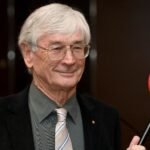
    Since November 2005, The Generator has interviewed some of the most important figures in the sustainability movement as well as mainstream figures, such as Dick Smith, who have made significant contributions to the area. Here below, is a smattering of those interviews. The SNIPs are generally 30 second snippets lifted from the interview, ususally because of some news value at the time.

    Richard Heinberg speaks

    The Interview

    Heinberg in the news

    Richard Heinberg is the author of eight books including The Party’s Over: Oil, War and the Fate of Industrial Societies (New Society, 2003, 2005), Powerdown: Options and Actions for a Post-Carbon World (New Society, 2004), The Oil Depletion Protocol (New Society, 2006), and Peak Everything (New Society, 2007). He is a Senior Fellow of Post Carbon Institute and is widely regarded as one of the world’s foremost Peak Oil educators.

    Richard Heinberg

    Dick Smith speaks

    Interview part 1

    Dick Smith is a famous Australian businessman with a passion for the Australian bush and aircraft. In 1968 he started a electronics business that was later called “Dick Smith Electronics.” He sold this in 1982 to publish the quarterly magazine, “Australia Geographic”. As well as a number of world breaking solo flights, Dick Smith started a food company to buy and sell Australian Made Food. He spoke to Giovanni Ebono about the sustainability of that venture.
    Dick Smith