The forthcoming book, Your Life Your Planet, deals with sustainability in the home, looking at it through the lens of degrowth and systemic change. It will be launched by Australian Geographic in February 2021.
The experts who provided the background for the book were interviewed by Geoff Ebbs on EcoRadio over the course of 2020. Wrapping up his contribution to EcoRadio for 2020 Geoff, summarised the philosophy of the book and played snips from a number of contributors.
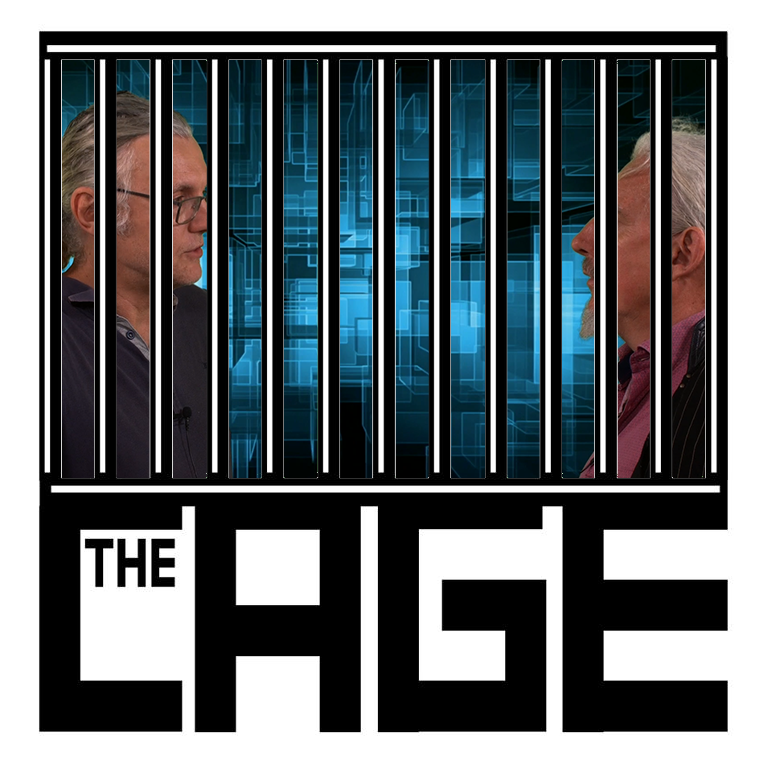
One of those interviewed, was Erich Schulz. Watch Geoff and Erich in the Cage on YouTube.
Geoff interviews Erich about activism, consumerism and systemic change.
Maya Krikke is remarkable for building a business around the traditional drink water kefir sold in returnable bottles.
For his sins, YLYP author Geoff Ebbs was condemned to delivering food in the gig economy. These boxes had to fit in that little Alto and be taken from one side of the city to the other, across the river at 7:45am. The total fare? $9.34
Debra Weddall has produced over 400 videos and television segments promoting solidarity and equality for the labour movement. She is a founder member and National CoSecretary of the Rideshare Driver Network, an organisation of app based drivers in Australia.
If you drive on a rideshare basis you can join the group through their facebook site.
Spare Harvest is a peer to peer app that started as a solution to a mandarin problem that I had and has grown organically by word of mouth. Now people share food hydrators, mowers, cuttings, food scraps, coffee grounds, eggshells and cartons.
Listen to the conversations between Geoff and Helen.
The future is already here, it is just not evenly distributed
Bewildered climate
activists flood my feed.
The essential
question is ‘Why CoViD19 and not Global Heating?’
The response we
have seen over the last months and weeks is the sort of response we have been
waiting for since the turn of the millennium.
This article
contends that while it is important to understand the difference in the
responses, it is even more useful to examine those responses to learn the
lessons required to build the post-growth world.
Personal, immediate and real
The fundamental
difference, apparent in all the language used by all authorities, is that the
threat from SARS-CoV-2 is immediate and it is personal. ‘If we don’t do this,
you will die.’
The images of
Italians and New Yorkers waiting for Intensive Care provides compelling
evidence. ‘That could be me.’ There is no doubt of the risk. Global heating, by
comparison, will harm us all at some point in the future. It is easy to ignore.
The other,
critically important, difference is that there is a well-funded
climate-denialist lobby, actively undermining any policy or action addressing
greenhouse gas emissions. Their efforts, the media they control and the
toxicity they inject into the debate are systematically documented by Naomi
Klein in her 2014 book, This Changes Everything as well as many other
places.
The absence of that
truth denying lobby in this pandemic allows us to analyse government, community
and individual responses to the pandemic without doubting the self-evident
facts. In fact it provides a controlled experiment in which different national
responses adjust individual variables providing a rich field for exploration.
We are all selfish
Young people did
not physically distance as soon as lock downs were decreed: they went out and
partied, invited friends over and generally behaved as if they are invincible. As
you do.
Despite admonitions
not to, many people hoarded. Some had experienced shortages in wars, some only survive
by their wits and some are simply greedy. We do not want to queue for food, go
hungry or pay extorted prices to others who are faster to act than we are.
Anaesthetist Erich
Schulz recently told me, “hundreds of people struggle to make sacrifices that
will save their lives. They should eat less, drink less, exercise more, but
they cannot give up the immediate gratification of their current lifestyle,
even though it is a matter of life or death. We cannot change people’s
behaviour by telling them what is good for them, let alone what is good for
everybody else.”
Environmental
movements have failed to sweep progressive politics partly because they often
sit uncomfortably with social justice movements. The environment is perceived
as a concern of the affluent. This pandemic has brought home the reality that
we all respond to Maslo’s hierarchy of needs, we feed and shelter our family
before we look out for the neighbours or build community. Apply your own oxygen
mask first.
In building a
sustainable, post-growth future, we first have to build community, the framework
to support the change in our behaviour. We cannot dictate what others do, we
must invite them to join us in the thriving and sustainable future that we
create.
Lives versus money
Because the
CoViD-19 disease has an obvious impact, offers no immediate profit and has
arrived so fast, governments have acted on behalf of their citizens rather than
the interests of capital.
The few outliers
calling the “cure worse than the disease” or saying, “I would rather die than
harm the … economy” have gradually morphed into the more gentle assertion that
“harming the economy will kill more people than the disease.”
This goes to the
heart of our standard left/right political divide. It is not a trivial
argument.
We have enjoyed seventy
years of affluence beyond the wildest dreams of earlier epochs. We travel in
smooth, fast chariots without making personal effort. We whisper into or wave
our hands over polished rocks that transfer our thoughts instantaneously to the
other side of the world.
This affluence has
been brought about by scientific ingenuity, plentiful cheap energy, the
resulting exponential population growth and the extraction of irreplaceable resources.
Capitalism has facilitated this affluence and is dependent on the continuous
growth and extractive practices.
‘The economy’ is simply the mechanism for tracking
and the measuring commercial activity, it is not in itself an entity that
requires nurturing. That fiction has been actively promoted by the owners of
joint-stock companies over centuries who use ‘the economy’ as the means to
control governments and so extract wealth from our individual activity. It is
the worship of money that is the root of all evil, not money itself.
CoViD 19 has
shifted the debate from whether we should reduce activity, to how we
manage that enforced reduction and its impact on the population at large.
The role of the state
Part of the emerging
libertarian pushback is on grounds of personal rather than economic freedom. Laws
preventing gatherings may ensure public safety in a pandemic but sacrifice hard
won freedoms that governments may be reluctant to relinquish.
This can be subtle.
We willingly give up cash to use the more hygienic digital equivalent, even
though centralised money systems can be abused. The fictional example of Handmaids
Tale reflects the actual, recent experience in Greece. Digital money can be
reassigned at the press of a button.
Conservative
governments have gone out of their way to apologise to business and industry
for the loss of profit caused by governing in the interests of public safety.
The important thing
to remember is that we call on the state to support us when the situation gets
beyond our capacity to manage. If the neighbour’s party turns into a riot, we
call the police; when a woman collapsed outside my apartment yesterday, I
called an ambulance.
When the Black
Plague swept through Europe in the 14th Century killing over 30% of
the population, people blamed God, prayed for deliverance and went to their
deaths assuming that He had forsaken (or sacrificed) them. By comparison, in
response to the cholera plagues of the 1850s, citizens turned to governments to
build better sanitation and water supply and provide compensation and
regulation.
We acknowledge and
recognise the apparatus in which we place our faith by supporting it with our
loyalty, our cash and our compliance. The neo-liberal project has undermined
our faith in government and replaced it with faith in the market. The CoViD 19
crisis exposes the falseness of that proposition. It is an echo of the City’s
assumption of control over New York fire brigades in the late nineteenth century
to prevent disasters caused by in-fighting between insurance companies.
Nuance is difficult – Science is hard
We have watched
governments blunder and stumble in their interpretation of the science and
converting it to policy. But the messaging, science and policy have gradually
converged to make cogent sense.
A clear example has
been the concept of ‘flattening the curve’ and its more nuanced partner,
‘bending the curve’.
On 20th March,
Tomas Pueyo published in Medium.com an article entitled the Hammer and the
Dance analysing in detail the actions taken by various governments and the
corresponding infection and mortality rates.
His article is
dense and not easy to explain in a three minute news story.
Over the subsequent
week, though, hand worked examples of exponential growth appeared on free to
air television, the rhetoric of ‘flattening the curve’ was used to explain the
need to manage demand for a limited resources, such as intensive care beds and
then, finally, the rhetorical device of ‘bending the curve’ explained the
difference between an exponent of more or less than one.
This week governments
are struggling with the messaging for the reality that until there is a
vaccine, we remain locked down or wait until about 70% of the population gains
immunity through infection.
The absence of
people actively funding ‘anti-science’ has allowed a widespread dissemination
of information and the creation of knowledge and intelligence to understand and
accept challenging policy that requires personal sacrifice.
Toilet paper, sanitizer and spaghetti
The items we have hoarded
during the CoViD 19 pandemic reveal systemic flaws that we must address in the
larger project of building the post-growth future.
We cannot easily
direct people to use squares of newspaper instead of super soft, double ply
toilet tissue because the modern sewer is not equipped to handle squares of
toilet paper, no matter how vigorously they have been softened by the sitter.
Hand sanitiser is more convenient than soap and water, our love of meat means
we no longer obtain the bulk of our protein from pulses as was traditionally
the case.
When we outline the technological solutions to greenhouse gas pollution and biodiversity, we have to take these dependencies into account.
Hubs of production
Cat Green is a PhD student researching food sovereignty. She contributed a chapter called the Radical Homemaker to a book on Fair Food. Part of her radical homemaking manifesto is that our homes have been constructed as nodes of consumption and that we need to transform them into hubs of production. We buy stuff and consume it at home, alienating ourselves by consuming alone. If we make stuff to share, then we put ourselves at the centre, or hub, of the network instead of at the edge. Our lives are filled with people and those people get something tangible from us that builds a relationship. By engaging friends and neighbours in shelling the pigeon peas we grow on the spare block next door, we build community in ways that have worked for thousands of centuries. That community supports us in the present as well as the future. That network makes us resilient and helps us thrive instead of simply survive. Of course, the choices we make as a consumer can contribute to long term sustainability but we would have to buy a lot of hand-made soap to influence the footprint of soap manufacturing. By contrast, making the soap for other people spreads the word, increases the volume of hand-made soap and encourages soap-manufacturers to respond to the market.
Creating the future
This pandemic is just the most recent disaster. While we are
battling it, Australia’s Great Barrier Reef is undergoing its fourth major
bleaching event in a decade. Bushfires that denuded the landscape of every
living thing were still burning in late January. There will be other disasters
in the future, probably before we emerge from the pandemic.
Governments are already saying they will ‘take off the
brakes’ on ‘the economy’ to ‘get back to normal’ when we get ‘to the other
side’. To maintain control of the agenda, we will have to build on the
lessons outlined in this article.
There will be fertile ground. Regional manufacturing is
re-emerging a couple of weeks into the shutdown, local economies are forming,
people are rediscovering the joys of games, reading, learning, playing music
and singing together.
We must support and nurture resilient communities to thrive
in a post-growth era and we have a golden opportunity to establish those
communities. We must also wrest control of our governing structures from the
mega-wealthy who own the capital that controls the systems that, until last
month, dominated government policy. That is the larger task, but at least this
crisis has offered us a window into what is possible when our governments take
control.
The future is already here and, this time, it is widely
distributed