Climate chaos may provide further economic advantage to Europe, Science Daily reports this week.
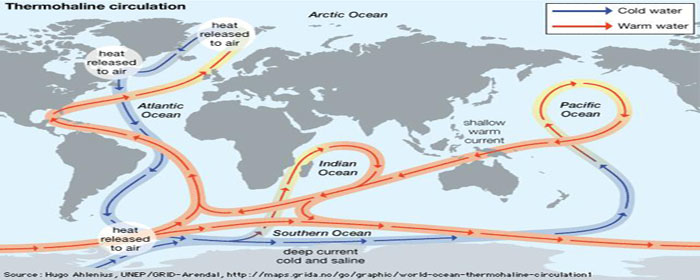
Evocatively described as the heartbeat of the planet, the Gulf Stream is an integral part of the world’s ocean currents and keeps the North West Coast of Europe, especially Great Britain, much warmer than its latitude would indicate. In previous global warming events it has switched off, creating Ice Ages that balance the initial warming. The paper in Science Daily predicts that the Gulf Stream will not plunge Europe into an Ice Age but will keep it relatively cool, protecting it from the worst excesses of Climate Chaos and further increasing the advantage that rich countries will have over poor ones in the economic disaster that inevitably results from major climate disruption.
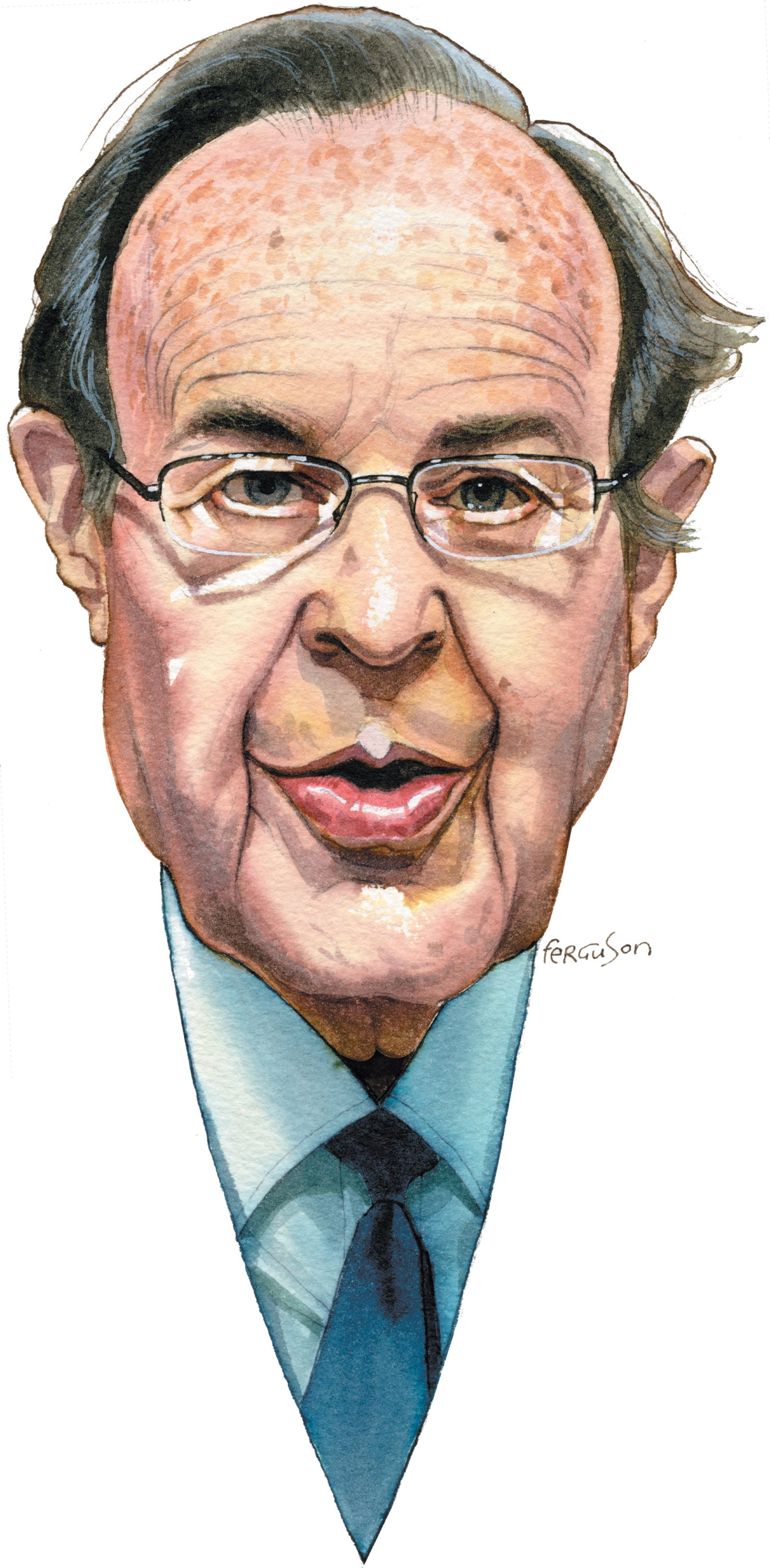
New York Review of books illustration of William Perry by James Ferguson
The risk of nuclear war is now the greatest it has ever been according to William Perry, US Secretary of Defense twenty years ago and weapons systems manufacturer before that. In a new book released this month, he says that The US and Russian governments have torn up the treaties that helped stabilize the world in the eighties and nineties. The US has supported the eastward expansion of NATO, both nations have built smaller tactical nuclear warheads that fall outside existing nuclear agreements and the USA has withdrawn from the Anti-Ballistic Missile (ABM) Treaty and started deploying weapons along NATOs new eastern border. The result, according to Perry, is that we face the huge risk of a nuclear war that could destroy civilisation.
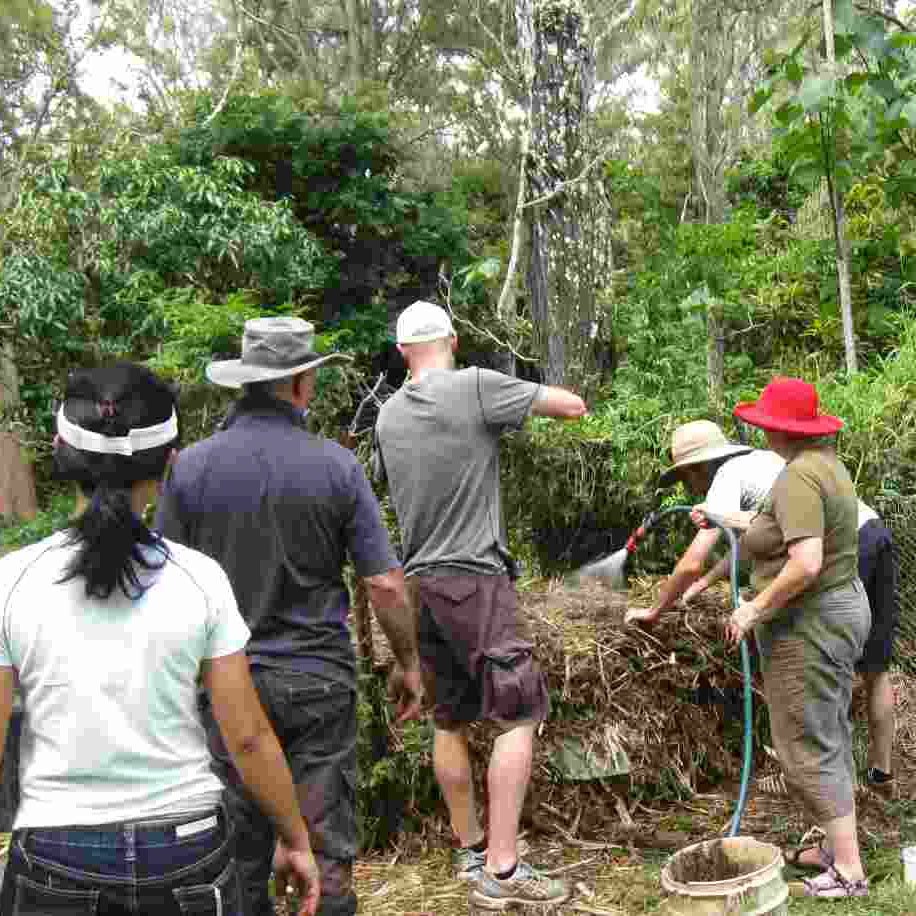
Camp Mountain is a great location for a bio-dynamics workshop
This experiential two day workshop gives you a balance of both practical and theory in a great setting on 5 acres at 7 Hogan Court, Camp Mountain, QLD. Its only 30 minutes from the Brisbane CBD and 5 minutes to our local railway station. Low cost local homestay is available. The property has very well established gardens and has been worked with biodynamic practices. The place has a beautiful feel, the bird sounds are ever present.
The workshop is suitable for food growers from small scale to hobby farmers who are interested in ramping up their organic food production in a sustainable way, whilst developing an appreciation of the deeper spirit of nature.Its ideal that you have some experience of organic food growing. If you have already studied permaculture, you will find the workshop extends your existing knowledge, adding a new and interesting perspective to maximising the effectiveness of your food growing activities.
The workshop content is contexualised to the food growing spaces at the venue and the presenter also works closely with each participant to ensure there is an action plan to bring all content into the context of their own food growing spaces. As such, workshop participant numbers are limited to 12 people.
During the 2 days, Saturday and Sunday, you will:
Work with our vegetable growing and orchard areasgaining practical experience of how to work with organic and biodynamic methods
Understand the philisophical framework that drives all biodynamic processes so you can work with them from a placing of knowing.
Immerse yourself in our beautiful nurturing space and be well fed with biodynamically grown food, so you appreciate the end point, healthy enlivened food
Appreciate how biodynamic methods will fit into the rhythm of your organic food growing system to produce the highest quality organic food.
London is an island in the British Isles, celebrating Brexit with gin, tonic and champagne, while Scotland and Ireland plan to Leave the United Kingdon to Remain in Europe. The working class that feed London are in revolt.
Others have predicted (a decade ago) the fall of the nation-state and the rise of the city state to replace it. City states are easier to defend than nations and they breed innovation and nurture trade.
Magacities will shape the economy of the 21st Century
The world’s mega cities have economies larger than most nations and are the hubs of commerce that fuel the globalisation that disenfranchises the working and middle classes that support Western democracy.
In these megacities, life is cheap, slavery is rife and global commerce is not always top of everyone’s mind.
To survive, these cities must maintain their food, water and energy supplies and sufficient infrastructure to remain connected to their sources of revenue.
Theory has it that these Cities will battle directly with the mercenary armies of global corporations to demarcate the ungoverned spaces between them.
BrExit brings this future one step closer to realisation.
I repeat: London is an island in a hostile United Kingdom. Scotland and Wales will vote to Leave the UK so they can Remain in the EU.
By the time that is untangled Wales will join a plethora of other subnations that enjoy ersatz independence until a new overlord decides they are worth incorporating and taxing.
In this, Crimea is two steps ahead. Russia will not hesitate to reincorporate the near, loose pieces as Europe falls apart.
China will continue its imperial project in Africa and the securing of its new silk road(s). It will bring the US to its knees financially with a gold backed currency and its trillions of dollars in US bonds.
Thus the nation state may collapse, but the Imperial project is not dead. The major change as a result of BrExit is that the corporations of the West will be forced to recentre themselves in Asia and South America as the military ambitions of the US implode with its southern border. This means lots of failed states or independent states in previously fairly orderly Western enclaves: The Caribbean, the Mediterranean, the Pacific.
While the realities of this power shift sink in for the West, huge opportunities exist in South America and South East Asia. Neither are directly in the path of clashing empires and are largely sheltered from the fall out across the North Atlantic.
South America is poised for greatness but is crippled by internal chaos (largely due to US interference).
India has no choice but to lock in the coastal connections to its West and expand its trade with South East Asia. South East Asia still reels from a century of geopolitical chess (largely due to US interference) and has a major opportunity to bounce back. Indonesia is the third most populous nation in the world and remains vigorously expansionary.
We must re-read and reappraise the work of Sayyid Qutb to understand the impact of Islamism on these events. We must also understand the realities of Peak Oil and Climate Change.
We are heading for the rapids and it pays to understand the rivers that feed this cataract.
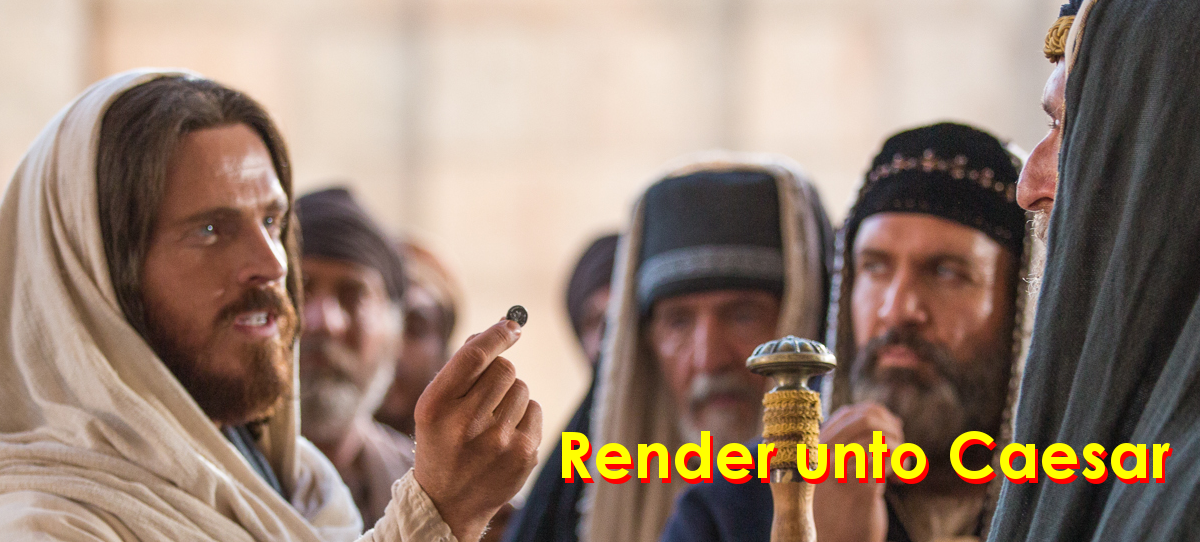
Render therefore unto Caesar the things that are Caesar’s and unto God the things that are God’s. – Matthew 22:21
A blue-eyed Christ delivers his famous riposte to a Semitic Pharisee
As debate around the privileged position of the christian church in Australian society slowly grinds its way into the mainstream discourse, it becomes increasingly important to clarify the fundamental issues.
Those of us who believe firmly in the need for a secular state are often shouted down for being amoral, immoral, anti-religious or worse.
It is worth taking a little time to understand the distinction between secularism and atheism.
Justice Michael Kirby spoke about this often, noting that the two terms are often used interchangeably; not just in common usage but also in political and scholarly discourse. The most important part of the distinction is that atheism refers to the beliefs of an individual where as secularism refers to the political principle that the state should be separate from the church.
Pulling together the work of English liberal humanist philosophers Hume and Locke, Kirby puts it succinctly.
Secularism is a principle by which society and its lawmakers ensure that religion does not enter the public sphere in an active way. The object of these principles is not only to stop an excessive interference of religion in the lives of the people but to ensure that people of different faiths (and those of no religious faith) can co-exist peacefully.
Thus India is a society with a huge emphasis on secular government, not because the members of the government do not hold, or respect, religious beliefs but because the diversity of religious belief in India demands secularism. It demands that government define rules around how religions interact and that avoid one religious group interfering with the human rights of another.
The problem with most governments is that they are not truly secular.
One reason for this is that they pander to the majority of their citizens to ensure their popularity. This is as true in dictatorships as it is in democracies.
Another reason is that institutional religion is a handy tool for ensuring the compliance of the population. This may be used overtly, as it is in religious states such as Saudi Arabia, or more subtly as it is in the USA. The truth is that organised religion in is largely a tool of the state invented to harness faith and govern people without the requirement of forceful coercion. The divine right of kings is one expression of this, Emperor Constantine’s latter day conversion to Christianity is a classic example of cynical manipulation and appropriation of religious ritual to empower the state.
As a result of this legacy, a modern democracy such as Australia has a number of regulations and laws in Australia that cross this boundary and confuse the issue. Four examples:
Churches are exempt from paying tax because they provide a public good
Church agencies are actively involved and supported in providing welfare services
Church based educational organisations are actively funded
Commercial activity is banned on Good Friday and Christmas day
Parliament prays to a Christian God
Witnesses in court generally swear on a Christian bible
While atheists actively campaign against the inherent injustice in this favouritism, that does not mean that only atheists oppose the state support of a particular religion, or religious institutions in general.
Indeed, one would expect competing religions to be unhappy with state support of a particular religion, on the grounds of unfairness, if nothing else. The requirement for the state to be even-handed when it comes to dealing with citizens of different religions is the most easily understood requirement for secularism in government. The phrase “regardless of faith” or its equivalent is present in many declarations of rights from the Magna Carta, the US Constitution through to the UN declaration of Human Rights.
The handling of disputes between religions, though, is much more complicated and philosophically much more fundamental. Whether you are religious or not, it is patently obvious, that if religions have different and competing rules over some aspect of behaviour then an untractable dilemma emerges.
Either the differing religions acknowledge the other religion’s right to do things differently, or they go to war to enforce the will of one religion over the other. Secularism is an agreement by the citizens of a state to allow the government to set the rules such that war does not break out. What it effectively does is put the law of the land, above religious law.
This is where the confusion enters the debate. Religious fundamentalists argue that the state has no right to limit any group’s beliefs on the basis that the law of God is above the laws of humanity. Religious moderates accept that the outcome of such fundamentalism is endless hostility and that tolerance involves compromise.
In terms of juggling the tension between fundamentalism and moderation, atheism is just one more belief system. The anti-theists who actively attack religion as a set of false beliefs do just as much to destroy harmonious governance of religious morality as any fundamentalist preacher.
For the sake of clarity, it is critically important that we get the anti-theism out of the advocacy for secular government so we can build the broadest and strongest coalition possible.
The aim of that coalition must be to reclaim the billions in lost tax that we squander on empowering and enriching religions. To achieve that believers and non-believers will have to work together to create a truly secular state that respects one’s right to be religious or not, to follow any god, or cultural practice that does not contravene the laws of the land. It should arguably be a secondary aim of that project to get the religious institutions out of the delivery of welfare and education services, with the possible exception of ministering to their own congregations.
Inherent in the broader project is the requirement to change those laws and regulations that are implicitly or explicitly religious. It does not imply that the laws should undermine the realm of the spirit or pit scientific evidence against faith. Those belong in a different realm and deserve their own discussion.
A complete tax holiday PLUS welfare payments to organised crime?
Cross was sickened, again, last week by the torture and brutality of the Holy Sisters and local priest Father Reginald Basil Durham at St Joseph’s orphanage, Neerkol, near Rockhampton.
This sick rapist and soul thief groomed his victims from childhood, so he could abuse them at will – further twisting the knife by demanding their apology and gratitude for his absolution in the confessional.
The institutional brutality of power-crazed cowards in the Christian welfare sector over the last sixty years has been exposed time and time again, now en-masse thanks to this Commission. We are all sickened. The danger of institutional religious power has been revealed. An institution that became so obsessed about survival it paid its minions with the bodies of its most vulnerable members.
And what did those minions deliver? Money.
Holy shit, holy church – that is fully Despicable <my capitalisation>. Your apology of April 22 simply does not cut the mustard.
Never has the need for secularism been more obvious.
A secular government need not repress religion, it simply governs the limits of religious power in secular society. It makes sure that the religion is not abusing its unique power over the faithful.
A secular government would never put chaplains in charge of teenage welfare, for example: Even if we were not at the tail end of the hearings of the Royal Commission into child abuse.
On the other hand, our deeply Christian governments cannot help themselves when it comes to locking people up and finding unusual ways to torture them. Our Federal Abbot and two Bishops take particular delight in posting the victims of our failed wars to tropical islands and leaving them standing behind wire, in the sun, on hot rock, while bitter locals look on with fear and loathing.
We have not come far from Van Diemen’s land. … or Palm Island. Concentration camps were not invented in Germany.
At the state level, our VLAD laws are still in place. Those laws lock members of Criminal Gangs in solitary confinement in tiny concrete cells, in the middle of a wire cage, in the Woodford Detention Centre. Wearing pink overalls and chains convicted members of Criminal Gangs are allowed out of the concrete cell, into the wire cage for an hour at a time, when no other prisoners are outside.
Criminal Gangs are defined as a group “declared to be a criminal gang” by the Attorney General. That makes it pretty easy to find out what organisations are criminal, we simply ask the AG.
That law also makes it illegal for any members of those criminal gangs to meet in public in groups of three or more, or to wear clothing in public that identifies them as members of their gang.
I get a wry satisfaction at the thought of a freshly-elected, future Queensland Attorney General declaring certain Christian sects to be criminal organisations and parading a few nuns up and down George Street in pink. It would be outrageous, of course! It is an outrageous law.
But it might help address the social imbalance caused by giving the churches tax-free status and the most lucrative welfare contracts.
Ponder on it as you next take up your cross to bear. May humour leaven the pain.