Author: Geoff Ebbs

  • Witness K may have evidence of multi billion dollar mining theft

    Witness K may have evidence of multi billion dollar mining theft

    Speaking on ABC Radio last week, former head of the Department of Prime Minister’s legal section, Ian Cunliffe told Geraldine Doogue that both Australia and East Timor have been robbed of more than $3billion in revenue from the helium extracted in the Timor Sea.

    https://soundcloud.com/thegeneratornews/witness-k-and-helium
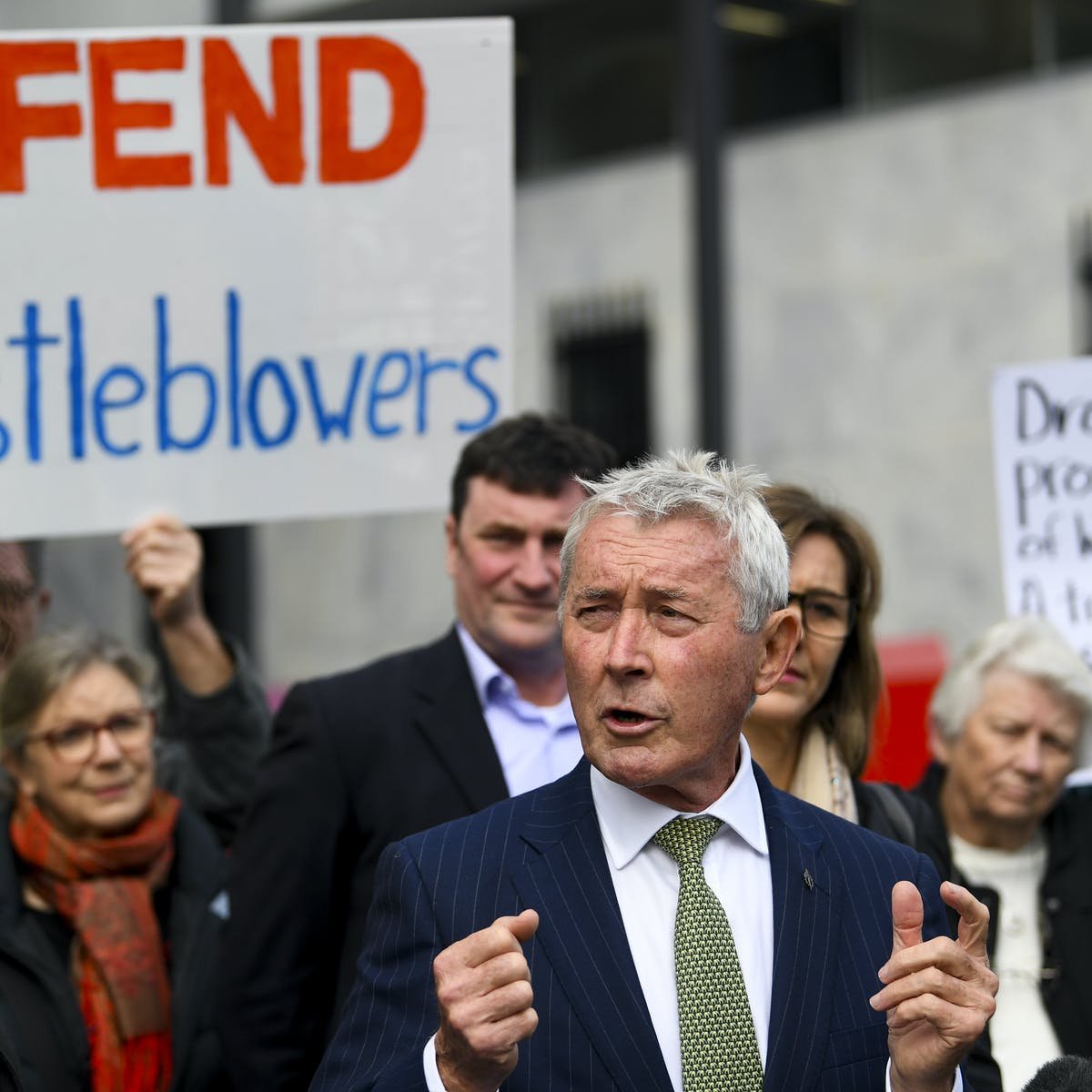
    Bernard Collaery (The Conversation)

    https://www.abc.net.au/radionational/programs/saturdayextra/east-timor,-collaery-and-witness-k/13384906

    That deal is the subject of international hearings into Australia’s bugging of East Timor offices during negotiations designed to give Australia a negotiating advantage. Cunliffe said that it has not been widely reported that the contract was changed, without the knowledge of either government, by persons unknown, to give the helium to the exploration companies Woodside and Conoco-Phillips.

    https://theconversation.com/why-bernard-collaerys-case-is-one-of-the-gravest-threats-to-freedom-of-expression-122463

    Former ACT Attorney General, Bernard Collaery and witness K, who were taking the Australian Government to court in the Hague, are both being prosecuted under the Intelligence Services Act and legally prevented from releasing the evidence they have about the contract. Helium has been classed as a “fully imported critical defence commodity” since 1945.

    Bernard Collaery at a pro-whistleblower rally – The Conversation

    https://www.thesaturdaypaper.com.au/opinion/topic/2021/06/12/bernard-collaery-and-witness-k/162342000011856

    Cunliffe speculates that the unusual charges against Collaery and Witness K may be designed to protect those responsible for the changes to the contract that have cost the Australian taxpayer billions of dollars and weakened our national security.

    Post Script

    This story has echoes of the “granting” of WestPapua to Indonesia by the international community in 1969 What the Indonesian, Dutch and Australian governments did not know at the time the deal with Indonesia was set up was that the US government had allowed US oil companies the exclusive rights to the richest source of sweet crude oil in the region as well as the rights to the world’s largest gold mine.
    https://www.smh.com.au/politics/federal/oil-and-politics-prove-fatal-mix-for-the-people-of-west-papua-20091230-lju6.html

    So the death of over 600.000 Papuans at the hands of the Indonesian military with the silent complicity of the Australian government has been bought by billions of dollars going straight into the pockets of these mega-corporations.
  • Long-term threat to Moreton Bay

    Long-term threat to Moreton Bay

    The RAMSAR listed wetlands of Moreton Bay are under threat from more developments than the proposed 3,600 home development at Toondah Harbour, according to media platform eFlux.

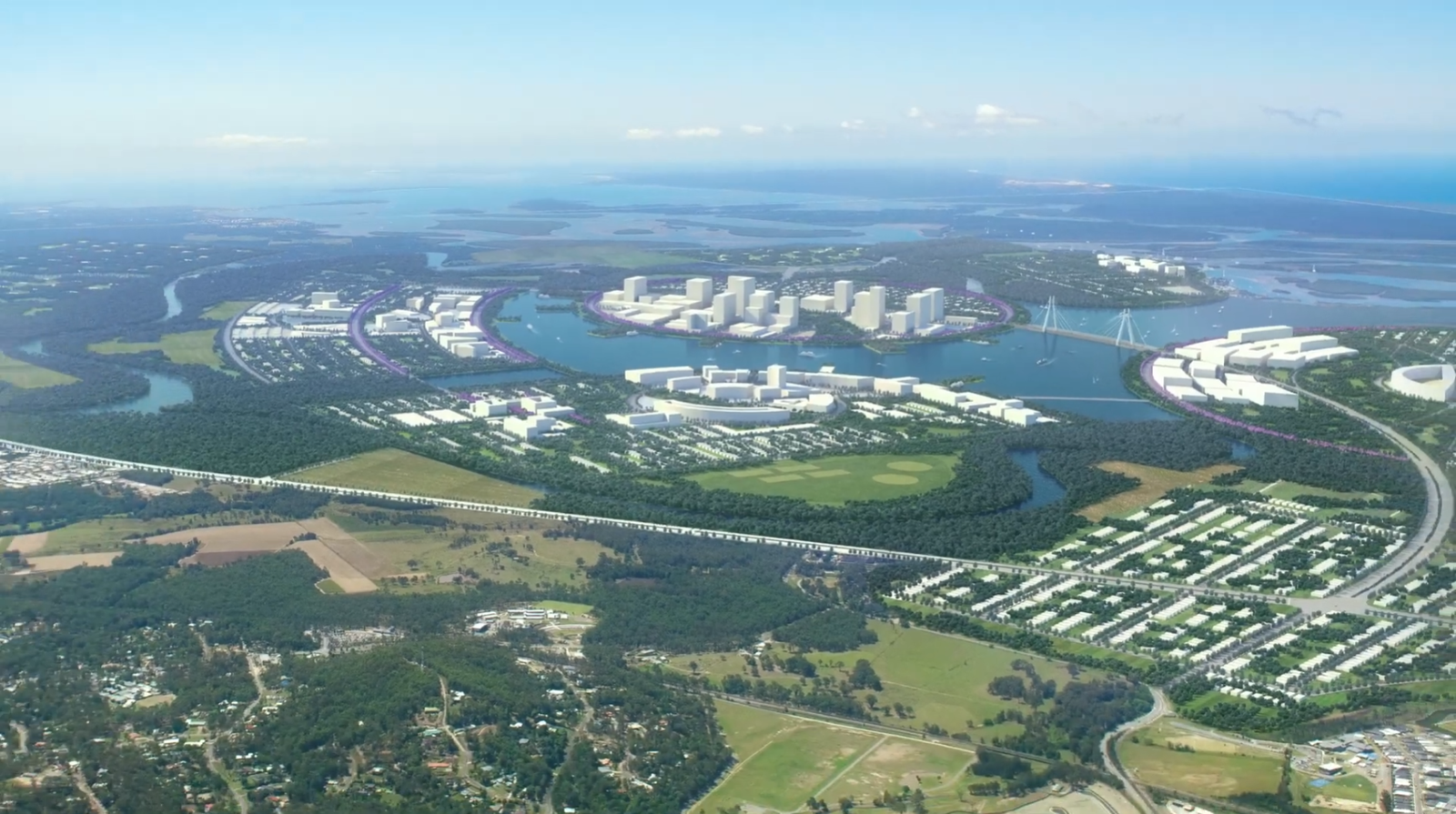
    Collier International’s vision of the future for Southern Moreton Bay

    Already approved developments include the $1billion 65,000 home Pacific-City at Norwell Valley and a new freeway, linking that city to the Gold Coast and Brisbane. So far there are no plans for public transport. Moreton Bay Council announced in February plans to more than double its economy in two decades by encouraging agribusiness, construction and tourism.

    The Bay is home to more than 50,000 waterbirds, including one percent of the world’s migratory species.

    The Southern Moreton Bay Islands 2030 Community Plan, now a decade old, does not mention the major development of infrastructure required for Pacific City and its proposed satellites.

    Moreton Bay Shire Council plans to expand the region’s economy from $17billion to $40billion by encouraging development in agribusiness, construction and tourism.

    You can hear that story in The Generator News for Wednesday May 26th

    The discussion of development on Moreton Bay on EcoRadio

    Or the 2020 interview about Toondah Harbour.

    Background information

    Link to eFlux story

    Real Estate Agent Ray White’s summary of the project

    Canegrowers form syndicate to sell land – 2016

    Moreton Bay Council’s plans for the North

  • Belize asks for Climate Fund money promised in 2015

    Belize asks for Climate Fund money promised in 2015

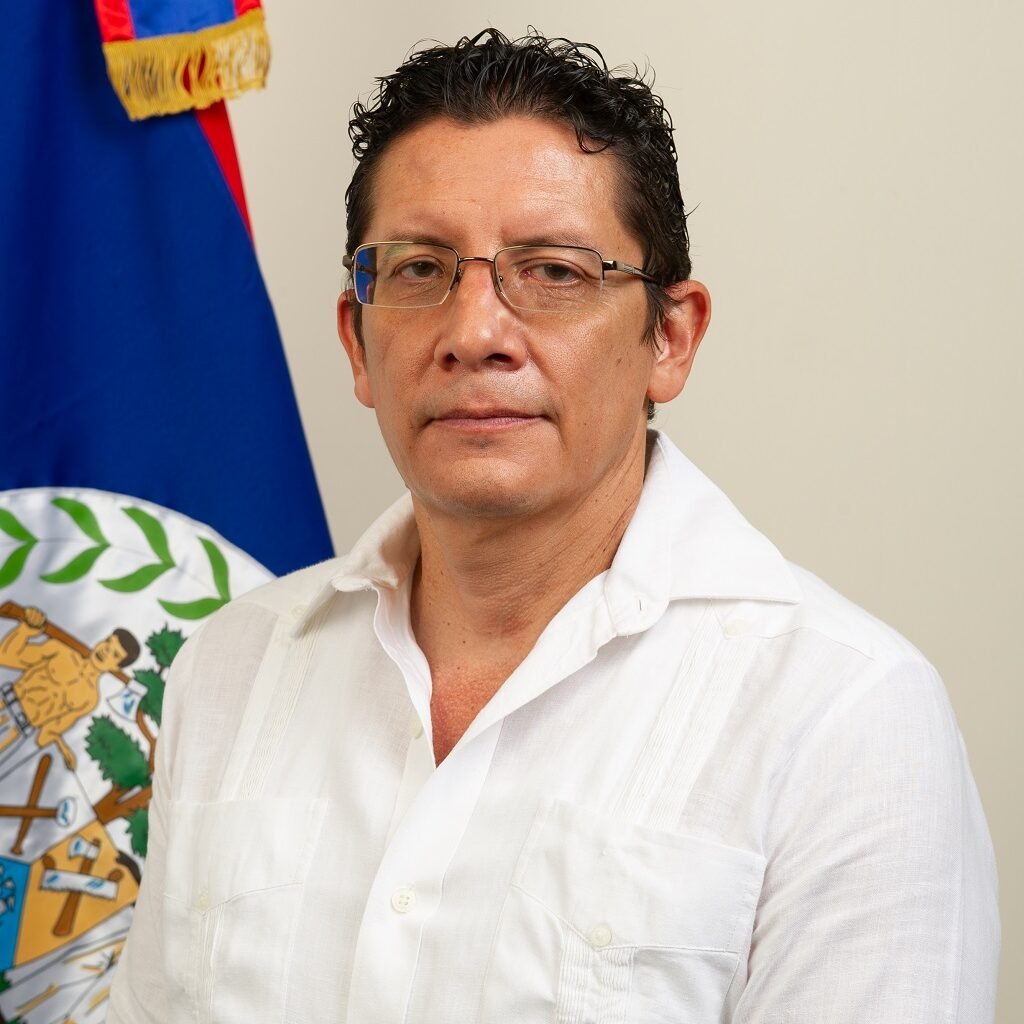
    The Minister of State in Belize, Christopher Coye, demanded climate compensation last week saying, “We should be compensated for suffering the excesses of others and supported in mitigating and adapting to climate change effects.”

    The Honorable Christoper Coye, Minister of State, Belize

    Belize is one of a number of developing countries suffering major effects of climate change while emitting minute amounts of greenhouse gases, and also struggling financially in the face of huge debts to the Global North, including China. The issue is on the agenda for November’s climate conference in Glasgow and will highlight the failure of wealthy nations to keep their 2015 promise to deliver US$100 billion per year to assist poor countries to build resilience and adaptation responses to the spiraling climate chaos. Australia formally withdrew in 2019 from the Green Climate Fund set up to deliver the promised money.

    Sources

  • UK Architects want buildings to last

    The Architect’s Climate Action Network in the UK has called for legislation to regulate embodied emissions of new buildings using ‘whole life-cycle assessment’. The network writes that “Being ‘green’ when occupied is poor compensation for construction using masses of concrete, steel and glass.” About 70% of the total emissions of a modern buildings comes from the concrete, steel and other building materials. The architects network points out that vast emission savings are available through simply legislating to encourage reuse of existing buildings and design for longevity. Most modern buildings are designed to last for only 25 to 50 years.

    Sources:

    In his weekly environment roundup on Pearls and Irritations on May 9th, Peter Sainsbury wrote, “A couple of months ago I highlighted the carbon emissions associated with the materials needed to keep high-rise buildings standing – turned out that over their entire life-cycle, four-storey courtyard buildings are the most energy efficient and environmentally sustainable form of housing. So claims of ‘carbon neutrality’ for skyscrapers that are covered in green walls, have triple glazed windows and use 100% renewable energy need to be viewed with some scepticism. Being ‘green’ when occupied is poor compensation for construction that involved masses of concrete, steel and glass, all of which contain lots of ‘embodied carbon emissions’ – the emissions associated with the extraction, manufacture, transport, installation, maintenance, demolition and disposal of materials. Over the life-cycles of today’s typical offices, warehouses and homes, the embodied emissions constitute around 70% of total emissions.

    “Most building regulations ignore the embodied carbon and yet significant carbon reductions can be made relatively cheaply by following five simple strategies:

    • Build less: reuse existing buildings
    • Build smart: use low carbon materials
    • Build efficiently: use fewer resources and waste less
    • Build circular: design for reuse and recycle
    • Build durable: design for longevity.

    “The UK’s Architects Climate Action Network is calling for legislation to regulate embodied emissions including requirements to assess, report and reduce embodied carbon using ‘whole life-cycle assessment’; limits on embodied carbon limits in building materials and building types; and Environmental Product Declarations to be made freely available on a national product database. For nations and companies that are serious about tackling climate change, the time for smoke and mirrors is long past. It’s no use a building being carbon neutral in its daily operations if its construction involved materials containing lots of embodied carbon. Commissioners, designers, builders and occupiers of buildings need to lift their game.”

  • Ross Garnaut defends RESET in the Cage

    Ross Garnaut defends RESET in the Cage

    The Generator’s Geoff Ebbs puts Professor Ross Garnaut in the Cage to discuss his new book RESET. A blueprint for a green, socially just future for Australia.

    Professor Garnaut, outlines the technology solutions he highlighted in his previous book Superpower, noting that the government’s current technology roadmap largely follows his lead. He discusses the value of clean hyrdrogen in building a clean manufacturing and export business.

    In the second part of the interview Geoff and Ross discuss his economic measures to ensure that future growth is socially just. The Australian Income Security and the tax on wealth rather than income.

    In this segment, the third part of the interview, Geoff asks Professor Garnaut about the differences between Green Growth and deGrowth, the reality of decoupling economic growth from environmental impact and whether we are creating a scientific dystopia in which wilderness is a theme park.

  • After the floods: the Border Rivers

    After the floods: the Border Rivers

    The Equinox flooding of the East Coast of Australia may not have broken the drought but it has filled the border rivers full to overflowing. Geoff Ebbs took a trip along the border of NSW and Queensland the week after Easter, when the rivers had settled down and most roads were passable.

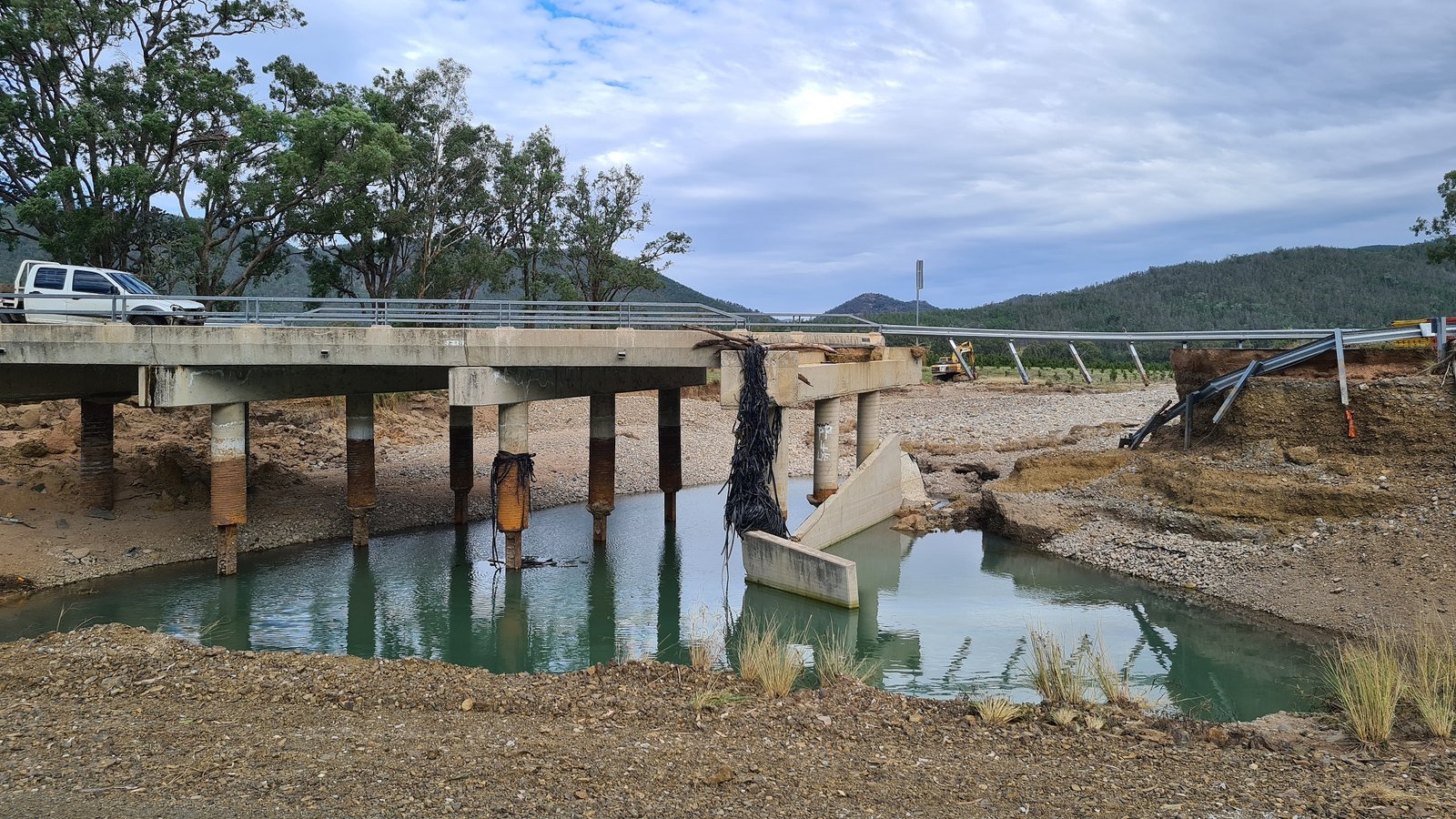
    The Bruxner is broken near Bonshaw
    The Bruxner Highway is broken near Bonshaw

    He picked up the border near Carney’s Creek on Falls Rd which follows the border Queen Mary’s Fall and then follwed it through the mountains to the Lindsay Highway where it heads around the South Eastern edge of Sundown National Park. That being rugged country, he followed the Severn River, through Stanthorpe and around the north westedn edge of Sundown National Park where it joins the Dumaresq (and the border). Both River and border flows north west to Texas and then west to Goondiwindi. That’s Texas Queensland, in case you haven’t been there.

    Along the way he crossed the Condamine a couple of times. The Condamine does not flow along the border, though it rises only a couple of kilometres from it. It runs through Killarney and then north through Warwick before heading West. They both eventually flow into the Darling, but that’s a long way West and another story.

    The border follows the ridge separating the Tweed River in NSW from Qld, then the Great Divide until it meets the Dumaresq at the junction of the Dumaresq and Severn River. The pictures above are: Falls Rd near Carney’s Creek x2. The view from Carrs Lookout at the head of the Condamine. Queen Mary’s Falls and Daggs Falls on Spring Creek, only metres from the border but the water flows into the Condamine at Killarney. Criss crossing the border through the hills South West of Killarney, then the Severn North West of Sundown National Park, The Severn at Broadwater in Sundown National Park, The Dumaresq where it meets the Severn and picks up the border, the Dumaresq Valley at Heynes Bridge, a tributary takes out the Bruxner Highway and the Dumaresq at Texas.