Former CIA head, General Michael Hayden, yesterday accused international telecommunications giant, HuaWei, of spying for the Chinese Government, after Malcolm Turnbull said that he would review a Labor government decision to ban the company from building the NBN.
HuaWei has sponsored more trips to China by politicians, mostly coalition members, than any other company, according to the parliamentary record.
General Hayden says “at the very least, Hua Wei is sharing sensitive information about the telecommunications infrastructure of Western countries with the Chinese intelligence agencies.”
Shark tales and movies at Edge Theatre on Tuesday 23 July.
Richard Fitzpatrick rides a shark to work
Next Tuesday, hands on environmental group Wild Mob will thrill the audience at the Edge Theatre in Southbank with close up and personal shark tales from Emmy-award winning filmmaker and shark researcher Richard Fitzpatrick.
The presentation will be part of Eco Expo13, a free event designed to give students and parents a taste of the careers available in environmental science and related areas.
Richard Fitzpatrick has worked on more than 50 films for the BBC, National Geographic and Discovery Channel, including last year’s popular documentary series Great Barrier Reef.
Eco Expo 2013 is being organised by environmental education charity Wild Mob in conjunction with the Smith Family Partnership Brokers, universities, TAFEs and other organisations.
“Lots of young people are passionate about the environment but they don’t always know how to pursue a career in this sector,” said Wild Mob spokesperson Lydia Gibson.
“Eco Expo gives people a chance to hear from a diverse range of industry professionals and learn about the different pathways to a career in this highly rewarding field.”
KEY EVENT INFO: Environment Careers and Opportunities (ECO) EXPO Date: Friday July 23, 2013 Time: 10-2pm (Schools), 3-6pm (Students and Parents) Venue: The Edge, Southbank, Brisbane Cost: FREE
The fruit is huge, almost the size of a human head
Winter is citrus season and the mountains of oranges and mandarins appear at precisely the time we need the extra vitamins to ward off those winter colds and flu.
Most Westender readers will head to the Jane St markets for mountains of produce in a market settings but I had the opportunity to explore the Mount Gravatt Showgrounds last Sunday and was suitably impressed.
I was meeting someone at 6am on Sunday, odd I know, and was amazed to see crowds of people with head torches darting through the misty dark, it was quite damp and cold last Sunday morning, grabbing the best produce and then heading back to their restaurants, juice bars and veggie shops.
Since I did not have my head torch, I drank coffee and ate curry puffs – yes the same ones from Jane St – until the sun came up.
When you rip it open the flesh is exposed from inside the individual segments.
My find of the day was a mighty citrus fruit I had not come across before, the Pomelo.
I call it the mighty Pomelo, because it is huge.
Described by some people as the ancestor of the citrus, it is available in sweet and sour varieties and ranges from quite green to a rich yellow.
There are two Pomelo sellers at Mount Gravatt, I chatted to Elena Moeller, who grows the Pomelo’s she sells in Bundamba. She offers a free taste which had me immediately interested.
The flavour is reminded my of the Schweppes Old Fashioned Lemonade – it is sharp but not sour, almost sweet but very refreshing.
I took my Pomelo home, peeled it by hand (after making one cut with a knife) and tore it apart. I found myself devouring quite a few of the significant size segments before I remembered that I was planning to make fruit salad.
It is, quite frankly, delicious.
Keep your eye out for this striking fruit and if the vendor is offering a free taste, try it. If you like it, you’ll find it a pretty cost-effective way to put some citrus into your menu for the week.
The stark choice between the ‘climate makers’ and the rest of us underlines a competition of two radically different visions. It is a fight over the very future of Australia
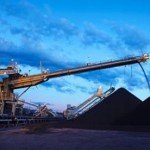
Coal loading operations in the Hunter Valley. Photograph: Ho New/Reuters
A mighty political struggle is dividing Australia, but it is not the mêlée taking place in Canberra. It is the battle that pitches the kids on my street: bouncy Jack, serious Cristiana, little toddling Lily and all of their mates, and every other child from across Australia, against a gigantic industry that menaces their future. It is the epic fight that is taking place between the fossil fuel companies and the rest of us.
The politics of climate change is often seen as complicated, but in one sense it is all very simple. On the one side we’ve got those who leading UK analyst Tom Burke calls “the climate makers – the small number of large businesses who produce and burn fossil fuels”. On the other side is everyone else.
In Australia, the arch climate makers are the coal mining companies, with up to 91 coal projects planned for Queensland and New South Wales alone. If they are allowed to proceed, burning the coal from these new projects could add an additional 1.5 bn tonnes of carbon dioxide to the atmosphere each year after 2018.
These are the coal mining companies who care so little about our country that they would wreck the Great Barrier Reef for their trade, and would dig up the fossil fuels that the science tells us is unburnable carbon. They’ve used the money that was meant for developing carbon capture and storage into a promotional slush fund. The head of the Australian Coal Association apparently sees the collapse of Arctic sea ice as worth a joke. These are the realities of the coal industry’s cynicism and contempt.
Enviroment activists display an anti-coal industry placard outside the New South Wales Parliament building in Sydney. Photograph: Greg Wodd/AFP/Getty
The contest between the climate makers and the rest of us is a competition between two radically different visions. It is a fight over the very future of Australia. It is the hope of people set against the bullying voice of a corporate lobby telling us that there is no choice but to let the coal industry have its way.
As the National Sustainability Council recently highlighted, we know from the Australian Bureau of Statistics’ measures of Australia’s progress that environmental sustainability, economic resilience and social equity are recurring themes that matter to Australians. These are our hopes and dreams for Australia, embedded in our deepest shared values about what constitutes the good society.
Most Australians want decent sustainable jobs, prosperity that is about more than just the narrow pursuit of wealth at whatever cost, and a smart, balanced and resilient economy. We share the cherished ambition of our kids and their kids having fresh air, clean beaches, green spaces on which to play and bush to explore.
But the very possibility of a decent future for our country is at risk from the climate makers. We are already two years into what the Climate Commission calls the “critical decade” for averting catastrophic climate change. The National Sustainability Council said last month that the decisions we make in the very near future will determine “whether or not the next generation of Australians will become the first in recent history to be worse off than their parents and grandparents.” I think about the kids on my street. I don’t want them to miss out on the best of what life and our country has to offer. And the greatest threat to the prospects of the next generation of Australians is the climate makers.
Whether we can break the grip of the coal dead hand on our politics is a defining challenge of our time. Climate change is not just another policy issue. Global warming undermines the very foundations of the modern state. Professor James Hansen has described coal as “the single greatest threat to civilisation and all life on our planet”. According to Australia’s own Climate Commission, “[b]urning all fossil fuel reserves would lead to unprecedented changes in climate so severe, that they will challenge the existence of our society as we know it today.”
We already know that the extreme heatwaves and catastrophic bushfire conditions during the angry summer of 2012-13 were made worse by climate change. A nation perpetually reeling from cyclones, floods, fires and droughts, and struggling with food security and mass climate migration in a drastically more unstable world, will find it difficult to prosper. It is hard to see how Australians can hope to become healthier, better educated, more productive, or more content, in a world of climate chaos.
The choice could not be starker. The contrast in visions of the future is clear. If the climate makers win, it means diminished opportunities and reduced horizons for our children and grandchildren. The kids on my street deserve better than what the coal industry has in store for them. All our kids deserve better than that. It is the coal industry against the rest of us.