Author: Jan Bowman

  • DIY learning at Brisbane Free University

    Briohny Walker and Anna Carlson: Brisbane Free University
    Briohny Walker and Anna Carlson: Brisbane Free University

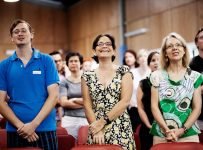
    In the week that ended with students across Australia rallying against the Abbott Government’s plan to deregulate University fees, I joined about 40 others at a Brisbane Free University event in a car park off Boundary Street in the West End of Brisbane. The discussion was about refugee rights.

    It was a refreshing change to be part of conversation that was not dominated by partisan politics, but instead focused on the lived experiences of refugees, as recounted by Anthropologist Dr Gerhard Hoffstaedter; and on their rights in law as detailed by UQ Law lecturer Dr Peter Billings. Rather than a conventional lecture style, the discussion, facilitated by Brisbane-based activist, writer and lawyer, Marissa Dooris, involved a dialogue between the academics and the participants.

    Brisbane Free University (BFU) was established in October 2012 and is the brainchild of three West End women, Briohny Walker, Anna Carlson and Fern Thompsett. In recognition of her leadership in her local community through BFU, Anna Carlson, with the BFU team, was the inaugural winner in the Youth Category for the Kurilpa Local Legends Awards in 2013.

    I spoke recently with Briohny Walker and Anna Carlson. The third member of their team, Fern Thompsett, is travelling and researching free university models in the US. On May 30 she represented BFU on a panel at the Left Forum in New York City.

    The concept for BFU came about, Anna Carlson said, from their dissatisfaction with the traditional university process. “We had connections with a lot of people who had critical and important information to share, that was very rarely getting beyond the sandstone. We were pretty passionate about the idea that education has the capacity to make the world more just. It has that capacity, but at the moment it is caught within hierarchies that limit access to it.”

    She added that the concept is not a new one. “Free education movements have a long history. People have been setting up free spaces for education for a really long time and the history is not quite as gentrified as you might expect. In many cases the people who were setting up these sorts of institutions were people who were living in poverty or were living as wage labourers in very inequitable conditions.”

    A number of the more recent free education movements and networks have emerged from Occupy Wall Street. ”And that was essentially what lead to our free university” Ms Carlson said. “There was a Brisbane free university (that wasn’t ours), that was open in Musgrave Park during the Occupy Brisbane time and that was one of the seeds for us that has grown into what we do now.”

    “I think in many ways there is an increasing recognition that these kind of movements offer, not simply an alternative, but something that can be entirely different from the mainstream.” Ms Carlson said.

    Commenting on the deregulation of fees and the rising cost of university courses foreshadowed in the recent federal budget, Ms Walker said that the concept of a free University has been “a vital part of the project that exists in protest against the corporatisation of universities”.

    For the last year and a half BFU has been running fortnightly or monthly sessions in a car park in West End, covering quite a diversity of topics. Speakers and support crew give freely of their time.

    As to topics, Ms Walker said, “One of the really fun things about Brisbane Free University so far has been the incredible variety of stuff we have had people talk on. It tends to work that we either have a topic we are interested in and we seek speakers, or more often, we hear about an amazing speaker or lecturer or we have a friend who has heard someone speak, and we contact them…. Our first ever talk was called ‘Capitalism and it’s Discontents’ and there has been, I think, an undercurrent throughout the talks which is critical of mainstream economic policy and the effects of that.”

    “But”, she added, “it has been much broader than that. We have had talks about dieting and body image… Most recently we had one about alternative approaches to violence and we had three women speakers talking about violence against women from quite different positions …”

    “We have also had stuff on the media. We are very interested in participating in the conversation that is leading up to the G20 this year and we’ve already had some sessions on that.” Unimpressed with mainstream media coverage of the G20 to date, Ms Carlson said, “I guess we could go about covering it better for ourselves, using social media and local community radio…”

    Attendance at BFU events varies from a minimum of about 40 people up to 100 plus for some events. Ms Carlson said her favourite session to date, was about the gentrification of the West End. “We had some great speakers come and talk about what that would mean for homeless people and about gentrification trends in general. I think because a topic like this goes to the hearts of people who live in the area we had over 100 people turned up for that one.”

    The venue, the chairs and audio equipment for events are all provided free or borrowed from local businesses and friends. “It is a free university and we want a venue that is simultaneously welcoming and widely accessible” Ms Carlson said. “Part of the reason that we started using the car park is that it was very open and very close to the street and had no overheads. Even cafes bring with them some expectation that you’re going to buy coffee or that you maybe feel at least a little bit obliged to participate in that capital exchange in some way. Whereas the car park is genuinely free. The downside of course is that it can be cold and sometimes really hot, but it does have a roof, it’s not an open car park.”

    There are free universities in Dunedin in New Zealand, across the UK and the US, and the movement is expanding internationally. In Australia, Melbourne Free University predates BFU and is “a sight to behold”, according to Ms Carlson. She added though that Melbourne Free University is “probably less committed to the idea of public spaces than we are, as they started out as an organisation that held lectures in pubs and in cafes. I think it’s really interesting to see how the projects are aligned but are also really different, and I think that’s an enormous strength to the way free education can manifest”.

    Ms Carlson and Ms Walker said they are very dedicated to being responsive to what people want the sessions to be about. Anyone who has an idea for a panel or speakers, or who wants to speak themselves, is welcome to put forward their ideas. People wanting to contribute ideas can contact BFU through its Facebook site.

    Every session has been recorded, and sessions are podcast from time to time on the BFU website.

    You can hear more of Anna, Fern and Briohny, along with Stephanie Vidot and Emma Wilson, on Brisbane Community Radio 4ZZZ’s “Radio Reversal” on Thursday mornings from 9am – midday.


    – See more at: http://nofibs.com.au/2014/06/01/dyi-learning-at-brisbane-free-university-by-griffithelects/#sthash.CA01QSSd.dpuf

  • Rally fights for public parks in the West End

    Over 100 local Westenders attended a Fight for Public Parks rally in Davies Park on Saturday June 7.

    Addressing the rally were Gabba Ward Councillor Helen Abrahams, West End Community Association President, Dr Erin Evans, Federal Member for Griffith, Ms Terri Butler, and Adjunct Associate Professor Phil Heywood.

    I caught up with Cr Abrahams before the rally and asked her what she hoped it would achieve. She said the most important thing is to inform people about what is happening under the current Brisbane City Council Administration. “They’re increasing the number of people they propose to put into the West End and they are reducing the amount of parks…” she said.

    Councillor Helen Abrahams
    Councillor Helen Abrahams

    Cr Abrahams said the current city plan proposes seven new parks for the West End and South Brisbane, but that the new City Plan, which comes into effect on July 1, 2014, removes four of those parks and replaces them with plazas. Plazas she said, are not parks.

    A number of local residents also spoke with me at the rally telling me they are concerned that parks and infrastructure are not keeping up with growth into the region. Click here to listen to residents who attended the rally

    Dr Erin Evans, President of WECA
    Dr Erin Evans, President of WECA

    West End Community Association President, Dr Erin Evans kicked off the rally with an appeal to residents to sign an e-petition to the Brisbane City Council which asks Council to honour the plan for parks in West End, and to not replace them with plazas. A plaza, Dr Evans said, is not a park. “A plaza is privately owned land, it’s paved, and it’s probably got cafes around the sides, it is actually probably more for pedestrian corridors, rather than open spaces”, she said.

    Stressing the importance of public parks as opposed to plazas, Dr Evans said that as the population grows at the projected rate, 89 percent of people in the area will be living in apartments, and many of those will be families with children. “We need the public space, we can’t just get what the developers leave over”, she said.

    Terri Butler, Federal Member for Griffith
    Terri Butler, Federal Member for Griffith

    Terri Butler, Federal Member for Griffith, told the crowd that Westenders are not alone in their struggle, and that residents in Bulimba, Kangaroo Point and Coorparoo, are all facing development issues. She stressed that the question is not one of being pro or anti-development, “… it’s one of wanting sustainable development that takes into account the needs of the local residents into the future.” Parks, she said, are not a trivial or peripheral issue, “This is an issue about the quality of life of residents in our cities, and that should be front and centre on the agenda of all politicians”, she said.

    Local Resident and Adjunct Associate Professor in Urban and Regional Planning at Queensland University of Technology, Phil Heywood, outlined seven ways in which he thinks residents can advance the cause of parks for the West End. “By talking to friends and neighbours…, attending demonstrations like this, signing petitions…, writing blogs, for those that way inclined, sending emails.., using social media, making your voice heard in community associations like WECA, the West End Trader’s Association, and Parents and Citizens Associations, and political parties; all political parties”, he said, adding, “We want a suburb that remains open for people, not just for big business”.

    Associate Professor Phil Heywood
    Associate Professor Phil Heywood

    In the final address to the rally Cr Abrahams, borrowing from Shakespeare, declared that “Clearly all is not well in Brisbane City Council under this administration, clearly all is not well with the new city plan, and clearly all is not well in the West End.” She accused Councillor Amanda Cooper, chairperson of the Brisbane City Council’s Neighbourhood Planning and Development Assessment Committee, of not being transparent or consultative about the planning process and changes to the city plan. “This” she said, “is a disgrace”.

    Leo Tsimpikas, President of the West End Traders’ Association (WETA) told me in a separate interview about a week before the rally that if it is to survive, the West End needs more people and new developments. “Without the new developments, we will be stagnant…” he said. He added that, “we don’t want the 30 and 40 and 22 story developments, we want sustainable developments…”Developer's Sign - West End

    “I think the council, the government, should make the developer create some green space, instead of having little spots of green space”, Mr Tsimpikas said, citing as an example, the site at 68 Vulture Street, which he said will be compulsorily acquired to make a 940 square metre park.

    “I think that’s negative…” Mr Tsimpikas said, adding, “With all that, I want green space myself, but that’s got to be the responsibility of the developer coming in here, because he has to satisfy the people that buy the units….They want green space, they want to put their feet on the grass, so I think we can work together…”

    I am seeking a comment from Cr Cooper about the City Plan and the Council’s planning process.

  • Sunday Assembly – ‘live better, help often, and wonder more’

    Sunday Assembly – ‘live better, help often, and wonder more’

    Cameron Reilly and Chrissy Dunaway at Sunday Assembly - Jo Stevens
    Cameron Reilly and Chrissy Dunaway at Sunday Assembly – Jo Stevens

    Church is about God isn’t’ it?

    Or so I thought until a few weeks ago when I first attended the Brisbane Sunday Assembly.

    I’d read a little of Alain De Botton’s 2013 book “Religion for Atheists: A Non-believer’s Guide to the Uses of Religion”, but still wondered what a god-free ‘church’ would be like, and why you would want one in the first place.

    I put these questions to Anne Reid, who I had met when she was the Secular Party candidate in Griffith in the 2013 election. Anne invited me along to the Brisbane Sunday Assembly to see for myself.

    Anyone stumbling into a meeting of the Sunday Assembly for the first time could be forgiven for thinking they were in a church. The group meets in a school hall but so do a lot of religious groups these days.

    The meeting commenced with music provided by a live band (clapping and singing along), followed by a reading, a key speaker, a word of testimony, more singing, and some silent contemplation.

    Brisbane Sunday Assembly - Photo by Jo Stevens
    The congregation is much like any other Sunday gathering

    This structure was familiar to me from my past life in a Protestant community church. The similarities stop however with these outwards trappings.

    The songs were not hymns: on the day I attended, songs included Cat Stevens’ ‘Peace Train’ and John Lennon’s ‘Imagine’. The reading was not from the Bible: it was a poem titled, “A Square Deal” by iconic Australian, CJ Dennis. The key speaker was not a minister or priest, but a professor of quantum physics (and the custodian of the world famous Pitch Drop Experiment) at the University of Queensland. Professor Andrew White did not present us with a sermon or a homily; instead, he gave an amusing and accessible overview of an aspect of his work.

    This is certainly not church as I had known it.

    In the final segment of the meeting, Chrissy Dunaway, one of the founders of Brisbane’s Sunday Assembly, explained why, as an atheist, the concept and practice of Sunday Assembly are important to her. Brought up in the Mormon Church in the United States she came to a point where she could no longer accept the religious dogma and she left. Her mother, she said, characterised her life after Mormonism is a being like “a ship without a rudder” and that, she said, was a fair description of how she had felt. Ms Dunaway said that what she had been looking for was a philosophy and a supportive community; the very things that she had lost when she had left the church.

    The concept for Sunday Assembly began just one year ago with UK comedians, Sanderson Jones, and Pippa Evans. They say on their website that, “they wanted to do something that had all the best bits of church, but without the religion, and awesome pop songs.” In the short time that has followed, Sunday Assembly groups have been established in a number of UK and US cities, as well as in all mainland Australian capital cities. The Brisbane Assembly attracted over 200 people to its first meeting and around 100 people routinely attend its monthly meetings.

    Grant Richards, well known in Brisbane as “Grant, the polite guy,” told me that he first encountered Sunday Assembly as an invited speaker. Once homeless himself, Grant is the founder of Signal Flare which runs barbecues and raises funds for the homeless. Sunday Assembly and Signal Flare have since developed an ongoing relationship, with Sunday Assembly helping at barbecues and providing clothes and toiletries and other essentials for homeless people living in and around Brisbane and Ipswich.

    Asked if he is happy with the non-theist basis of Sunday Assembly, Grant said, “I love the community spirit here, and the three point philosophy: ‘live better, help often, and wonder more.’” Adding, “It is awesome, it’s the community coming together to celebrate life.”

    Brisbane Sunday Assembly
    The ritual is familiar to those brought up in a church

    Commenting on the Assembly’s work with Signal Flare, Ms Reid said that some people think that charity is the province of the churches, “but I have been openly atheist for some time, and I have been involved in a lot of charity work.” “In that [charity] scene,” she said, “the question is always about what church you belong to. The assumption being that only the religious do charity work. I would very much like to change that perception”.

    Ms Reid considers that in the future Sunday Assembly could provide a base for the many overseas students she meets. Such students, she said, are often in need of a community in Australia, and they are frequently drawn to the churches for support. She thinks that it could be important to have non-religious organisations available to these students to help them navigate the basics of living in a foreign country without the associated belief system.

    Both Ms Reid and Brisbane Sunday Assembly President Cameron Reilly said that criticism of Sunday Assembly has mostly come from other atheist organisations which consider it is too similar to a church. Ms Reid said this was a pity because, “atheists come in all ‘makes and models’ and all outlets of atheist expression should be encouraged.”

    Mr Reilly said, “We really do like people, and we like community, and we want to help other people. This criticism that atheists should not get together as a community just doesn’t make a lot of sense to me”. He added that the structure of the meetings is intentionally similar to a church service, “we deliberately take what we think are the best parts of religion, because it works. What a lot of people are looking for is a community and that sense of knowing your neighbours, and having a group of people you care about, that care about you…that you share some common interests with”. “The thing with Atheism,”.” he said, “is that it tends to be a solitary thing. You may be part of a music group, or a sports group, but nothing that really talks about how you live your life, about how you support one another in times of need; what your philosophy is. I think there are a lot of us that are yearning for something like that.”

    De Botton says much the same thing in ‘Religion for Atheists’: “For too long non-believers have faced a stark choice between either swallowing lots of peculiar doctrines or doing away with a range of consoling and beautiful rituals and ideas.”

    I asked Mr Reilly whether Sunday Assembly will create its own rituals to mark life events, such as births, marriages, and deaths. He said that he and his partner have a baby due in 3-4 weeks, and they have been talking about how Sunday Assembly will welcome this new life. “Those sorts of rituals are an important part of the human experience and an important part of being a community: celebrating and supporting people through major life events.”

    Sunday Assembly meets each month. For more information on their meeting times and events, see the Sunday Assembly website or look them up on Facebook.

    For Signal Flare’s next event see their Facebook site.

    I’d like to thank Jo Stevens for providing the images that accompanying this story.

  • Sunday Assembly – ‘live better, help often, and wonder more’

    Cameron Reilly and Chrissy Dunaway at Sunday Assembly - Jo Stevens
    Cameron Reilly and Chrissy Dunaway at Sunday Assembly – Jo Stevens

    Church is about God isn’t’ it?

    Or so I thought until a few weeks ago when I first attended the Brisbane Sunday Assembly.

    I’d read a little of Alain De Botton’s 2013 book “Religion for Atheists: A Non-believer’s Guide to the Uses of Religion”, but still wondered what a god-free ‘church’ would be like, and why you would want one in the first place.

    I put these questions to Anne Reid, who I had met when she was the Secular Party candidate in Griffith in the 2013 election, and she invited me along to the Brisbane Sunday Assembly to see for myself.

    So, on a wet Sunday on April 13 I joined Anne and a small enthusiastic group in Ashgrove. I felt a bit like an intruder, especially as I was planning to write this story, but after warm greetings at the door, I immediately felt welcome.

    Anyone stumbling into a meeting of the Sunday Assembly for the first time could be forgiven for thinking they were in a church.

    The meeting commenced with music provided by a live band (clapping and singing along), followed by a reading, a key speaker, then a word of testimony, more singing, and some silent contemplation. The group meets in a school hall but so do a lot of religious groups these days.

    Brisbane Sunday Assembly - Photo by Jo Stevens
    The congregation is much like any other Sunday gathering

    This structure was familiar to me from my past life in a Protestant community church. The similarities stop however with the outwards trappings. The songs were not hymns: on the day I attended, songs included Cat Stevens’ ‘Peace Train’ and John Lennon’s ‘Imagine’. The reading was not from the Bible: it was a poem titled, “A Square Deal” by iconic Australian, CJ Dennis. The key speaker was not a minister or priest, but a professor of quantum physics (and the custodian of the world famous Pitch Drop Experiment) at the University of Queensland. Professor Andrew White did not present us with a sermon or a homily; instead he gave an amusing and accessible overview of an aspect of his work.

    This was certainly not church as I had known it.

    In the final segment of the meeting, Chrissy Dunaway, one of the founders of Brisbane’s Sunday Assembly, explained why, as an atheist, the concept and practice of Sunday Assembly is important to her. Brought up in the Mormon Church in the United States she came to a point where she could no longer accept the religious dogma and she left. Her mother, she said, characterised her life after Mormonism is a being like “a ship without a rudder” and that, she said, was a fair description of how she had felt. Ms Dunaway said that what she had been looking for was a philosophy and a supportive community; the very things that she had lost when she had left the church.

    The concept for Sunday Assembly began just one year ago with UK comedians, Sanderson Jones and Pippa Evans. They say on their website that, “they wanted to do something that had all the best bits of church, but without the religion, and awesome pop songs.” In the short time that has followed, Sunday Assembly groups have been established in a number of UK and US cities, as well as in all mainland Australian capital cities. The Brisbane Assembly attracted over 200 people to its first meeting and around 100 people routinely attend its monthly meetings.

    Grant Richards, well known in Brisbane as “Grant the polite guy”, told me that he first encountered Sunday Assembly as an invited speaker. Once homeless himself, Grant is the founder of Signal Flare which runs barbecues and raises funds for the homeless. Sunday Assembly and Signal Flare have since developed an ongoing relationship, with Sunday Assembly helping at barbecues and providing clothes and toiletries and other essentials for homeless people living in and around Brisbane and Ipswich.

    When I asked Grant if he is happy with the non-theist basis of Sunday Assembly, he said, “I love the community spirit here, and the three point philosophy: ‘live better, help often, and wonder more’.” Adding, “It is awesome, it’s the community coming together to celebrate life”.

    Brisbane Sunday Assembly
    The ritual is familiar to those brought up in a church

    Commenting on the Assembly’s work with Signal Flare, Ms Reid said that some people think that charity is the province of the churches, “but I have been openly atheist for some time and I have been involved in a lot of charity work”. “In that [charity] scene”, she said, “the question is always about what church you belong to. The assumption being that only the religious do charity work. I would very much like to change that perception”.

    Ms Reid considers that in the future Sunday Assembly could provide a base for the many overseas students she meets. Such students, she said, are often in need of a community in Australia and they are frequently drawn to the churches for support. She thinks that it could be important to have non-religious organisations available to these students to help them navigate the basics of living in a foreign country without the associated belief system.

    Both Ms Reid and Brisbane Sunday Assembly President Cameron Reilly said that criticism of Sunday Assembly has mostly come from other atheist organisations which consider it is too similar to a church. Ms Reid said this was a pity because, “atheists come in all ‘makes and models’ and all outlets of atheist expression should be encouraged.”

    Mr Reilly said, “We really do like people, and we like community, and we want to help other people. This criticism that atheists should not get together as a community, just doesn’t make a lot of sense to me”. He added that the structure of the meetings is intentionally similar to a church service, “we deliberately take what we think are the best parts of religion, because it works. What a lot of people are looking for is community and that sense of knowing your neighbours, and having a group of people you care about, that care about you…that you share some common interests with”. “The thing with Atheism” he said, “is that it tends to be a solitary thing. You may be part of a music group, or a sports group, but nothing that really talks about how you live your life, about how you support one another in times of need; what your philosophy is. I think there are a lot of us that are yearning for something like that.”

    De Botton says much the same thing about ‘Religion for Atheists’: “For too long non-believers have faced a stark choice between either swallowing lots of peculiar doctrines or doing away with a range of consoling and beautiful rituals and ideas”.

    I asked Mr Reilly whether Sunday Assembly will create its own rituals to mark life events, such as births, marriages and deaths. He said that he and his partner have a baby due in 3-4 weeks, and they have been talking about how Sunday Assembly will welcome this new life. “Those sorts of rituals are an important part of the human experience, and an important part of being a community: celebrating and supporting people through major life events”.

    Sunday Assembly meets each month. For more information on their meeting times and events, see the Sunday Assembly website or look them up on Facebook.

    For Signal Flare’s next event see their Facebook site.

    I’d like to thank Jo Stevens for providing the images that accompanying this story.

  • Terri Butler talks

    Terri-Butler-21Following a hard fought by-election campaign, dominated by claims and counter claims about a Medicare Co-payment, Terri Butler was elected Member for Griffith on February 8, 2014.

    While her Liberal National Party opponent Dr Bill Glasson (thereafter nicknamed, ‘$6Bill’) seemed to initially support the co-payment, he backed away from that position during the course of the campaign, and senior government members, including Julie Bishop and the Prime Minister vehemently denied a co-payment was being considered.

    Just three months later, on Wednesday May 15, Treasurer, Joe Hockey confirmed what Ms Butler had been warning her constituents of, that there will be a Medicare Co-payment, and everyone will pay.

    On May 21 I recorded an interview with Terri Butler in which she reflected on that election campaign and talks about her new life as a local member. We met at the Avid Reader café in the West End, the venue for her first press conference after being preselected as Labor’s Griffith candidate in December 2013. Below is an edited transcript.

    Have the concerns of people in Griffith changed over the past three months since your election?
    Well we’ve just had a federal budget. I think that has been the single event that has crystallised for people the eventual trajectory that this government is on, and the approach that this government is taking, and the values that the Liberal National Party really have. A lot of things have happened of course in three months but I believe that has been the event that for me has drawn into sharp focus the choice of people have when they go to vote.

    You probably remember during the Griffith by-election there was a lot of talk about the GP tax. We were very concerned about it and the government was attempting to neutralise it as an issue by saying that they had no plans to introduce one, but of course, they were just weasel words…Well people now know that it is going to be imposed.

    If you look at the budget papers it will affect everybody. So the people who are already paying the $70 … will get five dollars less than they are getting at the moment. So everybody’s GP fees are going to go up because of the GP tax.

    I get letters, I get emails, and I get phone calls: we do street stalls at shopping centres on the weekend, and people come and talk to me about what’s on their mind. I’ve had disability support pensioners talking to me about how they are going to be affected by the budget. Pensioners are concerned about it and write to me about the GP tax. People write to me about deregulation of university fees.

    There is frustration out there about the complete absence of any discussion about climate change in the budget. I think you probably know that is something I find quite concerning.

    It seemed to me that your maiden speech was something of a rallying call for Labor to return to traditions of compassion and courage. Was it, and if so, what do you think Labor needs to do differently?
    To the extent the speech is about the Labor Party, I was talking about what Labor has traditionally done in government. I talked about superannuation; I talked about Medicare; I talked about how Labor approaches government. But in terms of courage and compassion I was really talking about our nation. I was talking about the sort of country we want to be. I think people expect Parliamentarians to articulate a vision for the sort of nation we can be in the future. I think we can be courageous; we can look around and say we’re actually a significant country; we’re a rich country; we are a country that has been engaged in international relations for decades and we have led in that sphere…
    We have shown that Australia can be an outward looking, engaged country. We don’t have to be scared and inward looking, and mean-spirited.

    A lot of labour voters are disappointed with Labor, particularly around asylum seeker policy. Was Labor being populist rather than courageous in the way it approached those policies?
    I actually don’t think so, no. The thing about Labor’s policies you can tell from the internal discussions that we have had (they have been played out in public), is people in Labor are genuinely concerned about how we best help people fleeing persecution. I was involved in Labor for Refugees and that’s an organisation that works constructively across Labor to try to work towards policy settings that would help Australia to meet its international obligations, but more importantly would help people fleeing persecution…

    I have certainly read the Amnesty Report in relation to Manus Island, and read the recommendations of the Houston review [Expert Panel on Asylum Seekers]. From my own position, I want to engage in meaningful discussion about what can change, because I don’t want people living in a situation like the one at Manus, and I certainly don’t want people’s faith in our nation’s capacity to investigate the death of Resa Berati to be eroded because of this government’s failure to be transparent.

    In the Griffith by-election we had independent candidates calling for a new style of collaborative, grass-roots policy development. Is it possible in our current system to have more informed and nuanced policy discussions on important and complex social questions such as climate change, health funding, and asylum seekers?

    The independents in the by-election all stood for different things.

    I spoke to all of them at the Westender Forum, and each of them was very committed to democracy and that is why they were standing. I said to them all at the time that I would really value the opportunity to get together sometime in the future and hear from them about their views…

    The broader question about how you engage is a really difficult one.

    The question for me is, “How do I listen to people?” My first large mail-out was a survey about one of the issues that keeps cropping up in this electorate, and that’s noise from the Airport. I will be continuing to survey people and asking for feedback. I’ll be writing to everybody shortly about the effects of the budget, and one of the things I’m asking is for people to come to my website and tell their story. Not a survey or a petition, just an opportunity for people to say, “This is what I think; this is what I reckon.”
    I think when it comes down to it, it’s actually more about…engaging in conversations. Small group conversations are obviously best. The question is the practicality of that in an electorate of 140,000 people…97,000 voters… that’s a lot of people to engage with.

    I have spoken briefly to Cathy McGowan, the Member for Indi. I read in The Westender that there was a session being held about the Voice for Indi campaign, and I said to her, ‘do you mind if I head along?’ and she said well it’s actually in Indi, so it might be a bit far. I’m very interested in the Victorian Women’s Trust model that she uses to engage with people, and that’s something that we will be investigating… Part of it is just giving people an avenue. In some ways the best discussions are organic, rather than set up by politicians. So its stalls, going to events, surveys, providing different opportunities for feedback, and small group meetings. It’s a range of different ways to connect with people.

    There has been a recent mobilisation of people through the Marches in March and May, blockades against coal mining and CSG, and on Friday there will be a national day of action against the deregulation of university fees. From what you are hearing, are these just the grumblings of a radical few, or do these actions have resonance in the electorate more broadly?

    Everyone’s concerned, but everyone’s expressing their concerns in different ways.

    It feels to me like that period in the late 1990’s and early 2000’s when people were prepared to protest…We had only been allow to march in Queensland for a decade at that point, so people were doing it, there was a lot of expression of sentiment through protests and peaceful marches…Now perhaps we’re seeing people who are doing it for the first time, finding this as one of the ways to express the fear that they have.

    I think when you have as much fear in the community as you do right now, that people are going to react to that. Some people do it by writing to politicians, other people will do it by arranging a demonstration and listening to speakers. I think what I noticed about the weekend’s events, was that people were very respectful of the speakers, and speakers were very diverse… it wasn’t just a bunch of kids who were bored, it was a genuine expression of dissent from our community, and that doesn’t happen often.

    The question is what the effect is, what’s the benefit of having a discussion. The people who need to take notice, is everyone. These events raise awareness. Everyone who participated would have gone back to their home and spoken to someone that they know, about what was said there. Politicians will attend. I was there; Senator Claire Moore was there; Jackie Trad attended: not so much to do anything other than just to listen and to hear what people’s views are. I don’t expect you will see any Liberal politicians at any marches anytime soon. I think that these things raise awareness, and they raise people’s preparedness to actually say, “This isn’t good enough”.

    Can you describe a typical day in a sitting week?
    We get to the House about 7:40. We then look at what’s coming up for the day, deal with correspondence and emails… Throughout the day there is a range of events we have to attend. Often constituents and community organisations have arranged meeting times in Canberra. There are meetings of full Caucus, and there are meetings of Caucus committees. I am on the Education Caucus Committee and the Economics Caucus Committee.

    Then there is generally events, for example during budget week there was an event on how the budget affect women…I intended to attend but I was in another meeting at the time.

    Then there is Parliamentary committee business: I am on two parliamentary committees; Social Policy and Legal Affairs, and Tax and Revenue. They meet during sitting weeks… for about two hours. And then you have training and briefings. … Then on top of that you might have press engagements; so last week that’s why I didn’t get to the women’s briefing, because we were doing a press conference in the courtyard about the ship building industry: I have a ship yard in my electorate. Then there is being in the chamber; there is a bills program or a business program each day, so you’ll be in the chamber at different times during the day. It’s just impossible to be in the chamber at all times because if you do that you’re not discharging your other obligations in respect of committee business and constituent work. And then of course there is speech writing, so a lot of the week is spent preparing notes on important topics during that week.

    You have given a number of speeches in Parliament. How does that work?
    You put your hand up. For bills I put up my hand. There’s an opportunity to give a 1.5 minute statement before question time, its first in, first served. Then you will be asked to speak. It depends on what’s going on in a day.

    We sit until 9:30 at night on a normal day, and you don’t leave the building during that time. I find myself running constantly; I think I’m going to keep my weight off. It’s really important to take the opportunity to speak.

    I imagine you are ambitious to get into Shadow Cabinet at some point.
    What I’m ambitious for is to represent the electorate well. I’ve got a strong view that parliamentarians should work as hard as they possibly can to represent the interests of the electorate because it is a privilege to be in the Parliament, and it’s not one that you should squander.

    I follow you on social media and you are out at events in the Griffith electorate every weekend and on some days you attend multiple events. Is there a personal cost to always being available, and is it sustainable?

    Terri Butler sworn inIt’s interesting, before I went into the Parliament, I was running a practice group in a national law firm. Being a partner in a law firm is not a 9-to-5 job, so I’m used to the long hours, and I enjoy work. I wouldn’t have this sort of demand on my time if I didn’t want to make a contribution. Every working parent has a juggle: people in paid work, people in unpaid work, it’s just part of life, and we all are trying to manage, but yes it does bring into sharp focus for me, some of the policy settings that need to change to allow people of parenting age to fully participate in our workforce.


    ABC 612’s Steve Austin recently spoke with you about the dubious honour of being the 100th opposition member suspended from Parliament. How many times have you been kicked out of Parliament now?
    Five. Unfortunately where I sit is right at ear level for the Speaker. So I don’t really do anything particularly. But it’s actually incredibly frustrating to sit in that chamber and have Greg Hunt walk to the dispatch box and say nothing at all about tackling climate change. Nothing at all. …All he has said in question time is that we should repeal the carbon tax; that’s his whole contribution. So if you’re someone who like me believes that we need to continue to improve our policies to combat climate change it is virtually impossible not to say so. Similarly when Christopher Pyne stands up and speaks to the Parliament about nursing education in Tasmania when his LNP colleagues in Brisbane have axed nursing jobs, including at the Princess Alexandra Hospital in my electorate, it is impossible not to speak out.

    I make no apology for being a vocal local representative.

    – See more at: http://nofibs.com.au/2014/05/27/griffithelects/#sthash.ZPVsuiHN.dpuf

  • Street art in West End

    The following images of street art were provided by Jan Bowman and shot in and around West End

    The question is how do we curate the canvas that is the buildings of our community for the greatest visual benefit.

    These images have been posted by Westenders keen to highlight the positive impact of Street Art on community