US wildfires are what global warming really looks like, scientists warn
The Colorado fires are being driven by extreme temperatures, which are consistent with IPCC projections
 Email
Email- guardian.co.uk, Friday 29 June 2012 11.36 BST
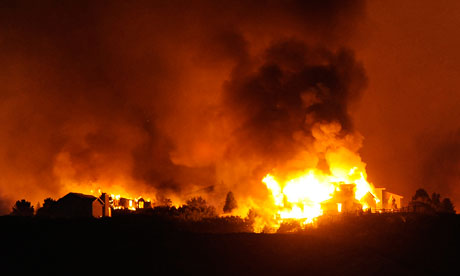
Scorching heat, high winds and bone-dry conditions are fueling catastrophic wildfires in the US west that offer a preview of the kind of disasters that human-caused climate change could bring, a trio of scientists said on Thursday.
“What we’re seeing is a window into what global warming really looks like,” said Princeton University’s Michael Oppenheimer, a lead author for the UN’s climate science panel. “It looks like heat, it looks like fires, it looks like this kind of environmental disaster … This provides vivid images of what we can expect to see more of in the future.”
In Colorado, wildfires that have raged for weeks have killed four people, displaced thousands and destroyed hundreds of homes. Because winter snowpack was lighter than usual and melted sooner, fire season started earlier in the US west, with wildfires out of control in Colorado, Montana and Utah.
The high temperatures that are helping drive these fires are consistent with projections by the UN Intergovernmental Panel on Climate Change (IPCC), which said this kind of extreme heat, with little cooling overnight, is one kind of damaging impact of global warming.
Others include more severe storms, floods and droughts, Oppenheimer said.
The stage was set for these fires when winter snowpack was lighter than usual, said Steven Running, a forest ecologist at the University of Montana.
Mountain snows melted an average of two weeks earlier than normal this year, Running said. “That just sets us up for a longer, drier summer. Then all you need is an ignition source and wind.”
Warmer-than-usual winters also allow tree-killing mountain pine beetles to survive the winter and attack western forests, leaving behind dry wood to fuel wildfires earlier in the season, Running said.
“Now we have a lot of dead trees to burn … it’s not even July yet,” he said. Trying to stop such blazes driven by high winds is a bit like to trying to stop a hurricane, Running said.
Fires cost about $1bn or more a year, and exact a toll on human health, ranging from increased risk of heart, lung and kidney ailments to post-traumatic stress disorder, said Howard Frumkin, a public health expert at the University of Washington.
“Wildfire smoke is like intense air pollution,” Frumkin said. “Pollution levels can reach many times higher than a bad day in Mexico City or Beijing.”
Older people, the very young and the ill are most vulnerable to the heat that adds to wildfire risk, he said. The strain of fleeing homes and living in communities in the path of a wildfire can trigger ailments like post-traumatic stress disorder, depression and anxiety.
The briefing was convened by the science organisation Climate Communications, with logistical support by Climate Nexus, an advocacy and communications group. An accompanying report on heat waves and climate change was released simultaneously.
Leave a Reply
You must be logged in to post a comment.