
Category: Ebono Institute

Funder and founder of the Generator, the Ebono Institute provides the techincal foundation of the network and contributes content on technology, artificial intelligence and efforts to build morality into the DNA of the system.

  • Tech assumptions embed digital divide

    Tech assumptions embed digital divide

    Two contradictory technological currents combine to further disempower the already disadvantaged.

    On one hand, the assumption that people in general have a certain technical capacity (both access and skills) means that those without that capacity are left on the wrong side of the digital divide pushing them into a downward spiral that mirrors the compounding impacts of economic disadvantage.

    On the other hand, the concerns around privacy and individual control of their online profile are a luxury that only the rich can afford. If you are not securely and comfortably connected to the digital systems that underpin modern life, you do not get the right to be choosy about the manner in which your profile is built or managed.

    Excluding the technologically disadvantaged

    An example may help.

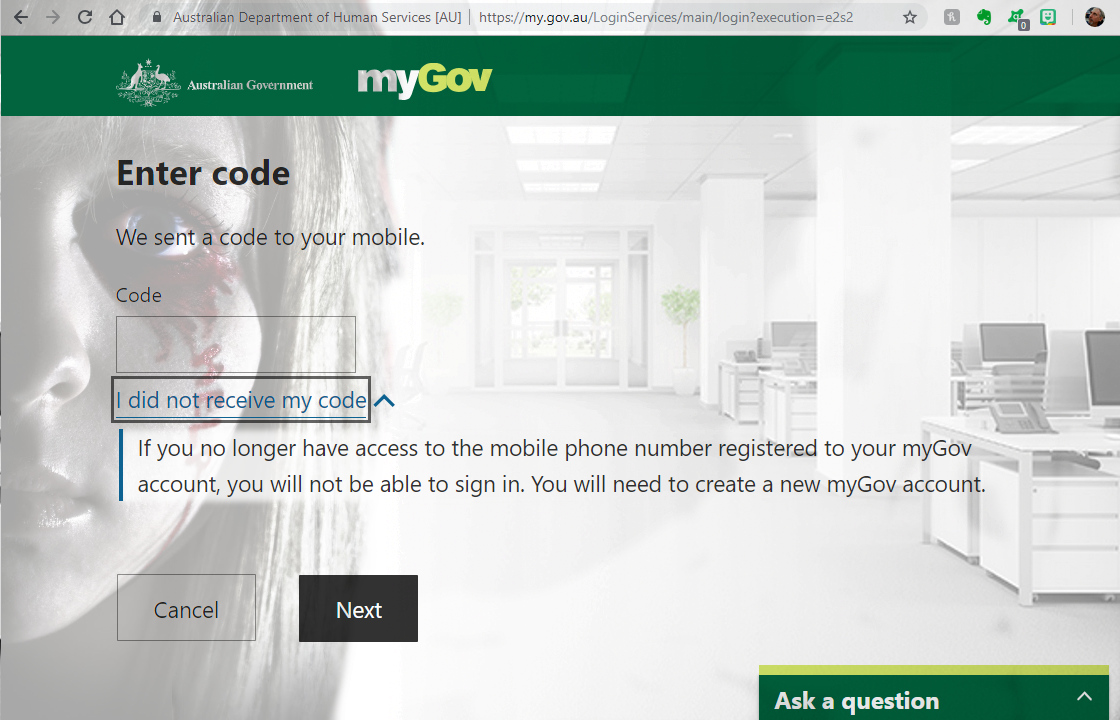
    To log into any of the major government agencies – Taxation, Medicare, My Health, NDIS, Veteran Services  as well as any of the welfare services on which millions of Australian depends – you must enter your username and password and then verify your identity by entering the code that arrives at your mobile phone. If you do not have a mobile phone you are advised that you cannot use the online services and you must go to an office of the relevant service.

    Thus, the elderly, the digitally illiterate, those with a physical or mental characteristic that causes them to struggle with a smart phone are forced to physically attend offices while the rest of us blithely manage our health records or report our taxation figures online. In many cases, those offices present another range of barriers. At the Centrelink office, for example, you are encouraged to reduce the load on staff by using the computers at the side of the office to access your claim online.

    So far, this example defines the relatively straightforward argument that we increasingly rely on services that demand a technological capacity that is not universally available. It is easy to understand that people with limited, flawed or no access to digital technology are at a disadvantage when it comes to engaging with certain aspects of modern life. While the scale of this disadvantage is not widely understood – partly because of its compound nature – the concept it easy to grasp.

    Profiling them regardless

    The second force at work, though, is more subtle. The privacy implications of digital technology are far reaching and complex. Consider the case of a person completely refusing to engage in the digital world, thereby maintaining their privacy by maintaining what is known in the business as an “air gap”.

    Refusing to participate in the digital world certainly ensures complete protection from direct access to your activity, it does not guarantee that you do not have a digital footprint and it certainly does not allow you to manage or shape your digital profile.

    Take the example of an elderly person who has no mobile phone or debit card.

    Even though they do not participate in social media, for example, they still have a digital profile compiled from references to them made by their friends and relatives. Similarly, face recognition software that draws on databases of passport and license photos does not require their online engagement to store the photograph from their passport or driver’s license.

    The My Health record is a recent and controversial example of an online database that requires every citizen to engage, even if it simply to state that you wish to disengage.

    So, the complete refusal to engage is the simplest example of disengagement and it still involves complex ethical and practical considerations. If we consider those people who use debit cards for banking and mobile telephones to make calls and send text messages but otherwise resist engagement in the more advanced digital platforms the complexities multiply significantly.

    The implications

    Once we start to examine how much control someone has over the digital profile that they willingly create but wish to manage, the issues become so complex that we struggle to find the boundaries.

    Consider a woman fleeing domestic violence, applying for help from the government to support her in a safe refuge form her violent partner.

    The first thing that any domestic violence support organisation will do is remove the SIM card from her phone, cut it in half, smash the mobile phone to pieces and deposit the lot in a bin. The mobile phone is the most common mechanism whereby perpetrators of domestic violence track down their victims. The days following the departure from the scene of domestic violence represent the greatest danger to victims of violence. More women are killed attempting to flee domestic violence than enduring it, this is one of the major challenges for agencies attempting to support women who face violence in a relationship.

    Now, because government departments insist that citizens have a mobile phone to gain online access to their own records, the next thing the agency has to do is to assist the woman to set up new telephone and email account so that she can start applying to government agencies for assistance.

    And so now the complexities begin. Existing email addresses and telephone numbers are often the very tools used by these agencies to verify the identity of an applicant. If they have just smashed their phone into small pieces this may represent a significant challenge.

    Even without exploring the legal requirements regarding consent of a spouse before some details can be accessed and changed, or a partner can be excluded, the situation is riddled with the anomaly we commonly call a Catch 22. You cannot log into your record without the mobile phone that you wish to report as no longer available. Changing these details at the offices of various agencies may be the only means possible. That relies on having original documents that may well be in the filing cabinet in the family home where an angry spouse sits armed and waiting for the opportunity to punish the person fleeing the control and abuse to which they have been subject for years.

    Without getting into the tangled web that faces every victim of domestic violence it is apparent that anyone outside what is considered the standard digital capacity of the modern citizen faces the traps and pitfalls of those systems once the cracks open up because one piece of the puzzle is missing.

    The My Health record is a recent example of a controversial system that we are assured is perfectly easy to control, simply by logging in and specifying how we want it managed. The assumption, again, is that we all have access to our record online.

    Does it matter?

    To test how dependent you are on your online connection, try leaving your phone at home and going through a normal day. Turn off your domestic wifi and see how well you can meet the demands of your family. Watch the people landing at an international airport. They will queue for half an hour to get access to WiFi so they can reconnect to the services that locate and verify them.

    Reflect on the news stories that emerge when the power is off for more than 24 hours across large sections of a community. The water runs out, fuel pumps stop working, food rots in refrigerators that no longer remain cold, cold, hungry desperate people take advantage of the darkened streets to help themselves to what they need.

    We live in a highly integrated and fragile world that relies on all its constituent parts functioning correctly to maintain the lifestyle to which we have become accustomed. Those people who do not have access to all those components work twice as hard to maintain a base level of engagement. The exclusion of these people from our online activity is a major disempowerment and disadvantage for a whole class of people that is largely invisible to those of us who never experience it.

    It is the assertion of this article that we need to address this imbalance by supporting the digitally challenged as an integral part of our social safety net.

    It is a topic of further exploration that their inability to engage removes any degree of control over how they occupy that digital world. The irony of that situation that may seem abstract and of little interest but it actually identifies a major challenge. The digital representation of ourselves now occupies an important place in the global systems by which we define ourselves that is rapidly becoming more significant than the physical self. We have already forgotten that not so long ago, the physical self completely defined us.

    But that is a consideration for another article.

  • Decentralized Applications: Harnessing Bitcoin’s Blockchain Technology

    Decentralized Applications: Harnessing Bitcoin’s Blockchain Technology

    Author: Siraj Raval

    ISBN: 978-1491924549

    Publisher: O’Reilly – Safari Books

    Published: August 2016

    Price: Kindle $US20, Paperback $19.95

    Raval writes for application developers interested in the capacity of the blockchain to underpin distributed applications. He provides excellent explanations of the evolution of the technology and its implication in terms of how applications operate and the impact those modes of operation have on various business models.

    He maps out the various BitCoin technologies and components of the BitCoin ecosystem and discusses the political beliefs that underpin preferences for certain approaches. This is valuable for strategic planners in corporations, government as well as academics researching the area.

    He discusses separately the decentralisation of various aspects of technology such as bandwidth, asset registration and processing capacity and then pulls all that together with a discussion of the practical implications of that.

    Thus a serious foundation for the principles underpinning distributed application is built up before he touches the topic of specific platforms or presents a line of pseudo code.

    By Chapter 3 he has the reader building their first dApp and then moves in Chapter 4 to exploring the operation of the first distributed marketplace, the Open Bazaar.

    By interweaving practical technical development with real world considerations he provides a path to market that will suit most hands on developers.

    From there on he introduces one technology after another, outlining its operation, implications, installation and manipulation.

    This is a hands on book for real world developers who want to get immersed in the capabilities of distributed applications, quickly.

    It is beautifully produced with code blocks, examples and illustrations all carefully laid out and presented to maximum effect.

    At 18 months old, some of the technologies have moved on a version or two, but the rapid immersion approach ensures that you can follow Raval into a topic and then quickly catch up with the latest developments.

    O’Reilly is selling it as a contemporary work, at $US20 for the Kindle version and $US19.50 for the paperback it is clearly aimed at meeting the current needs of active programmers. With the rapid move from concept to hands-on implementation, this is not a book for planners or strategists, though if you find a copy in the lunch room, you will enjoy the introductions to any of the topics that interest you.

    You can buy the book directly by clicking the picture of the cover above.

  • Mastering BitCoin: Programming the Open Blockchain

    Mastering BitCoin: Programming the Open Blockchain

    Author: Andreas M. Antonopolous

    ISBN: 978-1491954386

    Publisher: O’Reilly – Safari Books

    Published: June 2017

    The second edition of this text is aimed directly at software developers and programmers but many technically savvy readers who are not coders report that it helped them understand the technology much better than any of the more general introductions.

    It deals in detail with the requirements of coding distributed apps and software to take advantage of the blockchain. To achieve this, it describes in detail how each of the components work before delving into the code itself.

    While the background and the introduction to each concept is general, the examples are all in Python and C++. Most programmers will find that the examples are translatable to the code of their choice but If that represents a serious challenge, you may need to look elsewhere.

    The book evolved from a published set of documents on GitHub and the many participants who contributed to the evolution of the text are acknowledged up front. As with all collaborative projects the maturity that comes with the robust use, testing and feedback shows in the quality of the examples and the depth of the discussion around challenges and reasons for things being developed in particular ways.

    There is nothing shrill or hyped about this text, it is considered, well reviewed and recently updated.

    At $US11.95 for the Kindle edition and $US21.53 for the paperback this is a full-priced text, but it represents real value for money. I thoroughly recommend it as a solid technical overview and a good guide for developers and programmers serious about considering a move into distributed application development.

  • Blockchain: Blueprint for a New Economy

    Blockchain: Blueprint for a New Economy

    Author: Melanie Swan

    ISBN: 9781491920497

    Publisher: O’Reilly – Safari Books

    Published: February 2015

    O’Reilly has been publishing technical books for decades and has established a reputation for accuracy, timeliness and depth that is unparalleled in the market. BLueprint for a New Economy lives up to this reputation and covers the philosophical, economic and technical implications of the technology in great depth.

    The one limitation of the book is its age: At three years old in a fast moving are like this it is seriously in need of an update. While the underlying technology and its implications have not changed, it is frustrating to read facts and figures that an educated layperson knows are wrong peppered throughout the text. While this remains a valuable reference, I am not recommending it as an introductory text for that reason.

    If you are comfortable with your knowledge of the overall area and want to go deeper into the implications at an academic, philosophical or policy level this remains relevant and useful. Do not turn to it, however, for a current snapshot of the industry.

    At $US4.82 and $US9.54 for the ebook and paperback respectively, O’Reilly appears to be currently discounting this in preparation for a new edition. When that happens I have no hesitation recommending this as the authoritative text providing a complete overview on a range of levels.


  • Blockchain Technology Explained

    Blockchain Technology Explained

    Author: Alan T. Norman

    ISBN: no ISBN

    Publisher: self-published, Alan T. Norman

    Published in December 2017, Alan T. Norman’s latest book on the technology goes a lot deeper than many of these introductory texts. At 126 pages it simply has more depth and because Norman has written separate books on investing in digital currency and other areas of software development he has a deeper body of work on which to draw.

    As one example of that depth, he actually goes into detail on the specific problems faced by organising financial services online, which BitCoin solves and the technical aspects of that solution. Put simply, the double spend problem is ensuring that money is only spent once and the solution is to combine the power of file sharing technology to ensure that information is widely distributed and always available with encryption to ensure that the distributed information is secure and accurate.

    He builds that picture piece by piece using simple business english, with enough examples that most readers will get the picture, without being buried in technical detail.

    He moves through the blockchain, BitCoin, other digital currencies and their uses and applications, distributed apps and the application of all this technology in corporations, software development and governance.

    He breaks down the hype around the blockchain and distributed apps to paint a realistic picture of its implementation and how it will roll out in our everyday life.

    Norman also goes into sufficient detail about the operation of the technology to explain why it is secure and how it works. These explanations are readable and straightforward without being dumbed down and over-simplistic.

    For example his explanation about the use of cryptography in the blockchain is titled A Deep Dive on How Blockchain Hashing Works

    He opens the chapter with the observation,

    “This chapter is here by popular demand from reader comments. It’s a deep dive into how hashing works. This is going to get very technical, and you don’t have to read this section in order to understand the basics of blockchain.”

    He then launches into a good, high level explanation of the idea of hashing (creating a code that proves online data has not been tampered with) and then, in the next section, how it is used in the blockchain. Once he has explained it as simply as possible he observes,

    “I’ve been defining mining difficulty by the number of leading zeroes a successful hash needs to have, since it’s an easy visual way to understand mining difficulty. The truth is more complicated and variable.”

    In this way, he builds up a complex understanding at the depth required by the reader. As soon as you get bored with the level of detail provided you jump to the next heading. By the end of that particular chapter, he has explained the SHA-256 hashing algorithm in sufficient detail that you could actually map it out and write the code required to perform it. Most readers will skip over some part of it, but it is great to be able to delve into it at your level of interest.

    His discussion of the limitations of BitCoin as an active currency is honest and important. With gateway providers, such as Stripe, dropping support for BitCoin it is imperative that people considering the business applications of these technologies understand the thinking behind it. In a nutshell, that limitation is the time it takes to authorise a transaction on the blockchain. At many minutes that authorisation time is well outside the instant payment systems that we have become used to online rendering Bitcoin on its own useless as a medium for transaction in most ecommerce applications.

    Norman outlines some of the approaches that are being taken to develop solutions to these teething problems but points out that the technology is not ready to sweep the world in quite the way that some of the marketing hype (and some of the less considered books available) suggest.

    In summary, this is a nice combination of a low priced, self-published book and a reasonable depth of information. At the time of writing it was $US1.02 for the Kindle edition and $US9.95 for the paperback. That being said, the book is not as well produced as those from more established publishers. The ability to navigate through the book is limited to the basic functions of the Kindle application on which you are reading it. The layout is basic, there are no footnotes or references in the text and the presentation of headings and lists is primitive.

    These are small sacrifices for the price saving if that matters to you.

  • Blockchain: The Beginners Guide

    Blockchain: The Beginners Guide

    Author: Artemis Caro

    ISBN: 1985574020

    Publisher: self-published, Artemis Caro

    The full title of Artemis Caro’s recent book (February 2018) is Blockchain: The Beginners Guide To Understanding The Technology Behind Bitcoin & Cryptocurrency (The Future of Money). It is a quick overview and introduction aimed to provide introduce the interested reader to the overall concepts. It is cheap, $US3.10 on the Kindle and $US5.49 for the paperback and Kindle combined at the time of going to press. It is short and does not have a lot of depth. That said, it covers the basic questions in an organised fashion and gives you some pointers into what areas you might want to explore further. It sets out to cover the questions:

    • A Brief History of Blockchain Technology
    • Blockchain Basics: Managing Digital Transactions
    • What is a Distributed Ledger?
    • Blockchain Beyond Bitcoin
    • Implications Of Blockchain: Big Data, Privacy & Personal Data
    • Profiting from Blockchain Technologies
    • Limitations & Challenges of Blockchain
    • The Future of Blockchain

    The marketing blurb says “The goal of this book is not to plumb the depths of the mathematical wizardry used to code blockchain-based applications, but rather to serve as an introduction to the broader architecture and conceptual background behind blockchain technology.” That is something of an understatement.

    If you want a quick read to bring you up to speed this is not a bad way to get an overview fast. If you like doing your own research, though, a weekend on the Internet would probably give you more satisfaction.