Geoff has written for publications as diverse as PC User and The Northern Star His weekly columns have been a source of humour and inspiration for tens of thousands of readers and his mailbox is always full.
Here you can find his more recent contributions.
Leigh Storr talks to The Generator at his office in Woolloongabba
As predicted by The Generator in August 2014 a combination of domestic solar power and local storage has fallen below the price of grid power. South Australia will ramp up its incentives to owners of household solar power. While this price advantage makes it attractive to customers in all states to leave the grid, sonme governments and power companies are colluding to make that difficult. Indeed it may also be socially responsible as well as more secure to remain connected to the grid despite the commercial disadvantages forced on the homeowner by pricing policies and regulation. The Generator August 2014 article outlines a guerilla disconnection process that allows users to sidestep regulations preventing disconnection flagged in Queensland at the time of writing.
Tesla battery + solar now significantly cheaper than greed power.
Analysis has shown that households are better off installing 5 kW solar and a battery rather than relying on grid only supply. South Australia’s consumers bought 20% less electricity from the grid in 2017 than they did in 2010. I imagine that by 2025 the amount will be at least 20% less again.
Battery storage leaves fossil fuels and regulators in state of intertia
Ever since the opening of the Tesla big battery next to the Hornsdale wind farm in South Australia last month, it is as though a new era has dawned for the management of Australia’s electricity supply. This is not just about flexibility, smoothing out renewables, or responding to peak demand and speed of response – it is also about grid security and grid stability. And it is causing a massive re-think. Here’s why:
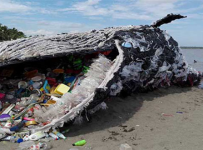
Greenpeace Philippines created this artwork to highlight the impact of plastics on the aceans
Life expectancy is falling in the US as the impact of pollutants on cancer in children, and untreatable diseases spread from industrially farrmed food into the population. As the impact of pollutants on childhood health is better understood experts warn that cancers, asthma and obesity have become normal characteristics of the population. Pollution is directly killing over 20 million people a year, wiping out the equivalent of a nation like Australia or a US state like Florida or New York, every year. The impact of industrial use of antibiotics in food production means that untreatable diseases are being transmitted into the population through the food chain.
A US-UK trade deal threatens to export the horrors of US corporate livestock production
Around 75% of the antibiotics used in the US are fed to farm animals. Our city is under siege, and we are knocking down our own defences. The EU and the UK are no paragons. The Guardian has revealed that both pork and chicken sold here are infected with resistant superbugs.
The Precautionary Principle Asks “How Much Harm Is Avoidable?” Rather Than “How Much Harm Is Acceptable?”
In 1980, breast milk in the US was so contaminated with DDT, PCBs and other industrial poisons. If it were cow’s milk, it would be banned. After two decades of failed “chemical regulation,” babies everywhere in the world are drinking industrial toxicants in breast milk. In 2005 umbilical cord blood from newborns showed that babies are now “pre-polluted” with 200 industrial compounds. In the US, children’s health is deteriorating. childhood cancers has risen 27% since 1974; childhood asthma, obesity, learning and behaviour problems doubled. Industrial poisons have spread worldwide because regulators have relied on a quantitative risk assessment to determine which chemical releases are “safe.” But “safe” amounts of 80,000 chemicals have contaminated the entire planet, so today noone is safe.
Junk Planet: Is Earth the Largest Garbage Dump in the Universe?
Approximately 19 million premature deaths occur annually as a result of the way societies use natural resources and impact the environment to support production and consumption. This will give you a reasonably comprehensive summary of the types of garbage being generated (focusing particularly on those that are less well known), the locations into which the garbage is being dumped and some indication of what is being done about it and what you can do too.
Desperate Need to Halt ‘World’s Largest Killer’ — Pollution
Analyses impacts on human health and ecosystems brought on by air, land, freshwater, marine, chemical and waste pollution. “None of us is now safe, so now all of us have to act. The health effects are stark, with air pollution alone killing some 6.5 million annually, affecting mostly poor and vulnerable people.”
Deposit schemes reduce drink containers in the ocean by 40%
Some eight million metric tonnes of plastic ends up in the ocean every year. There has been a push to get rid of plastic straws, and even Queen Elizabeth II has banned single use plastics from Royal Estates. How effective is a cash for containers program? While there is evidence that container deposits increase return rates and decrease litter, until now there has been no study asking whether they also reduce the sources of debris entering the oceans.
This article originally appeared on the ABC but was removed citing “editorial standards”. The fact was brought to the attention of the Generator News by News Daily The article itself was retrieved from the Web Archive
Tax-free billions: Australia’s largest companies haven’t paid corporate tax in three years
Exclusive by chief economics correspondent Emma Alberici
Qantas CEO Alan Joyce, one of the most prominent supporters of the Turnbull Government’s proposed big business tax cut, presides over a company that hasn’t paid corporate tax for close to 10 years.
The period roughly coincides with Mr Joyce’s tenure at the helm of Australia’s flag carrier.
Alan Joyce, the CEO of Qantas, is a major supporter of corporate tax cuts in Australia. (AAP: Joel Carrett)
Despite generating income of $106.4 billion, the flying kangaroo has avoided paying tax on that bounty since 2009, thanks to Australia’s generous tax concessions, depreciation provisions and the ability to offset company losses against past and future profits.
New analysis by the ABC reveals Qantas is not alone — its tax behaviour is consistent with about 380 of Australia’s largest companies. ATO corporate tax transparency data — confirmed in email exchanges with company representatives — reveals about one in five of the country’s biggest companies have paid no tax for at least the past three years.
Not one of Australia’s biggest airlines has paid corporate tax since at least 2013, including Virgin and its subsidiary Tigerair, Etihad, Emirates and Qatar.
Each one of those companies has sold billions of dollars worth of tickets in Australia.
When asked for an explanation, both Qantas and Virgin pointed the ABC to their historical losses and the entirely legitimate use of Australia’s tax laws that allow them to offset those losses against future profits indefinitely.
Both companies were at pains to point out that, notwithstanding their zero corporate tax liabilities, they had continued to collect and pay departure taxes, fuel and alcohol excises, payroll tax, GST and FBT.
Presumably that’s what the Etihad spokesman was alluding to in his statement to the ABC.
“Etihad is fully compliant with all Australian tax requirements, and has paid all the taxes it is obligated to do so under Australian law.”
EnergyAustralia’s tax-free decade
At a time when Australian households have seen their electricity prices soar, the country’s leading energy retailer, EnergyAustralia, hasn’t been paying corporate tax. EnergyAustralia paid no corporate tax for the decade to 2016.
For the three years to June 2016, EnergyAustralia’s 1.7 million electricity and gas customers across eastern Australia helped it record $24 billion worth of income on which no tax was paid.
An EnergyAustralia spokesperson said the company’s performance, “reflects how the power-generation sector is underpinned by assets that were built last century”.
“Since 2006, EnergyAustralia has written down the value of its assets by $1.9 billion.”
How much tax did the big banks pay?
Ten years after the global financial crisis — which they are largely responsible for creating — some of the world’s most prominent investment banks are collecting tidy sums of income in Australia and not paying corporate tax.
Among them is Malcolm Turnbull’s old employer, Goldman Sachs, which recently won a lucrative contract with the NSW Government.
Described by Rolling Stone Magazine as, “the great vampire squid wrapped around the face of humanity, relentlessly jamming its blood funnel into anything that smells like money”, Goldman will be paid $16.5 million as the state’s financial adviser on the sale of the $16.8 billion WestConnex motorway in NSW.
The investment bank generated revenue of $1.84 billion over three years but paid zero corporate tax.
Ditto for JPMorgan Chase which raked in $2.2 billion and hasn’t paid corporate tax since at least 2013.
In one of the most audacious explanations advanced to the ABC for the non-payment of corporate tax, a spokesman for America’s biggest bank said JPMorgan was still suffering the aftershocks of the financial crisis which meant its Australian operations continued to operate at a loss.
But late last year, it emerged JPMorgan Chase agreed to pay a record $13 billion fine to US federal and state authorities in 2013.
The purpose of this fine was to settle claims it had misled investors in the years leading up to 2008.
Could the bank be writing that fine off against its Australian income? The spokesman didn’t care to elaborate.
Shifting profits overseas
88 per cent of people, polled by Reuters, think corporate tax avoidance leads to a culture which poses the question: “Can we get away with it?” (Supplied: Thomson Reuters)
Curiously, French bank BNP Paribas also appeared to have made some bad investments taxpayers were having to compensate it for.
It hasn’t paid corporate tax for at least three years – like Goldman, JPMorgan Chase, American Express, Barclays Bank and the Royal Bank of Scotland.
The oldest foreign bank in Australia (resident here since 1881) told the ABC that despite attracting close to $10 billion in income since 2013, BNP failed to make any profits.
BNP said its losses, “included the write off of bad debts from lending to certain Australian domiciled companies”.
As far as the local financial services sector goes, Babcock and Brown International stands out among the 2,000 company names in the Australian Taxation Office’s public records.
Babcock and Brown remains the country’s biggest corporate failure, having collapsed in 2009 with debts of more than $10 billion.
According to the ATO, Babcock and Brown International (a wholly owned subsidiary of the liquidated group, Babcock and Brown Ltd) reported $1.7 billion worth of income for the three years to 2016.
It paid no corporate tax.
CEO Michael Larkin, who has been with the Babcock group for 14 years, told the ABC the money was taxed elsewhere in the world where Babcock and Brown International engages in business.
He wouldn’t be drawn on what the company does overseas, where or how much tax has been paid in other jurisdictions.
Australian tax law has allowed foreign companies to shift profits to affiliates or parent groups offshore in the guise of payments for services.
They’ve also been entitled to lend money to their Australian operations at inflated prices to create excessive tax deductions in Australia.
This can all work to render the Australian business loss-making, therefore not required to pay corporate tax.
For local companies, the dividend imputation system is a unique tool that allows businesses to pass tax credits on to their investors.
Australia and New Zealand are now the only two OECD countries to offer imputation which results in around a third of corporate tax revenue in Australia being handed back to investors.
Put simply, it means a 30 per cent corporate tax rate with franked dividends raises roughly as much as a headline 20 per cent rate without them.
Over the past 30 years, a number of countries have abandoned dividend imputation, including the UK, Germany, Finland, Norway, Singapore and Malaysia.
Thanks to legislation passed in 2013, the Australian Tax Office now publishes an annual record of total income received, taxable income and tax payable for the roughly 2,000 Australian companies with annual turnovers of more than $100 million.
It’s called The Corporate Tax Transparency Data which is somewhat of a misnomer given the numbers say nothing about how businesses use deductions and concessions to reduce their taxable incomes.
All the focus on the tax shenanigans of foreign technology and media companies has diverted our gaze from the taxpaying habits of some of their home grown rivals.
The media colossus reported total income of $8.5 billion and even boasted a $71 million profit in 2014/15 but no corporate tax was paid.
The company’s corporate affairs boss, Liz Deegan, wrote to the ABC to clarify that: “News Corp Australia has deductible operating costs and certain tax incentives and allowable credits, like R&D and franking credits, that offset the revenue disclosed.”
Its partly owned pay-TV company, Foxtel, received a $30 million gift from the Federal Government in the last budget, ostensibly to provide better coverage of female sports.
In the three years prior, Foxtel had also not paid corporate tax. Fairfax, News Corp’s newspaper rival in Australia, paid $53.1 million in corporate tax over the same period.
The tax-free club
Software giant Atlassian also pointed to R&D tax concessions when explaining why it too hasn’t paid corporate tax for the past two years on accumulated income just shy of $1 billion.
A tally of the three years’ available data reveals some of this country’s most recognised names haven’t paid corporate tax since at least 2013.
They include Broadspectrum (formerly Transfield Services) which collected $8.6 billion in income over three years. An estimated 30 per cent of that income ($2.5 billion) was paid directly by the Federal Government for running Australia’s offshore detention facilities. Broadspectrum was taken over by Spanish conglomerate Ferrovial in 2016.
Among the others who’ve escaped paying any corporate tax for three years are Bluescope Steel, Ansell, Amcor, Billabong International and TransurbanHoldings.
The big property and construction companies Lend Lease, Grocon, Stockland and GPT are also part of the corporate tax-free club.
Mackay Sugar and CSR who’ve been lobbying against a sugar tax haven’t paid corporate tax for three years either.
Not going down without a fight
The Turnbull Government knows well that forensic tax audits are an expensive and resource-sapping exercise, especially when they involve the complex interpretation of other countries’ tax codes and their intersection with ours.
Federal Treasurer Scott Morrison has committed $679 million over four years to a new Tax Avoidance Taskforce.
New laws to combat complicated corporate structures whose core purpose is to avoid tax have also been passed.
But if Australia wants the likes of Apple, Google and Facebook to pay more tax on the phones and advertising it sells in Australia, some of our biggest taxpayers, BHP and Rio Tinto should arguably be paying more tax in China where they sell most of their iron ore.
Among all the murky detail of corporate tax arrangements, one thing is clear: companies with the financial firepower of BHP and Rio Tinto aren’t going to accept a negative assessment from the ATO without a fight.
Both of Australia’s biggest miners are currently in dispute over their Singaporean marketing operations (corporate tax rate of 17 per cent).
Convoluted corporate arrangements see BHP and Rio sell commodities they’ve mined in Australia to their Singapore businesses, which on-sell the iron ore et al in to export markets (predominantly China) often with a hefty mark-up.
The ATO rejects the legitimacy of the tax structure and is seeking $1 billion in tax, interest and penalties from BHP and about half that ($500 million) from Rio.
A BHP spokesman told the ABC, “The primary tax in dispute represents less than 2 per cent of the $66 billion in taxes and royalties paid in Australia over that 11-year period … BHP does not agree with the ATO’s position.
“Consequently, we have objected to all the amended assessments and intend to continue to defend our position, including by initiating court action if necessary.”
Perhaps unsurprisingly, some of the country’s most trusted corporate advisers, including the Boston Consulting Group and MYOB, paid no tax for the three years to 2016.
Even the industry groups — Chartered Accountants (CAANZ) and the Certified Practising Accountants (CPA) have paid nothing, or next to nothing, in corporate tax over the that period on account of their “mutual” status which excludes membership fees from assessable income.
CPA Australia reeled in $493 million in income between 2013 and 2016.
Australia’s tax laws allowed them to pay just $1,967.00 in corporate tax.
Chartered Accountants Australia and New Zealand is a relatively new group.
In its two years as a registered entity for tax purposes it has paid zero corporate tax on $240 million in income.
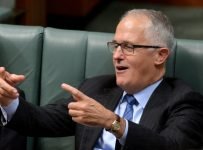
The Prime Minister Malcolm Turnbull will today decree a Royal Commission into Sexual Staff Relations known as the Royal Commission into Bonks, i.e. #bonkcommission.
He will say, “Far from being tawdry or salacious, the investigation will provide clear guidelines as the what is and is not appropriate in navigating the complex world of human relations in the intense workplace environment that is Australian Parliament House.”
The announcement follows yesterday’s revision to the Code of Ministerial Conduct trending online as #bonkban.
The Prime Minister will also say. “The Commission will find it desirable to set up a Register of Staff Relations.”
Those failing to accurately use the Register will be deemed to have committed a #bonkommission.
The PM says there will be zero tolerance for #bonkemissions in his APH
He will also announce a new APH (Australian Parliament House) clean furniture policy. Breaches of this policy will be known as #bonkemissions.
International media and parliamentary supervisors watch developments in Australia with interest. Some commenttators consider the Australian PM an endangered species known as The Woolly Malcolm.
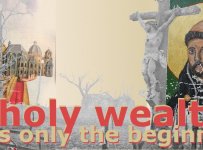
The Age special investigation by Royce Millar, Ben Schneiders and Chris Vedelago into Catholic Inc has unleashed a storm of controversy about the stinginess of the Church in response to child sex abuse victims. It is a valuable piece of research that justifiably triggers strong emotions in the largely irreligious Australian population.
The image of a vastly wealthy institution lying about its wealth in court to protect itself from the compensation claims of innocent victims of rape perpetrated by its officials is inflammatory in the extreme. It is, however, a distraction from the fundamental distortions of moral principle that typify the status of the church in our society.
The list is long:
There is the hypocrisy of the church deliberately lying.
There is the hypocrisy of the church worshipping money.
Then there is the complex and fraught issue of the tax free status of religion.
Then there is the blatant placing of the church above the law by its most senior officers in public, without any shame, regret or attempt at explanation.
On top of that there is the complicity of the state which pays the church billions of dollars to provide welfare services even though it has been extensively proven that the church committed institutional and systemic abuse and exploitation of the weak and vulnerable in those very welfare services.
While nearly all of these are mentioned in the Age special report, they are simply referred to as part of building the general case that the church gets special privileges that it may not deserve. This article argues that each of these items deserves focused consideration.
The lies
Millar, Schneiders and Velago extensively document the nature of the lies and the methods used to fabricate them. The church deliberately misled the courts and parliaments or refused to provide the information necessary to determine its wealth. There is no point in carrying out this subterfuge unless it is to protect that wealth. The act of lying about that wealth implicitly proves that the church is acting to protect and nurture that wealth from the interests of the state in which it operates.
The worship
Timothy writes of the duty of servants and masters to behave themselves in the interests of a stable society. He lectures servants on hating good masters and masters on coveting wealth.
Timothy 6:7 For we brought nothing into this world and it is certain we can carry nothing out.
Timothy 6:10. For the love of money is the root of all evil: which, while some coveted after, they have erred from the faith and pierced themselves through with many sorrows.
Much of the basis of the 400 year old protestant revolution was based on the sin of the church in being too focused on wealth. This is not a new problem but it needs to be restated a thousand times.
The tax
The relationship between church and state is long and complex.
Traditionally the priest caste and the warrior caste performed different roles in society and often came to loggerheads. Jared Diamond in Collapse presents the demise of Easter Island, as just such a tussle. The failure of crops due to overpopulation was blamed on the weakness of the priest caste and so the warrior caste rose to prominence and directed the energy of the people into building its famous stone monuments.
Tom Holland in Rubicon and The Shadow of the Sword describes Rome as perfecting the use of religion as a cheaper tool for subduing populations than force. To have people willingly submit to the state as a divine protector is a handy form of social management.
He extends the notion in Millenium, describing the pact between a struggling church and a rampant force of land dwelling vikings (the northmen, norsemen, Normans) who used the recently discovered stirrup to mount armed raids on a defenceless public and rape and pillage medieval Europe into a blackened mess. By redirecting their energy into the Crusades and promising them wealth on Earth and everlasting accolades in heaven a string of actors from the Abbot of Cluny to Charlemagne founded Christian Europe on a very clear alliance between Church and State.
The separation of Church and State is a concept born in the Enlightenment in an attempt to relegate the Church to a less central position of power. The fact that the Church developed, refined and continues to use every weapon in its arsenal to resist that relegation should hardly surprise us.
We cannot and must not dismiss the notion of taxing the church as impossible or unreasonable not can we underestimate the power and fury with which the church will resist any such attempts.
This is not a simple decision that will be made by a mail order plebiscite, this is a tooth and claw battle that has fuelled many civil wars in the past and is likely to do so in the future.
The current level of debate on this topic is a long way from taking this dangerous, historical dimension into account. /religious-tax-exemption-protects-the-state/
The law
Given the history just outlined, the church naturally assumes a special relationship with the law. Kings ruled by the Grace of God at the whim of the pope. The protestant refusal to pay taxes to the church and await a papal blessing on the choice of spouse is still viewed within the church as a particular characteristic of a certain period of history rather than as the rightful relationship between church and state.
Render unto Caesar what is Caesar’s reserves plenty of room for interpretation about exactly where that line lies.
What is interesting in the alt-right context of 2018 is to compare this with the hysteria around the nature of Sharia law as it is practiced in countries like Saudi Arabia. The alt right feed and fuel the fear that our unholy military alliance with such evil bastards might allow their creepy zealotry to infest and overwhelm our precious democracy. In truth, the enemy is within. It is our own existing religious institutions, especially the Catholic Church, who put themselves above the law and would “prefer to go to jail that inform the police of the [criminal] activities of a priest.” Yes, our democracy is fragile, but it is not immigration that threatens it, it is corruption in the upper echelons of society.
Welfare
And so to the unholiest alliance of all.
In the name of economic rationalism, modern neoliberal governments attempt to outsource welfare and willingly hand over billions to the churches who are well organised, have the real estate, the workers and the financial framework to deal with those members of society who are not productive participants in the money generating machine.
The fact that the churches all have a notion of the deserving poor, make moral judgements about who should and should not receive that welfare and are more concerned with building and protecting their institutions than in servicing their clients means nothing to the bureaucrats. It is simply handy to get those inconvenient numbers off the books and get on with the business of running “the economy”.
More relevantly, these institutions have been proven to be organised crime syndicates systematically nurturing and protecting rapists and paedophiles. Worse, they blatantly deny any responsibility for compensating the victims or preventing future re-occurences of this criminal behaviour.
Despite this, our governments assume that we will continue to accept the churches as the relevant institutions to teach our children, protect our orphans, feed and clothe the poor and homeless and find work for the damaged and under employed.
At the same time, hardworking secular organisations are branded as advocates and lobbyists and punished for their activism by having their funding removed.
That specific argument is presented in detail in an earlier editions of the Cross. /criminal-gangs/
and so …
It is critical that we act. The heat generated by this worthy investigation into the unholy wealth of this criminal organisation can and should be harnessed to call for fundamental change. We must be ready to back the secular organisations that offer alternatives to church welfare and we must stand up to our pious and self serving politicians that will pay lip service to the cause but fundamentally protect their backsides from the heat of a furious dragon protecting its gold.
Above all we must be prepared to face the truth. The church is not a protector of our morals or a force for good. It is a dark and secretive institution designed to prey on the billions of its members to accumulate vast wealth and wield vast power. We must be prepared to fight it no matter how hard that is.
Uber driver, Sayed. Badly beaten for his phone and wallet.
Sayed is a fellow driver who answered a job request in Brighton on a Wednesday night at 2am. He was forced from his car at knifepoint, badly beaten, then left to die on the road. His car and phone were stolen. There was nothing he could do to stop this violence or save his belongings. This could happen to any rideshare driver.
Now Sayed has broken bones and an injured back. He says he feels like a disabled person. He definitely can’t drive and, like the rest of us, he has noinsurance cover or sick pay that will cover being beaten up by a rider.
After initially stating that they are not responsible for such an occurrence (even though the request came through their system), Uber thanked Sayed for remaining professional throughout the beating. Since Channel 7 news exposed their lack of support, however, Uber have offered Sayed a small sum, not enough even to cover his ambulance bill.
So drivers and riders and the general public are coming together to provide a fund for Sayed that will help with medical bills and support him while he is unable to work.
Please support those in our community who are employed without safeguards. Let’s show that we live by higher standards than the unscrupulous employers who act like we really are replaceable ants. We are better than them.