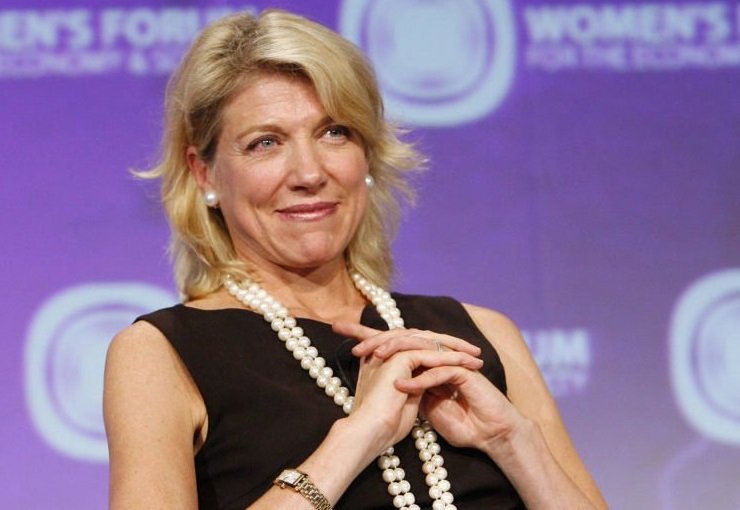
Lyn Forester de Rothschilds is a key player in the Council for Inclusive Capitalism with the Vatican.
The article outlines a key alliance between the world’s richest people and the Vatican to create an “inclusive” capitalism that protects the poor and the planet in line with Pope Francis recent dictates.
It criticises the alliance on a number of levels, primarily for the manner in which global agendas have a habit of entrenching power elites in the name of doing good. It compare Pope Francis global agenda with the twelfth century Crusades and highlights connections between, Lyn Forester de Rothschilds, Jeffrey Epstein and the Clintons.
While Neo Journal’s approach concentrates on these seedy connections and the shadowy reputation of some activities by these global philanthropists, The Generator has concentrated on specific problems – such as the concentration of resources in the Doomsday Project, the arbitrary harshness of Modi’s cashless India, and the underlying role of the very small number of people who actually direct the world’s financial systems.
Regular followers of The Generator know that we are rigorous about checking and providing sources and debunking conspiracy theories. That has occasionally put us at odds with facebook – https://thegenerator.news/china-shuts-the-door-on-facebook/ and https://thegenerator.news/soul-sex-facebook-saga-continues/ but has stood us in good stead when reporting controversial issues.
This is in response to the recent New York Time’s commentary on the Empire of Rupert Murdoch, P&I 5th April. Murdoch’s insight has been passed to many of the publishers of commercial media and political parties. It has damaged society and there’s no easy way for it to be countered.
In 1998 Rupert Murdoch received a Papal Knighthood
Since Moses was a boy, one of the universal challenges of any person who needs to communicate, sell, preach, or evangelise, is of communicating to the maximum number of people at the smallest cost per person. It’s a maxim in trade, politics, religion and any form of communications. It’s the fundamental dynamic that undergirds the entire advertising industry. The vast majority of the population scarcely pay attention to the techniques used to attract their attention.
Larger audiences at the lowest cost
In recent history where trade, business and sales are perceived as vital to modern capitalist economies, this search for communications pathways has become more important than ever.
We are familiar with the way businesses and political parties seek out demographic segments. We see ’boutique businesses’ catering for the wealthy, or people seeking products that will ‘set them apart’. We see businesses, and political parties, targeting demographic segments such as the migrant vote, the blue collar vote, and so on.
The ‘genius’ of Rupert Murdoch is that he identified a sector of the population that is far larger than all the rest put together. Many, including the authors of the NYT’s study, mistake this for some ‘conservative sector’ in society. I’d argue that is a by-product of the brilliance of what Rupert discovered. Initially, his challenge was the changing media and technological landscape that was stealing the audiences that underpinned profits, largely sourced from advertising, in his newspapers. His quest has been to find a new audience to replace those who were no longer buying his newspapers and tuning in to his television and radio stations. Rupert is not stupid. What he came up with was sheer genius. It has not only delivered him wealth beyond imagination; it has also delivered him power to manipulate vast, even national audiences and populations.
Where did the inspiration come from?
Who knows how he came up with this strategic breakthrough? There might be a Catholic connection. Rupert isn’t a Catholic, but in 1967 he married his second wife, Anna Torv, a Catholic. Together they had three children, Elizabeth, Lachlan and James. The two boys are in contention to eventually be the successors to inherit their father’s empire. That ‘Catholic connection’ eventually led to Rupert being made a papal knight – a Knight Commander of the Order of St Gregory, KCSG – in 1998, three months before he split with Anna. You can read more at this article in the Los Angeles Times where a pile of these knighthoods were handed out like confetti to people who helped fund the reconstruction and refurbishment of Cardinal Roger Mahony’s cathedral in Los Angeles.
Back in 1979 another Cardinal, Joseph Ratzinger, who subsequently became Pope Benedict XVI, made an observation about the ordinary pew-sitters in the Church. In a homily he stated, “The Christian believer is a simple person: bishops should protect the faith of these little people against the power of intellectuals.” While only a small number of people in the educated, affluent, first world heard or read those words, it seems about 90% of the baptised picked up that it was how the hierarchs were going to treat them: as “little and simple people who needed to be protected from intellectuals”. In other words, Catholicism was for simpletons. The majority gave up listening and participating across the Western world.
There is insight and wisdom in Cardinal Ratzinger’s words…
Yet, I would argue, there was actually a lot of insight and wisdom in the future pope’s words, beside the fact that it reflected the outlook of the majority of bishops in what they saw as their chief role of protecting ‘the faithful’ from intellectuals and from thinking for themselves. More importantly, this insight is also linked to the genius insight of Rupert Murdoch KCSG.
The sad truth is that the majority of the human population do not aspire to be intellectuals or to devote a lot of energy to thinking about what they see as esoteric theories, and rules and laws in such fields as theology, politics, economics or even the sciences. They want, even demand, ‘simple answers’ answers than can be digested in three sentences and simple slogans. Look at how few people join political parties these days compared to the total population. Participation in political parties is declining as rapidly across the Western world as participation in religion.
Rupert’s genius insight is that most of the population want ‘simple answers’. Above all else they want a little bit of security. Yes, some of them do aspire to be as rich as the Murdoch family, but most are simply content to preserve what they already have. Insurance and superannuation have become massive growth industries. So have personal development courses offering people forms of security and the opportunity to ‘get ahead’. But they’re not going to invest a huge amount of intellectual, mental and emotional energy thinking about it.
The Romans learned this long ago. They built huge stadiums to entertain and distract the masses from having to think too much. This is also one of the inheritances of the institutional Catholic Church from Emperor Constantine and his successors: Keep It Simple for the masses. Provide them with what are essentially emotional distractions, such as superstitions and simple pieties, and big dollops of anxiety and fear about eternal damnation. Perhaps somewhere between 60 and 70% in any population operate out of this mindset.
Rupert Murdoch reads the minds, needs and wants of the populations where he operates better than any priest, politician or pope. He feeds them what they most want: wall-to-wall, 24/7 entertainment and distraction. All the major commercial media have borrowed his formula and today offer this constant diet of over-the-top sentimentality mixed in with slogans to generate anxiety and envy about others. Politicians also have adopted his genius and now offer ‘slogan solutions’: “Stop the Boats”; “Build a Wall”; “Make Us Great Again”.
None of it is about genuine conservatism. It’s an exercise in stirring up sentimentality – getting people crying on television is a common trick in commercial current affairs programs and talk-back radio – and then stirring up anxiety, anger and venting about somebody who’s going to steal your job or rip off all your hard-won assets.
Rupert was merely trying to maintain the audiences that had once caused the rivers of gold to flow through classified advertising in his newspapers. Stirring up the basest human instincts in the ‘fight or flight’ responses gave him access to a far larger audience than anything that could be expected through appealing to any particular demographic or sub-sector of the population. The truth is all of us have this ‘fight or flight’ instinct that is as old as humanity. Some refer to it as the ‘lizard’ part of our brain that we share in common with the lowest animals. It utilises a technique that appeals to those with a narcissistic streak who know how to exploit populations for their own acquisition of wealth or power.
What’s the answer to Rupert’s genius?
I don’t pretend to know the answers to how any nation can respond to this. We’re dealing with forces in the human psyche that are more powerful than virtually any other force known to humankind. We see it manifested in the increasing instability emerging all over our planet today: from Britain with Brexit and the refugee problems in Europe, to Trump’s efforts to build a wall in the United States. We see it in the political and economic instability in countries like Venezuela, Brazil, the Philippines, Italy, Hungary and even France.
We need to confront the narcissistic leaders who are exploiting this. But we also need to tame the insecurities and anxieties of this vast population who seek simple answers, hate ideas, thinking and intellectuals, and who think and act in very shallow ways. The task, and challenge, is not going to be easy.
There are good reasons why we don’t tax religions:
1. They would mostly claim charitable status anyway
2. It opens up the possibility of a government making discriminatory or punitive anti-religious policies
3. As tax-paying institutions, they would earn the right to engage in politics
4. It undermines the separation of church and state & damages constitutional secularism
Tighten rules by all means; but don’t mash our political safeguards!
William Bryant ScrivenerThe safeguards don’t seem to prevent the infiltration of theocrats into Australian politics.
Ashley LockeThese safeguards also appear to have done nothing to stop religions from comport in themselves like businesses and engaging in unregulated and unethical conduct that would NEVER be lawful for any private enterprise.
Ryan LeeIf the churches stop using their tax free money to influence the politics, if religious people stop hurting the lgbtiq community, if we can get the bottom of child sex abuse done by churches. I would not care tax church or not. It is not possible to taxthe churches anyway as the churches have the majority support in Australia.
Nic Forster: they do, however, prevent religions themselves from engaging directly in political activity. Abbott, Abetz, Bernardi and Hanson are more products of Australia’s political failings than anything else.
Neil CotterThe Anglicans gave $1 million to the No campaign. Hillsong hosts conservative politicians regularly. There is nothing stopping churches from engaging in politics at present, certainly not their tax-exempt status. The Catholic Church was behind the DLP for decades, and continues to influence both major parties to this day, most obviously the ALP via the SDA.
Michael ThorpWhat about your hyper-profitable juggernauts like Hillsong. How do you feel about a tax-free threshold of sorts to prevent obviously highly profitable businesses hiding under the banner of a cross from making an extra 30%?
Neil Cotter
1. If they can claim charitable status for their activities anyway, let them do that. I think you are over estimating the proportion that they can do so, but I don’t see why taxpayers should subsidise proselytising or religion generally.
2. What does tax exemption have to do with “discriminatory or punitive anti-religious policies”? The government discriminates between religions and beliefs at present by not giving some tax exemptions.
3. Churches are already engaged in political activity. Unlike other charities they are not being targeted by the government for this.
4. The status quo is undermining church and state separation by giving privileges to churches rather than just treating them like any other association.
Pope Francis is unpopular with the institutional hierarchy
Pope Francis this week named pollution as ‘sinful’ and fighting Climate Change a ‘sacred duty’.
He called urgently for people to actively work to save the environment, proposing that the Catholic Church add such a duty to the list of “seven mercies,” which includes feeding the hungry and visiting the sick, which Catholics are required to perform.
“Humans are turning the planet into a polluted wasteland full of debris, desolation and filth,” the Pontiff said. Building on Laudato Si his Encyclical last year, he added that “The world’s poor, though least responsible for climate change, are most vulnerable and already suffering its impact.”
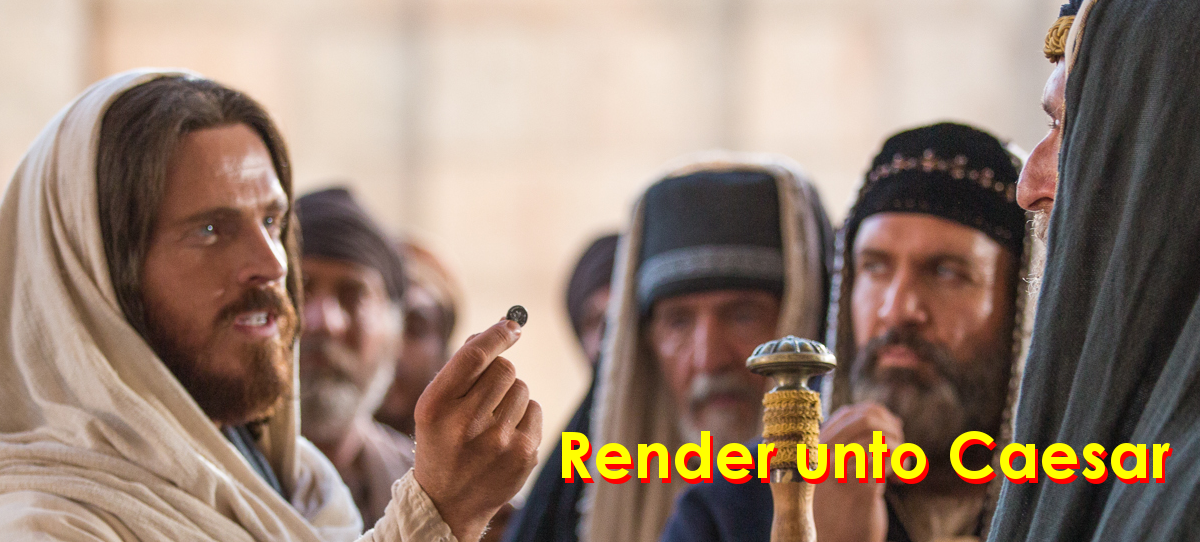
Render therefore unto Caesar the things that are Caesar’s and unto God the things that are God’s. – Matthew 22:21
A blue-eyed Christ delivers his famous riposte to a Semitic Pharisee
As debate around the privileged position of the christian church in Australian society slowly grinds its way into the mainstream discourse, it becomes increasingly important to clarify the fundamental issues.
Those of us who believe firmly in the need for a secular state are often shouted down for being amoral, immoral, anti-religious or worse.
It is worth taking a little time to understand the distinction between secularism and atheism.
Justice Michael Kirby spoke about this often, noting that the two terms are often used interchangeably; not just in common usage but also in political and scholarly discourse. The most important part of the distinction is that atheism refers to the beliefs of an individual where as secularism refers to the political principle that the state should be separate from the church.
Pulling together the work of English liberal humanist philosophers Hume and Locke, Kirby puts it succinctly.
Secularism is a principle by which society and its lawmakers ensure that religion does not enter the public sphere in an active way. The object of these principles is not only to stop an excessive interference of religion in the lives of the people but to ensure that people of different faiths (and those of no religious faith) can co-exist peacefully.
Thus India is a society with a huge emphasis on secular government, not because the members of the government do not hold, or respect, religious beliefs but because the diversity of religious belief in India demands secularism. It demands that government define rules around how religions interact and that avoid one religious group interfering with the human rights of another.
The problem with most governments is that they are not truly secular.
One reason for this is that they pander to the majority of their citizens to ensure their popularity. This is as true in dictatorships as it is in democracies.
Another reason is that institutional religion is a handy tool for ensuring the compliance of the population. This may be used overtly, as it is in religious states such as Saudi Arabia, or more subtly as it is in the USA. The truth is that organised religion in is largely a tool of the state invented to harness faith and govern people without the requirement of forceful coercion. The divine right of kings is one expression of this, Emperor Constantine’s latter day conversion to Christianity is a classic example of cynical manipulation and appropriation of religious ritual to empower the state.
As a result of this legacy, a modern democracy such as Australia has a number of regulations and laws in Australia that cross this boundary and confuse the issue. Four examples:
Churches are exempt from paying tax because they provide a public good
Church agencies are actively involved and supported in providing welfare services
Church based educational organisations are actively funded
Commercial activity is banned on Good Friday and Christmas day
Parliament prays to a Christian God
Witnesses in court generally swear on a Christian bible
While atheists actively campaign against the inherent injustice in this favouritism, that does not mean that only atheists oppose the state support of a particular religion, or religious institutions in general.
Indeed, one would expect competing religions to be unhappy with state support of a particular religion, on the grounds of unfairness, if nothing else. The requirement for the state to be even-handed when it comes to dealing with citizens of different religions is the most easily understood requirement for secularism in government. The phrase “regardless of faith” or its equivalent is present in many declarations of rights from the Magna Carta, the US Constitution through to the UN declaration of Human Rights.
The handling of disputes between religions, though, is much more complicated and philosophically much more fundamental. Whether you are religious or not, it is patently obvious, that if religions have different and competing rules over some aspect of behaviour then an untractable dilemma emerges.
Either the differing religions acknowledge the other religion’s right to do things differently, or they go to war to enforce the will of one religion over the other. Secularism is an agreement by the citizens of a state to allow the government to set the rules such that war does not break out. What it effectively does is put the law of the land, above religious law.
This is where the confusion enters the debate. Religious fundamentalists argue that the state has no right to limit any group’s beliefs on the basis that the law of God is above the laws of humanity. Religious moderates accept that the outcome of such fundamentalism is endless hostility and that tolerance involves compromise.
In terms of juggling the tension between fundamentalism and moderation, atheism is just one more belief system. The anti-theists who actively attack religion as a set of false beliefs do just as much to destroy harmonious governance of religious morality as any fundamentalist preacher.
For the sake of clarity, it is critically important that we get the anti-theism out of the advocacy for secular government so we can build the broadest and strongest coalition possible.
The aim of that coalition must be to reclaim the billions in lost tax that we squander on empowering and enriching religions. To achieve that believers and non-believers will have to work together to create a truly secular state that respects one’s right to be religious or not, to follow any god, or cultural practice that does not contravene the laws of the land. It should arguably be a secondary aim of that project to get the religious institutions out of the delivery of welfare and education services, with the possible exception of ministering to their own congregations.
Inherent in the broader project is the requirement to change those laws and regulations that are implicitly or explicitly religious. It does not imply that the laws should undermine the realm of the spirit or pit scientific evidence against faith. Those belong in a different realm and deserve their own discussion.
Why pay billions of taxpayer dollars to christian welfare groups when they have been exposed as Criminal Gangs. Not only has the Royal Commission into Abuse Sexual identified the repeat offending of those organisations, it has shown that they closed ranks to protect their members in an organised manner, abusing their political influence to avoid prosecution. These gangs can no longer be allowed to provide welfare services.
The evidence thrown up at the commission is more than enough to justify kicking a large proportion of the so called christian operators of schools, orphanages and other institutions for ever. We must curtail the power they have abused by taking welfare out of their hands and putting it in the hands of the community. Right now, the opposite is happening. The community sector is being starved of funds and the money is being poured into the churches.
This argument is not anti-theism.
For a start, my targets are the institutions not the faithful. It is the institutions that have the money and the power to hire managers and staff of the organisations that house the homeless, protect the vulnerable and feed and clothe the poor.
Second, my charge is not that religious institutions have no place in welfare. That place, though, should be limited to the wishes of its members and their capacity to fund those wishes. To put the church in charge of taxpayer funded programs of government is to grant them inappropriate privilege. To do that at a time when they have failed their flock so criminally is simply insane.
Third, I am not arguing that organisations should be denied funding on the basis of their belief patterns. That would be discrimination of the worst kind. It is appropriately discriminating, however, to conclude that legally incorporated bodies that have repeatedly broken the law and used their institutional power to avoid prosecution are inappropriate bodies to receive public funding to deliver public services.
I am not claiming that religion is evil. Indeed, greed and lust for power is not the exclusive province the christian church. Private operators in the welfare sector have been notorious since Dickens penned Oliver Twist. The religions institutions who have now been exposed as harbouring the most heinous criminals while also being largely responsible for the welfare sector in Australia for a very long time reflect the make-up of society at the time. Had the penal colony been founded by Zoroastrian imperialists, I am sure they would have gone through a similar bout of cruelty.
Our problem is not the religiosity of these institutions it is that they are being handed ever more money and power as the ideological drive to get rid of the public service pushes more and more victims into their care.
Ponder this as you next take up your burden. May righteous anger leaven your pain.