Category: Energy Matters

  • Methane Hydrate Production could Replace Fracking as Next Major Concern


    Methane Hydrate Production could Replace Fracking as Next Major Concern

    Posted: 04 May 2012 06:20 PM PDT

    The U.S. Department this week said it worked with ConocoPhillips and the Japan, Oil, Gas and Metals National Corp. on the extraction of natural gas from methane hydrate ice structures from the North Slope of Alaska. Scientists were able to coax natural gas out of the crystals by injecting carbon dioxide and nitrogen into ice formations. The U.S. energy secretary said the field test was just the beginning, but given the history of methane hydrates, it could replace fracking as the next major concern in the natural gas industry.U.S. Energy Secretary…

    Read more…

    Posted: 04 May 2012 06:20 PM PDT

    The U.S. Department this week said it worked with ConocoPhillips and the Japan, Oil, Gas and Metals National Corp. on the extraction of natural gas from methane hydrate ice structures from the North Slope of Alaska. Scientists were able to coax natural gas out of the crystals by injecting carbon dioxide and nitrogen into ice formations. The U.S. energy secretary said the field test was just the beginning, but given the history of methane hydrates, it could replace fracking as the next major concern in the natural gas industry.U.S. Energy Secretary…

    Read more…

  • Debunking the Peak Oil Debunkers

    Debunking the Peak Oil Debunkers
    EV World
    So why are there still commentators who refuse to believe peak oil? Similar to the phony global warming “debate,” many, but not all of the most vocal deniers are politically conservative, pro-business. And, by their refusal to take into account basic
    See all stories on this topic »

  • Miners’ $1b dig at Barry O’Farrell

    O’Farrell is now the meat in the sandwich!!!!

    Miners’ $1b dig at Barry O’Farrell

    0
    Mining

    The mining powerful lobby wants to challenge O’Farrell’s protection of agricultural land. Source: AFP

    THE state’s multi-billion dollar mining industry is preparing to take on the O’Farrell government over its controversial plans to protect agricultural land.

    The powerful NSW Minerals Council will today release a report detailing the impact the Strategic Regional Land Use Plans will have on the state budget and the economy. The council will allege the loss of revenue from potential mining restrictions under the plans will impact the state government’s ability to deliver on its infrastructure commitments.

    The report, prepared by Monash University and PricewaterhouseCoopers, calculates a $1 billion revenue loss for the state government in declining mining royalties over the next 20 years.

    It also said the plans would cut a full per cent from the state’s economic growth in 2018, resulting in over 8000 fewer jobs.

    The economic modelling was undertaken based on two plans the state government has drafted, which cover the Upper Hunter and New England districts. The plans aim to identify high value agricultural land with anyone proposing a mine or gas extraction within two kilometres of the site being forced to acquire a Gateway Certificate before they can proceed to all the usual state approvals.

    The plans have divided the community with graziers, farmers and green groups joining forces against the mining industry. It also pits treasurer Mike Baird against his former chief-of-staff, Stephen Gallilee, who heads the council.

    Mr Gallilee said the land covered by the two plans accounted for more than 70 per cent of coal production. “Slowing the state’s biggest export industry will have an impact that will be felt right across the economy,” Mr Gallilee said.

    The report predicts a 16 per cent contraction in the gross regional product of Upper Hunter region in 2018 and 5000 fewer mining jobs. The New England area would experience a 5 per cent hit to the gross regional product with 800 fewer jobs over the next decade.

    11 comments on this story

  • The eye-watering expense of nuclear power

    The eye-watering expense of nuclear power

    The coalition wants us to depend more and more on nuclear power, but quite simply, it is too expensive to be able to deliver

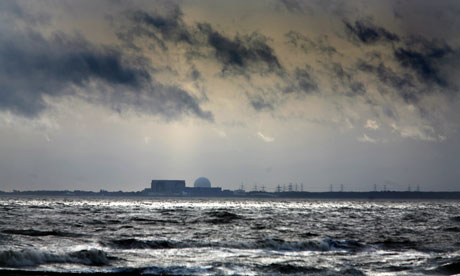
    nuclear sites risk of flooding and coastal erosion : Sizewell nuclear power plant Southwold Suffolk

    Sizewell nuclear power plant, seen from across the sea at Southwold, Suffolk. Photograph: Graham Turner for the Guardian

    Just for a moment, forget whether you’re pro-nuclear or anti-nuclear, and reflect on the coalition government’s policy for nuclear power.

    It wants to see 10 new reactors built over the next few years. It sees this as a critical part of its carbon management strategy, and absolutely necessary to help “keep the lights on”. It believes it will strengthen the UK’s energy security at a time when North Sea oil and gas continues to decline. It is working closely with a wide range of energy companies to help deliver the 10 new reactors. That’s the plan. Some think it’s great; some don’t much like it, but see it as a necessary part of addressing accelerating climate change; some think it is seriously misguided.

    It doesn’t really matter what you think: it cannot possibly deliver – primarily for economic reasons.

    Nuclear reactors are massively expensive. They take a long time to build. And even when they’re up and running, they’re nothing like as reliable as the industry would have us believe. Few if any companies have balance sheets that are strong enough to cover the capital costs of a new reactor – with a starting price today of about £6bn, and growing by an average of 15% per annum. For that reason, the funding has to come either from private investors or from governments: no reactor has ever been built anywhere in the world without substantial government subsidy, and no reactor ever will be built without substantial government funding in future.

    However, private investors are not enamoured by nuclear power. The construction risks are too high (with cost overruns and substantial delays all but guaranteed), and the political risks (with governments constantly changing their mind about levels of support) even higher. The higher the risk, the higher the costs of capital.

    Which means governments always have to step in – including the UK government. For the time being, ministers in DECC are sticking to the wording of the Coalition Agreement that a new nuclear programme can only proceed “provided that they receive no public subsidy”. This is now so transparently dishonest that it will not be possible to maintain that fiction for much longer, especially when the details of the electricity market reform (EMR) proposals are published.

    Here’s their dilemma. Ministers wanted to have lots of companies competing to build the ten reactors. Three of the most significant players, (RWEnpower, EON UK and Scottish and Southern Electricity), have already dropped out. Both GDFSuez and Centrica have been giving out very strong signals to investors that they are about to drop out. Most of the rest of the companies left in are too small or incapable to bother about. That leaves EDF, a nuclear giant, 85% owned by the French government.

    Just three years ago, EDF’s chief executive could be heard crowing about the fact that EDF would need no public subsidy to build its EPRs (European pressurised reactors) here in the UK. Today, his senior directors are pretty much permanently camped out in the Department of Energy and Climate Change (DECC) demanding eye-watering levels of financial support for the four reactors they hope to build at Hinkley Point and Sizewell.

    The going wholesale price for electricity at the moment is around £45/MWh. Under the EMR, the government is offering “contracts for difference” to cover the extra cost of nuclear – the so-called “strike price”. Calculating the scale of those extra costs is tricky, not least because it is impossible to believe anything the industry says about future costs. Estimates vary between £60/MWh and £90/MWh, with most independent commentators veering towards the high end rather than the low end.

    The amount of subsidy required for just four reactors, £90/MWh, would be £2bn a year for 30 years. £60bn. For 10 reactors, it would be £5bn a year for 30 years. £150bn

    And you need to understand that this figure doesn’t take into account any of the other forms of subsidy on offer (be it in the form of a carbon price floor or massively subsidised insurance arrangements to cover the possibility of nuclear accidents), let alone the massive liabilities for cleaning up our existing nuclear power programme, which come in at about £7bn a year.

    From a taxpayers’ point of view, that’s a minimum of £12bn a year to support an industry that is meant to be receiving “no public subsidy”. The implications of all this for an already shambolic government are enormous. George Osborne is deeply concerned about the costs of “the green agenda”. How could he possibly wave this through in the name of a low-carbon economy, when he could get infinitely better value for our money by investing in energy efficiency and renewables?

    And as for the Lib Dems, either they renege on the Coalition Agreement, and come out firmly against these proposals, or they go into the next election as liars to a man and woman.

    • Jonathon Porritt, Tom Burke, Charles Secrett and Tony Juniper have produced a series of six briefings to help inform the public debate about nuclear power. On 12 March, they wrote to the prime minister to warn him that his current proposals will end in failure. As yet, they have not received a reply.

  • Carbon compo ‘not enough’ for poorest households

    Carbon compo ‘not enough’ for poorest households

    Updated May 04, 2012 16:10:06

    Families and pensioners will soon be getting the first round of compensation for the incoming carbon tax, but there are fears it will not be enough for some low income households.

    A new report into Australia’s spending habits found that while incomes have kept up with cost of living pressures across the board, electricity prices were growing more sharply than other costs.

    NATSEM research fellow Ben Phillips told the ABC this week that most people are spending a similar proportion of their income on power bills, but have cut back on how much power they use.

    But not everyone is finding it easy to cut back.

    The Physical Disability Council of New South Wales says over the last year it has been inundated with calls from people who are struggling to afford electricity.

    The council’s executive officer, Ruth Robinson, says people are already facing the choice between eat or heat.

    “We find that people are doing really serious things that compromise their health and wellbeing,” she told Radio National.

    “We’ve met people who aren’t prepared to use their stoves anymore because they’re frightened that that will keep their bills up. We’ve met people who sit around at night with candles on because they’re not game enough to have their lights on at night.

    “We’ve met lots of people who are no longer going out to visit their family members or getting out and about and living everyday lives because they’re trying to conserve all of their money to pay electricity, as distinct to catching an accessible cab somewhere. So we’re finding that people are becoming more and more isolated.”

    We’ve met people who sit around at night with candles on because they’re not game enough to have their lights on at night.

    Ruth Robinson


    ‘Huge disparity’

    In the last five years, electricity prices in New South Wales increased by 80 per cent as average weekly earnings rose about 18 per cent.

    The spike in prices has been caused by rising transmission and distribution costs, for example, building new power poles and wires.

    Lynne Chester from the Department of Political Economy at the University of Sydney says people on low incomes have been lost in the discussion about a carbon tax.

    “We know it’s coming but we don’t understand the impact of these electricity price increases on low income households which have significantly outstripped any increase in pensions and incomes,” she said.

    “And now we’re going to add on a further impact from a carbon tax.

    “I don’t think we are doing enough. The size of these increases, and the amount that is provided to assist those in energy hardship, there is just a huge disparity between the two.”

    Significant assistance

    Climate Minister Greg Combet says Treasury has forecast the cost of the carbon tax will be $3.30 per week, and compensation will be worth $10.10.

    Mr Combet says reports the Government is looking at ways to soften the impact of the tax are incorrect.

    He says the household assistance package, which is about to be rolled out, is already very significant.

    “Nine out of 10 households will receive assistance through tax cuts or pension increases or other Commonwealth payments,” he said.

    “But in fact 4 million households in the lowest income households in the country will receive assistance that’s at least 20 per cent more than the expected average price impact.”

    But Ms Robinson says people with disabilities are not finding the Government’s promises reassuring.

    “For the people with physical disability around the state that we know of, it’s causing incredible anxiety,” she said.

    “We already know of people who are cutting back of having medications filled and taking medications that they need, simply because they are desperately desperately trying to pay their bill.

    “If that’s what we’ve been finding with people over the last 12 to 15 months, the outlook is extremely grim for some people.”

    Listen to Alison Carabine’s report from Radio National Breakfast.

    Topics:climate-change, welfare, poverty, environment, electricity-energy-and-utilities, industry, business-economics-and-finance, australia, nsw

    First posted May 04, 2012 14:44:18

    Updated May 04, 2012 16:10:06

    Families and pensioners will soon be getting the first round of compensation for the incoming carbon tax, but there are fears it will not be enough for some low income households.

    A new report into Australia’s spending habits found that while incomes have kept up with cost of living pressures across the board, electricity prices were growing more sharply than other costs.

    NATSEM research fellow Ben Phillips told the ABC this week that most people are spending a similar proportion of their income on power bills, but have cut back on how much power they use.

    But not everyone is finding it easy to cut back.

    The Physical Disability Council of New South Wales says over the last year it has been inundated with calls from people who are struggling to afford electricity.

    The council’s executive officer, Ruth Robinson, says people are already facing the choice between eat or heat.

    “We find that people are doing really serious things that compromise their health and wellbeing,” she told Radio National.

    “We’ve met people who aren’t prepared to use their stoves anymore because they’re frightened that that will keep their bills up. We’ve met people who sit around at night with candles on because they’re not game enough to have their lights on at night.

    “We’ve met lots of people who are no longer going out to visit their family members or getting out and about and living everyday lives because they’re trying to conserve all of their money to pay electricity, as distinct to catching an accessible cab somewhere. So we’re finding that people are becoming more and more isolated.”

    We’ve met people who sit around at night with candles on because they’re not game enough to have their lights on at night.

    Ruth Robinson


    ‘Huge disparity’

    In the last five years, electricity prices in New South Wales increased by 80 per cent as average weekly earnings rose about 18 per cent.

    The spike in prices has been caused by rising transmission and distribution costs, for example, building new power poles and wires.

    Lynne Chester from the Department of Political Economy at the University of Sydney says people on low incomes have been lost in the discussion about a carbon tax.

    “We know it’s coming but we don’t understand the impact of these electricity price increases on low income households which have significantly outstripped any increase in pensions and incomes,” she said.

    “And now we’re going to add on a further impact from a carbon tax.

    “I don’t think we are doing enough. The size of these increases, and the amount that is provided to assist those in energy hardship, there is just a huge disparity between the two.”

    Significant assistance

    Climate Minister Greg Combet says Treasury has forecast the cost of the carbon tax will be $3.30 per week, and compensation will be worth $10.10.

    Mr Combet says reports the Government is looking at ways to soften the impact of the tax are incorrect.

    He says the household assistance package, which is about to be rolled out, is already very significant.

    “Nine out of 10 households will receive assistance through tax cuts or pension increases or other Commonwealth payments,” he said.

    “But in fact 4 million households in the lowest income households in the country will receive assistance that’s at least 20 per cent more than the expected average price impact.”

    But Ms Robinson says people with disabilities are not finding the Government’s promises reassuring.

    “For the people with physical disability around the state that we know of, it’s causing incredible anxiety,” she said.

    “We already know of people who are cutting back of having medications filled and taking medications that they need, simply because they are desperately desperately trying to pay their bill.

    “If that’s what we’ve been finding with people over the last 12 to 15 months, the outlook is extremely grim for some people.”

    Listen to Alison Carabine’s report from Radio National Breakfast.

    Topics:climate-change, welfare, poverty, environment, electricity-energy-and-utilities, industry, business-economics-and-finance, australia, nsw

    First posted May 04, 2012 14:44:18

  • N. America’s radiation threat another mainstream news blackout

    N. America’s radiation threat another mainstream news blackout
    DigitalJournal.com
    It is odd that neither the Canadian nor the American mainstream news, nor any government agencies are speaking about the radiation that continues to flow into North America by way of the jet stream. News that should be a priority isn’t,
    See all stories on this topic »