What Nuclear-Free Japan Means For Us
Business Insider
As the Fukushima Daiichi disaster showed, the country’s vulnerability to earthquakes and tsunamis poses a serious danger. Just last month, the nation’s nuclear watchdog, the Nuclear and Industrial Safety Agency, revealed that a nuclear power plant in …
See all stories on this topic »
Category: Energy Matters
-
What Nuclear-Free Japan Means For Us
-
New Propulsion System cuts Fuel Consumption of Cargo Ships by 75%
New Propulsion System cuts Fuel Consumption of Cargo Ships by 75%
Posted: 03 May 2012 10:39 AM PDT
I recently wrote an article about a hybrid propulsion system for cargo ships which used giant sails along with traditional diesel engines. International transport via shipping is very popular, and also very polluting. The hybrid design, using diesel engines and wind power, managed to reduce fuel consumption by 30%; a decent amount, and one which could reduce shipping costs, potentially reducing the price of many imported goods.However a group of engineers, from Gamma Light and Heavy Industries Ltd. claim that they have discovered a new method of…Kenyan Energy Companies sign Multimillion Dollar Geothermal Energy Deals
Posted: 03 May 2012 10:36 AM PDT
Kenya currently receives most of its renewable power from erratic hydroelectric sources, which struggle to meet the nation’s energy demand, and supply varying levels of electricity to the grid.Now, two government-owned companies exploring the geothermal potential in Kenya have signed multimillion dollar deals to develop geothermal power plants in an effort to boost the country’s clean, reliable energy.Kenya Electricity Generating Company (Kengen) and Geothermal Development Company (GDC) have been exploring geothermal sources, mainly… -
Last Japanese reactor in outage
Last Japanese reactor in outage
04 May 2012
Japan will find itself without nuclear power for the first time since 1970 as the last of its currently operating nuclear reactors prepares to go offline.
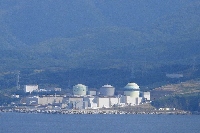
Hokkaido Electric’s Tomari plant (Image: Mugu-shisai) Hokkaido Electric’s Tomari 3 will shut down for a scheduled periodic inspection outage on 5 May. The inspection itself will take about 71 days, but when the 912 MWe pressurized water reactor can expect to return to operation remains unknown. Following the Fukushima Daiichi nuclear accident of 2011, the Japanese government required all of its nuclear plants to undergo two-phase ‘stress tests’ to verify their ability to withstand extreme events. The first phase of test must be carried out while the reactor is offline during its first regularly scheduled outage.
In normal operations, Japan’s nuclear power plants are taken offline for safety inspections every 13-18 months, so nearly 14 months on from the Fukushima Daiichi accident, all of Japan’s reactors have now reached their prescheduled maintenance outages. Although the tests have been completed at some of them, no reactor has yet been given the final go-ahead to restart. The end result is a nuclear power hiatus for a country that normally relies on its reactors to supply around 30% of its energy.
The findings of the stress tests results for two of Kansai’s reactors, Ohi 3 and 4, have already met with approval from Japanese nuclear regulators and the government has voiced its approval for the units to restart. However, approval for restarts at the local level has not yet been secured.
Without its nuclear plants, Japan is having to turn to other sources of power. According to figures from the Japanese Atomic Industry Forum, the country faces a 12% shortage of electricity in summer 2012. Meanwhile additional fossil fuel imports are costing it about $40 billion, or $333 per person, per year while its carbon emissions have risen some 14% above 1990 levels.
Researched and written
by World Nuclear News -
New Worries at Fukushima
Greenpeace paraglider ‘bombs’ French nuclear reactor in mock terror attack
Daily Mail
The incident has sparked concerns that activists could be planning a similar stunt in the US. Edwin Lyman, a nuclear terrorism specialist, believes a danger does exist following a decision by the Nuclear Regulatory Commission to exclude the possibility …
See all stories on this topic »
Daily MailNew Worries at Fukushima
Birmingham Weekly
“The reactors are stable, which should resolve one big cause of concern for us all,” Noda told the Japanese people in a televised address. But Mr. Noda’s optimistic assessment may have been premature. Nuclear engineer and former power company executive …
See all stories on this topic »Nuclear power is only solution to climate change, says Jeffrey Sachs
The Guardian
Nuclear reactors are massively expensive. They take a long time to build. And even when they’re up and running, they’re nothing like as reliable as the industry would have us believe.” But Sachs, director of the Earth Institute and professor of …
See all stories on this topic » -
India’s Traditional Power Sources on Razor Edge of Supply
India’s Traditional Power Sources on Razor Edge of Supply
Posted: 02 May 2012 04:01 PM PDT
The biggest economic story of the 21st century has been the dramatic emergence in the last decade of the “BRICs” – Brazil, Russia, India and China.Their dramatic emergence onto the world’s global economic stage has produced a middle class in all BRIC countries, whose growing clout wants reliable 24/7 power. The Russian Federation is awash in oil and natural gas, Brazil after the 1973 oil embargo developed ethanol alternatives and last year became an oil exporter, which leave energy and resource-starved China and India scrabbling… -
The Peak Oil Crisis: Implications
The Peak Oil Crisis: Implications
Falls Church News Press
By Tom Whipple Last week we talked about the possibility that researchers have found a second and potentially useful and inexpensive way of converting hydrogen into helium accompanied by a release of significant quantities of energy.
See all stories on this topic »
