|
||
| Nuclear threat a clear and present danger Toronto Sun AFP PHOTO / NICOLAS ASFOURI OTTAWA – Threats of a Cold War nuclear attack sparked by aggression between the Yanks and Ruskies are 20 years behind us. But the world is now wrestling with a different nuclear threat – there’s enough highly enriched … See all stories on this topic » |
||
|
||
|
||
|
||
| Curbing nuclear terrorism The Korea Herald The threat of nuclear terrorism loomed large following the 9/11 attacks on the United States. But global efforts to address it had remained low-key until US President Barak Obama energized them. In a speech in Prague in 2009, Obama presented his vision … See all stories on this topic » |
||
|
||
| What Iran Can Learn From Kazakhstan New York Times The threat from nuclear terrorism is one of the greatest our world faces. If terrorist groups manage to get their hands on material to make nuclear or radioactive weapons, they will not hesitate to use them. The resulting death toll and damage would be … See all stories on this topic » |
||
| Commentary: How safe is safe enough with nuclear power? Gainesville Times By Joan King joank@windstream.net March 11 was the one-year anniversary of the triple meltdown at Fukushima Daiichi nuclear plant in Japan following the earthquake and tsunami. Despite everything I’ve said about being too old for long day trips, … See all stories on this topic » |
||
|


- guardian.co.uk, Tuesday 20 March 2012 13.36 GMT
- Article history
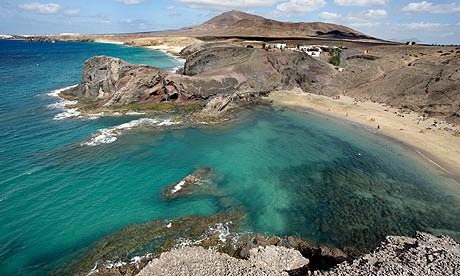
Playa Papagayo beach in Lanzarote. Opponents of the drilling warn an oil spill would wreck beaches on the islands and drive away tourists. Photograph: B.A.E. Inc./Alamy
One of Britain’s best-loved holiday destinations is under threat from oil prospectors who have been given permission to drill for offshore fields, according to local authorities and hoteliers in the Canary Islands.
The area’s authorities have reacted angrily to a Spanish government decision that allows the giant Repsol company to look for oil 60km (37 miles) off the coasts of Lanzarote and Fuerteventura, warning that a spill would wreck beaches and drive tourists away.
“This is not compatible with the kind of sustainable tourism we want,” said regional prime minister Paulino Rivero, of the Canary Coalition party. “It only benefits Repsol.”
TUI, owner of Thomson and First Choice holiday brands, has already expressed worries that an oil spill might permanently damage the Canary Islands’ reputation as a holiday spot.
“A tragedy of this kind would not just ruin a single tourist season, but would see the Canary Islands forever associated with oil,” TUI’s head of sustainability, Harald Zeiss, said in a letter to the island government of Fuerteventura.
But Spain‘s new conservative government, which gave the go-ahead for drilling, hopes oil and gas fields hidden under the Atlantic seabed will allow it to reduce oil imports.
“Apart from reducing our almost total dependency on imported gas and petrol, it also has great potential to create highly qualified jobs and benefit the islands’ economy,” a government statement said.
Repsol would be expected to pay for any clean-up operation caused by an accident, and extraction licences would have to be approved separately. The company claims it would create up to 5,000 jobs.
Local environmentalists said the only jobs would be for specialists from abroad.
“This is a threat to the islands’ economy, which is based on tourism, and to a rich source of maritime biodiversity,” said Iván Darias of the Ecologists in Action group. “Both the technology and the depth of the fields they seek are similar to those used in Louisiana in 2010.” Fears over oil spills have increased since the explosion on BP’s Deepwater Horizon rig off the Louisiana coast in 2010 which killed 11 people and released millions of barrels of crude into the Gulf of Mexico.
“The government is creating the same sort of risks that can lead to accidents like the one seen in the Gulf of Mexico,” agreed Greenpeace spokesman Mario Rodríguez.
Around 2.6 million British holidaymakers visit the Canary Islands every year.