Category: Energy Matters

  • Australia passes controversial nuclear waste bill

    Australia passes controversial nuclear waste bill

    Radioactive material set to be dumped in remote Aboriginal community, despite ongoing court case into legality of proposal

    • guardian.co.uk, Tuesday 13 March 2012 12.50 GMT
    • Article history
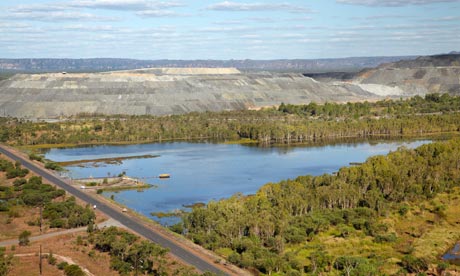
    • uranium ore stockpile, Ranger Uranium Mine, Kakadu National Park, Northern Territory, Australia

      A uranium ore stockpile in Kakadu National Park, Northern Territory. Australia has the largest uranium store in the world. Photograph: David Wall/Alamy

      The Australian government has passed legislation that will create the country’s first nuclear waste dump, despite fierce opposition from environmental and Aboriginal groups.

      The passage of the National Radioactive Waste Management Bill 2010 through the Senate paves the way for a highly controversial plan to store nuclear waste in Muckaty Station, a remote Aboriginal community in the arid central region of the Northern Territory.

      The ruling Labor party received support from the conservative coalition opposition to approve the bill, despite an ongoing federal court case over the legality of using the Muckaty site to store radioactive material.

      Currently, nuclear waste from the medical and mining industries is stored in more than 100 “temporary” sites in universities, hospitals, offices and laboratories across Australia.

      Anti-nuclear protesters disrupted proceedings in the Senate as the legislation was debated earlier on Tuesday, with the group heckling lawmakers from the public gallery over their support for the bill.

      A recent medical study warned that transporting nuclear waste over long distances to such an isolated location, which is 75 miles north of the Tennant Creek township, could endanger public health.

      “The site is in an earthquake zone, it floods regularly, there are very long transport corridors, there are no jobs being applied and it’s opposed from people on the ground, on the front line from Tennant (Creek) all the way up to the NT government and people around the country,” said senator Scott Ludlam of the Greens, which successfully added an amendment to the bill that bans the importing of foreign nuclear waste to the site.

      Aboriginal groups launched legal action after claiming that traditional owners of the land around Muckaty do not approve of the dump, despite the government maintaining that the local Ngapa indigenous community supports the plan.

      Under Australian Native Title law, indigenous groups recognised as the traditional owners of land must be consulted and compensated for any major new infrastructure.

      Although the Australian government insists that it has not decided on a site for the dump, Muckaty is the only option under consideration and the Northern Territory government has already been offered AUS$10m if it accepts the facility.

      Finding a location for a national nuclear waste dump has proved a major headache for successive Australian governments, with former prime minister John Howard rebuffed in his attempt to situate the facility in South Australia in 2004.

      The Northern Territory government has complained that it is being strong-armed into taking the dump due to it being a “constitutional weak link” and not having the same rights as full Australian states.

      Nuclear power remains a highly contentious issue in Australia, which, despite having the largest uranium deposits in the world, has steadfastly refused to shift its largely coal-fired energy generation to nuclear.

  • Volcanic News

    News 9 new results for volcanoes
    Volcano on scenic Greek island getting a little restless
    msnbc.com
    The volcano last erupted in 1950, albeit on a much smaller scale. Global positioning system (GPS) sensors placed on the caldera have detected renewed movement after decades of peace. The earth around the caldera (a depression at the top of a volcano)
    See all stories on this topic »

    msnbc.com
    Volcano erupts violently in Japan
    Telegraph.co.uk
    Sakurajima volcano in southern Japan has erupted for a second day, spewing hot rocks and ash for over a mile around. The Japanese Meteorological Agency said the eruption on Monday was the most forceful since 2009. Foot-wide rocks were expulsed over a
    See all stories on this topic »
    Volcanoes and zombies? It’s weird and wonderful stuff at the Science Festival
    Cambridge News
    Mill Road lecture rooms will host two talks, the first at 6pm given by geographer Clive Oppenheimer, who will look at how volcanoes have affected mankind and what can be done to prepare for future catastrophes. At 8pm, psychologist Kevin Dutton will
    See all stories on this topic »

    Cambridge News
    Climate change: causing volcanoes to go pop
    OUPblog (blog)
    By Bill McGuire When I first mention to someone that a changing climate is capable of causing volcanoes to go pop or the ground to shake, they think that I am either mad or having them on. Usually, this is just because they have not given the idea much
    See all stories on this topic »

    OUPblog (blog)
    Why are rising CO2 levels caused by burning fossil fuels?
    ABC Online
    How can you tell that rising carbon dioxide levels are caused by burning fossil fuels and not natural causes such as bushfires, volcanoes, rising ocean or soil temperatures? By Genelle Weule Levels of CO2 in the atmosphere have significantly risen
    See all stories on this topic »

    ABC Online
    Japanese Volcano Erupts For Second Day
    WFMY News 2
    The volcano is located in the southern prefecture of Kagoshima. The Meteorological Agency added that the volcano has been erupting steadily for the last two years, but the eruption on Monday turned violent, throwing 50-centimetre (1 foot 6 inches)
    See all stories on this topic »

    WFMY News 2
    Sakurajima Volcano Erupts; Foot-Wide Rocks Land Mile Away (VIDEO)
    Huffington Post
    Mt. Sakurajima, one of Japan’s most active volcanoes, has erupted several times in the past 48 hours, sending 18 inch-wide rocks flying over a mile away. Residents from the southwestern town of Kagoshima were warned about dangerous debris, however,
    See all stories on this topic »
    Bulldogs burned by Volcanoes
    Corning Observer
    By Craig Purcell/Corning The Los Molinos High baseball team welcomed seven others to town over the weekend while hosting the annual Glenn Cox Tournament, but the Bulldogs’ 7-1 loss to Chester on Saturday marked the third loss for the tourney hosts,
    See all stories on this topic »
    Santorini: The ground is moving again in paradise
    Eureka! Science News
    Newman, a geophysicist in the School of Earth and Atmospheric Sciences, cannot be certain whether an eruption is imminent since observations of such activity on these types of volcanoes are limited. In fact, similar calderas around the globe have shown
    See all stories on this topic »

    Eureka! Science News


    This once a day Google Alert is brought to you by Google.

    Delete this alert.

  • Nuclear Issues.

    News 6 new results for DANGER TO US NUCLEAR PLANTS
    Fire at Nuclear Plant Called Serious Threat
    Wall Street Journal
    By TENNILLE TRACY A fire last year at an idled Nebraska nuclear plant that broke out after workers ignored warning signs represented a high-level threat to the plant’s operations, federal regulators said Monday. The June 7 fire at the Fort Calhoun
    See all stories on this topic »
    NRC: Nebraska nuclear plant fire was serious threat
    Boston Globe
    By Josh Funk | AP OMAHA – A fire that briefly knocked out the cooling system for used fuel at an idled Nebraska nuclear plant last June represented a serious safety threat, federal regulators said Monday. The Fort Calhoun plant north of Omaha was shut
    See all stories on this topic »
    Nuclear power threat to the UK – as energy security handed over to the French
    EcoFriend News
    The French will only build new nuclear reactors in the UK if the financial risks involved are transferred from France to British households and businesses – leaving UK taxpayers to pick up the bill to protect the French nuclear industry.
    See all stories on this topic »
    Putin slams US-Euro missile defence plans
    ABC Online
    Mr Putin has called the plan the biggest security threat facing his country. In response, Russia is pushing ahead with the deployment of a new generation of nuclear-capable short-range missiles in Kaliningrad, a Russian enclave surrounded by EU
    See all stories on this topic »
    Zimbabwe Lifts Ban on Used Vehicles But Japanese Cars Face Threat Over
    Voice of America
    The minister also told the committee that the government will monitor vehicles being imported from Japan, fearing radioactive contamination following last year’s tsunami that destroyed the Fukushima Nuclear Plant in that country.
    See all stories on this topic »
    US Nuclear Chief Wants Faster Reforms
    Forbes
    One year after the earthquake and tsunami that sparked Japan’s Fukushima Daiichi nuclear crisis, countries around the world are still scrambling to avoid similar disasters on their soil. And according to the top American nuclear regulator, US plants
    See all stories on this topic »


    Tip: Use quotes (“like this”) around a set of words in your query to match them exactly. Learn more.

    Delete this alert.
    Create another alert.
    Manage your alerts.

    Reply
    Forward
    Click here to Reply or Forward

    Ads – Why this ad?
    New 2.5L Engine With More Power, Torque & Better Fuel Efficiency.
    512
    Ads – Why these ads?
    New Small Car From Subaru

    New Generation Subaru Impreza. Test Drive At Your Nearest Retailer
    512
    Fuel Efficient Car Range

    Compare Our New 2011 Models In Accordance To Fuel Efficiency!
    512
    High Impact Advertising

    Connect with your consumers With high impact vespa advertising
    512
    No More Black Spots

    100% mobile phone coverage across Australia and out to sea.
    512
    Volvo Xc90 Petrol

    Save $1,000’s on all Volvo XC90’s Volvo buying power saves you money!
    512
    Stock Photo

    1000s Of Images Added Every Day. Subscribe & Start Downloading Now!
    512
    SsangYong Kyron

    Ssangyong. We Live Diesel Visit Us For A Test Drive Today!
    512
  • Mining boom is strangling heart of Gunnedah

    Liverpool plains-Prime farming country being ruined.

    Mining boom is strangling heart of Gunnedah

    1
    Gunnedah

    Brutal lesson … Gunnedah Mayor Adam Marshall, right, and Real Estate agent Ben Hennessy / Pic: Peter Lorimer Source: The Daily Telegraph

    WITH instant wealth, often comes unexpected hardship.

    It’s that brutal lesson the once-blithe township of Gunnedah is now attempting to swallow.

    The true heart of the northwestern town is dying on the inside; a victim of its own success and the mining dollars that have flooded into its streets, transforming it into one of the most expensive places to live in the nation.

    While six coal mines surround the town providing a jobs boom, many of its long-term residents can no longer afford to stay there, with rents tripling and businesses closing down as the town’s young men give up their professions to chase the coin down the mine shaft.Some rental properties are now commanding $1350 a week, giving middle and low-income families no alternative but to move out of the district.

    Gunnedah mayor Adam Marshall said the exodus is growing.

    “Locals are getting priced out of the market and I’m fully aware that those who can’t afford the rent are leaving town just to survive,” he said. “Council approved 82 residential dwellings in the last financial year, the best figures since 1981, but rent keeps going up.”

    Long-time locals, brothers Shannon and Chris O’Shea, have packed up their respective families and moved to Newcastle, where they found employment immediately.

    “We are looking at renting a house on the water cheaper than we can in Gunnedah,” Shannon said. “Chris and I both love Gunnedah, especially the fishing, camping and shooting, but we saw the writing on the wall when the mines starting opening up and look at the ridiculous rent now. We know plenty of other people who are thinking of moving out of the town for the same reasons.”

    Mr Marshall last week toured Roma in Queensland to get a grasp on what coal mines and coal seam gas booms over the recent years have done to the town of 8000.

    “Roma is in all sorts of trouble. The town has lost its character as locals left in droves, forced out by high rents and big industry,” he said. “We don’t want this to happen in Gunnedah and we need to act quickly before it’s too late.”

    Local real estate agent Ben Hennessy is dealing first hand with the rental crisis and also agrees that something needs to be done quickly.

    “We have three to four inquiries each day for rentals and there is no argument that locals are getting priced out of the market,” Mr Hennessy said.

    Mr Marshall describes the rental market as a machine snowballing out of control.

    “If the mining companies pay top dollar for rental houses everyone with a rental investment thinks they can get the same money, and that’s when the real problems start,” he said.

    “I live alone in a four-bedroom house and I’m probably better off moving in with my grandparents and renting it out for $350-$400 a week.”


    15 comments on this story

  • Peak Oil News

    News 1 new result for PEAK-OIL
    Toward Energy Literacy: Our “Peak Oil” Reality
    RenewableEnergyWorld.com
    By Tam Hunt, Contributor “Energy literacy” and “peak oil literacy” should be requirements for pundits – and for citizens more generally. I’ve followed these issues for many years now, and the poor energy knowledge among even the chattering classes and
    See all stories on this topic »

    RenewableEnergyWorld.com


    Tip: Use site restrict in your query to search within a site (site:nytimes.com or site:.edu). Learn more.

    Delete this alert.

  • Post-Fukushima world must embrace Thorium. not ditch nuclear

    Thorium is much cheaper and more plentiful- but is it better than Uranium ? India is considering using Thorium. because of the economics.

    Post-Fukushima world must embrace thorium, not ditch nuclear

    The man whose inventions led to nuclear power proliferation knew thorium was preferable to uranium – it’s time we caught up

    What is thorium and how does it generate power?

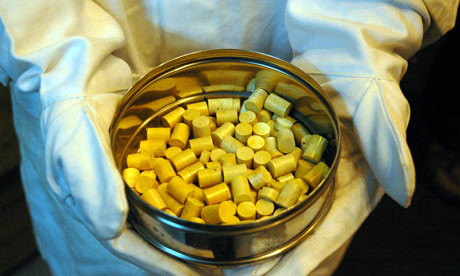
    • India nuclear plans: Thorium pellets at the Bhabha Atomic Research Centre (BARC) in Mumbai

      Thorium pellets at the Bhabha Atomic Research Centre (BARC) in Mumbai, India. Photograph: Pallava Bagla/Corbis

      A year ago this Sunday, a dreadful and terrifying natural disaster was sweeping a trail of death and destruction along the north-eastern coast of Japan. The Tohoku earthquake and ensuing tsunami claimed an estimated 20,000 lives, washing away entire towns and wreaking havoc with the nation’s infrastructure. An oil refinery was set ablaze leading to the death of six workers and a reservoir also failed, killing a further four people. The nuclear reactors at Fukushima experienced a partial meltdown causing the release of radiation, but killing no one.

      The media’s treatment of the entire disaster, however, was completely out of kilter with these facts. The unfolding events at the stricken power station quickly dominated the coverage, ousting the actual earthquake and its dreadful aftermath from the headlines and, it seems, our collective memories. A year later we talk of the anniversary of the Fukushima disaster, not the far, far greater tragedy of the Tohoku earthquake.

      In no way do I wish to make light of the suffering of the thousands evacuated from the exclusion zone around the power station, nor to undervalue the immense bravery of the workers who, under extreme pressure, worked tirelessly to minimise the impact of the accident. But we need to keep things in perspective. This was a terrible event, caused by a much more terrible event, which again brought to the surface the many troubling aspects of how the nuclear industry operates.

      For instance, the siting of reactors on the eastern seaboard of a country highly vulnerable to earthquakes ought to have necessitated far more preventative measures or, better yet, the decision not to build there at all. The reactor itself was over 40 years old and operating company Tepco had been criticised ahead of the accident for lax safety standards.

      The events in Fukushima do not justify a wholesale rejection of nuclear power. We have been able to harness the fissioning of the nucleus of an atom for good and evil, for life-saving medical treatments and to create the atom bomb. Somewhere on this scale of achievements lies our use of nuclear energy. And even within this, not all nuclear power is equal.

      The inventor of the technology upon which most of today’s operating nuclear power stations are based, Alvin Weinberg, was all too aware of this. He worried about some of the safety issues involved in using solid uranium fuel in his water-cooled reactors. He believed this configuration, though useful for creating materials for nuclear weapons, posed too many safety risks and created too much hazardous waste for widespread civilian use. As a result, he also directed a research team that invented a radically differently designed reactor, based on using chemically stable liquid salts as the coolant, and thorium as the fuel. Sadly, though he advocated safer, cleaner nuclear designs for the rest of his life, the world took no heed and the reactors we live with today are still fundamentally the same as those that he considered unnecessarily complex and vulnerable to accident.

      Fortunately, one of the legacies of Fukushima is that while investment in today’s current reactor designs may have slowed, there is a renewed interest in Alvin’s alternative designs and in other fundamentally different approaches. In China, a major R&D programme into thorium molten salt reactors is underway, with the first test reactors to be completed in 2015 and a larger-scale demo ready by the end of the decade. In the US, safer, molten salt cooled pebble bed reactors are being developed. In Europe, there are various research programmes into new designs. Even here in the UK, where nuclear R&D has been starved of investment, important but fragmented research is underway and, with the help of the Weinberg Foundation, I have helped to set up an all-party parliamentary group dedicated to exploring the potential of thorium-based energy.

      Fukushima must mark a turning point in the history of nuclear power. The proponents of the existing technologies should be chastened by the reminder it provided of how things can go wrong. Even if they are not, the providers of investment, both public and private, have had a wake-up call and will proceed with far greater caution.

      But the twin concerns of climate change and energy security mean we cannot afford to turn our back on nuclear altogether, as there is no greater potential source of energy on the planet. It is still an amazing achievement to have harnessed the vast energy forged into the heart of an atom during the dying moments of a star, and a safer, cleaner form of nuclear power is possible. As we move forward we need to admit to the failings of the current technologies and commit to developing new ones now.

      To try to use Fukushima to justify a complete disavowal of the use of nuclear power would be a gross distortion of the extent of the threat it posed. It would also consign the world to greater use of fossil fuels and higher concentrations of greenhouse gases, unleashing many more natural disasters with huge loss of life. This is the real risk we need to be vigilant against.