Category: Energy Matters

  • BIG NUCLEAR’S COSY RELATIONSHIP WITH THE OBAMA ADMINISTRATION

    Big Nuclear’s cosy relationship with the Obama administration

    One year on from Fukushima, the US is rewarding the nuclear energy lobby by underwriting new investment – regardless of risk


    • Nuclear Power in The U.S.

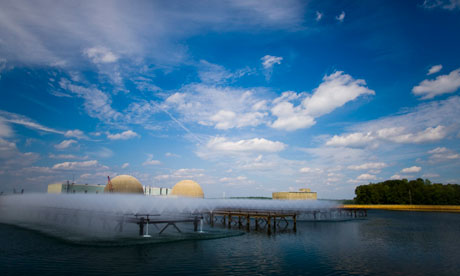
      The North Anna nuclear power plant, owned by Dominion Power, near Mineral, Virginia, US. Photograph: Jim Lo Scalzo/EPA

      Super Tuesday demonstrated the rancor rife in Republican ranks, as the four remaining major candidates slug it out to see how far to the right of President Barack Obama they can go. While attacking him daily for the high cost of gasoline, both sides are traveling down the same perilous road in their support of nuclear power.

      This is mind-boggling, on the first anniversary of the Fukushima nuclear disaster, with the chair of the US Nuclear Regulatory Commission warning that lessons from Fukushima have not been implemented in this country. Nevertheless, Democrats and Republicans agree on one thing: they’re going to force nuclear power on the public, despite the astronomically high risks, both financial and environmental.

      One year ago, on 11 March 2011, the Tohoku earthquake and tsunami hit the northeast coast of Japan, causing more than 15,000 deaths, with 3,000 more missing and thousands of injuries. Japan is still reeling from the devastation – environmentally, economically, socially and politically. Naoto Kan, Japan’s prime minister at the time, said last July;

      “We will aim to bring about a society that can exist without nuclear power.”

      He resigned in August after shutting down production at several power plants. He said that another catastrophe could force the mass evacuation of Tokyo, and even threaten “Japan’s very existence”. Only two of the 54 Japanese power plants that were online at the time of the Fukushima disaster are currently producing power. Kan’s successor, Prime Minister Yoshihiko Noda, supports nuclear power, but faces growing public opposition to it.

      This stands in stark contrast to the United States. Just about a year before Fukushima, President Obama announced $8bn in loan guarantees to the Southern Company, the largest energy producer in the southeastern US, for the construction of two new nuclear power plants in Waynesboro, Georgia, at the Vogtle power plant, on the South Carolina border.

      Since the 1979 nuclear accident at Three Mile Island in Pennsylvania, and then the catastrophe at Chernobyl in 1986, there have been no new nuclear power plants built in the US. The 104 existing nuclear plants are all increasing in age, many nearing their originally slated life expectancy of 40 years.

      While campaigning for president in 2008, Barack Obama promised that nuclear power would remain part of the US’s “energy mix”. His chief adviser, David Axelrod, had consulted in the past for Illinois energy company ComEd, a subsidiary of Exelon, a major nuclear-energy producer. Obama’s former chief of staff Rahm Emanuel played a key role in the formation of Exelon. In the past four years, Exelon employees have contributed more than $244,000 to the Obama campaign – and that is not counting any soft-money contributions to PACs, or direct, corporate contributions to the new Super Pacs. Lamented by many for breaking key campaign promises (like closing Guantánamo, or accepting Super Pac money), President Obama is fulfilling his promise to push nuclear power.

      That is why several groups sued the Nuclear Regulatory Commission last month. The NRC granted approval to the Southern Company to build the new reactors at the Vogtle plant despite a no vote from the NRC chair, Gregory Jaczko. He objected to the licenses over the absence of guarantees to implement recommendations made following the Japanese disaster. Jaczko said, “I cannot support issuing this license as if Fukushima never happened.”

      Stephen Smith, executive director of the Southern Alliance for Clean Energy, one of the plaintiffs in the suit against the NRC, explained how advocates for nuclear power “distort market forces”, since private investors simply don’t want to touch nuclear:

      “They’ve asked the federal government for loan guarantees to support the project, and they have not revealed the terms of that loan guarantee … it’s socializing the risk and privatizing the profits.”

      The Nuclear Information and Resource Service, noting the ongoing Republican attack on President Obama’s loan guarantee to the failed solar power company Solyndra, said:

      “The potential for taxpayer losses that would dwarf the Solyndra debacle is extraordinarily high … this loan would be 15 times larger than the Solyndra loan, and is probably 50 times riskier.”

      As long as our politicians dance to the tune of their donors, the threat of nuclear disaster will never be far off.

      • Denis Moynihan contributed research to this column

      © 2012 Amy Goodman; distributed by King Features Syndicate

  • Nuclear threats

    News 10 new results for DANGER TO US NUCLEAR PLANTS
    Nuclear Fallout
    New York Times
    The threat from nuclear power plants is twofold: grand scale catastrophe and continuing health problems connected with radioactive contamination in our air, water, soil and food supply — both short-term, high-level contamination and the long-term,
    See all stories on this topic »

    New York Times
    Invisible threat hangs over people of Fukushima
    Sydney Morning Herald
    1 nuclear power plant’s triple meltdown last March, sending radioactive particles over a wide area. The immediate threat of a catastrophic release has passed, but residents of several towns, including those outside the 20-kilometre exclusion zone,
    See all stories on this topic »

    Sydney Morning Herald
    Nuclear meltdown danger kept secret
    Sydney Morning Herald
    TOKYO: Just four hours after a tsunami swept into the Fukushima nuclear power plant on March 11 last year, Japan’s leaders knew the damage was so severe the reactors could melt down, but they kept it secret for months. The revelations were in documents
    See all stories on this topic »
    Japan’s Hamaoka nuclear plant sees tsunami defense in (very big) wall
    Christian Science Monitor
    It has been branded the most dangerous nuclear power station in the world by some seismologists. Its operator, Chubu Electric, is determined to reopen the plant as soon as its workers have finished building a six-ft.-thick anti-tsunami wall that will
    See all stories on this topic »
    Japan tsunami anniversary: the firemen who risked their lives to stop nuclear
    Telegraph.co.uk
    Photo: Androniki Christodoulou By Danielle Demetriou in Tokyo It was late at night after a rigorous training session that Yasuhiro Ishii was informed that he was being sent on a dangerous mission to the heart of Fukushima’s damaged nuclear power plant.
    See all stories on this topic »

    Telegraph.co.uk
    Radiation still leaks from nuclear power plant
    Winnipeg Free Press
    This is life with radiation, nearly one year after a tsunami-hit nuclear power plant began spewing it into Ota’s neighbourhood, 60 kilometres away. She’s so worried she has broken out in hives. “The government spokesman keeps saying there are no
    See all stories on this topic »
    Is Helen Caldicott’s Nuclear Madness still relevant?
    The Hindu
    The Germans have decided to phase out nuclear reactors for energy by 2020 or so — that is within the next 10 years. From her own anti-nuclear testing experiences spearheaded in Australia and the US, Caldicott learned the following valuable lessons
    See all stories on this topic »
    A year after tsunami, a cloud of distrust hangs over Japan
    Kansas City Star
    Even in Tokyo, more than 200 miles from the northeastern region devastated by the March 11, 2011, earthquake and tsunami that caused radiation to spew from the nuclear plant, residents fear that local schoolyards are laced with dangerous isotopes.
    See all stories on this topic »
    Aging Nuclear Reactors: Are We Doing Enough to Ensure Safety?
    Huffington Post
    It had only been ten days since Japan’s 9.0 earthquake and tsunami overwhelmed the Fukushima Dai-ichi nuclear power station, washing away the plant’s emergency generators, and forcing the plant into nuclear meltdown. The danger of operating nuclear
    See all stories on this topic »
    Is nuclear power the demon it’s made out to be?
    The Hindu
    Sometimes, the trucks ferrying water came late at night and even those who’d been toiling endlessly at the plant site had to wait to take their shower. Rice cooked in this water had a yellow tinge. But what tormented us the most were the heaps of dust
    See all stories on this topic »


    Tip: Use site restrict in your query to search within a site (site:nytimes.com or site:.edu). Learn more.

  • Fracking action ‘induced’ quakes

    Fracking action ‘induced’ quakes

    March 11, 2010

    WASHINGTON: A series of small earthquakes in Ohio late last year was probably caused by activity from fracking, a review by authorities in the US has concluded.

    The Ohio Department of Natural Resources said its review revealed the quakes in the north-east of the state in December appeared to be caused by a rare confluence of events in which wastewater injected into the ground triggered seismic activity in an unmapped fault area.

    ”Geologists believe induced seismic activity is extremely rare but it can occur with the confluence of a series of specific circumstances,” the report said.

    ”After investigating all available geological formation and well activity data, state regulators and geologists found a number of co-occurring circumstances strongly indicating the Youngstown area earthquakes were induced.”

    It concluded that disposal fluid from the Northstar 1 well ”intersected an unmapped fault in a near-failure state of stress, causing movement along that fault”.

    With the report, Ohio’s oil and gas regulators announced new standards for transporting and disposing of brine, a by-product of oil and natural gas hydraulic fracturing, or ”fracking”, saying the rules will be ”among the nation’s toughest”. Some US states and other countries have moved to ban certain types of fracking, although the industry contends the techniques have been in use for decades and are safe.

    The new rules call for a review of geologic data for known faulted areas within the state and a ban on putting certain disposal wells within these areas.

    The state will also require oil and gas operations to plug with cement any wells that penetrate into the Precambrian basement rock and prohibit injection into these formations.

    The report is the latest to raise fresh questions about fracking, a technique that offers the potential to unlock vast quantities of natural gas from shale formations but has come under intense scrutiny from environmentalists.

    The Ohio Oil and Gas Association said the report simply indicated the well was in an unknown fault area.

    The association’s executive vice-president, Thomas Stewart, said that the report ”confirmed … our belief that the recent seismic activity in the Youngstown area was associated with a previously unknown geologic factor, in this case, an unmapped fault”.

    Agence France-Presse

    Read more: http://www.smh.com.au/environment/energy-smart/fracking-action-induced-quakes-20120310-1ur0v.html#ixzz1olDY9WAl

  • Nuclear meltdown kept secret

    How many other countries or govt’s would keep stumm on this.

    Nuclear meltdown danger kept secret

    March 11, 2012

    A man looks for his photographs at a collection centre for items which were found in the rubble of an area devastated by the March 11, 2011 earthquake and tsunami in Sendai, Miyagi prefecture March 9, 2012, ahead of the one-year anniversary of last March 11 earthquake and tsunami. More than 250,000 photographs and personal belongings are displayed at the centre for owners to recover.

    A year later … looking for personal photographs at a tsunami collection centre for effects in Sendai. Photo: Reuters

    TOKYO: Just four hours after a tsunami swept into the Fukushima nuclear power plant on March 11 last year, Japan’s leaders knew the damage was so severe the reactors could melt down, but they kept it secret for months.

    The revelations were in documents released late last week. The minutes of the government’s crisis management meetings from the day the earthquake and tsunami struck until late December had to be reconstructed retroactively.

    They show confusion, delayed responses and miscommunication among government and plant officials as some ministers expressed the sense nobody was in charge while conditions quickly worsened.

    Star fish are being dried for plant food on the ground in Tashirojima island, off Ishinomaki city, Miyagi Prefecture.Click for more photos

    Japan – one year on

    Star fish are being dried for plant food on the ground in Tashirojima island, off Ishinomaki city, Miyagi Prefecture. Photo: AP/Itsuo Inouye

    • Star fish are being dried for plant food on the ground in Tashirojima island, off Ishinomaki city, Miyagi Prefecture.
    • An empty street is seen in the highly radiated town of Iitate, in the village of IItate, Fukushima Prefecture, Japan. Radiation is still being emitted from the now defunct nuclear Dai-ichi plant and more than 20,000 people are registered on waiting lists to get their radiation levels measured.
    • A policeman stands guard at one of the entrances to the 20km evacuation zone surrounding the tsunami-crippled Fukushima Dai-ichi nuclear plant. Radiation is still being emitted from the shutdown plant.
    • The Takahama Nuclear Power Station is seen in a roadside mirror which runs by Kansai Electric Power Co, on March 9, 2012 in Takahama, Japan. Only two of Japanese's 54 nuclear reactors are online nearly 12 months after last year's March 11 earthquake and tsunami.
    • Tamiko Abe, 71, whose home was destroyed in last year's tsunami cooks a seaweed dish in a temporary housing unit.
    • Reina Endo, 7, and her brother Shun Endo, 10, from Minamisoma, are prepared to be screened for radiation during a whole body radiation check at the Minamisoma City General Hospital, just outside the 20km evacuation zone surrounding the tsunami-crippled Fukushima Dai-ichi nuclear plant, on March 09, 2012.
    • A man looks for his photographs at a collection centre for items which were found in the rubble of an area devastated by the March 11, 2011 earthquake and tsunami in Sendai, Miyagi prefecture on march 9, 2012.
    • A worker offers prayer during a ceremony to commemorate their colleagues who were killed by a tsunami at the the Nippon Paper Industries Co.  Miyagi Prefecture, Japan.
    • Tsunami victim Shigemi Yoshida, 58, holds a photograph of himself and his wife at their wedding party, which was found in the rubble of an earthquake devastated area.
    • Police officers walk past a pine tree which survived the  earthquake and tsunami, during an operation searching for bodies,  in Rikuzentakata, northeastern Japan, one year after the disaster.
    • Cars damaged by the tsunami, on March 11, 2011, are stacked on the ground in Ishinomaki City, Miyagi Prefecture, Japan.
    • Schoolchildren wear padded hoods to protect them from falling debris during a disaster drill named
    • Schoolchildren take shelter underneath their desks during a disaster drill named
    • A Volunteer group from Tokyo works to clear buried drainage pipes in Rikuzentakata, Japan. Volunteer groups have come from all across Japan to help in the massive recovery effort.
    • Rie Komatsu lays flowers at the site of a convenience store where two of her friends were killed by last years' tsunami in Rikuzentakata, Japan.
    • Bulldozers work to sort and clear massive piles of scrap metal and debris in Rikuzentakata, Japan.
    • A replica of the Statue of Liberty that was damaged by the March 11 tsunami stands in Ishinomaki, Miyagi Prefecture.

    The minutes quoted an official as saying the reactors’ cooling functions were being kept running by batteries that would last eight hours. ”If temperatures in the reactor cores keep rising … there is a possibility of meltdown,” the official said during a meeting hours after the tsunami.

    The revelation comes as people continue to look for cherished possessions in centres set up by recovery authorities.

    Associated Press


    Read more: http://www.smh.com.au/world/nuclear-meltdown-danger-kept-secret-20120310-1ur0y.html#ixzz1okmXhShN

  • Doomsday business is booming

    News 3 new results for PEAK-OIL
    I would be sceptical about this report.
    There are Post Carbon deniers out there.

    Peak oil‘ debate dead amid US boom: BMO’s Sherry Cooper
    Globe and Mail
    An “unexpected boom” in oil supplies ends the debate on “peak oil,” Bank of Montreal’s chief economist believes. Sherry Cooper took a look this week on the surge in production in the United States and Canada. And ironically, she says, many are looking
    See all stories on this topic »

    Last one into Bantry, please turn off the lights
    Irish Times
    Colin Campbell (no relation), an Oxford-educated petrogeologist who lives in the village of Ballydehob, nine miles from Bantry, has just produced a book, Peak Oil Personalities . Now an expert in peak oil, his first graduate assignment was to map the
    See all stories on this topic »

    Irish Times
    Doomsday business is booming
    Off-Grid
    Whether or not you believe in the Mayan prophecy, Peak Oil or Global flooding, there is big money being made out of the coming collapse. From society’s wealthiest and powerful Wall Streeters to rural bug-out types, people are preparing for the worst,
    See all stories on this topic »

    Off-Grid
  • Global accord on nuclear safety needed urgently- World Energy Council

    Global accord on nuclear safety needed urgently – World Energy Council

    A year on from Fukushima disaster, council says safety in nuclear industry should be a ‘collaborative, not competitive issue’

    • guardian.co.uk, Friday 9 March 2012 07.15 GMT
    • Article history
    • The Unterweser nuclear power plant near Stadland, Germany

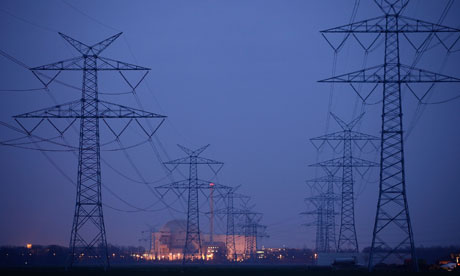
      The Unterweser nuclear power plant near Stadland, Germany – one of seven nuclear reactors Chancellor Angela Merkel chose to shut in the wake of the Fukushima disaster. Photograph: Sean Gallup/Getty Images

      A new international accord on the management and safety of nuclear power plants should be a priority for governments, an influential global energy organisation has said.

      A year after Japan’s Fukushima reactor was shut down, the World Energy Council – whose members include many of the biggest energy companies from around the world – said an agreement was possible and should be a matter of urgency. “Global nuclear power is one of the rare issues on which an international accord could be achieved with a reasonable level of efforts— the need to act is urgent, and the time is right,” its report found.

      “Very little has changed in respect of improving global governance of the nuclear sector, highlighting the need for action. There is critical need to inform the public about issues relating to nuclear generation technologies, safety, costs, benefits and risks.”

      The WEC also found that nuclear energy continues to be a popular choice when governments around the world are setting their future priorities, despite concerns over the safety of reactors following the Fukushima disaster last March.

      Although many countries have paused their work on nuclear power developments, and some – including Germany, Italy and Switzerland – have withdrawn altogether, the WEC study concluded that the impetus for nuclear development in key parts of the developing world would continue.

      Christoph Frei, the secretary general of WEC, said: “The nuclear renaissance is continuing. But there is a strong need for the public to be informed, and for more discussion around safety procedures. Safety should not be a competitive issue – it should be something where companies collaborate to ensure that everyone is using the best practice.”

      The WEC study found that most countries had not materially reduced their plans for new nuclear reactors, and that 60 plants were still under construction. “Very little has changed, especially in non-OECD [developing] countries, in respect of the future utilisation of nuclear in the energy mix after Fukushima,” was the report’s verdict.

      However, some nuclear experts disputed the claims, pointing out that proposed new reactors can take many years to come to fruition, and that while countries’ plans for new nuclear development may remain in favour of the technology on paper, this was far from a guarantee that the plans would be carried out in reality.

      Steve Thomas, professor of energy studies at the University of Greenwich, said on Wednesday that while construction began on 38 new reactors between 2008 and 2010, construction only began on two between 2011 and 2012. He said estimates from the nuclear industry more than a decade ago that nuclear power would cost about $1,000/KW of capacity to construct had now been revised upwards to about $6,000.

      Mycle Schneider, a nuclear energy consultant speaking at a conference held by the Greens/EFA party at the European parliament to discuss the impact of Fukushima on the nuclear industry a year on, said there had been a “dramatic decline” since the 1980s in the number of nuclear plants around the world. Keith Baverstock, of the University of Eastern Finland, added that the three major examples of nuclear accidents – Three Mile Island, Chernobyl and Fukushima – showed that nuclear power was “very dangerous and very accident-prone”.

      Connie Hedegaard, the European Union’s climate chief, warned that the costs of nuclear power had probably increased after the Fukushima incident. “I’m sure that nuclear power has not gone down in price, because of the extra security.”

      But the WEC said it was essential for a public debate on nuclear to include the question of how safety and governance could be co-ordinated at an international level. Pierre Gadonneix, chairman of the World Energy Council, said: “It is clear from the report that nuclear energy will play a full part in the future energy mix, especially in developing countries, provided nuclear safety and transparency are continuously being reinforced. I believe there is a real opportunity for our world leaders to promote a consensual solution to this issue and thus demonstrate that real international governance, where emerging economies fully participate, can be successful.”