Category: Energy Matters

  • Nuclear power is an expensive gamble that may (or may not )pay off

    Nuclear power is an expensive gamble that may (or may not) pay off

    Energy deals could suck in vast resources for generations, or prove one of the most far-sighted government decisions ever


    • Hinkley Point at Bridgwater

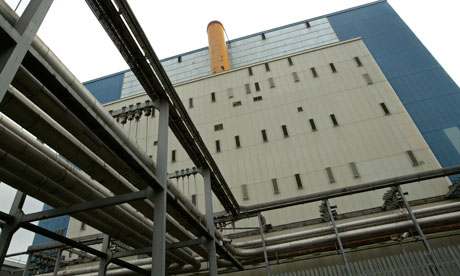
      A picture of the now decomissioned Hinkley A nuclear power plant. A new Hinkley C plant is proposed near the Bridgwater site in Somerset. Photograph: Martin Argles for the Guardian

      Britain’s energy future starts in Paris with David Cameron and Nicolas Sarkozy signing formal agreements for the UK and France to work together on nuclear power. Attention will soon shift to a 500-hectare (1,250-acre) plot in Somerset where the French state energy giant EDF hopes to start work on Hinkley C. If all goes to plan, the first nuclear power station to be built in Britain since 1995 will generate 2,000MW of electricity a year by 2018-2019.

      The reality is that few, if any, of the world’s 435 working nuclear power stations were built to cost, or on schedule – the prototypes of the two stations EDF wants to build in Britain have taken far longer and proved much more expensive to build than anyone ever expected.

      The Paris agreements only allow preparatory work to start, but they do establish one version of the low-carbon electricity future that climate change demands. The deals also address the fact that Britain has very few young engineers to run what may eventually be eight or more nuclear stations, by providing money for a training centre in Bridgwater, Somerset.

      However, while EDF’s earth-movers arrive in Somerset for Hinkley C, questions about radioactive waste management, long-term fuel supplies, vulnerability to terrorist attack, the risk of radiation, decommissioning, coastal siting, flooding, exorbitant costs and accident liabilities which were all skated over in consultations last year, have not been answered and are likely to come back to haunt governments for generations.

      Nuclear critics, like the former energy secretary Chris Huhne, argue that nuclear energy is a tried and failed technology which has needed hundreds of billions of pounds of state subsidies and sweeteners but still generates expensive and dangerous energy.

      The question hanging over Britain’s new stations will be whether cheaper, safer, alternatives become available. If so, Britain will be embarrassed, chained to a massively expensive technology that will suck in resources for ever. If they do not, the decision to build them may prove to be one of the most far-sighted taken by any government.

  • Re the provision of Solar Trains.

    Re the provision of Solar trains.

    It should be noted that the costs of the necessary infrastructure involved in providing Solar Trains

    needs to be evaluated and may be an inhibiting factor in the provision of such trains.

    This has been drawn to my attention after recent posts. Financing these trains may pose problems.


  • Works starts on World’s largest solar bridge at Blackfriars

    Work starts on world’s largest solar bridge at Blackfriars

    By

    13:16 October 5, 2011

    The new Blackfriars railway station, being built on the foundations of a Victorian bridge ...

    The new Blackfriars railway station, being built on the foundations of a Victorian bridge spanning the River Thames in London, has started to have the first of over 4,400 solar panels installed on its roof (All photos: Solarcentury/Network Rail)

    Image Gallery (4 images)

    Get 3 Solar Quoteswww.solarmarket.com.au
    Solar Market Free service, no obligation to buy

    Ads by Google

    Blackfriars Bridge, a Victorian rail bridge in the heart of London, is now well on its way to becoming the biggest solar array in the city and the world’s largest solar bridge. When the installation is complete, the roof of the new Blackfriars railway station will be home to over 6,000 square meters (64,583 sq.ft.) of solar panels, satisfying half of the station’s power needs.

    We recently featured a two mile stretch of rail tunnel with 16,000 solar panels on the roof, providing power to signaling, lighting, and heating of railway stations, and also to some of the trains using the Belgian rail network.

    Now, Blackfriars Bridge has started to have over 4,400 high-efficiency Sanyo HIT photovoltaic panels installed on its newly-built roof by London-based Solarcentury and engineers from Jacobs. Blackfriars spans the River Thames, and was originally built during the age of steam in 1886.

    The new Blackfriars Station is currently being redeveloped as part of a Network Rail Thameslink program upgrade (with funding from the Department for Transport’s safety and environment fund), which aims to have longer trains – meaning more seats for commuters – running from Bedford to Brighton via London. The solar installation will generate a claimed 900,000kWh of electricity every year, and will be joined by other energy-saving measures such as rain harvesting systems and sun pipes for natural lighting.

    High Quality Solar Powerwww.cbdsolar.com.au
    German solar panels and inverters Backed by ASX-listed
  • Indian Railways Usher in Solar Power for Electrification

    Indian Railways Usher in Solar Power for Electrification

    spcma 128x100 button Indian Railways Usher in Solar Power for ElectrificationSolar Power Commercial Market Applications” width=”128″ height=”100″ />Indian Railways is reining in solar power for electrification of railway system assets and bringing in improved technologies to bring down emissions from locomotive engines in its attempt to assay environmental contamination and economize energy.


    Solar energy is the radiant light and heat from the Sun that has been harnessed by humans since ancient times using a range of ever-evolving technologies. Solar radiation along with secondary solar resources such as wind and wave power, hydroelectricity and biomass account for most of the available renewable energy on Earth. Only a minuscule fraction of the available solar energy is used.

    Solar energy technologies provide electrical generation by means of heat engines or photovoltaics. Once converted its uses are only limited by human ingenuity. A partial list of solar applications includes space heating and cooling through solar architecture, potable water via distillation and disinfection, daylighting, hot water, thermal energy for cooking, and high temperature process heat for industrial purposes.

    A consultancy for reducing of exhaust discharges from diesel engines has already been approved and the work is coming along.

    In addition to this, diverse technology betterments are being adopted up on diesel locos to better operating capabilities and bring down unburnt fuels to check global warming.

    Solar power is also being reined in for electrification of manned level crossings, administrative buildings, training institutes, canteens and hospitals and for water heating functions.

    At present, 128 level crossings and four stations in West Central Railway have already been provided with solar panels for electrification purpose.

    Read more about Solar Power Commercial Market Applications

    Read Related Articles

  • Nuclear news

    India’s nuclear reactors are highly secure: AEC
    Economic Times
    Inspite of that there is a perception in the minds of people that these projects may be dangerous for them.” To a question on proposed 9900 MW Jaitapur nuclear power project, the AEC chairman said the plant in Maharashtra’s Konkan area will not be any
    See all stories on this topic »
    How Many Lives Does Nuclear Energy Have?
    Forbes
    Some are filing suit in the United States Court of Appeals in Washington to stop Southern’s nuclear pursuits. Among the many arguments that they are now making is that nuclear power plants are notorious for exceeding their time tables and budgets.
    See all stories on this topic »

    Forbes
    A nuclear Iran: Netanyahu’s ‘Churchill moment’ looms dangerously close
    Daily Maverick
    With Iran less than a year away from full nuclear capability, and the Ahmadinejad regime unbowed by the West’s strategy of ever-harsher sanctions, the window for avoiding a Middle Eastern catastrophe is closing. While British and US diplomats scrambled
    See all stories on this topic »
    Energy generation debate heats up
    Green Bay Press Gazette
    It was the first approval for new electricity-generating nuclear reactors in 30 years. They likely won’t be the last. Johnson said one utility “is right behind us” seeking licenses for two reactors. NextEra Energy, which owns Point Beach Nuclear Plant,
    See all stories on this topic »
    The threat from Iran grows graver
    City Journal.in
    Despite an ever-tightening net of economic sanctions Iran is drawing inexorably closer to achieving the ability to build nuclear weapons. At the last count, 6208 centrifuges were enriching uranium inside a previously secret plant at Natanz,
    See all stories on this topic »

    City Journal.in
    Iran strike talk ‘premature,’ top US general says
    CNN International
    By the CNN Wire Staff (CNN) — The United States believes talk of military strikes against Iran’s nuclear program is “premature” and has advised Israel that an attack would be counterproductive, the chairman of the Joint Chiefs of Staff says.
    See all stories on this topic »
    Let’s Hope War with Iran Can Be Avoided
    Yahoo! Contributors Network
    Not only might there be no winnable scenario in attacking Iran, there’s a possibility Iran might only be developing its nuclear reactors for the reasons it claims — energy and medical research. Just imagine if our government is lying about Iran being
    See all stories on this topic »
  • COAL SEAM METHANE

    Coal seam methane

    The Liverpool Plains and Ranges are also being explored by Santos Ltd for coal seam gas (CSG, or CBM, coal bed methane gas – see below). Often referred to (by gas companies) as a more environmentally-friendly fuel extraction than coal mining, CSG extraction nevertheless is not without considerable risks to water supplies and the environment.

    A Santos Project in East Java, Indonesia has been declared a disaster zone after an exploration well could not be contained in 2006. The well spews out 40 Olympic-sized swimming pools worth of hot, volcanic mud every day and has already displaced 50,000 people, submerged homes, factories and schools. The question has to be asked: what guarantees of environmental safety were these poor people given during exploration and what are these guarantees worth now?

    Santos were made aware of the potentially unstable Hunter Mooki Fault System here at the recent community meeting at Blackville. We don’t want an unnatural disaster here in the Liverpool Plains!

    CSG extraction also requires the dewatering of the aquifers contained with the gas which means these deep bores (>800m) will be puncturing through our good water supplies and the prospect of contamination between supplies is real. Just like for coal.

    Water found with CSG is always highly saline and has the potential to contain heavy metals, sorbed on the surface or compounded within the fine suspended particulate matter, yet another environmental hazard. CSG water has to be ponded, trucked out, or forced back into the ground under pressure. The sheer volume of this ‘waste water’ is a huge concern as is the potential for ‘good water’ to migrate towards the coal seam voids and depletion of quality water aquifer pressures due to unloading changes caused by water and gas extraction. Heavy machine-based fracturing of the coal seam to get the gas to flow can also lead to unpredictable venting of CSG which readily poisons the soil and water supplies above, yet another potential hazard with this ‘cleaner’ fuel.

    As the General Manager of Sydney Gas (drilling in picturesque Wollombi) said “I’m not going to say there’s a zero chance of water contamination”. Same old mining story. A fuller description of CSG hazards by independent consultants is available here.

    Be sure to check out the Caroona Coal Action Group by following this link here: http://www.ccag.org.au/index.php?option=com_content&task=view&id=95&Itemid=89


    Read the report: COAL BED METHANE HAZARDS IN NEW SOUTH WALES,

    by C. M. ATKINSON, January 2005.

    or click here for the latest report from Caroona Coal Action Group on CSG

    http://www.ccag.org.au/images/stories/pdfs/aust_csm_report.pdf


    Coal bed methane gas (CBM, or coal seam methane)

    “Coal seam gas refers to methane sorbed into the solid matrix of the coal. The presence of this gas is well known from its occurrence in underground coal mining, where it presents a serious safety risk. Coal bed methane is distinct from a typical sandstone or other conventional gas reservoir, as the methane is stored within the coal by a process called adsorption. The methane is in a near-liquid state, lining the inside of pores within the coal (called the matrix). The open fractures in the coal (called the cleats) can also contain free gas or can be saturated with water.” [1]

    This coal gas can be extracted by various drilling techniques and used as the natural petroleum gas.

    For more information and a comprehensive description, click here to go to Hunter Gas Action group. http://www.huntergasactiongroup.com.au/hgcbm.html


    [1] Adsorption is a process that occurs when a gas or liquid solute accumulates on the surface of a solid or a liquid (adsorbent), forming a film of molecules or atoms (‘the adsorbate’). It is different from absorbtion, in which a substance diffuses into a liquid or solid to form a solution. The term sorption encompasses both processes.

    Source: http://en.wikipedia.org/wiki/Adsorption

    Document Actions