Category: Population

  • Populate and perish: Sydney’s time bomb


    The director of the Australian Demographic and Social Research Institute, Peter McDonald, said the natural constraint of the Blue Mountains would force the city to spread to the north and south, until it eventually met growing populations in Newcastle and Wollongong.

    ”I think you will see the coming together of those three cities into a single urban area,” Professor McDonald said.

    ”It isn’t simply that the Sydney metropolitan area will continue to grow. I think at some point people will actually choose Wollongong and Newcastle over Sydney to avoid the crowding and congestion and the cost of living.

    ”But the end result is that they will probably end up living in a larger metropolitan area anyway, with Sydney at its centre and a continuous urban link to those regional centres.”

    Planners and experts in health and sustainability said a 50 per cent increase in Sydney’s population would require tens of thousands of additional hospital beds and nearly a million new homes. The amount of water consumed for household use would increase from 1.3 billion litres a day to 2.1 billion litres, requiring a far greater utilisation of water recycling or a new dam.

    ”In the Sydney basin we may not be able to sustainably meet this population increase,” said Dr Chris Dey, a sustainability expert from the University of Sydney. ”We need greater diversification – more harvesting, recycling, more reuse of waste water.”

    Stuart White from the University of Technology’s Institute for Sustainable Futures said public transport and housing would be greater challenges. ”These are major pieces of infrastructure that must be integrated into the city on a mass scale and that is an extremely difficult task, particularly when you’re starting from the position we’re in now.”

    While the Prime Minister, Kevin Rudd, welcomed the population increase, Labor backbencher Kelvin Thompson said Australia was ”sleepwalking into an environmental disaster”.

    ”Another 13 or 14 million people will not give us a richer country, it will spread our mineral wealth more thinly and give us a poorer one,” Mr Thompson said. ”It will make a mockery of our obligation to pass on to our children a world in as good a condition as the one our grandparents gave to us.”
  • Leave population out of climate talks, Indian minister says

    Leave population out of climate talks, Indian minister says


    Jairam Ramesh claims there is a move among western countries to bring India’s rapidly growing population into climate change negotiations


    Western nations are trying to use India‘s “profligate reproductive behaviour” to force Delhi to accept legally binding emission reduction targets, India’s environment minister said today.


    Speaking at a conference in the Indian capital, organised by Delhi’s Centre for Science and Environment, Jairam Ramesh said there was a “move in western countries to bring population into climate change [negotiations]. Influential American thinktanks are asking why should we reward profligate reproductive behaviour? Why should we reward India which is adding 14 million people every year?”


    Ramesh’s speech comes as the 100 day countdown begins to the UN climate change summit in Copenhagen, which will agree on a successor to the Kyoto agreement, due to expire in 2012. Developing nations such as India and China were not constrained by the Kyoto agreement, and western nations now argue that these rapidly growing economies should sign up to legally binding emission targets.


    India’s population of over 1 billion means that while it is the world’s fifth biggest emitter of greenhouse gases, its per capita emissions are just one-twentieth of the United States. However, its population is rising quickly and the United Nations predicts India will have 1.7 billion people by 2050 – while China will by then have a population of 1.4 billion.


    It is understood that American diplomats had raised the issue of overpopulation with the Indian delegation during talks when US secretary of state, Hillary Clinton, visited New Delhi earlier this year.


    Ramesh said that at “today’s state of development” India could not and should not accept “legally binding reduction targets”. The minister added that the Indian government saw per capita emissions rising from one tonne of carbon dioxide to “three or four” by 2030.


    “For us this is about survival. We need to put electricity into people’s homes and do it cleanly. You in the west need to live with only one car rather than three. For you it is about luxury. For us survival.”


    The Indian government – along with 37 other developing nations – has argued that rich nations such as the US should set a goal of cutting emissions by 40% from 1990 levels by 2020.


    “Once developed countries have shown demonstrable proof of their seriousness then India can think of going to next stage. At a time when every (rich) country is in violation of the Kyoto protocol obligation to ask China and India to take on legal targets smacks of hypocrisy.”


    Finance is one of the key sticking points, as poorer nations demand huge amounts of cash to buy technologies and adapt their nations to climate change. Richer nations have proved reluctant to commit. One recent estimate, highlighted by Pakistan’s chief Copenhagen negotiator, Farrukh Iqbal Khan, who has worked closely with Indian counterparts, put the cost at £265bn a year.


    Asked what he might say to the UK climate change minister, Ed Miliband, who arrives next week, Ramesh said pointed out that the only leader to come up with a “concrete offer (of money)” was Gordon Brown. “He said earlier this year that there should be a fund of $100bn (£60bn). We don’t know if that is every year or what. But it is an offer on the table.”


    Ramesh, who has just returned from Beijing, said that India and China had agreed to “coordinate all actions” before multilateral meetings. He said that the only difference was that a Chinese thinktank had called for Beijing to “peak emissions” by 2030. Ramesh said the Chinese chief negotiator on climate change had assured him that this was “thinktank policy not government policy”.

  • Percentage of global population living in cities, by continent

    Percentage of global population living in cities, by continent


    Studies have shown city dwellers have smaller carbon footprints than their countries’ national averages


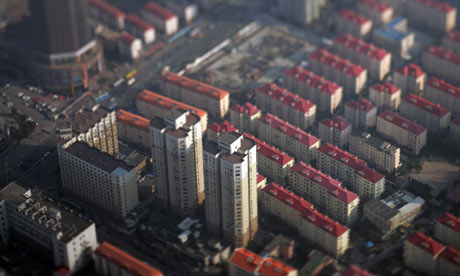
    Shanghai housing

    The percentage of China’s population living in cities rose from 13% to 40.4% between 1950 and 2005. It is predicted to rise to 60.3% by 2030. Photograph: Dan Chung


    Since 1950 there has been a huge worldwide increase in the percentage of population living within cities. The trend shows no sign of stopping – for the next 20 years, the flow of people is predicted to continue soaring.


    Some commentators believe this move to urban living is good for the environment because of denser housing and greater use of public transport. Studies have shown city dwellers on four continents have smaller carbon footprints than their countries’ national averages.


    In 1950, the population living in UK cities was 79% – already a large figure – but one which is set to rise to 92.2% by 2030. Elsewhere, China’s percentage rose from 13% to 40.4% between the years 1950-2005, and is predicted to rise to 60.3% by 2030. With so many migrating from rural areas, what does this mean for Chinese agriculture and its domestic food security? In all likelihood, it will look more like the UK – importing an increasing proportion of its food with the wealth generated by its urban industry and commerce.


    But it’s Botswana that has experienced the largest influx. Next year, 61.2% of its population are expected to live in urban areas, yet back in 1950 only 2.7% of Botswanans lived in cities.


    DATA: Percentage of global population living in cities, by continent 1950 to 2030


    • Can you do something with this data?
    Flickr Please post your visualisations and mash-ups on our Flickr group or mail us at datastore@guardian.co.uk


  • World Population Clock

  • Having Children Brings High Carbon Impact

    August 7, 2009, 10:32 am

    Having Children Brings High Carbon Impact


    PregnantReuters Her carbon footprint is getting bigger, too, a new study suggests.

    Having children is the surest way to send your carbon footprint soaring, according to a new study from statisticians at Oregon State University.


    The study found that having a child has an impact that far outweighs that of other energy-saving behaviors.


    Take, for example, a hypothetical American woman who switches to a more fuel-efficient car, drives less, recycles, installs more efficient light bulbs, and replaces her refrigerator and windows with energy-saving models. If she had two children, the researchers found, her carbon legacy would eventually rise to nearly 40 times what she had saved by those actions.


    “Clearly, the potential savings from reduced reproduction are huge compared to the savings that can be achieved by changes in lifestyle,” the report states.


    The impact of children varies dramatically depending on geography: An American woman who has a baby will generate nearly seven times the carbon footprint of that of a Chinese woman who has a child, the study found.


    The calculations take account of the fact that each child is, in turn, likely to have more children. And because the calculations derive from the fertility rate — the expected number of children per woman in various countries — the findings focus on women, although clearly men participate in the decision to have children.


    “In discussions about climate change, we tend to focus on the carbon emissions of an individual over his or her lifetime,” said Paul Murtaugh, a professor of statistics at O.S.U., in a statement accompanying the study’s release. “Those are important issues and it’s essential that they should be considered. But an added challenge facing us is continuing population growth and increasing global consumption of resources.”


    The full report is published in the February 2009 edition of the journal Global Environmental Change: Human and Policy Dimensions.

  • Aim for sustainable population and generous immigration (Canberra Times)


      NB (This very topical with current issues surrounding relocation of Pacific Islands


        cliimate change refugees)


    Aim for sustainable population and generous immigration (Canberra Times)


    13 February 2009

    We can achieve a sustainable population while discharging our ethical obligations to accept refugees, Charles Berger writes.

    Last October, the Commonwealth Treasury released modelling intended to inform the design of the Government’s carbon pollution reduction scheme. The modelling assumed net migration to Australia of 150,000 people a year through to 2050, which would result in an Australian population of about 33million by 2050. Operating on an assumption of 200,000 a year in the last half of this century, Treasury’s modelling envisages about 45million Australians by 2100.

    Pause for a moment to consider whether you support an increase in Australia’s population that would, among other things, transform Melbourne and Sydney into mega- cities of 10 million residents each.


    Now consider that the Treasury’s assumptions about Australia’s population in advising the Government on climate change were woefully on the low side. Australia’s actual net migration in 2006-07 was 177,600, the highest on record at the time.

    The preliminary net migration figure for 2007-08 is 213,500. Because the Government further increased skilled migration numbers in 2008, it is likely net migration for 2008-09 will be higher still.

    In fact, we are now roughly tracking a ‘high-growth’ scenario developed by the Australian Bureau of Statistics in 2006, which projects an Australian population of more than 62million and growing by 2100.

    There is a real difference between an Australia with a stable population of perhaps 25 million to 30 million people and an Australia with twice that number and still growing fast. Our ability to cope with climate change and manage our environment sustainably is vastly improved with a lower, stable population. It is not only the Treasury assumptions for its climate change advice that now appear completely superseded by population growth.

    Most state planning frameworks, including Melbourne 2030, were based on population estimates that are now laughably out of date, largely due to the massive increase in migration begun by the Howard Government and accelerated under the Rudd Government.

    As a result, state and local planning schemes for housing, water supply, electricity, health care, education and transport are becoming redundant almost before the ink is dry on them. Victoria’s latest State of the Environment report concludes that development on Melbourne’s urban fringes is driving the loss of natural habitat and biodiversity, degrading waterways, taking up good agricultural land and creating a host of other pressures.

    In this context, the release of the book Overloading Australia by Mark O’Connor and Bill Lines has sparked another round of debate about Australia’s population. Some commentators have been quick to detect a murky agenda of xenophobia hovering behind a green cloak in the population debate.

    They are right to be suspicious.

    Population control movements have been associated in the past with anti- migrant agendas and coercive birth control policies in developed and developing countries. In light of this dark history, it is critical for those who advocate population stabilisation to reject any such association unequivocally. And yet it is possible to argue for a sustainable population policy that includes some limits on migration without being anti-migrant.

    When I was in law school in the US, I spent many late hours volunteering at a legal clinic that represented refugees making application for asylum.

    I feel deeply that one of the true measures of a society’s ethics is how it treats refugees and others on the wrong end of the modern global economy. Many people may not realise that in recent years more than half of Australia’s permanent migrants have been through the skilled migration stream, compared with only 7 per cent of the total being humanitarian migrants and 25 per cent family migrants.

    So having a sound population policy that brings migration back down to reasonable levels does not mean shutting the door on refugees. In fact, Australia could even increase its refugee intake, while still tracking for stabilisation of the overall population by about 2050, if we reduce skilled migration substantially.

    Since most of the recent increase in migration is attributable to perceived economic requirements, not humanitarian or family obligations, perhaps we should scrutinise more closely the claims by industry that they are needed to meet ‘skills shortages’.

    One wonders whether such claims are really just code for ‘lower wages’. The truth is, the rapid increase in skilled migration is being used as a crutch for the economy, a way of providing a short-term boost to things like housing construction and retail demand but without any serious reckoning of the long-term consequences. Relying on migration to prop up sectors of the economy also diverts us from the task of devising more sustainable solutions.

    In trying to ease the pressure overpopulation and excessive consumption are having on our planet and its ecological systems, we must debate immigration and demographic patterns while keeping Australian values of justice, equity and fairness front and centre.

    Those who are sceptical of calls for a sustainable population policy are also fond of pointing out that our modern, high-consumption lifestyle is the most pressing cause of our environmental problems. They are correct that we must tackle our high pollution and consumption levels and shift to a more sustainable lifestyle.

    According to the World Resources Institute, Australia’s greenhouse pollution level of 26tonnes of CO2-e per person per year is double Germany’s, six times China’s and 11 times Indonesia’s. But, while a lower-impact way of life must be a top priority, we must also understand that a rapidly growing population will make that transition much more difficult.

    For instance, in 2002, a CSIRO report analysing the possible consequences of different population levels for Australia found a 28 per cent increase in the nation’s population by 2050 would lead to 20 per cent more energy use and greenhouse pollution, 25 per cent more urban water use and higher food import requirements (especially for fish and vegetables), among many other impacts.

    The sobering reality is that the growth of a consumption- intensive population in Australia is seriously damaging our environment. Despite these pressures, Australian governments have continued to pursue high-population-growth strategies or have had no coherent demographic policy at all. The baby bonus (or the new plasma screen bonus, as they call it at one major retailer) is an example of such a misguided policy.

    Australia now needs to shift its focus to policies that seek to match human populations and consumption levels within nature’s carrying capacity, while transforming our economic and social systems to function within the limits of ecological systems.

    We should also support programs in high-fertility countries that improve education and maternal and child health care as well as provide sustainable economic opportunities. The good news is, these programs are the most effective means of reducing fertility and promoting sustainable development.

    We can achieve a sustainable population while discharging our ethical obligations to accept refugees and play a positive role internationally. It is not only achievable: our future may depend on it.

    Charles Berger is director of strategic ideas at the Australian Conservation Foundation.