Category: Greenwash – Companies falsely claiming green cred.

The typical image of the Mediterranean is a blue sea with white-walled houses clinging to the rocky landscape. Every spring, after the Easter processions when the Mistral stops blowing, house-proud citizens freshen up those walls with a bucket of whitewash. The power of a simple mixture of lime, chalk and water to hide the ravages of a year’s wear and tear is so compelling it has entered the language. When a politician puts the best face on a difficult policy, we accuse them of ‘whitewashing’ the truth. The language lives and whitewash has now acquired a green tinge as companies appeal to environmentally careful consumers. Some of them claim green credentials where no green credentials exist. Culprits range from “green phones” through “eco-credit cards” to “clean, green nuclear power”. The Australian Consumer and Competition Commission has had to step in and regulate the offset of carbon dioxide emissions and provide guidelines and definitions for the term “climate neutral”. Your challenge is to develop the necessary X-ray vision to see past the greenwash to the facts underneath. A mixture of specific examples and general principles are provided here to hone your green wash detectors.

  • Bluesky greenwashes 7 million bottles

    Bluesky greenwashes 7 million bottles

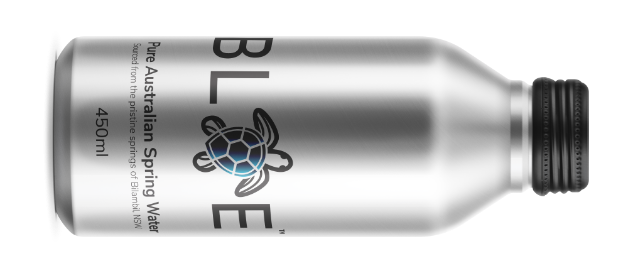
    Local drink manufacturer, Blue Sky Beverages, will launch a campaign at midday tomorrow claiming to replace single use plastic bottles with 3D printed, aluminium ones.

    BlueSky founder, Matt Isles, said the facility is designed to print seven million bottles each year.Where the press release refers to 3D printed bottles it actually means the label is printed on the bottle, not that the bottle itself will be 3D printed in Brisbane. The company will not be collecting or reusing the bottles.

    Wallaby Water and Cotton On launched a similar product in August last year that was designed to be recycled rather than reused.

    A detailed analysis by US company Tappwater indicates that individual aluminium cans have a carbon footprint almost three times that of plastic bottles. Their advantage is that aluminium can be reliably recycled.

    https://bluespringwater.com.au/

    https://www.foodanddrinkbusiness.com.au/packaging/cotton-on-launches-water-bottled-in-aluminium

    https://tappwater.co/en/glass-vs-plastic-vs-aluminium-what-is-the-most-sustainable-choice/

    https://slate.com/technology/2008/03/the-eco-guide-to-responsible-drinking.amp

  • Greenwash exposed by YesMen at COP26

    Greenwash exposed by YesMen at COP26

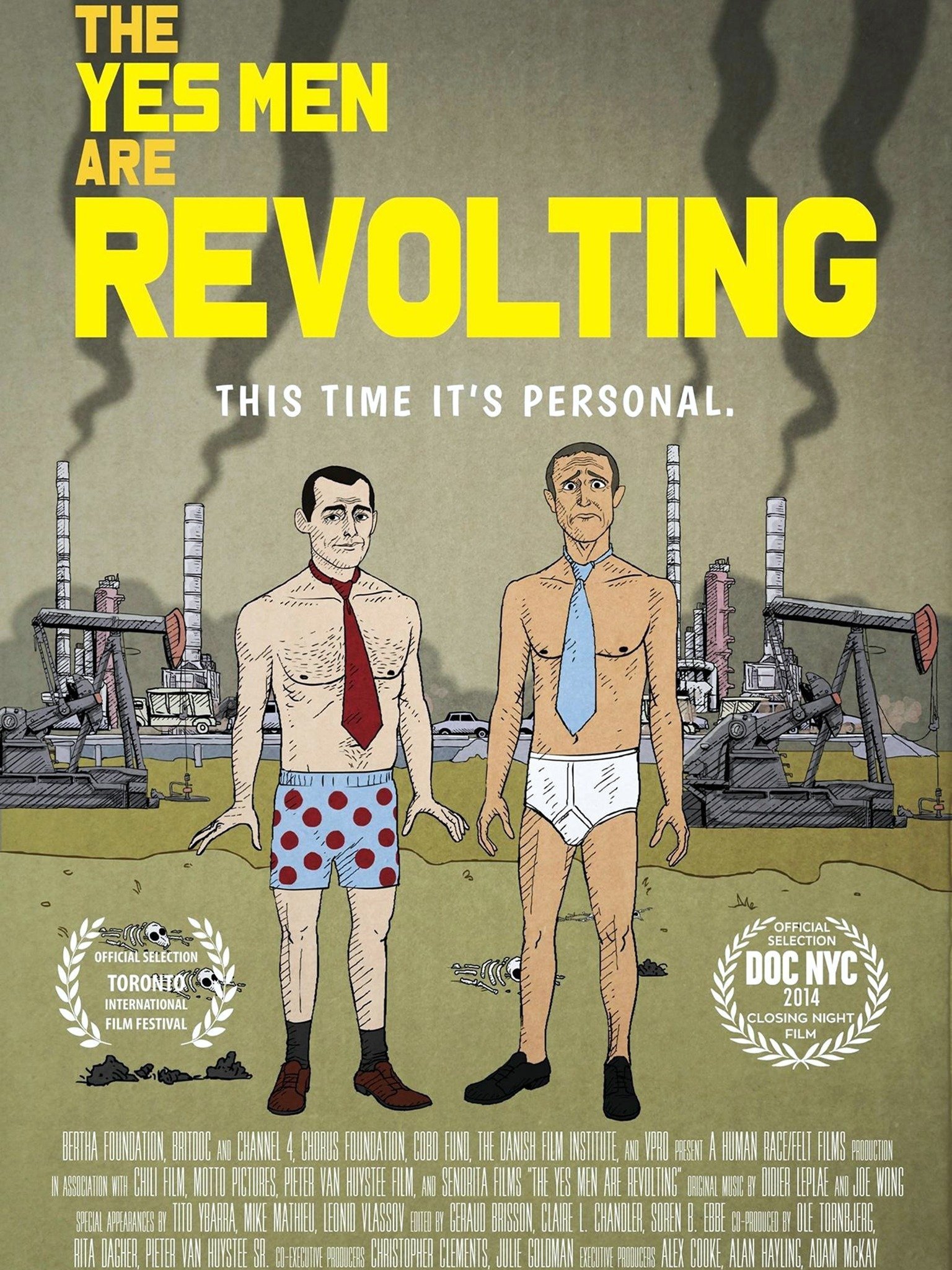
    A poster for a documentary about the Yes Men

    Two official COP26 “Net Zero” programs were exposed as harbouring large elements of greenwash this week by New York based ‘YesMen” and UK-based Glasgow Calls Out Polluters (GCOP).

    The official “Race to Zero” and “Science based Targets” initiatives have been criticised by many academics and environmentalists including Greta Thunberg who tweeted that “net-zero targets [are] being used as excuses to postpone real action.”

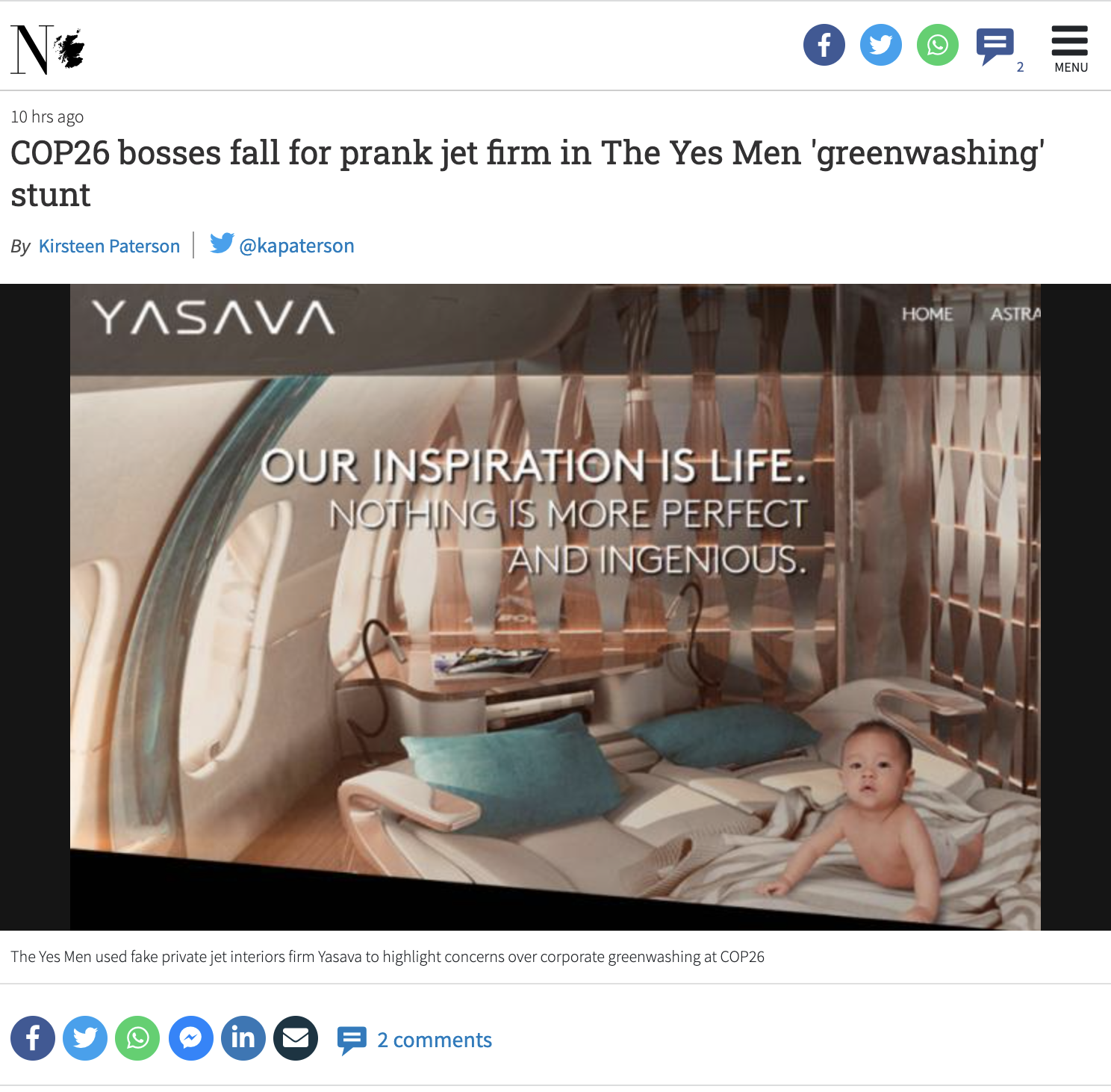
    The details of this week’s expose concerns an airline services company, Yasava, who claims to facilitate net-zero flight technology. The real company was falsely included in the official program as a prank by the Yes Men. Other members of these official UN initiatives include major polluters Maersk, Chevron, Halliburton, Delta, United, American, DL Piper, Edelman, JP Morgan, Hitachi, Iberdrola and Unilever.

    https://www.globalcitizen.org/en/content/race-to-zero-net-zero-emissions-climate/

    https://www.greenbiz.com/article/net-zero-faces-fierce-criticism

    https://theyesmen.org/project/yasava/fakerelease

    https://www.gcop.scot/

    https://press.theyesmen.org/press-archive/yasava-thenationalscotland-images/yasava-thenational1.png

  • IPCC denies the option of degrowth

    IPCC denies the option of degrowth

    Writing in this week’s Pearls and Irritations, Peter Sainsbury points out that the most recent Intergovernmental Panel on Climate Change (IPCC) projections regarding climate change assume continual economic growth as fundamental to their projection. Their modelling offsets this with unprecedented technical change, such as green hydrogen and green steel and new, negative emissions technologies. Europe’s Fit for 55 zero-emissions plan, also predicates economic growth, decoupled from environmental harm. Sébastien Wälti of the Swiss National Bank and other degrowth researchers point out that the vast sums of money spent on emissions reduction technologies over the last two decades have had very little impact on emissions. Reducing consumption and population rather than inventing new technologies.

    Sources:

    https://johnmenadue.com/sunday-environmental-round-up-14/

    Nature Journal

    Sebastian Waelti on Degrowth

    https://www.tandfonline.com/doi/full/10.1080/13563467.2013.866081?casa_token=wSYTa3lmbVoAAAAA%3A3VsXj0b5tSkZJX1s3aZOUfJoVlczKPp2IJu4JupsEfgQ3SjFDZxKuWeaEkSKptWMjtFFWw9-n_Yk

    https://www.ingentaconnect.com/content/whp/ev/2013/00000022/00000001/art00006

    https://link.springer.com/chapter/10.1007/978-3-319-38807-6_15

  • Fossil fools start leaking cash

    Fossil fools start leaking cash

    coal_humanityThere is a room at the Parliament House where disaffected ex-ministers meet. Other Parliamentarians refer to it as the Monkey Pod. Chief monkey was once famous for three word slogans. It was thought quite impressive that a monkey could string three words together convincingly enough to cause humans to repeat and discuss them as a meaningful phrase.

    Westender can reveal, however, that the ape did not invent the phrases on its own. Humans were employed to invent them and teach them to him. Yes, that’s right, Moulah changed hands.

    Of course, the monkey did not pay the money. Money is poured into the monkey pod – not generated there. The money was paid by vested interests for global use and the monkey was just trained to use the important lines. The fossil fools are those who are bought, not those who do the buying.

    “Coal is good for humanity” was developed by Burston Marstellar for a global campaign by Peabody Energy, the world’s largest privately held company. It was such an important campaign that they decided to use five words. Not only that, but there are a flotilla of other phrases: energy poverty, little black rock, amazing things, watch what coal can do for you. Murston Marstellar used the same techniques for decades on the payroll of big tobacco.

    Even after the world wildlife fund successfully took Peabody to court in the UK for misrepresenting the facts, those phrases are still being used. “This little black rock can do amazing things” is still being promoted across social media as I write. The moulah is still being spent even though the monkey is rattling the bars of a much smaller cage.

    It was something of a slap in the face then, for Westender to be offered a tiny amount of money to run a piece of PR fluff on the civil contribution of the fracking industry. At a word rate we are talking here around thirty cents a word. While competition from out of work journalists has caused word rates to drop, both owners of Westender have earned considerably more than a dollar a word at many points in their somewhat chequered careers.

    Only a dozen words actually did the work, the rest was designed to carry them. Thousands of jobs; world class natural gas; exciting economic and employment boost. There was a mangled piece of logic about falling oil prices that makes no sense when you parse it.

    Compared to the hundreds of thousands spent on three word slogans it is an absolute pittance. Of course, Westender was not being asked to craft the words, merely mouth them like a member of the monkey pod. And that is the greater insult.

    Of course, Westender has to live. We regularly write puff pieces for local eateries, we run advertisements for local politicians, and once – without payment – we even ran a puff piece for the Australian Air Force about a local girl who was allowed into a plane.

    Our reporting on coal has gone through a similar arc to the rest of the media. During the 2013 election campaign (doesn’t Gillard and the Carbon Tax seem like a century ago) we argued internally whether anti-coal campaigns were too Green or just too radical, divestment was still considered weird, an idea that students had got out of Rolling Stone and coal was generally considered reliable, even though it had not yet been found to be good for humanity.

    Since then, the Greens have started winning lower house seats in rural areas with the backing of farmers, Glen Lazarus has reinvented himself as a representative of Lock the Gate, conveniently forgetting it was a coal magnate who put him into power in the first place, and the banks have walked away from Adani in the Gallilee Basin.

    What has changed is the hysteria with which the fossil fuel advocates are screaming from the sidelines. Even though they are now throwing money at small independent publications to try and build grass roots support, we’re not picking it up.

    In the interests of fairness and even-handed reporting we have given you the three key phrases, free of charge, in the context of the truth. Anyone who wants the original press release which we were offered a hundred bucks to publish, just ask.
  • ‘Middle ground’ of sea-level change: ‘Intra-seasonal’ variability impacts forecasting and ecosystems

    ‘Middle ground’ of sea-level change: ‘Intra-seasonal’ variability impacts forecasting and ecosystems

    Posted: 27 Nov 2012 08:13 AM PST

    The effects of storm surge and sea-level rise have become topics of everyday conversation in the days and weeks following Hurricane Sandy’s catastrophic landfall along the mid-Atlantic coast. Researchers are throwing light on another, less-familiar component of sea-level variability — the “intra-seasonal” changes that occupy the middle ground between rapid, storm-related surges in sea level and the long-term increase in sea level due to global climate change.

  • Surviving without ice: Arctic crustaceans use currents, deep-water migration to survive sea ice melts

    Surviving without ice: Arctic crustaceans use currents, deep-water migration to survive sea ice melts

    Posted: 13 Sep 2012 02:30 PM PDT

    With sea ice in the Arctic melting to record lows in summer months, marine animals living there face dramatic changes to their environment. Yet some crustaceans, previously thought to spend their entire lives on the underside of sea ice, were recently discovered to migrate deep underwater and follow ocean currents back to colder areas when ice disappears.