Category: Articles

  • Monbiot hardens views on Corporate Feudalism

    Monbiot hardens views on Corporate Feudalism

    Gangs of America outlines the deliberate undermining of legislatures by corporations

    Gangs of America outlines
    the deliberate undermining
    of legislatures by corporations

    Guardian columnist George Monbiot hardened his view on Corporate Feudalism on December 6th, writing that under the onslaught of the placeless, transnational capital McDonald’s exemplifies, democracy as a living system withers and dies.

    Monbiot joins the ranks of Ted Nace, Noam Chomsky and other thinkers who have recognised that corporate subversion of the democratic process is at the heart of our modern malaise.

    Where as most commentators study events of the last decade or so in an attempt to identify the source of citizen dissatisfaction with democracy, Ted Nace, points to the deliberate campaigns waged by Corporations in the nineteenth century to harness the Fourteenth Amendment to the US Constitution to grant themselves power to cross state boundaries without approval of state governments. As a result of this campaign the railway barons were born creating the financial institutions of the twentieth century and the underpinnings of the unsustainable financial system that drains the pockets of ordinary citizens and the state that should represent them.

    None of this is news to socialists who have followed Marx’ analysis of capitalism over roughly the same period. Ironically, the mantra of neoliberalism, that capital should be free, is the very concept at the heart of the nineteenth century critiques of capital, Marx included.

    French economist Thomas Picketty became the rock star of his industry with his book Capital,  that irrefutably proved that wealth trickles upwards and the gap between rich and poor increases in the absence of intervention by governments.

    An analysis of Picketty’s book and rise to fame is available from The Economist.

    Monbiot’s piece can be found at the Guardian where he writes weekly.

    Other articles on Corporate Feudalism from The Cage, The Generator and Monbiot are available at TheGenerator.News

  • Who are the one per crore?

    Who are the one per crore?

    The planet is not dying it is being killed and the people killing it have names and addresses, said singer activist and well known wobbly, Utah Phillips.

    A dollar from the United States of Africa (in the cage)
    We talk about the one per cent. It is more like the one in ten million.

    If we know the names and addresses of the 700 people who control the wealth and armies of the planet, then we might be able to adjust their behaviour.

    Taking the Forbes rich list of 1,900 billionaires and chopping it off at 700 would give us a partial result, but it excludes royalty and dictators. Also, the arms dealers, drug runners, slave traders and engangered animal merchants deliberately keep themselves off the list.

    Note that five percent of the 2,000 billionaires on the planet (ie 100 people) own more than $US10,000,000,000 (or to use the Vedic system, 100 crore $1,00,00,00,000). We might take them as our first tranche and see where that gets us.

    The top ten of the Forbes list are as follows.

    No.NameNet worth (USD)AgeNationalitySource(s) of wealth
    1Bill Gates$75.0 billion60 United StatesMicrosoft
    2Amancio Ortega$67.0 billion79 SpainInditex
    3Warren Buffett$60.8 billion85 United StatesBerkshire Hathaway
    4Carlos Slim$50.0 billion76 MexicoTelmexGrupo Carso
    5Jeff Bezos$45.2 billion52 United StatesAmazon.com
    6Mark Zuckerberg$44.6 billion32 United StatesFacebook
    7Larry Ellison$43.6 billion71 United StatesOracle Corporation
    8Michael Bloomberg$40.0 billion74 United StatesBloomberg L.P.
    9Charles Koch$39.6 billion80 United StatesKoch Industries
    9David Koch$39.6 billion75 United StatesKoch Industries
    11Liliane Bettencourt$36.1 billion93 FranceL’Oreal

    I find it somewhat refreshing that six of the ten are tech related and there is a fashionista in there as well. Two are financiers and the Koch brothers are the biggest coal barons in the world and among the largest funders of the climate denial campaign of which Senator Malcolm Roberts is the latest outgrowth.

    Of course, political power amounts to something even if we cannot simply give every politician that represents one crore of people a place in the one per crore and leave it at that. While that would represent one person one vote, the politicians from the world’s twentiest richest nations wield much more significant power than the one hundred poorer ones.

    Here are the twenty richest nations.

    Country
    Countrypopulation (1000s)adults (1000s)Share of world population (%)Share of adult population (%)Wealth per capitaWealth per adultShare of world wealth (%)GDP per capita
    Country
    World6085576369751110010026416434941007675
     United States
     United States2841542028654.675.4914372720131925.435619
     United States
     Japan
     Japan1270341009332.092.731248581571469.8625924
     Japan
     China
     China125178884206320.5722.7711267167498.773844
     China
     United Kingdom
     United Kingdom58670438710.961.191289591724614.7124252
     United Kingdom
     Germany
     Germany82344648101.351.75907681153254.6523917
     Germany
     Italy
     Italy57715464160.951.261208971503274.3422876
     Italy
     India
     India102108457059516.7815.436513116554.142684
     India
     France
     France59278443580.971.2945571263603.4923614
     France
     Spain
     Spain40717321650.670.87930861178372.3619037
     Spain
     Brazil
     Brazil1738581042132.862.8219676328252.137745
     Brazil
     Canada
     Canada30689227640.50.62892521203261.728731
     Canada
     Russia
     Russia1465601074932.412.9116579226041.519996
     Russia
     Mexico
     Mexico100088561321.651.5223488418811.469711
     Mexico
     Taiwan
     Taiwan22191154760.370.421000091434051.3819714
     Taiwan
     South Korea
     South Korea46779332420.770.945278637161.3214937
     South Korea
     Netherlands
     Netherlands15898120460.260.331211651599101.225759
     Netherlands
     Australia
     Australia19071136900.310.37909061266351.0827193
     Australia
     Indonesia
     Indonesia2091741244463.443.377973134011.044035
     Indonesia
     Turkey
     Turkey68234403911.121.0922379378060.957414
     Turkey

    Note that the Indonesians are set to pass Australia, we might soon be begging for a seat at the G30 if we want to keep our nose in world affairs. The point here is that a small number of relatively underpopulated nations compete with China, India and Brazil, the USA, Indonesia and Russia for a place at the big table.

    If we put in a political ofical for every crore of people in the G20 that would give us another 200 candidates for the 700 one per crore. Around 30 of them would be citizens of the USA, and 125 of them members of the Chinese Communist party. Russia would only get 15 places in this slice of the population, but it has around 60 billionaires to build up its numbers. This might be over estimating the power of political influence but it is at least a start.

    Now that leaves out world leaders who have scammed their way into the game without declaring their hand.

    Aross all time, the world’s most corrupt leaders have been named by Transparency International. A look at their embezzled fortunes, makes you realise how much wealth the truly wealthy have, even when you take inflation into account.

    World’s Ten Most Corrupt Leaders

    NamePositionFunds embezzled2
     1. Mohamed SuhartoPresident of Indonesia (1967–1998)$15–35 billion
     2. Ferdinand MarcosPresident of the Philippines (1972–1986)5–10 billion
     3. Mobutu Sese SekoPresident of Zaire (1965–1997)5 billion
     4. Sani AbachaPresident of Nigeria (1993–1998)2–5 billion
     5. Slobodan MilosevicPresident of Serbia/Yugoslavia (1989–2000)1 billion
     6. Jean-Claude DuvalierPresident of Haiti (1971–1986)300–800 million
     7. Alberto FujimoriPresident of Peru (1990–2000)600 million
     8. Pavlo LazarenkoPrime Minister of Ukraine (1996–1997)114–200 million
     9. Arnoldo AlemánPresident of Nicaragua (1997–2002)100 million
    10. Joseph EstradaPresident of the Philippines (1998–2001)78–80 million
    Source: Transparency International Global Corruption Report 2004 (not updated since)

    There needs to be a tranche of members based on military influence and then some way of accounting for the crooks.

    Cross referencing, updating and fleshing out these sources is just the beginning of a project to identify the One per Crore, the one in ten million people who actually call the shots. That is the 700 people in the world who we might clearly claim are running it. Once we have their names and addresses we can start working on ways to help them manage their affairs more in line with our communal and long term interest.

    The Cage welcomes your suggestions on ways to flesh out this list.

    Comment below.

  • Sweepers arise – your brooms await

    Sweepers arise – your brooms await

    Evil, evil lawn
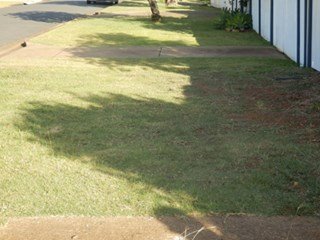
    The evil of grass: fossil fuel and water intensive, worse still: inedible!

    On occasion conservationists are portrayed as party poopers. Green wowsers, in contrast to the wee green people who epitomise a party wherever they appear; lepers rather than leprechauns, perhaps.

    The occasions vary. The Howard government felt we spoiled their fun locking refugees in cages in the desert. Woodchipping and land clearing companies feel we spoil their fun trashing a major national asset. That’s rules for you. Every time the police breathalyse someone at 0.15%, POOF, another party’s over – replaced by an instant hangover.

    Of course, one person’s party is another’s riot. The music that soothes my teenage daughters disturbs the paying guests of the Catholic retreat next door. The sound of lawn mowers may be music to someone’s ears, to mine it is the mad clatter of petrol addicts fighting nature with all the sanity of an acid-freak battling lizards in the bath.

    You, I suspect, do not consider graffiti to be art. Personally, I think graffiti is mostly silly and occasionally wonderful, but I am equally offended by bad and boring architecture.

    I am never as offended by visual pollution as I am by noise. You can look the other way or close your eyes, but your ears are always open.

    Given my distaste for the timbre of the two stroke engine, it will not surprise you, Dear Reader, that I do not like leaf blowers.

    I believe that creating order gently through the humble act of sweeping is meditation. I revel in my efficiency with the yard broom and the crisp swish of bristles relaxes me as does a babbling brook.

    By comparison, donning the earmuffs and eyeglasses to wave the noisy, smelly beast that blows is like smashing through the window of the florist in your four wheel drive to buy a bunch of long stemmed roses.

    Apparently, I am not the only weirdo to feel this way. 20 cities in California have banned them outright. Celebrity gardeners argue on television for their right to peace and quiet, or the freedom to blow leaves as they see fit.

    While I have restrained myself from crash-tackling the local newsagent at 6.30 in the morning, I do discourage our elected representatives from spending rate monies on energy intensive machines that can be replaced with a little, old-fashioned elbow grease.

    The Cage is on 4ZZZ FM, 102.1FM Wednesdays between 12 and 2am.

  • BrExit and the City

    BrExit and the City

    London is an island in the British Isles, celebrating Brexit with gin, tonic and champagne, while Scotland and Ireland plan to Leave the United Kingdon to Remain in Europe. The working class that feed London are in revolt.

    Others have predicted (a decade ago) the fall of the nation-state and the rise of the city state to replace it. City states are easier to defend than nations and they breed innovation and nurture trade.

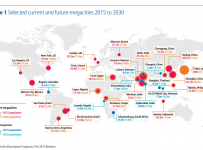
    Magaciies of the present and future
    Magacities will shape the economy of the 21st Century

    The world’s mega cities have economies larger than most nations and are the hubs of commerce that fuel the globalisation that disenfranchises the working and middle classes that support Western democracy.

    In these megacities, life is cheap, slavery is rife and global commerce is not always top of everyone’s mind.

    To survive, these cities must maintain their food, water and energy supplies and sufficient infrastructure to remain connected to their sources of revenue.

    Theory has it that these Cities will battle directly with the mercenary armies of global corporations to demarcate the ungoverned spaces between them.

    BrExit brings this future one step closer to realisation.

    I repeat: London is an island in a hostile United Kingdom. Scotland and Wales will vote to Leave the UK so they can Remain in the EU.

    By the time that is untangled Wales will join a plethora of other subnations that enjoy ersatz independence until a new overlord decides they are worth incorporating and taxing.

    In this, Crimea is two steps ahead. Russia will not hesitate to reincorporate the near, loose pieces as Europe falls apart.

    China will continue its imperial project in Africa and the securing of its new silk road(s). It will bring the US to its knees financially with a gold backed currency and its trillions of dollars in US bonds.

    Thus the nation state may collapse, but the Imperial project is not dead. The major change as a result of BrExit is that the corporations of the West will be forced to recentre themselves in Asia and South America as the military ambitions of the US implode with its southern border. This means lots of failed states or independent states in previously fairly orderly Western enclaves: The Caribbean, the Mediterranean, the Pacific.

    While the realities of this power shift sink in for the West, huge opportunities exist in South America and South East Asia. Neither are directly in the path of clashing empires and are largely sheltered from the fall out across the North Atlantic.

    South America is poised for greatness but is crippled by internal chaos (largely due to US interference).

    India has no choice but to lock in the coastal connections to its West and expand its trade with South East Asia. South East Asia still reels from a century of geopolitical chess (largely due to US interference) and has a major opportunity to bounce back. Indonesia is the third most populous nation in the world and remains vigorously expansionary.

    We must re-read and reappraise the work of Sayyid Qutb to understand the impact of Islamism on these events. We must also understand the realities of Peak Oil and Climate Change.

    We are heading for the rapids and it pays to understand the rivers that feed this cataract.

    Hang on. It is going to be some ride.

  • Fossil fools start leaking cash

    Fossil fools start leaking cash

    coal_humanityThere is a room at the Parliament House where disaffected ex-ministers meet. Other Parliamentarians refer to it as the Monkey Pod. Chief monkey was once famous for three word slogans. It was thought quite impressive that a monkey could string three words together convincingly enough to cause humans to repeat and discuss them as a meaningful phrase.

    Westender can reveal, however, that the ape did not invent the phrases on its own. Humans were employed to invent them and teach them to him. Yes, that’s right, Moulah changed hands.

    Of course, the monkey did not pay the money. Money is poured into the monkey pod – not generated there. The money was paid by vested interests for global use and the monkey was just trained to use the important lines. The fossil fools are those who are bought, not those who do the buying.

    “Coal is good for humanity” was developed by Burston Marstellar for a global campaign by Peabody Energy, the world’s largest privately held company. It was such an important campaign that they decided to use five words. Not only that, but there are a flotilla of other phrases: energy poverty, little black rock, amazing things, watch what coal can do for you. Murston Marstellar used the same techniques for decades on the payroll of big tobacco.

    Even after the world wildlife fund successfully took Peabody to court in the UK for misrepresenting the facts, those phrases are still being used. “This little black rock can do amazing things” is still being promoted across social media as I write. The moulah is still being spent even though the monkey is rattling the bars of a much smaller cage.

    It was something of a slap in the face then, for Westender to be offered a tiny amount of money to run a piece of PR fluff on the civil contribution of the fracking industry. At a word rate we are talking here around thirty cents a word. While competition from out of work journalists has caused word rates to drop, both owners of Westender have earned considerably more than a dollar a word at many points in their somewhat chequered careers.

    Only a dozen words actually did the work, the rest was designed to carry them. Thousands of jobs; world class natural gas; exciting economic and employment boost. There was a mangled piece of logic about falling oil prices that makes no sense when you parse it.

    Compared to the hundreds of thousands spent on three word slogans it is an absolute pittance. Of course, Westender was not being asked to craft the words, merely mouth them like a member of the monkey pod. And that is the greater insult.

    Of course, Westender has to live. We regularly write puff pieces for local eateries, we run advertisements for local politicians, and once – without payment – we even ran a puff piece for the Australian Air Force about a local girl who was allowed into a plane.

    Our reporting on coal has gone through a similar arc to the rest of the media. During the 2013 election campaign (doesn’t Gillard and the Carbon Tax seem like a century ago) we argued internally whether anti-coal campaigns were too Green or just too radical, divestment was still considered weird, an idea that students had got out of Rolling Stone and coal was generally considered reliable, even though it had not yet been found to be good for humanity.

    Since then, the Greens have started winning lower house seats in rural areas with the backing of farmers, Glen Lazarus has reinvented himself as a representative of Lock the Gate, conveniently forgetting it was a coal magnate who put him into power in the first place, and the banks have walked away from Adani in the Gallilee Basin.

    What has changed is the hysteria with which the fossil fuel advocates are screaming from the sidelines. Even though they are now throwing money at small independent publications to try and build grass roots support, we’re not picking it up.

    In the interests of fairness and even-handed reporting we have given you the three key phrases, free of charge, in the context of the truth. Anyone who wants the original press release which we were offered a hundred bucks to publish, just ask.
  • Go tell it to the children – angry Mum

    Go tell it to the children – angry Mum

    Salisbury children plant corn after school
    Salisbury children plant corn after school

    A Salisbury woman was told by Brisbane City Council today that a community garden she has built with local children is to be torn down by Council.

    “I’m afraid I was not very polite,” Ms Pia Deerain told The Generator, “I told him not to save it for the children and hung up in his ear. Those kids put their heart and soul into this little garden.”
    Ms Deerain and nine neighbourhood children have started a compost heap and vegetable garden in her front yard, which last month extended onto the nature strip. Today, a council worker rang Ms Deerain to tell her that the garden will be dismantled.
    There has been a spate of battles between gardeners and council recently with high profile celebrities such as the ABC’s Jerry Coleby Williams getting involved in some early cases in 2008. He recently published a how-to article on working with Council on his own web-site.
    The most recent case in Norman Park was allowed to remain after a number of high profile articles in the mainstream media. Council reports that it has “decided that the garden may remain once a trip hazard has been removed”.

    Jerry Coleby Williams' nature strip
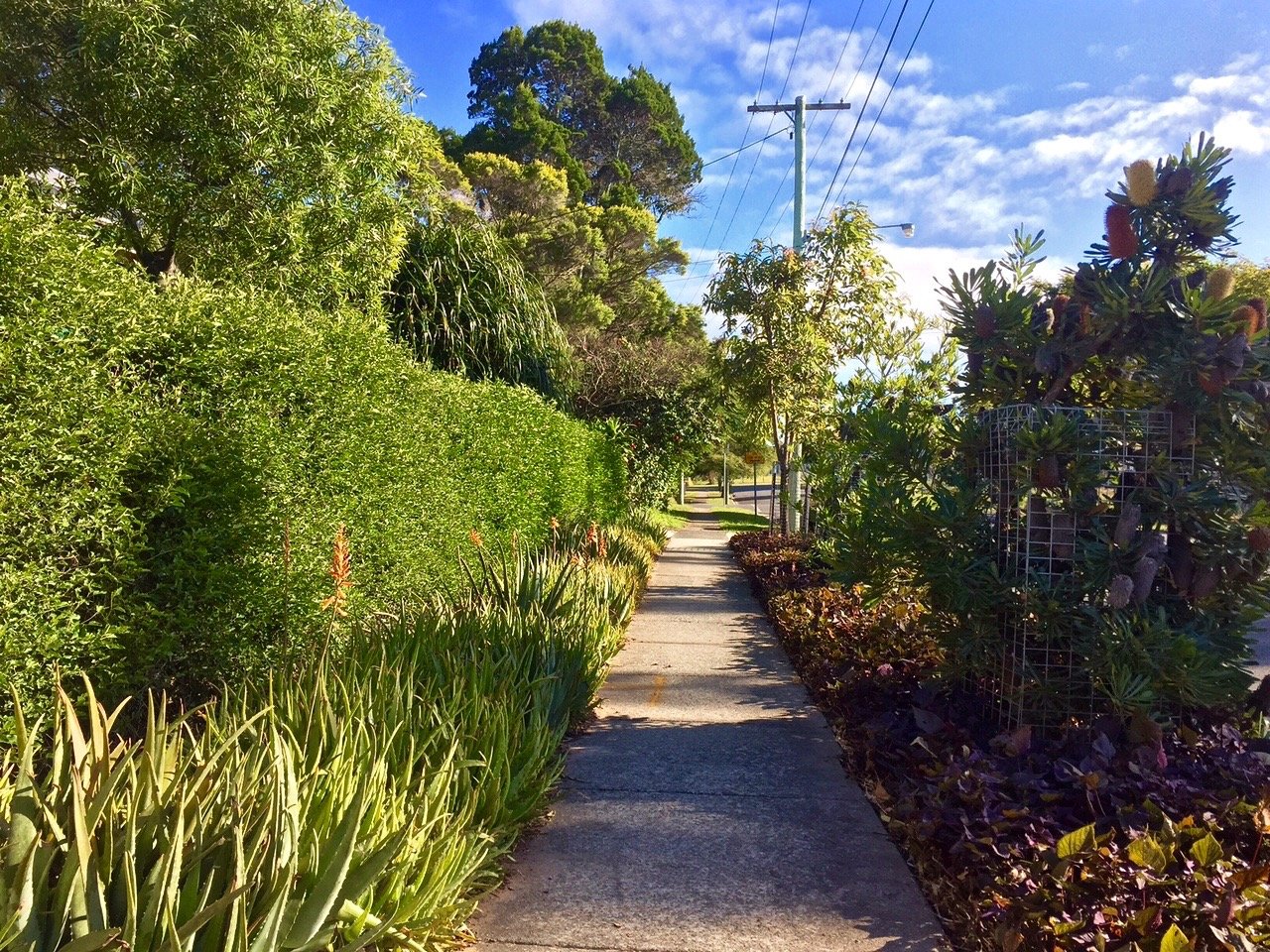
    Jerry Coleby Williams’ nature strip

    Council’s online advice is that nature strip gardens should not obstruct access to services and should not involve weeds or inappropriately large trees. Council has told Ms Deerain that they have picked out her garden in response to a complaint, but have not revealed the nature of the complaint.
    The Generator observes that this may be due to Ms Deerain hanging up while the Council worker was still talking.
    “We are talking about a couple of vegetable gardens in 30cm high bed,” Ms Deerain said. “If anyone needs access to the services I can remove the whole bed in fifteen minutes with a normal garden shovel.”
    The controversial garden is geographically in the centre of the Moorooka Ward. Councillor Steven Griffiths has been involved in a number of greening Moorooka activities across the ward. His office has been contacted by The Generator for comment. Greens candidate for Moorooka Leo Campbell said “Obviously Council has to ensure that planting in public spaces is appropriate, but the emphasis should be to encourage local food production and community engagement.”
    Readers can contact Steven Griffiths as follows.
    Phone: 07 3403 1730
    Fax: 07 3403 1733
    Email: moorooka.ward@bcc.qld.gov.au
    Website: www.stevegriffithsmoorooka.com
    Write to: www.stevegriffithsmoorooka.com/contact-us