Category: Climate chaos

The atmosphere is to the earth as a layer of varnish is to a desktop globe. It is thin, fragile and essential for preserving the items on the surface.150 years of burning fossil fuel have overloaded the atmosphere to the point where the earth is ill. It now has a fever. Read the detailed article, Soothing Gaia’s Fever for an evocative account of that analogy. The items listed here detail progress on coordinating 6.5 billion people in the most critical project undertaken by humanity. 

  • Turn green worda into green deeds

    Turn green words into green deeds


    Despite government talk, transport emissions are rising because carbon-generating schemes are being given the go-ahead


    Two key transport announcements were made yesterday. The UK government launched a Carbon Reduction Strategy for transport which set out a vision with little action on the ground. Far less noted was the launch of a National Transport Plan for Wales, cancelling an extension of the M4 planned for south-east Wales. A saving of a cool £1bn, with plans to invest instead in improvements to the existing road, together with sustainable travel initiatives.


    The decision to cancel the M4 in south-east Wales can be seen as a watershed. As the first cancellation of a motorway extension in recent times, a low-carbon transport strategy is being led not from Whitehall but from Cardiff.


    Clearly, the UK government recognises the need to promote low-carbon transport, and its proposals to integrate transport modes, promote walking and cycling and reduce the need to travel are welcome. But here’s the rub: transport emissions are increasing because, on the ground, schemes that generate carbon are being given the go-ahead. This is true at a national level through approval of Heathrow’s third runway, as well as at regional and local levels.


    The government’s own assessment found that helping people to find alternatives to car use is one of the most effective and cost-efficient ways of reducing emissions from transport. Sustrans’ TravelSmart programme provides tailored travel advice direct to households and has reduced car use by more than 10% in the towns and cities where it has operated. Further city pilots and work with local authorities are welcome, but government has missed an opportunity to invest in a national Smarter Choices programme as a way of promoting change through better information. If the government invested the £250m earmarked for electric cars in Sustrans’ TravelSmart, it could reach about 10m households across the country and achieve reductions in car trips of about 10%, together with significant increases in levels of walking, cycling and public transport use.


    The decision from the Welsh assembly has set the bar very high for the first litmus test of the low-carbon transport strategy. Today the UK government will announce decisions on English regional funding for transport. With the majority of English regions having prioritised road schemes it rests with the government to put its low-carbon transport strategy into action and ensure that we are indeed travelling towards a low-carbon future.


  • Labour orders green energy revolution

    Labour orders green energy revolution


    Miliband takes control of power grid and lays out plan for low-carbon UK


    Wave and tidal energy

    Natural power: Britain has most of Europe’s wave and tidal energy resources yet it provides next to no electricity at present. New funding will provide support, particularly in Cornwall. Photograph: Matt Oldfield/Getty Images/Dorling Kindersley


    The government seized control of key levers in the energy sector today in an attempt to kickstart a stalling “green energy” revolution and head off the threats of global warming and a rundown in North Sea oil.


    Ministers plan to take over the allocation of electricity grid connections in order to favour renewable schemes, force the industry regulator, Ofgem, to tackle carbon pollution and pass laws to compel power companies to help poorer families meet rising energy bills.


    John Vidal: ‘This has never been attempted on this scale in any country’ Link to this audio

    The moves came as Ed Miliband, energy and climate change secretary, set out an ambitious road map for the UK to meet its legally binding target of a 34% cut in greenhouse gas emissions by 2020. Measures range across homes, cars, business and farming, but clean electricity generation will deliver half the reduction.

    Miliband said Britain would meet 40% of its electricity needs from wind, tidal and nuclear by the end of the next decade. The government’s overall plans believe 1.2m new green jobs will be created.

    “Our plan will strengthen our energy security, it seeks to be fair to the most vulnerable, it seizes industrial opportunity and it rises to the moral challenge of climate change,” he said.

    The government said £100bn had to be spent on energy projects and accepted that customers’ bills would have to rise to pay for much of it.

    But Miliband said domestic energy saving initiatives should mean there would be no related hikes in utility bills until 2015 and by 2020 should mean on average 6% – £75 – a year on domestic bills. The decision to significantly strengthen government control of the planning and infrastructure of the energy markets in a bid to increase renewable power sixfold turns back some of the market-driven approach developed by Margaret Thatcher.

    Lord Mandelson, business secretary, said: “We must combine the dynamism of the private sector with a strategic role for government to deliver the benefits of innovation, growth and job creation in the UK.”

    The developments have delighted a clean energy sector frustrated by long delays to win access to the national electricity grid. “The renewables industry has had a tough time in the UK for many years and it has missed out on technologies where it should have led the world. What we heard … today shows a level of understanding and political leadership that suggests that may be about to change,” said Gaynor Hartnell, director of policy at the Renewable Energy Association.

    Friends of the Earth also welcomed the moves. “Today’s announcements are a significant step towards the creation of a safe, clean and low-carbon future,” said Andy Atkins, executive director.

    But some of the large power companies which want to build nuclear and coal plants as well as wind farms still felt the government was not doing enough. “The government has to give companies such as E.ON a market that also gives them confidence to build Britain’s low carbon future,” said Paul Golby, chief executive of E.ON UK, which is pushing to build a coal-fired plant at Kingsnorth but is also engaged in the world’s biggest wind farm, the London Array off the coast of Kent.

    Ofgem denied it had been found wanting by the government. “We don’t see this as a kick in the teeth. We have been working under our existing powers to make changes to the grid access regime without much success. So [we] welcome the government stepping in,” said an Ofgem spokesman, who also said it was happy to take on a greener role.

    Miliband said he was exercising reserve powers provided under the 2008 Energy Act for the government to intervene. He expects wind and other renewables to provide “over 30%” of the renewable power for electricity by 2020 but denied this was rowing back on a previous commitment to obtain 32%.

  • Warmer winter for southern scientists

    Warmer winter for southern scientists


    (NB Could also accelerate ice-melt and raise sea-levels)


    ABC July 17, 2009, 3:44 pm


    The blast of warm air is melting snow around the station.

    ABC News © [Enlarge photo]


      Scientists at Antarctica’s Casey station have recorded the warmest July on record.


      After weeks of blizzards, scientists at the station are now enjoying some relative warmth.


      The maximum of 2.4 degrees and minimum of -3 are the warmest July temperatures since record keeping began at the station 20 years ago.


      The Bureau of Meteorology’s Steve Pendlebury says once-in-a-decade wind patterns are the likely cause.


      “The air from the central Indian Ocean east of Africa somewhere, has moved all the way down right onto the Antarctic coast,” he said.


      Station leader Geoff Cook says it has started melting snow and is a welcome change.


      He says scientists have been able to venture out into the field for the first time in a month.

    • Canada’s dirty secret

      Canada’s dirty secret


      Despite its environmentally friendly reputation, Canada’s efforts on climate change rank last among the G8 nations 


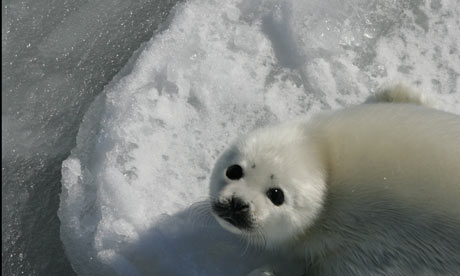
      A Harp seal white coat pup struggles in poor ice conditions in the Cabot Strait, Eastern Canada

      A Harp seal pup in the Cabot Strait, Canada. Photograph: Stewart Cook/IFAW


      Canada has come last on a WWiF scorecard of G8 countries’ efforts against climate change. That news would once have elicited at least a slightly surprised response. For several decades, Canada managed to present itself as the friendly giant of environmental issues. The 1989 Protocol on CFCs, an early turning point in combating the depletion of the ozone layer, was born in Montreal, and American environmental campaigners like Al Gore are always quick to heap praise on their northern neighbour.


      But these days, Canada is looking increasingly like the dirty one of G8. The WWF report noted that Canada is one of the few countries on the scorecard whose emissions are still rising, and that Canada’s Conservative government isn’t doing enough to combat climate change.


      Maybe some of Canada’s new bad-guy image on environmental issues is just a by-product of America’s new green image. Obama’s presidency was always going to bump the US up a few places on environmental scorecards, almost just out of gratitude that America has at least promised not to so flagrantly and unapologetically deplete the world’s natural resources.


      But Obama isn’t why Canada is losing its green reputation. The real reason lies in the vast Alberta oil sands. In 2008, Alberta’s economically recoverable reserves were placed at 173 billion barrels, meaning that only Saudi Arabia outstrips Canada on oil reserves. But unlike Saudi Arabia, in Alberta the oil is literally in the sand. To dig it up and refine it is a process far higher in emissions than the processing of Saudi Arabian oil, and is destroying much of Alberta’s northern Boreal forest along the way.


      The response to the report in Canada has been less hand-wringing than one might expect. Some dismiss the finding by pointing out that even other environmental organisations have problems with WWF. Others argue that surveys like the WWF’s are just penalising countries like Canada and Russia for their geographic realities – smaller countries keep their emissions down by importing oil from Canada, then criticise Canada for producing it, and so on.


      On top of the recession’s effect on plans for the oil sands, defenders argue that Obama’s cap-and-trade proposals would severely impact Canadian oil production because the proposal will heavily penalise those who ship Canadian oil sand bitumen to the United States, given that refining the raw bitumen is so energy-intensive.


      But Canada isn’t being punished for its geographic reality. It is finally being called out for presenting itself as environmentally friendly, while under the Conservative government green issues have been completely sidelined, if not derided. Before becoming prime minister, Stephen Harper implied that the science of climate change was “tentative and contradictory”, called the Kyoto accord a “socialist scheme” and ranted that an “army of Canadians” was needed to defeat it. While he has proposed “made in Canada” solutions to cutting carbon emissions, Harper’s main actions have been to cut programmes that promoted renewable energy like wind power. Even plans for the 2010 Winter Olympics in Vancouver risk causing environmental damage to rare forests in the nearby Eagle Ridge Bluffs.


      Vancouver is consistently voted one of the world’s most liveable cities, and the Canadian government intends to use the Olympics to showcase Canada’s pleasant, fresh-aired way of life. But the price Canada is paying to maintain its “friendly giant” facade is increasingly being paid for by the environment.


      The fact that Obama’s Clean Energy and Security Act will, if passed by Congress, disproportionately hurt oil companies working with Albertan oil sands may feel like American hypocrisy to Canadians who have long watched the US’s profligate environmental destruction go unchecked. But while Harper continues to disappoint on his commitments to the environment, someone has to play the bad cop to Canada.

    • The rich can relax. We just need the poor world to cut emissions. By 125%

      The rich can relax. We just need the poor world to cut emissions. By 125%


      British and G8 climate strategy just doesn’t add up. As soon as serious curbs are needed it turns into impossible nonsense.


      Well, at least that clears up the mystery. Over the past year I’ve been fretting over an intractable contradiction. The government has promised spectacular cuts in greenhouse gas emissions. It is also pushing through new roads and runways, approving coal-burning power stations, bailing out car manufacturers and ditching regulations for low-carbon homes. How can these policies be reconciled?


      We will find out tomorrow, when it publishes a series of papers on carbon reduction. According to one person who has read the drafts, the new policies will include buying up to 50% of the reduction from abroad. If this is true, it means that the UK will not cut its greenhouse gases by 80% by 2050, as the government promised. It means it will cut them by 40%. Offsetting half our emissions (which means paying other countries to cut them on our behalf) makes a mockery of the government’s climate change programme.


      The figure might have changed between the draft and final documents, but let’s take it at face value for the moment, to see what happens when rich nations offload their obligations. What I am about to explain is the simple mathematical reason why any large-scale programme of offsets is unjust, contradictory and ultimately impossible.


      Last week the G8 summit adopted the UK’s two key targets : it proposed that developed countries should reduce their greenhouse gases by 80% by 2050 to prevent more than two degrees of global warming. This meant that it also adopted the UK’s key contradiction, as there is no connection between these two aims. An 80% cut is very unlikely to prevent two degrees of warming; in fact it’s not even the right measure, as I’ll explain later on. But let’s work out what happens if the other rich nations adopt both the UK’s targets and its draft approach to carbon offsets.


      Please bear with me on this: the point is an important one. There are some figures involved, but I’ll use only the most basic arithmetic, which anyone with a calculator can reproduce.


      The G8 didn’t explain what it meant by “developed countries”, but I’ll assume it was referring to the nations listed in Annex 1 of the Kyoto protocol: those that have promised to limit their greenhouse gases by 2012. (If it meant the OECD nations, the results are very similar.) To keep this simple and consistent, I’ll consider just the carbon emissions from burning fossil fuels, as listed by US Energy Information Administration. It doesn’t publish figures for Monaco and Lichtenstein, but we can forgive that. The 38 remaining Annex 1 countries produce 15bn tonnes of CO2, or 51% of global emissions. Were they to do as the UK proposes, cutting this total by 80% and offsetting half of it, they would have to buy reductions equal to 20% of the world’s total carbon production. This means that other countries would need to cut 42% of their emissions just to absorb our carbon offsets.


      But the G8 has also adopted another of the UK’s targets: a global cut of 50% by 2050. Fifty per cent of world production is 14.6bn tonnes. If the Annex 1 countries reduce their emissions by 80% (including offsets), they will trim global output by 12bn tonnes. The other countries must therefore find further cuts of 2.6bn tonnes. Added to the offsets they’ve sold, this means that their total obligation is 8.6bn tonnes, or 60% of their current emissions.


      So here’s the outcome. The rich nations, if they follow the UK’s presumed lead, will cut their carbon pollution by 40%. The poorer nations will cut their carbon pollution by 60%.


      If global justice means anything, the rich countries must make deeper cuts than the poor. We have the most to cut and can best afford to forgo opportunities for development. If nations like the UK cannot make deep reductions, no one can. We could, as I showed in my book Heat, reduce emissions by 90% without seriously damaging our quality of life. But this carries a political price. Business must be asked to write off sunk costs, people must be asked to make minor changes in the way they live. This country appears to be doing what it has done throughout colonial and postcolonial history: dumping its political problems overseas, rather than confronting them at home.


      Befuddled yet? I haven’t explained the half of it. As the G8 leaders know, a global cut of 50% offers only a faint to nonexistent chance of meeting their ultimate objective: preventing more than two degrees of warming. In its latest summary of climate science, published in 2007, the Intergovernmental Panel on Climate Change suggested that a high chance of preventing more than two degrees of warming requires a global cut of 85% by 2050. In drafting the climate change act, the UK government promised to keep matching the target to the science. It has already raised its cut from 60% to 80% by 2050. If it sticks to its promise it will have to raise it again.


      Global average CO2 emissions are 4.48 tonnes per person per year. Cutting the world total by 85% means reducing this to 0.67 tonnes. Average per capita output in the 38 Annex 1 countries is 10 tonnes; to hit this target they must cut their emissions by 93.3% by 2050. If the rich persist in offsetting 50% of this cut, the poorer countries would have to reduce their emissions by 7bn tonnes to absorb our offsets. To meet a global average of 0.67 tonnes, they would also need to chop their own output by a further 10.8bn tonnes. This means a total cut of 17.8bn tonnes, or 125% of their current emissions. I hope you have spotted the flaw.


      In fact, even the IPCC’s proposal has been superseded. Two recent papers in Nature show that the measure that counts is not the proportion of current emissions produced on a certain date, but the total amount of greenhouse gases we release. An 85% cut by 2050 could produce completely different outcomes. If most of the cut took place at the beginning of the period, our cumulative emissions would be quite low. If, as the US Waxman- Markey bill proposes, it takes place towards the end, they would be much higher. To deliver a high chance of preventing two degrees of warming, we would need to cut global emissions by something like 10% by the end of next year and 25% by 2012. This is a challenge no government is yet prepared to accept.


      Carbon offsetting makes sense if you are seeking a global cut of 5% between now and for ever. It is the cheapest and quickest way of achieving an insignificant reduction. But as soon as you seek substantial cuts, it becomes an unfair, impossible nonsense, the equivalent of pulling yourself off the ground by your whiskers. Yes, let us help poorer nations to reduce deforestation and clean up pollution. But let us not pretend that it lets us off the hook.


    • Most Americans don’t believe humans responsible for climate change, study finds

      Most Americans don’t believe humans responsible for climate change, study finds


      In contrast, scientists overwhelmingly believe global warming is caused by human activity


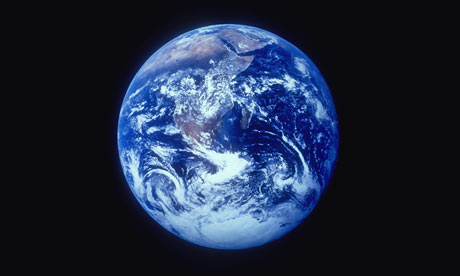
      Earth

      Planet Earth. Photograph: Blue Line Pictures/Getty Images


      Barack Obama’s sense of urgency in getting Congress and the international community to act on climate change does not appear to have rubbed off on the average American, a new study published today reveals.


      Even as the president pressed the G8 and the world’s major polluters to resist cynicism and the pressure of the economic recession to act against global warming, a majority of Americans remain unconvinced that humans are responsible for climate change, or that there is an urgent need to act.


      About 49% of Americans believe the Earth is getting warmer because of the burning of fossil fuels and other human activity, the survey by the Pew Research Centre and the American Association for the Advancement of Science said. Some 36% attributed global warming to natural changes in the atmosphere and another 10% said there was no clear evidence that the earth was indeed undergoing climate change.


      Scientists in contrast are overwhelmingly persuaded that global warming is caused by humans – some 84% blame human activity. A strong majority – some 70% – also believe it is a very serious problem. Despite that degree of consensus, some 35% of Americans continues to believe – wrongly it turns out – that climate change remains a matter of scientific controversy. Only about 47% of the public views climate change as a very serious problem, a finding that has remained stable over the years, the survey said. In other public opinion polls over the years, climate change has ranked near the bottom of the list of pressing problems.


      The Pew poll, like others in the past, also found attitudes towards climate change breaking down according to political allegiance. Some 67% of Republicans either deny the existence of climate change or attribute the phenomenon to natural causes. In contrast, 64% of Democrats believe that the earth is getting warmer because of human activity.