Category: Climate chaos

The atmosphere is to the earth as a layer of varnish is to a desktop globe. It is thin, fragile and essential for preserving the items on the surface.150 years of burning fossil fuel have overloaded the atmosphere to the point where the earth is ill. It now has a fever. Read the detailed article, Soothing Gaia’s Fever for an evocative account of that analogy. The items listed here detail progress on coordinating 6.5 billion people in the most critical project undertaken by humanity. 

  • Earth’s magnetosphere behaves like a sieve

    Earth’s magnetosphere behaves like a sieve

    Posted: 24 Oct 2012 07:16 AM PDT

    Our protective magnetic bubble lets the solar wind in under a wider range of conditions than previously believed. Earth’s magnetic field is our planet’s first line of defense against the bombardment of the solar wind. This stream of plasma is launched by the Sun and travels across the Solar System, carrying its own magnetic field with it. Depending on how the solar wind’s interplanetary magnetic field – IMF – is aligned with Earth’s magnetic field, different phenomena can arise in Earth’s immediate environment.
    You are subscribed to email updates from ScienceDaily: Severe Weather News
    To stop receiving these emails, you may unsubscribe now.
    Email delivery powered by Google
    Google Inc., 20 West Kinzie, Chicago IL USA 60610
  • Gulf Stream Moved Farther North Last Fall

    Gulf Stream Moved Farther North Last Fall
    Fenceviewer
    Glen Gawarkiewicz, a senior scientist in WHOI’s physical oceanography department, and five of his colleagues recently published their findings that in October of 2011, the core of the Gulf Steam at the edge, or break, of the Continental Shelf had
    See all stories on this topic »

  • Extreme Weather Watch: September 2012 Hottest September on Record

    Extreme Weather Watch: September 2012 Hottest September on Record
    San Diego Free Press
    In theUnited Statesalone, 2011 extreme weather events caused almost $60 billion in damages. This total does not include expenses associated with sickness or injuries triggered by the disasters. Given the number and severity of extreme events that have
    See all stories on this topic »
    eather Watch: September 2012 Hottest September on RecordDiego Free Press
    In theUnited Statesalone, 2011 extreme weather events caused almost $60 billion in damages. This total does not include expenses associated with sickness or injuries triggered by the disasters. Given the number and severity of extreme events that have
    See all stories on this topic »X

  • Sea Level Rising Faster Than Average In the U.S. Northeast

    Sea Level Rising Faster Than Average In the U.S. Northeast
    Climate Central
    Sea level is rising all over the world thanks to the heat-trapping effect of greenhouse-gas emissions, but according to a new study published in the Journal of Coastal Research, the northeastern U.S. and eastern Canada have seen the ocean rise at an
    See all stories on this topic »
    Channels below the surface found to mask Antarctic ice retreat
    Blue & Green Tomorrow
    The Intergovernmental Panel on Climate Change (IPCC) has highlighted the difficulty in predicting future sea level rise, with the aim to analyse the interactions between evolving ice sheets, oceans, sea level and climate. Significant efforts have been
    See all stories on this topic »

    Blue & Green Tomorrow
    Coastal defences causing Northern Ireland’s beaches to disappear
    Belfast Telegraph
    Prof Jackson said most countries are ill prepared for sea level rise. Until now, we have benefited from a geological ‘bounce’ that has seen Northern Ireland rising after its release from a mile-thick icesheet that pressed on it in the last Ice Age
    See all stories on this topic »

    Belfast Telegraph
  • UK’s year of drought and flooding unprecedented, experts say

    UK’s year of drought and flooding unprecedented, experts say

    The scale of drought recovery in 2012 has ‘not been seen before’, says Centre for Ecology & Hydrology

    Will climate change lead to more droughts?

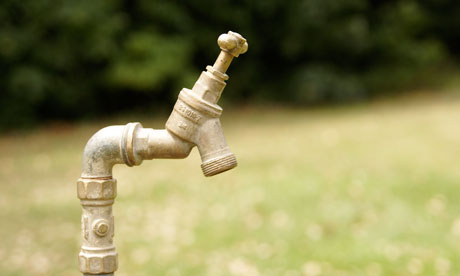
    A standpipe

    Bans on water use were put in place for large parts of England during spring 2012. Photograph: Alamy

    The dramatic switch from drought and hosepipe bans in England this spring to the wettest April to June ever and widespread flooding was of a magnitude never seen before, water experts said on Thursday.

    While water supplies have made “dramatic” recoveries from droughts before, such as in 1975-76, “sustained recoveries of this magnitude during the late spring and summer have not been seen before,” said Terry Marsh, from the Centre for Ecology & Hydrology (CEH).

    Earlier this month, the CEH said that following the wet summer, groundwater levels were above and “well above” the average for early autumn.

    The Environment Agency (EA), which is responsible for drought measures and flood defences, said the extreme weather showed the need for the UK to adopt greater resilience to protect homes, roads and power stations.

    Christine Tuckett of the EA said: “The weather extremes which we’ve seen this year – with widespread floods almost immediately following a long-term drought – have brought the importance of resilience into sharp focus. Taking action today to prepare and adapt our homes, businesses, and infrastructure is vital.”

    Sarah Jackson, chief adviser to the government at the Met Office, was reported by the Press Association as saying: “We are coming into a period [November to April] which is traditionally the wetter period. Because the ground is so wet, if we do have any prolonged heavy rainfall in any part of the country, there is going to be heightened risk.”

    Thousands of homes across the country have been hit by flooding in the past few months, with the Guardian revealing in July that hundreds of flood defences have gone unbuilt due to budget cuts. Officials at the EA said homeowners should sign up to flood warnings to avoid “the worst impacts of flooding”.

    In January, flooding was ranked as the number one impact of climate change in the UK, in the government’s first comprehensive assessment of how global warming will affect the country. It estimated up to 3.5 million people will be at flooding risk by 2050, as temperatures rise.

    “There is some hint but we certainly can’t say categorically that the rainfall we’ve seen this summer is a consequence of climate change,” said Jackson.

  • Canadian government ‘knew of plans to dump iron into the Pacific’

    Canadian government ‘knew of plans to dump iron into the Pacific’

    Chief executive of company responsible for controversial geoengineering test implicates several departments

    Geoengineering iron fertilisation in Canada : Aerial of the Haida Gwaii, British Columbia, Canada

    An aerial of the Haida Gwaii, British Columbia, Canada. Photograph: Russ Heinl/Alamy

    As controversy mounts over the Guardian’s revelations that an American businessman conducted a massive ocean fertilisation test, dumping around 100 tonnes of iron sulphate off Canada’s coast, it has emerged the Canadian government may have known about the geoengineering scheme and not stopped it.

    The news combined, with Canadian obstructionism in negotiations over geoengineering at a United Nations biodiversity meeting in Hyderabad, India, has angered international civil society groups, who have announced they are singling out Canada for a recognition of shame at the summit – the Dodo award for actions that harm biodiversity.

    They are criticising Canada for being one of “four horsemen of geoengineering”, joining Britain, Australia and New Zealand in opposing southern countries’ efforts to beef up the existing moratorium on technological fixes for global warming.

    The chief executive of the company responsible for spawning the artificial 10,000 square kilometre plankton bloom in the Pacific Ocean has implicated several Canadian departments, but government officials are remaining silent about the nature of their involvement.

    In an interview with Canadian radio, John Disney said: “I’ve been in touch with many departments within the federal ministry. All I’m saying is that everyone from the Canadian Revenue Agency down to the National Research Council and Department of Fisheries and Oceans and Environment Canada – these people, they’ve all known about this.”

    The Guardian has seen government correspondence which indicates that Environment Canada officers met with Disney’s company in June and expressed their misgiving about any ocean fertilisation going forward, but appear to not have taken further action.

    After the huge experiment happened in July, Canadian government officials were anxious to find out if the company’s boat flew under a Canadian flag and whether the iron was loaded in Canada.

    A large number of Canadian personnel have been involved on the boat, the largest fishing vessel under Canadian registration in the province of British Columbia. Disney, who is also a non-native economic manager for the indigenous council in the Old Masset village in Haida Gwaii, told media that the iron was brought from Alberta.

    Russ George, a colleague of Disney’s, told the Guardian: “Canadian government people have been helping us. We’ve had workshops run where we’ve been taught how to use satellites resources by the Canadian space agency. [The government] is trying to ‘cost-share’ with us on certain aspects of the project. And we are expecting lots more support as we go forward.”

    Environment Canada officials refused to comment, saying “the matter is currently under investigation.”

    “To clear these serious allegations of complicity the Canadian government needs to speak out and account for these events,” said Jim Thomas of the international technology watchdog ETC Group. “Officials need to condemn this dump as a breach of Canadian laws and take swift action against geoengineering: in Haida Gwaii that means initiating measures against Russ George and any Canadians involved, while in Hyderabad that means backing a global test ban.”

    Sources indicate that the Council of the Haida Nations, the political body that speaks for all Haida people, is passing a resolution that any future decision on such projects will have to be ruled on by the entire nation, rather than by one village.

    The Haida Salmon Restoration Corporation was established by Old Masset village after they borrowed $2.5m dollars from a Canadian credit union, which provided the loan despite flagging numerous concerns about George’s credibility and his plans to try to win carbon credits for the project.

    University of Victoria climate scientist Andrew Weaver told media that there are “profound implications” to dumping iron, and no guarantee that the ocean can be used as a carbon sink.

    “They are not going to get a penny in carbon credits, because there’s no evidence the carbon is going to stay where it is,” he said.

    Dodo Awards UK from Responding to Climate Change on Vimeo.