Category: Climate chaos

The atmosphere is to the earth as a layer of varnish is to a desktop globe. It is thin, fragile and essential for preserving the items on the surface.150 years of burning fossil fuel have overloaded the atmosphere to the point where the earth is ill. It now has a fever. Read the detailed article, Soothing Gaia’s Fever for an evocative account of that analogy. The items listed here detail progress on coordinating 6.5 billion people in the most critical project undertaken by humanity. 

  • More disaster zones declared in NSW

    More disaster zones declared in NSW

    Updated: 07:36, Wednesday March 14, 2012

    More disaster zones declared in NSW

    As Hay Shire, in NSW’s southwest, braces for fresh flooding, four more natural disaster zones have been declared across the state.

    Four more natural disaster zones were declared on Tuesday, bringing the total to 53 out of NSW’s 152 local government areas.

    The latest areas to be declared were Bombala, Murray Shire, Central Darling and Hay Shire.

    Residents of Hay, in southwest NSW, were on evacuation alert on Tuesday night as the Murrumbidgee River crept towards a nine-metre flood peak – equal to heights not seen since 1974.

    ‘Although the rain has eased and flood waters are starting to recede, it will be a long time before these communities will be back to normal,’ NSW Emergency Services Minister Mike Gallacher said in a statement.

    The State Emergency Service warned Hay Shire residents, particularly those in low-lying areas, to prepare to flee their homes.

    ‘Given that this region has not seen a flood of this magnitude for nearly 40 years, floodwaters will behave differently,’ SES Murrumbidgee regional controller James McTavish said in a statement.

    ‘It is extremely important for residents to heed the warnings issued by the NSW SES and other emergency service agencies.’

    Elsewhere, residents in Wagga Wagga and Forbes – which have borne the brunt of NSW’s flooding – continued their mop-up on Tuesday.

    NSW Health issued a warning about mosquito-borne infections such as Ross River Virus and Barmah Forest virus.

    ‘These infections can cause symptoms including tiredness, rash, fever, and sore and swollen joints,’ director of health protection Dr Jeremy McAnulty said.

    Ninety-four cases of Ross River virus and 56 cases of Barmah Forest virus were diagnosed in January and February.

    Meanwhile, the NSW government has confirmed it will not be pursuing a flood levy to help rebuild flooded communities.

    NSW Roads Minister Duncan Gay last week called on the federal government to impose a levy, as it did in 2011 after the Queensland floods.

    But Treasurer Mike Baird said cabinet had decided the state was not in the position to do the same.

    ‘We discussed this in cabinet yesterday and it’s very clear that we don’t think the state needs another tax at this point in time,’ Mr Baird told ABC Radio.


  • Climate change funding: Response from Dr Andrew Glikson

    So Neville – what is the price of the Earth?

    The root cause of global warming has been long established, by the mid-20th century, and to date more than 500 billion tons of carbon have been/continue to be released into the atmosphere through greenhouse gas emissions and land clearing.  Further research is not going to change this conclusion.

    In the meantime military expenses on the scale of $trillions are also increasing.

    The term “Tax payer” pertains to the (relatively) well to do citizens of western societies. What about the billions of poor, non-tax paying people, the”wretched of the Earth” – why should they not have any say in their future?

    So what does the “Tax payer” (and also the poor who do not pay tax) wish for?

    I’d say – a future for the children and for nature rather than continuing pollution and murderous wars.

    Andrew

    5-3-2012

  • Climate change research is costing the Australian taxpayers

    Climate change research is costing Australian taxpayers

    1

    MILLIONS of dollars in government research funding is being ploughed into studies of emotion in climate change messages, ancient economic life in Italy and the history of the moon.

    Studies of sleeping snails and determining if Australian birds are getting smaller because of climate change have also been allocated funding in the latest round of grants totalling $300 million by the Australian Research Council.

    A study of “an ignored credit instrument in Florentine economic, social and religious life from 1570 to 1790” secured $578,792 for a researcher from the University of Western Australia.

    The council insists the study was approved because it had modern day relevance to the global financial crisis as it shows how Florence in ancient times recovered from an economic downturn and because no one had studied that element of history before.

    Another project titled “Sending and responding to messages about climate change: the role of emotion and morality” by a Queensland university secured $197,302. The council said it was an important psychology project.

    The study to determine if birds are shrinking was awarded $314,000 and another of sleeping snails to determine “factors that aid life extension” was given $145,000. Studying the early history of the moon will cost taxpayers $210,000 and another study looking at “William Blake in the 21st century” comes with a $636,904 bill.

    “At a time when every available dollar could be put to backing innovation and research and development to make us more competitive, we have seen a growth in support for some real eyebrow-raising activities,” opposition finance spokesman Andrew Robb said.

    “Australian Research Council criteria has been extended beyond the scientific, the innovative and the practical to include some real airy-fairy stuff.

    “Which means less money for more worthwhile research.”

    Research Council CEO Professor Margaret Sheil said granting research funding was a way of ensuring universities keep the best researchers to teach students across a broad range of subjects.


    25 comments on this story

  • Oil exploration: too high a price

    Oil exploration: too high a price

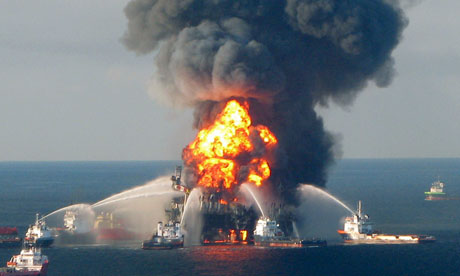
    Deepwater may cost BP $40bn in damages, but the oil industry hasn’t learned its lesson

    • Deepwater Horizon, off Louisiana

      The 2010 Deepwater Horizon disaster was the US’s worst ever offshore oil spill. Photograph: Ho/Reuters

      As a symbol of the extremes the world is prepared to go to feed its addiction to oil, the biggest and most complex civil trial in history is a blazing one. On Monday, barring a last minute settlement, BP and its partners in the Deepwater Horizon oil disaster will face 120,000 individuals who lost their livelihoods, plus the US federal government and states of Louisiana and Alabama. There are $40bn of damages and penalties at stake.

      But has the race to the bottom of the oceans and the ends of the Earth in search of oil and gas slowed in the face of such colossal legal and financial risk? It has barely checked its step.

      This is a story of superlatives. With unknowing hubris, Transocean, the owner of the Deepwater Horizon rig, trumpeted its world-record drilling depth of almost seven miles in September 2009. “Congratulations to everyone involved,” said CEO Robert Long at the time, noting the “intensive planning and focus on effective operations by BP and the drilling crews”. Just seven months later catastrophe struck: 11 men died and the US had its worst ever offshore oil spill on its hands.

      Yet, after a brief pause, business has not just returned to normal in the Gulf of Mexico, but been turbo-charged. There are now 39 oil rigs operating in its deep seas, about a third more than before the Deepwater disaster. Elsewhere, exploration has surged further and deeper into the oceans. Five months after Deepwater erupted, the Brazilian oil giant Petrobras achieved another superlative, the world’s largest-ever share offering, which raised $67bn to fund its exploitation of the vast, deep and ultra-deep oil fields off its coast. But even this is not the region that has analysts bubbling with most excitement. Africa’s west coast, from Angola to Congo to Nigeria, has the world’s richest fields.

      These contributions to the world’s fuel tanks will be topped up by a list of places that reads like a brochure for adventurous travellers – Egypt, Indonesia, Equatorial Guinea, the Phillipines, India and Mauritania – as well as the UK’s own fields in the deep blue off Shetland and perhaps the Falklands. While the Deepwater plaintiffs’ 340 lawyers and their opponents prepare to tackle 72m pages of evidence in a New Orleans court room, the world’s reliance on oil from miles under the sea also piles up. A fifth of all offshore oil is now dredged from the depths and this is expected by the industry to rise to over half by the end of the decade and two-thirds by 2030.

      At this point I hope you are wondering why the world appears content relying for oil – its economic lifeblood – on extraordinary feats of engineering performed in ever-more extreme locations on Earth. If you weren’t, consider the march northwards into the Arctic, the harshest and most fragile environment on the planet, led by Norway.

      The reason for this calm reliance on everyday technical miracles is, unlike the Deepwater court case, devastatingly simple: it is still cheap. Despite costing between four and eight times more to pump up than onshore oil, oil from the depths remains highly profitable. Global oil prices are being driven hard by the people from Beijing to Bangalore getting behind the wheel, with the number of cars on the world’s road expected to double to 1.7bn in 20 years. It is not impossible that plumbing the depths will become a little less attractive if BP, Transocean and the others emerge from their legal labyrinth with a bill of $40bn. But would oil majors really be held to account for disasters in the same way by nations whose GDP is dwarfed by the companies’ wealth? I think not.

      Deep water drilling is a hostage to fortune in the short term, especially in locations lacking the resources of the US to clean up and the good fortune of the balmy Gulf waters to degrade spilt oil quickly. In the long term, we will run out of space in the atmosphere for climate-warming carbon dioxide well before we run out of oil and gas. But if money is fuelling the submarine adventuring of ExxonMobil, Shell, BP, Chevron and others, money might just curb it too. The colossal global subsidies for fossil fuels – at least half a trillion dollars in 2010 – are starting to look vulnerable. The UN, G20, International Energy Agency and Barack Obama would all like to torch them, with Obama stating this month: “We need to end the subsidies for oil companies and double down on clean energy.”

      The New Orleans court case will push the boundaries of the US legal system and corporate responsibility. But oil exploration will continue to push the boundaries of the planet, until the cost of failure exceeds the prize of success.

      • Follow Comment is free on Twitter @commentisfree

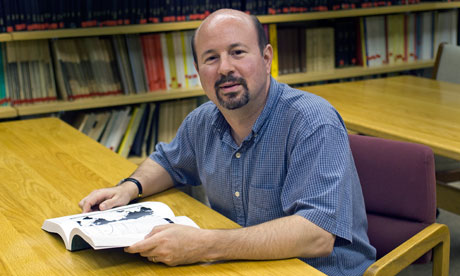
  • Death threats, intimidation and abuse: climate change scientist_Michael E. Mann counts the cost of honesty

    Death threats, intimidation and abuse: climate change scientist Michael E. Mann counts the cost of honesty

    Research by Michael E. Mann confirmed the reality of global warming. Little did he know that it would also expose him to a vicious hate campaign

    • guardian.co.uk, Saturday 3 March 2012 11.32 GMT
    • Article history
    • US physicist and climatologist Michael E. Mann

      Research by US physicist and climatologist Michael E. Mann demonstrating an increase in global temperatures infuriated climate change deniers. Photograph: Greg Rico

      The scientist who has borne the full brunt of attacks by climate change deniers, including death threats and accusations of misappropriating funds, is set to hit back.

      Michael E. Mann, creator of the “hockey stick” graph that illustrates recent rapid rises in global temperatures, is to publish a book next month detailing the “disingenuous and cynical” methods used by those who have tried to disprove his findings. The Hockey Stick and the Climate Wars is a startling depiction of a scientist persecuted for trying to tell the truth.

      Among the tactics used against Mann were the theft and publication, in 2009, of emails he had exchanged with climate scientist Professor Phil Jones of East Anglia University. Selected, distorted versions of these emails were then published on the internet in order to undermine UN climate talks due to begin in Copenhagen a few weeks later. These negotiations ended in failure. The use of those emails to kill off the climate talks was “a crime against humanity, a crime against the planet,” says Mann, a scientist at Penn State University.

      In his book, Mann warns that “public discourse has been polluted now for decades by corporate-funded disinformation – not just with climate change but with a host of health, environmental and societal threats.” The implications for the planet are grim, he adds.

      Mann became a target of climate deniers’ hate because his research revealed there has been a recent increase of almost 1°C across the globe, a rise that was unprecedented “during at least the last 1,000 years” and which has been linked to rising emissions of carbon dioxide from cars, factories and power plants. Many other studies have since supported this finding although climate change deniers still reject his conclusions.

      Mann’s research particularly infuriated deniers after it was used prominently by the UN’s Intergovernmental Panel on Climate Change (IPCC) in one of its assessment reports, making him a target of right-wing denial campaigners. But as the 46-year-old scientist told the Observer, he only entered this research field by accident. “I was interested in variations in temperatures of the oceans over the past millennium. But there are no records of these changes so I had to find proxy measures: coral growth, ice cores and tree rings.”

      By studying these he could trace temperature fluctuations over the past 1,000 years, he realised. The result was a graph that showed small oscillations in temperature over that period until, about 150 years ago, there was a sudden jump, a clear indication that human activities were likely to be involved. A colleague suggested the graph looked like a hockey stick and the name stuck. The results of the study were published in Nature in 1998. Mann’s life changed for ever.

      “The trouble is that the hockey stick graph become an icon and deniers reckoned if they could smash the icon, the whole concept of global warming would be destroyed with it. Bring down Mike Mann and we can bring down the IPCC, they reckoned. It is a classic technique for the deniers’ movement, I have discovered, and I don’t mean only those who reject the idea of global warming but those who insist that smoking doesn’t cause cancer or that industrial pollution isn’t linked to acid rain.”

      A barrage of intimidation was generated by “a Potemkin village” of policy foundations, as Mann puts it. These groups were set up by privately-funded groups that included Koch Industries and Scaife Foundations and bore names such as the Cato Institute, Americans for Prosperity and the Heartland Institute. These groups bombarded Mann with freedom of information requests while the scientist was served with a subpoena by Republican congressman Joe Barton to provide access to his correspondence. The purported aim was to clarify issues. The real aim was to intimidate Mann.

      In addition, Mann has been attacked by Ken Cuccinelli, the Republican attorney general of Virginia who has campaigned to have the scientist stripped of academic credentials. Several committees of inquiry have investigated Mann’s work. All have exonerated him.

      Thousands of emails have been sent to Mann, many deeply unpleasant. “You and your colleagues… ought to be shot, quartered and fed to the pigs along with your whole damn families,” said one. “I was hopin [sic] I would see the news and you commited [sic] suicide,” ran another.

      Yet all that Mann had done was publish to a study suggesting, in cautious terms, that Earth had started to heat up unexpectedly in the past few decades.

      “On one occasion, I had to call the FBI after I was sent an envelope with a powder in it,” Mann adds. “It turned out to be cornmeal but again the aim was intimidation. I ended up with police security tape all over my office doors and windows. That is the life of a climate scientist today in the US.”

      Mann insists he will not give up. “I have a six-year-old daughter and she reminds me what we are fighting for.” Indeed, Mann is generally optimistic that climate change deniers and their oil and coal industry backers have overstepped the mark and goaded scientists to take action. He points to a recent letter, signed by 250 members of the US National Academy of Science, including 11 Nobel laureates, and published in Science. The letter warns about the dangers of the current attacks on climate scientists and calls “for an end to McCarthy-like threats of criminal prosecution against our colleagues based on innuendo and guilt by association, the harassment of scientists by politicians seeking distractions to avoid taking action, and the outright lies being spread about them.”

      “Words like those give me hope,” says Mann.

      The Hockey Stick and the Climate Wars will be published by Columbia University Press in April

  • Link between earthquakes and cyclones


    ScienceDaily (Dec. 8, 2011) — A groundbreaking study led by University of Miami (UM) scientist Shimon Wdowinski shows that earthquakes, including the recent 2010 temblors in Haiti and Taiwan, may be triggered by tropical cyclones (hurricanes and typhoons), according to a presentation of the findings at the 2011 AGU Fall Meeting in San Francisco.


    See Also:
    Earth & Climate

    • Earthquakes
    • Natural Disasters
    • Hurricanes and Cyclones
    • Severe Weather
    • Rainforests
    • Earth Science
      • North Anatolian Fault
      • Alpine Fault
      • Typhoon Tip
      • 1997 Pacific typhoon season
        “Very wet rain events are the trigger,” said Wdowinski, associate research professor of marine geology and geophysics at the UM Rosenstiel School of Marine and Atmospheric Science. “The heavy rain induces thousands of landslides and severe erosion, which removes ground material from the Earth’s surface, releasing the stress load and encouraging movement along faults.”
        Wdowinski and a colleague from Florida International University analyzed data from quakes magnitude-6 and above in Taiwan and Haiti and found a strong temporal relationship between the two natural hazards, where large earthquakes occurred within four years after a very wet tropical cyclone season.
        During the last 50 years three very wet tropical cyclone events — Typhoons Morakot, Herb and Flossie — were followed within four years by major earthquakes in Taiwan’s mountainous regions. The 2009 Morakot typhoon was followed by a M-6.2 in 2009 and M-6.4 in 2010. The 1996 Typhoon Herb was followed by M-6.2 in 1998 and M-7.6 in 1999 and the 1969 Typhoon Flossie was followed by a M-6.2 in 1972.
        The 2010 M-7 earthquake in Haiti occurred in the mountainous region one-and-a-half years after two hurricanes and two tropical storms drenched the island nation within 25 days.
        The researchers suggest that rain-induced landslides and excess rain carries eroded material downstream. As a result the surface load above the fault is lessened.
        “The reduced load unclamp the faults, which can promote an earthquake,” said Wdowinski.
        Fractures in Earth’s bedrock from the movement of tectonic plates, known as faults, build up stress as they attempt to slide past each other, periodically releasing the stress in the form of an earthquake.
        According to the scientists, this earthquake-triggering mechanism is only viable on inclined faults, where the rupture by these faults has a significant vertical movement.
        Wdowinski also shows a trend in the tropical cyclone-earthquake pattern exists in M-5 and above earthquakes. The researchers plan to analyze patterns in other seismically active mountainous regions — such as the Philippines and Japan — that are subjected to tropical cyclones activity.
        Recommend this story on Facebook, Twitter,
        and Google +1:

    • Reference