Category: Freedom of speech, movement, rights

  • The John James Newsletter  258

    The John James Newsletter  258

    Why don’t the Americans get it? The terrorists are already in their midst, already in their homes: the mad gun-wielding members of the NRA.
    John James

    The drive towards personal excellence fuelled by the system of private enterprise has an embedded need for exponential growth and seems incapable of protecting key resources such as air quality, fertile soil and clean water
    Bruce Pascoe

    When plunder becomes a way of life for a group of men in a society, over the course of time they create for themselves a legal system that authorises it and a moral code that glorifies it
    Frédéric Bastiat

    British Columbia’s southern resident killer whale population is down to only 76 animals because human fishers have displaced the orcas from their favoured food, Chinook salmon, as we simultaneously displace the salmon from their spawning streams through hydro dams, pollution and urbanization.
    William Rees

    It is always easier to fight for one’s principles than to live up to them
    Alfred Adler

    The biggest crime scene on the planet is on the planet
    Gavin Schmidt

    The bellicose actions of the Trump Administration against trade with Iran is forcing major countries into cooperation that ultimately could spell the demise of the dollar hegemony, a hegemony that has allowed a debt-bloated US Government to finance global tyranny
    Willian Engdahl

    The EU resents and fears the consequences of the Trump administration’s reckless and provocative offensive against Iran. They resent it because Washington’s scuttling of the nuclear deal has pulled the rug from European capital’s plans to capture a leading position in Iran’s domestic market and exploit Iranian offers of massive oil and natural gas concessions. They fear it, because the US confrontation with Iran threatens to ignite a war that would invariably set the entire Mideast ablaze, triggering a new refugee crisis, a massive spike in oil prices and, last but not least, a re-partition of the region when the European powers lack the military means to independently determine the outcome.
    Keith Jones

    The US is now an Oligarchy
    Economic elites and organised business interests have substantial independent impacts on US government policy, while average citizens and mass-based interest groups have little or no independent influence. “When the preferences of economic elites are catered for, the preferences of the average American have only a minuscule, near-zero, statistically non-significant impact upon public policy. Though Americans do enjoy many features central to democratic governance, such as regular elections, freedom of speech and association, and a widespread (if still contested) franchise, policymaking is dominated by powerful business organisations and a small number of affluent Americans. Therefore, America’s claims to being a democratic society are seriously threatened.”      Read more

    Trump’s $2.1 trillion deal with the devil has failed
    Ominous signs are already evident in sectors most sensitive to higher borrowing costs. The Freddie Mac rate for a 30-year fixed mortgage has risen 100 basis points to 4.83% over the last year. Home sales have dropped by 21%. Average house prices have slipped 3.5%. This is remarkable given that the fiscal pedal is pushed to floor. The federal budget deficit is nearing 5% of GDP, at a time when full employment should restore balance.      Read details

    Global warming is eroding the polar vortex that once insulated the frozen north.
    The north pole gets no sunlight until March, but an influx of warm air has pushed temperatures in Siberia 35C above averages. Greenland has already experienced 61 hours above freezing in 2018 – more than three times as in any previous year. “This is an anomaly among anomalies. It is far enough outside the historical range that suggests there are further surprises in store as we continue to poke the angry beast that is our climate,” said Michael Mann. “The Arctic has always been regarded as a bellwether because of the vicious circle that amplify human-caused warming in that particular region. And it is sending out a clear warning.” This is a displacement of what ought to be happening farther north. Some recent temperatures have been warmer than London and Zurich, which are thousands of miles to the south.      Read more

    Summer weather is getting ‘stuck’ due to Arctic warming
    Rising Arctic temperatures mean we face a future of ‘extreme extremes’ where sunny days become heatwaves and rain becomes floods, leading to “very extreme extremes”, which occur when abnormally high temperatures linger for an unusually prolonged period, turning sunny days into heat waves, tinder-dry conditions into wildfires, and rains into floods.      Read more

    Comma tips.  See here

    2085934.pngEfforts to Fight Climate Change Had a Tough Election Day
    On Election Day, the House went to the Democrats, the Senate to the Republicans, and only two of seven climate-related measures on ballots across the country went in the planet’s favour. In Washington State, oil companies—led by BP America—spent more than thirty million dollars to defeat Initiative 1631, which would have established the country’s first-ever carbon fee. The proceeds that the state collected from its worst carbon polluters would have been put back into clean-energy infrastructure and other investments to adapt to the effects of climate change. Nevertheless the Democrats say “We will look to restore the environmental protections that have been gutted over the last two years.”      Read thisEarth Endangered by New Strain of Fact-Resistant Humans
    A virulent strain of humans who are virtually immune to any form of verifiable knowledge, are leaving scientists at a loss as to how to combat them. “These humans appear to have all the faculties necessary to receive and process information, and yet, somehow, they have developed defences that, for all intents and purposes, have rendered those faculties totally inactive. More worryingly, as facts have multiplied, their defences against those facts have only grown more powerful. Our research shows it’s possible that they will become more receptive to facts once they are in an environment without food, water, or oxygen.”      Humerous or true?China’s ‘extraordinary’ ambitions: the futuristic city being built on reclaimed land
    Colombo Port City is a project local politicians hope will spearhead the city’s bid to become a new Singapore-like economic hub in the Indian Ocean. China’s role in the project has also raised concerns in India, which is suspicious of Beijing’s intentions in the region. The project has strategic “implications, for by increasing Chinese leverage over Sri Lanka through debt-trap diplomacy, it promises to give China a strategic foothold in the Sri Lankan capital. Chinese projects can quickly acquire a strategic dimension.”      Read moreEurope and America clash over Washington’s economic war on Iran
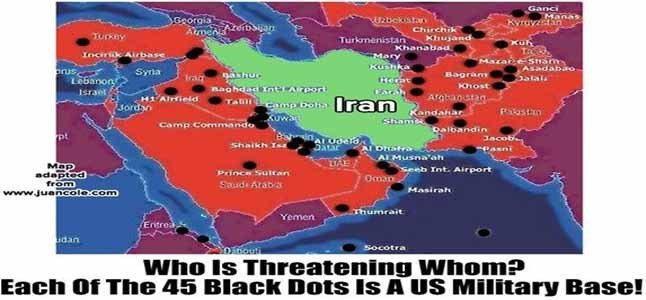
    Washington’s imposition of sweeping new sanctions on Iran—aimed at strangling its economy and precipitating “regime change” in Tehran—is roiling world politics. The US is embargoing all Iranian energy exports and freezing Iran out of the US-dominated world financial system to cripple the remainder of its trade and deny it access to machinery, spare parts and even basic foodstuffs and medicine. American imperialism is once again acting as a law unto itself. The sanctions are illegal under international law. It is tantamount to a declaration of war.    Read more
    2085933.jpgPutin to Trump: Thanks for Helping Make Russia Great Again!
    I am writing to thank you, Donald the Great, for helping me make Russia great again. What you have done by unilaterally withdrawing from Iran nuclear deal and by re-imposing and adding more sanctions on Iran on November 5 was a blessing for us and I love it! And here is why. The resource-rich Iran still needs to feed and take care of its more than 80 million people. And I am there for them, right up the road on the Caspian Sea, that technically and for all practical purpose makes us neighbors. BTW & FYI, at my behest, we just signed a major agreement divvying it up with Iran and three other littoral states. Donald, I cannot thank you enough for pushing Iran deeper into my lap, which in the near future will become entirely a “client state” of Russia. Pretty soon I will be their largest supplier, trading partner, freight forwarder, middleman, salesman, banker, capital projects builder, and agent, all combined! But wait a minute: I have to be careful of your trade menace, the sneaky Xi Jinping who is my menace too! He undoubtedly will try to compete with me, as he dreams to corner Iran’s market by bartering for their discounted oil and selling them all sort of Chinese goods and services, as well as pushing for his new global initiative of building more “belts and roads”!      Read moreOcean shock
    Reuters reveals the climate crisis beneath the waves. Driven by warming waters, marine life is on the move — and life on land is forever changed. Fish and other sea life are fleeing for their lives, seeking the even temperatures they need to breed and thrive.      Read here

    El Nino alert with 70pc chance of hot and dry conditions
    The Met has just upped the chance of an El Nino this year, meaning there is now three times the normal risk of the climate being hotter and dryer this year. It had been a slow boil.”This is absolutely not the outlook many people hoped to hear.”      Read more

    David Attenborough has betrayed the living world he loves
    It is not proselytising or alarmist to tell us the raw truth about what is happening to the world, however much it might discomfit us. For many years, wildlife film-making has presented a pristine living world. It has created an impression of security and abundance, even in places afflicted by cascading ecological collapse. The cameras reassure us that there are vast tracts of wilderness in which wildlife continues to thrive. They cultivate complacency, not action. You cannot do such a thing passively. Wildlife film-makers I know tell me that the effort to portray what looks like an untouched ecosystem becomes harder every year. They have to choose their camera angles ever more carefully to exclude the evidence of destruction, travel further to find the Edens they depict. They know – and many feel deeply uncomfortable about it – that they are telling a false story, creating a fairytale world that persuades us all is well, in the midst of an existential crisis.      Read the whole argumentWorld Bank ends its support for coal worldwide
    The World Bank has abandoned the last coal project on its books, with its president publicly dumping the Kosovo e Re plant on Wednesday. “We are required by our by-laws to go with the lowest cost option and renewables have now come below the cost of coal. So without question, we are not going to [support the plant].     Read more

    Spain to close most coalmines in €250m transition deal
    By the end of the year after government and unions struck a deal that will mean €250m will be invested in mining regions over the next decade. Unions hailed the mining deal – which covers Spain’s privately owned pits – as a model agreement. It mixes early retirement schemes for miners over 48, with environmental restoration work in pit communities and re-skilling schemes for cutting-edge green industries.      Read more

    A Day in Pompeii – Full-length animation
    Fascinating.          Watch this

    2085935.pngThe psychosocial dimension of power: An emotional analysis of the Davos elite’s discourse on globalization
    The central feature of the Davos elite culture of globalisation that emerged from this analysis is the lack of democracy in the decision-making processes, both at relational and organisational level. To change this entails recovering the sense of public good, conceived as pertaining to the collectivity, in contrast to the private good, referring to an exclusive possession, that deprives someone of something.      Read moreArctic Methane Catastrophe
    55 million years ago it took less than 200 years for global temperature to rise about 10C. There was a critical level of C02, beyond which rapid and unstoppable temperature rise occurred.    Video worth warching

    2085998.pngChina’s ‘extraordinary’ ambitions: the futuristic city being built on reclaimed land
    C
    olombo Port City, a project local politicians hope will spearhead the city’s bid to become a new Singapore-like economic hub in the Indian Ocean. China’s role in the project has also raised concerns in India, which is suspicious of Beijing’s intentions in the region. The project has strategic “implications, for by increasing Chinese leverage over Sri Lanka through debt-trap diplomacy, it promises to give China a strategic foothold in the Sri Lankan capital. Chinese projects can quickly acquire a strategic dimension.”     Read more

    $2.7 billion deal opening Madagascar to Chinese fishing
    Life on the coast of Madagascar is increasingly precarious. In recent decades, the overexploitation of marine life has made it difficult for hundreds of thousands of small-scale fishers to make a living. Two months ago, a little-known private Malagasy association signed a 10-year, $2.7 billion fishing deal — the largest in the country’s history — with a group of Chinese companies that plans to send 330 fishing vessels to Madagascar. The country’s fisheries minister said he learned about it in the newspaper. Local fishers are already struggling with foreign competition for Madagascar’s dwindling marine stocks. No draft of the deal has been made public and the association that signed it did not conduct an environmental impact assessment or any public consultation.      Not pleasant reading

    A Theory of Human Thinking
    “By connecting all these previous discoveries, we came to the assumption that the brain stores a mental map, regardless of whether we are thinking about a real space or the space between dimensions of our thoughts. Our train of thought can be considered a path though the spaces of our thoughts, along different mental dimensions. These processes are especially useful for making inferences about new objects or situations, even if we have never experienced them,” the neuroscientist continues. Using existing maps of cognitive spaces humans can anticipate how similar something new is to something they already know by putting it in relation to existing dimensions. If they’ve already experienced tigers, lions, or panthers, but have never seen a leopard, we would place the leopard in a similar position as the other big cats in our cognitive space. Based on our knowledge about the concept ‘big cat’, already stored in a mental map, we can adequately react to the encounter with the leopard. We can generalise to novel situations, which we constantly face, and infer how we should behave.”    This is my experience, too

    “The abuse of buying and selling votes crept in and money began to play an important part in determining elections. Later on, this process of corruption spread to the law courts. And then to the army, and finally the Republic was subjected to the rule of emperors”     
    Plutarch

    The past two years Trump has abandoned or threatened the Trans-Pacific Partnership, the Paris Climate Accord, the JCPOA with Iran, the North Atlantic Treaty Organisation, the International Criminal Court, the Postal Union Treaty, and the Intermediate-range Nuclear Forces Treaty. The liberal world order is under threat from its principal architect, the UDS.
    Matthew Shannon

    The cut in corporate tax rates from 35% to 21% has fed stock buybacks by US companies. Why would they invest into an ageing boom, in the midst of a global trade war? The mechanical consequence of a US consumption boom and a soaring dollar is to suck in imports, painting the current account deficit in Gothic colours.
          Ambrose Evans-Pritchard

    Climate change is impacting the Caribbean, with millions facing increasing food insecurity and decreasing freshwater availability as droughts become more likely across the region
    Blaine Friedlander

    Russia & China Invest in Infrastructure; US Spends on Military
    China’s “Belt and Road Initiative” is famous as an extension of their domestic infrastructure investments, but Russia is also investing heavily in infrastructure. Both countries need to do it in order to improve the future for their respective populations, and both Governments have avoided the Western development model of going heavily into debt in order to pay for creating and maintaining infrastructure. Both are, in fact, exceptionally low-debt Governments. China has a public debt/GDP of 17.7%, and Russia’s is 8.0%. For comparison, America’s is 93.6%. (Others are: Germany 85.8%, Spain 91.2%, Italy 122.6%, Greece 147.1%, India 54.2%, Pakistan 47.0%, and Brazil 55.0%.) The US isn’t going into public debt in order to finance building or maintenance of infrastructure, but instead to finance expansions of its military, which is already (and by far) the world’s largest (in terms of its costs, but not of its numbers of troops). A nation that spends over a trillion dollars a year on ‘national defence’ can’t have much left over to spend on things that ‘can wait’ — such as repairing its bridges, roads, etc. — and so those repairs do wait, while even more money, than before, becomes devoted to purchases of new weaponry.   Read more

    Russia, India & Iran want to create alternative trade route to Suez Canal
    The new shipment passage, North-South Transport Corridor, to connect the Indian Ocean with the Persian Gulf through Iran to Russia and Europe. The 7,200-kilometers long corridor will combine sea and rail routes.Currently, Indian logistics companies have to route shipments through China, Europe or Iran to get an access to Central Asian markets – long, time-consuming and inevitably expensive: with the Iranian route seen as the most viable.     Read the details

    2085990.pngApocalyptic Climate Reporting Completely Misses the Point
    Reporting on the IPCC, and climate change more broadly, is unbalanced. It’s fixated on the predictions of climate science and the opinions of climate scientists, with cursory gestures to the social, economic, and political causes of the problem. Yet analysis of these causes is as important to climate scholarship as modelling ice-sheet dynamics and sea-level rise. Reductionist climate reporting misses this. Many references to policy are framed in terms of carbon pricing. This endorses the prevailing contempt in establishment circles for people’s capacity to govern themselves beyond the restrictions of market rule. Meanwhile, the IPCC report is overflowing with analyses showing that we can avoid runaway climate change, improve most people’s lives, and prioritise equality through a broad set of interventions.      Read morePopulation: The Multiplier of Everything Else
    Conservative demographic projections show the world’s population growing by 2.5 billion people over the next four decades – a 40% increase. Many people are simply not aware of the scale and speed at which world population is expected to continue growing – by about 80 million annually. This is like adding a new Egypt every year. The total population is approaching 7 billion, seven times what it was in 1800. The cost in human suffering from unplanned and excessive childbearing is staggering: 500,000 women and girls die worldwide every year from pregnancy and childbirth. Most of the women who die are in their teens and early twenties, forced by their societies into bearing children too young and far too frequently. The lives of billions are being rendered increasingly desperate by being denied access to family-planning. The surge is not the result of rising birth rates, which have dropped since 1970, but primarily from declining death rates —the result of widespread vaccination, etc.      Read moreBlack-starting the grid after a power outage
    Large blackouts can be quite devastating and it isn’t easy to restart the electric grid again. This is typically done by designated black start units of natural gas, coal, hydro, or nuclear power plants that can restart themselves using their own power with no help from the rest of the electrical grid.         Read more“It is easier to imagine the end of the world than the end of capitalism.”         Blog source

    2085936.pngTo unsubscribe from any future messages, please click the unsubscribe link below.

  • The John James Newsletter  253

    View Email Online                          Subscribe to NewsletterForward this message to a friend so they can use the Subscribe to Newsletter link at the top of the message to receive future emailsImageThe recent IPCC report says we could, but will we?
    It tells us we can limit planetary destruction if we act now, but we know from the world’s response to that report that we won’t act, not now and probably not ever. Since the Paris agreement, the mining of fossil fuels has increased, and we are still constructing coal powered plants, and planning more oil extraction. No country has instituted a carbon tax, no country has passed mandatory energy efficiency measures, no country has reduced car emissions or the production of cement, or plastics, or weapons of war. There has been not one agricultural reform to reduce methane emissions. Not one country has started to do anything commensurate with the risk, not one!
    And we know the weather is being destabilised, the world is getting too hot for life, cereal production is threatened and the permafrost is melting and releasing more methane – something this report, like its predecessors, does not mention.
    And what of population growth around the tropics that further stretch the earth’s capacity for food, goods, energy, homes and water.
    The IPCC state that a condition for success is that we withdraw much of the carbon we have put into the air. Not only do we not have the technology, but every calculation shows there would be little net gain as the environmental cost would be too high.
    What the report does not say is that it would be better to reduce our wealth and comfort to safeguard our future; better to end all fossil fuel use right now; better to shut down all operating coal plants and cancel any under construction; better to impose a stiff carbon tax; better to end the use of plastics; better to develop a recycling economy at all levels; better to stop fighting.
    This latest report offers hope that something could be still be done in spite of history. The report warns our leaders, but is it likely they will lead? Do you reckon??? Read it here.
    As long as our current political and economic system remains we cannot avoid paying the extreme penalty for what we have inflicted on our planet, our only home.
    John James

    The scariest thing about the IPCC Report is that it’s the watered down, consensus version. The latest science is much, much, much more terrifying
    Jamie Henn

    The IPCC understates a key risk: that self-reinforcing feedback loops could push the climate system into chaos before we have time to tame our energy system, and the other sources of climate pollution
    Mario Molina

    Capitalism cannot save nature because it sees nature only as another collection of commodities, the long-term persistence of which comes second to immediate profit concerns
    Jeffrey Hollander

    Politics is the not-so-gentle art of getting votes from the poor and campaign funds from the rich, by promising to protect each from the other
    Oscar Ameringer

    You have no idea of how much the people must be misled if the support of the masses is required
    Mien Kampf

    From 1952 to 1985, the western edge of the Vavilov ice cap, 1,820 square kilometres in area and between 300 metres and 600 metres in thickness, shifted at about 12 metres a year. By 2011 it had stepped up the pace to 75 metres a year. By 2015, the ice front had broken into tongues that moved at more than 1,000 metres a year. And within a year the leading edge had started racing into the Kara Sea at 5,000 metres a year. By the way, it is also thinning at the rate of a third of a metre a day,
    Michael Willis

    Nations have lost control of their own economies: it doesn’t matter what people want as there is no way to vote against the global interests of Goldman Sachs or ExxonMobil. This is the core of today’s political crises. The global result is movements of resistance, of which Trump is just a part.
    Chris Hedges

    The problem with carbon capture is that it is energy-intensive and expensive. The process uses chemicals to absorb carbon dioxide from exhaust gas. Then they have to be separated so that they can be reused and the carbon dioxide can be buried. All of this consumes energy. Power plants equipped with carbon capture systems generally use up to 30 percent of the electricity they generate just to power the capture, release, and storage of carbon dioxide.
    Prachi Patel   

    Our climate’s natural variability is now on steroids
    Joelle Gergis

    At this point both 1.5 and 2C climate goals goals are starting to look wildly out of reach
    New York Times

    Today, 2 degrees is aspirational and 1.5 degrees is ridiculously aspirational. We need to face the fact that we might not stop at either, and start thinking seriously about what a 2.5 degree or 3 degree world might look like
    Gary Yohe

    Planet has only until 2030 to stem catastrophic climate change
    The IPCC report warns that the planet will reach the crucial threshold of 1.5 C by 2030, precipitating the risk of extreme drought, wildfires, floods and food shortages for hundreds of millions of people. The date falls well within the lifetime of most people alive today. It is based on current levels of greenhouse gas emissions. The window on keeping global warming below 1.5 C is closing rapidly and the current emissions pledges made by signatories to the Paris Agreement do not add up to us achieving that goalTo limit global warming to 1.5 degree C is “possible within the laws of chemistry and physics.” But doing so would require unprecedented changes.    Read more

    Lets ponder those changes. Reduce coal and gas production and (and!) use by 10% each year, so phased out by 2030. Compensation? Share market losses? Massive equipment junked? Enforcement? Silence the barons? If we haven’t begun this process so far, what makes you believe its going to be any different from here?     The report is our obituary, premature but timely.

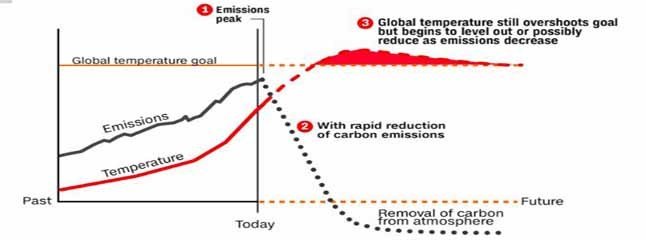
    Sketch shows that even were we to stop now there would still be overshoot. This, like all studies, does not take methane into account, nor the almost 1C increase that would occur as the pollution falls out of the atmosphere, our blanket of filth that has been keeping the temperature lower.
    2054844.jpgWhat’s Not in the Latest Terrifying IPCC Report?
    “The scariest thing about the report is that it’s the watered down, consensus version. The latest science is much, much, much more terrifying” because it does not cover the threat from methane and the threatened tipping points when self-reinforcing feedback loops push the climate system into chaos before we have time to tame our capitalist energy system. The world has less than twelve years to drastically alter course to avoid the worst impacts of human-caused global warming and that nothing less than keeping all fossil fuels in the ground is the solution to avoid future calamities. Experts responding to the report have a potentially unwelcome message for your already over-burdened hearts and minds: It’s very likely much worse than you’re being told.    Read moreVast costs of Arctic change
    The costs of a melting Arctic will be huge, because the region is pivotal to the functioning of Earth systems of oceans and climate. The release of methane from thawing permafrost beneath the East Siberian Sea, off northern Russia, would cost $60 trillion in the absence of mitigating action — a figure comparable to the size of the world economy in 2012. A 50-gigatonne reservoir of methane, stored in the form of hydrates, exists on the East Siberian Arctic Shelf. It is likely to be emitted as the seabed warms, either steadily over 50 years – or suddenly. The total cost of Arctic change will be much higher, mostly borne by developing countries, which will face extreme weather, poorer  health and lower agricultural production.     Read moreReactions of the Least Developed Countries to the IPCC Report    Read more‘There’s nowhere to hide’: companies warned on climate risks
    When it comes to corporate Australia and climate change, 2018 is shaping up as a perfect storm. Investors and lawyers are all circling, ramping up their scrutiny on how companies are planning for climate change, how they are trying to tackle it, and what information they are releasing about the risks it poses to their operations. More than 200 institutional investors with $26 trillion in assets under management said they would step up pressure on the world’s biggest corporate greenhouse gas emitters to combat climate change.    Read moreFinal warning
    These projections underestimate what is happening in the atmosphere-ocean-land system since, due to amplifying feedbacks from desiccating land, warming oceans, melting ice, methane release and fires, no temperature limit can be specified for global warming. The Paris agreement, which focuses on limits to emissions, hardly acknowledges the essential need to down-draw atmospheric carbon which has already reached >450 ppm CO2 including methane. The report takes little account of the non-linear to abrupt behaviour of atmospheric conditions, no of aerosol blanketing. Together these mean global temperatures are tracking closer 2 degrees. The “Paris target” of 1.5oC is meaningless since: (1) no mechanism is known to arrest amplifying feedbacks rom rising above this limit, and (2) no plans for draw-down of atmospheric CO2 appear to be at hand, the $trillions required for such endeavor being spent on the military and wars.    Read more

    Climate Change Kills More People Than Terrorism
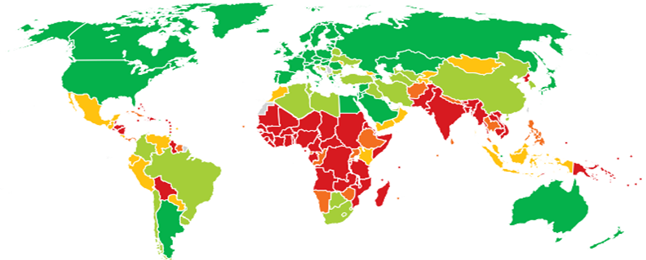
    Twenty governments commissioned a study of the human and economic costs of climate change. It linked 400,000 deaths worldwide to climate change each year, projecting deaths to increase to over 600,000 per year by 2030. When scientists attribute deaths to climate change, they don’t just mean succumbing to a heat wave. Heat waves devastate food security, nutrition, and water safety, increase malaria and dengue and floods contaminate drinking water with bacteria and pollution.  MAP of the most vulnerable countries.   Read this

    2054845.pngDutch Court orders Government to Move Faster on Emission Cuts
    The government of the Netherlands, said the court, “has done too little to prevent the dangers of climate change and is doing too little to catch up.” Dennis van Berkel, the legal counsel for Urgenda, added that the move “has consequences for all governments. They should look at this closely and realise that they are not acting in the interests of their own people. By delaying [climate] actions and not increasing them to the highest possible level—they are violating the rights of their people.”      Read moreHow to protect your private data when you travel to the United States
    First, use a cloud-based service such as Dropbox, Google Drive, OneDrive or Box.com to backup all of your data. Use another service like Boxcryptor, Cryptomator or Sookasa to protect your data such that neither the storage provider nor government agencies can read it. Next, cross the border with no or clean devices. If a border agent asks you to unlock your device, simply do so and hand it over. There should be nothing for them to find. You can access your data from the cloud at your destination. However, border agents do not need your device to access your online accounts. What happens if they simply demand your login credentials? Protecting your cloud data requires a more sophisticated strategy.     Read moreBaulking at the Chinese – wisdom at last
    Pakistan, following in the footsteps of Malaysia and Myanmar, is the latest country to baulk at the infrastructure focus of Beijing’s Belt and Road-related investments. They require it shifts to agriculture, job creation and foreign investment. Various Asian and African countries worry that Belt and Road-related investments in infrastructure risk trapping them in debt and forcing them to surrender control of critical national infrastructure, and in some cases media assets. Malaysia has suspended or cancelled $26 billion in Chinese-funded projects while Myanmar is negotiating a significant scaling back of a Chinese-funded port project on the Bay of Bengal in a bid to avoid shouldering an unsustainable debt.      Read more
    India alarmed at Saudi oil refinery project in strategic Gawadar port.  Read hereStephen Hawking’s final scientific paper
    Black Hole Entropy and Soft Hair was completed in the days before the physicist’s death in March. It may have been the last scientific exchange Hawking had. “It was very difficult for Stephen to communicate and I was put on a loudspeaker to explain where we had got to. When I explained it, he simply produced an enormous smile. I told him we’d got somewhere. He knew the final result.”     Read moreCerrado towns terrorized to provide toilet paper for the world
    Global consumers who buy brand name toilet paper and tissues may unwittingly be fuelling land conflicts, environmental crimes and the loss of native vegetation in Brazil. Residents of Forquilha, a traditional community in Maranhão state, allege that an agricultural entrepreneur used armed gunmen to try and force them out in 2014. The businessman took land claimed by the community and converted it to eucalyptus plantations, intending to sell the trees to Suzano, Brazil’s biggest pulp provider. Kimberly-Clark confirmed that it sources a significant amount of eucalyptus in Brazil from Suzano and Fibria, with pulp used to make “tissue and towel products like Scott, Cottonelle, Kleenex and Andrex.”      Read moreLonger and more frequent marine heatwaves over the past century
    We identify significant increases in marine heatwaves over the past century. From 1925 to 2016, global average marine heatwave frequency increased by 34%, resulting in a 54% increase in annual marine heatwave days globally. These trends can largely be explained by increases in mean ocean temperatures, suggesting that we can expect further increases in marine heatwave days under continued global warming.     Read this

    What Does Runaway Warming Look Like?
    The forcing caused by the rapid rise in the levels of greenhouse gases is far out of line with current temperatures. A 10°C higher temperature is more in line with these levels, as illustrated by the image below. Carbon dioxide levels have been above 400 ppm for years. Methane levels above 1900 ppb were recorded in September 2018. Such high levels are more in line with a 10°C higher temperature based on 420,000 years of ice core data from Vostok, Antarctica, research station.     Read moreUS Women Earned More PhDs Than Men Last Year    Read more
    2054848.jpg
    A mature response to the inevitable – at last!
    Governor Baker Signs Legislation Directing $2.4 Billion to Climate Change Adaptation, Environmental Protection, and Community Investments.    Read moreThe power of a hug
    Being hugged leads to release of the hormone oxytocin, setting off a range of downstream outcomes that could explain the benefits of hugging. Oxytocin is involved in a complex range of social processes, but has been implicated romantic bonding and trust. The benefits of hugs and affectionate touch more generally rest within the cardiovascular system. One study found lower systolic blood pressure in the husbands of couples asked to increase the frequency of affectionate touch with one another. Other research documents lowered blood pressure and heart rate among women who receive frequent hugs. We hug to convey that we care, that we’re grateful for a benefit received, that we share in an achievement.     Read moreWhy the American empire has lost control
    The dollar as the world’s reserve currency is running on fumes. The moment that’s over, American financial supremacy is instantly finished. It will be very similar to the aftermath of the Suez disaster—something like that is a characteristic of late empire. And the fragility of an empire means that when collapse comes it’s almost instantaneous. You look back at the rapid fall of the old Soviet Union. A failing empire is like a house of cards that just comes down—it’s not a slow descent. We know from history what happens. It’s not a mystery.     Read more

    ‘There’s no plan B’: Chris Hedges on the collapse of America
    We’re on the cusp of disintegration and I’m also clear that this has been a long process in which this is the culmination of a political, economic, and cultural deterioration.     Read moreGot a political problem? Commission a report
    Reports are the tried and true method to look like your doing something – without burning any political capital. In Australia we have had eight or more reports on climate change and energy policy. Let’s survey the field, charred as it is with the remains of ashed reviews and inquiries.
    1. In 2006 we had the Switkowski report into nuclear power.
    2. The Garnaut climate change review was released in 2008,
    3. then updated in 2011, after the release of eight interim papers. It recommended, of course, a carbon tax, an idea that now seems laughably utopian.
    4. The Finkel report in 2017 was supposed to form the basis for a credible, coming-together policy on energy and emissions reductions. Its chief recommendation – the creation of a clean energy target – was ignored.
    5. In the last year the Climate Change Authority has done three reviews – into the Emissions Reductions Fund, The National Wind Farm Commissioner and the National Greenhouse and Energy Reporting legislation.
    Yet climate policy in this country remains constipated. It is a boom time for reports, if not for their recommendations.     Read moreFacebook deletes alternative health pages as the war on free news escalates
    False health information can be disastrous, but “alternative” doesn’t always mean illegitimate. Can Facebook tell the difference? Facebook has deleted dozens of pages dedicated to fringe or holistic medicine in an apparent crackdown on pseudoscience. The Global Freedom Movement, an alternative media site, reported that the social platform purged over 80 accounts and that “no reason was provided. No responses to inquiries have been forthcoming.” This includes rather large accounts focused on health, natural remedies, and organic living, such as Just Natural Medicine (1 million followers), Natural Cures Not Medicine (2.3 million followers), and People’s Awakening (3.6 million followers). Small accounts with under 15,000 followers were also hit. Jake Passi spent six years building his Collectively Conscious page, which covered alternative health, spirituality, science, and “information that isn’t covered on mainstream media networks” and laments that his Facebook community was suddenly erased without warning. It had 915,000 followers.     Read moreThe Pentagon’s Insect Army
    Swarms of insects, transporting genetically modified infectious viruses, attack the agricultural crops of a country and destroy its food production – this is not a science-fiction scenario, but a plan that is actually being prepared by DARPA, the Pentagon’s Defence Advanced Research Projects Agency. This scenario of an attack on agricultural cultures in Russia, China and other countries, led by the Pentagon with swarms of insects transporting the virus, is not a science-fiction fable. DARPA’s programme is not the only one to use insects as a weapon of war. The US Office of Naval Research has asked for research from Washington University in St Louis in order to transform locusts into biological drones.     Read more

    2054843.jpgFarmers’ climate denial begins to wane as reality bites
    Australia has been described as the “front line of the battle for climate change adaptation”, and our farmers are the ones who have to lead the charge. Farmers will have to cope, among other pressures, with longer droughts, more erratic rainfall, higher temperatures, and changes to the timing of seasons. Yet, puzzlingly enough to many commentators, climate denial has been widespread among farmers and in the ranks of the National Party, which purports to represent their interests. There are signs we may be on the brink of a wholesale shift in farmers’ attitudes towards climate change. For a farmer, accepting the science means facing up to the prospect of a harsher, more uncertain future.      Read moreSalmon Farmers Are Scanning Fish Faces to Fight Killer Lice
    New technology will use facial recognition to build individual medical records for millions of fish to prevent the spread of epidemics like sea lice that infect hundreds of millions of farmed fish and cost the global industry $1 billion each year. “We can build a medical record for each individual fish, like a revolution.” Also a facial-recognition system to monitor cows so farmers can adjust feeding regimens to enhance milk production. Scanners will allow them to track food and water intake and even detect when females are having fertile days.    Read moreHow can politicians lie about climate change after signing off on the truth?
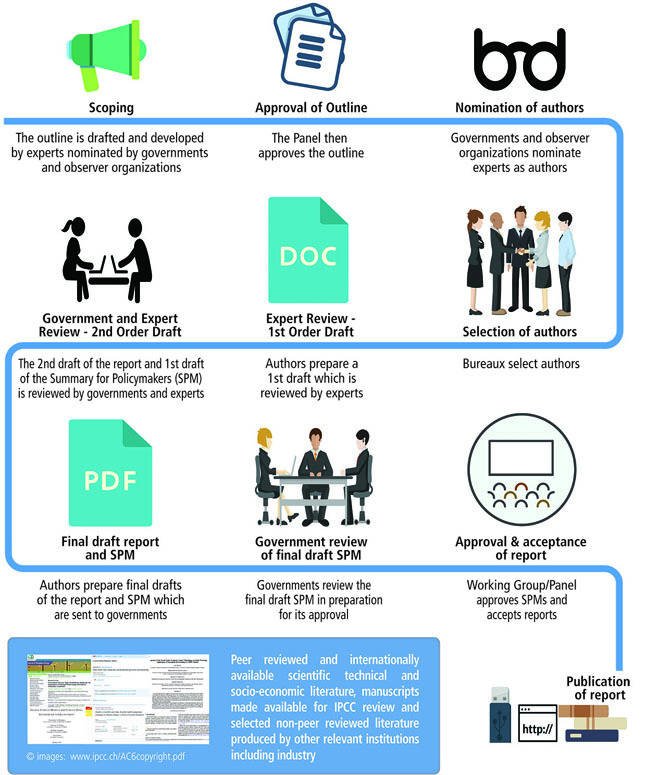
    “Approval” means that the material has been subjected to detailed line by line discussion and agreement. “By endorsing the IPCC reports, governments acknowledge the authority of their scientific content.” So, both the US and the Australian governments – which means Republicans and Coalition members, for they are the government – know, but still promulgate denial. They lie for political reasons and for gain. PIC.    Read more

    2054847.jpgTo unsubscribe from any future messages, please click the unsubscribe link below.

  • From Tolpuddle to Extinction – a continuum.

    From Tolpuddle to Extinction – a continuum.

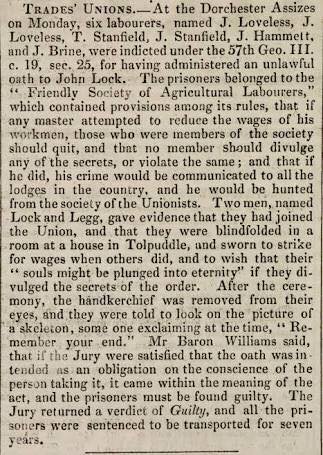
    Before 1824 the Combination Acts had outlawed “combining” or organising to gain better working conditions. In 1824/25 these acts were repealed, so trade unions were no longer illegal. In 1833, six men from Tolpuddle in Dorset founded the Friendly Society of Agricultural Labourers to protest against the gradual lowering of agricultural wages.
    These Tolpuddle labourers refused to work for less than 10 shillings a week, although by this time wages had been reduced to seven shillings and were due to be further reduced to six. The society, led by George Loveless (or Lovelass), a Methodist local preacher, met in the house of Thomas Standfield.

    In 1834, James Frampton, a local landowner and magistrate, wrote to Home Secretary Lord Melbourne to complain about the union. Melbourne recommended invoking the Unlawful Oaths Act 1797, an obscure law promulgated in response to the Spithead and Nore mutinies, which prohibited the swearing of secret oaths. James Brine, James Hammett, George Loveless, George’s brother James Loveless, George’s brother in-law Thomas Standfield, and Thomas’s son John Standfield were arrested and tried before Sir John Williams in R v Lovelass and Others. They were found guilty and transported to Australia.

    When sentenced to seven years’ penal transportation, George Loveless wrote on a scrap of paper lines from the union hymn “The Gathering of the Unions”:

    God is our guide! from field, from wave,
    From plough, from anvil, and from loom;
    We come, our country’s rights to save,
    And speak a tyrant faction’s doom:
    We raise the watch-word liberty;
    We will, we will, we will be free!

    In England they became popular heroes and 800,000 signatures were collected for their release. Their supporters organised a political march, one of the first successful marches in the UK, and all were pardoned, on condition of good conduct, in March 1836, with the support of Lord John Russell, who had recently become home secretary.

    People can make change. The actions of the Tolpuddle martyrs led to the ILU conventions of labour that guaranteed the right to strike and many more of the basic moral industrial human rights that we have since taken for granted.

    Now we are approaching a time when those standards are threatened once again. History has a tendency to repeat. What came about because of the industrial revolution is echoed in our time by the advancement of technology. The automation of human work has now been accompanied by automation of operational management in the form of administration of work using smart phone apps. What looks like an amazing new technological development is no more amazing than the introduction of the combustion engine that made much of human labour redundant.

    How does this apply now? Look at Uber as an example of the new automation, that seeks to replace every human with an automated double. From the support staff to the drivers, there is little need for human endeavour. Uber is an experiment in automating the back end of the taxi business that will eventually extend to the actual provision of transport. Cars will be cheaper to hire without drivers. Maintenance will be cheaper and more efficiently carried out by robots.

    It’s the obvious next move. When workers become redundant because they are replaced by machines, we see fewer jobs competed for by more workers, and this employers’ market gives rise to a reduction of wages that is commonly justified by the need for competitive pricing of the final product. A factory full of knitting machines does not pay wages and can therefor produce cheaper goods than a factory of workers with spinning wheels and looms.

    The next move then, is necessarily to replace both software and automobile mechanics and engineers with robots and computer designed software and computer diagnostics.

    This software revolution does not end with reduction. It is the end of human labour. Every occupation is open to replacement by sophisticated machinery. We’ve built the computers, we’re on the verge of nano-technology, and the next step, the step we are currently taking, is the incorporation of artificial intelligence driven software design.

    Anyone who doubts this is the future need only look back to the adoption of the combustion engine, to see the principle that guides capitalists to dispense with human labour. Indeed we are almost there. Almost at the point where computers can design software, without human fail safe support, that can take away any responsibility or complicity in driving the world according to the profit motive, by designing the systems that run the systems of production and manufacture.

    Anything can be run by sophisticated machinery. Sophisticated machinery removes the most expensive element of production. It removes human error out of the equation. Human endeavour no longer requires human operation. An idea could be fed to a machine and the machine can do the maths, design the product, build the product and sell the product to humans. Google world.

    If human endeavour no longer requires human operation, is it still human endeavour? Is it freedom? Freedom from drudgery? Or is it the ultimate means of disposal? If we are not required to work, what will we become?

    Back to the capital equation, someone has to be able to buy the product. Who will buy? How will we buy? We have no money.

    Is this where it all falls down and we have to go back to producing our own food, clothing, energy, and health care is a thing of the past? Is this the beginning of the sustainable world? No, because our enslavement to commercial production already and always demands we pay for something. Imagine the world with no goods for sale, no advertising, no corporate production or processing. How do you make a bed? How do you make a fake fur lined parka, or a baby’s bottle, or make a heater, or a solar system?

    So what if governments guarantee an income to citizens, the universal basic income? Is this where the corporations begin to mine governments for our taxes? No. Who pays the taxes to mine, if no one is required or able to work? Every proposal for UBI, funds it by discontinuing programs to support individual and family hardships. Ultimately the tax comes from two sources, private and business. Here in Australia, we still haven’t got past using promises to reduce company tax as election fodder. We are not nearly mature enough as a civilisation, to have real conversations about tax as a tool for engineering the future of our society. We are not sophisticated enough to socialise production and finance and tax.

    So how can this system work? If governments do not provide and we have no work and we cannot pay for the goods processed and produced for profit? Those processors and producers will cease to process and produce, victims of their own profiteering. While that seems a deliciousness too good to hope for, the death of greed, end of the shark oil salesmen; aside pointed out above, unless production is socialised we would be without beds and rice, without beds and rice and trains.

    Automation in fact requires us dead. If we cannot work, and we cannot earn, and we cannot pay taxes, and the government cannot then either provide for us by socialising the means of production, or deliver profits to those who still need to maintain the machines that maintain the machines that are the means, how will we survive?

    It’s no good saying there’s a line in automation beyond which no one will further automate. That’s simply not how capitalism works. Capitalism is essentially rooted in market competition and the profit motive and any company that fails to compete will die. But there must be some point at which the realisation becomes general knowledge that if we continue down this track no one gets their bikkies. What will we do then, and like every other realisation that humankind ever collectively came to, will we not realise until it is too late?

  • Brexit was the practice run for Trump

    Brexit was the practice run for Trump

    … and Trump is the practice run for taking over the US establishment.

    As reported here a little over a year ago, Robert Mercer has been building a media empire specifically designed to consolidate power.

    His empire was initially built on his work in artificial intelligence and natural languages that brought him in contact with the establishment through the campaign for the hearts and minds in Afghanistan. He then multiplied those earnings by building software that predicted share prices based on the behaviour of investors rather than the value of the investments. That investment engine generated the cash to begin building a media empire that could then use all the techniques developed over the years to exponentially amplify the power of those media holdings. The current UK investigation shows how that media empire and software tools were used to manipulate Brexit and the Trump election.

    Who knows what he plans to do know that he has got a President in his pocket and the attention of the industrial military complex but one can be sure he has moved to a seat at the “big table”. That is the one per crore, the seven hundred people who make the big decisions that affect the rest of us.

    For more information about the seven hundred, see the founding document or the initial analysis of how to identify the One Per Core.

    The great British Brexit robbery: how our democracy was hijacked 
    Logo for the #OnePerCrore
    Who is the One per Crore. 700 people control almost half the wealth in the world. Who are they?

    A motivated US billionaire – Mercer and his chief ideologue, Bannon – helped to bring about the biggest constitutional change to Britain in a century. There are three strands to this story. How the foundations of an authoritarian surveillance state are being laid in the US. How British democracy was subverted through a covert, far-reaching plan of coordination enabled by a US billionaire. And how we are in the midst of a massive land grab for power by billionaires via our data. Data which is being silently amassed, harvested and stored. Whoever owns this data owns the future.

    To anyone concerned about surveillance, Palantir is practically now a trigger word. The data-mining firm has contracts with governments all over the world – including GCHQ and the NSA. It’s owned by Peter Thiel, the billionaire co-founder of PayPal and major investor in Facebook, who became Silicon Valley’s first vocal supporter of Trump.
    Facebook was the source of the psychological insights that enabled Cambridge Analytica to target individuals. It was also the mechanism that enabled them to be delivered on a large scale.


    The company also (perfectly legally) bought consumer datasets – on everything from magazine subscriptions to airline travel – and uniquely it appended these with the psych data to voter files. It matched all this information to people’s addresses, their phone numbers and often their email addresses. “The goal is to capture every single aspect of every voter’s information environment, and with the personality data enabled Cambridge Analytica to craft individual messages.”
  • The article the ABC removed: Tax Free Billions

    The article the ABC removed: Tax Free Billions

    Democracy 4 sale
    Democracy 4 sale

    This article originally appeared on the ABC but was removed citing “editorial standards”. The fact was brought to the attention of the Generator News by News Daily The article itself was retrieved from the Web Archive

    Tax-free billions: Australia’s largest companies haven’t paid corporate tax in three years

    Qantas CEO Alan Joyce, one of the most prominent supporters of the Turnbull Government’s proposed big business tax cut, presides over a company that hasn’t paid corporate tax for close to 10 years.

    The period roughly coincides with Mr Joyce’s tenure at the helm of Australia’s flag carrier.

    Qantas CEO Alan Joyce
    Alan Joyce, the CEO of Qantas, is a major supporter of corporate tax cuts in Australia. (AAP: Joel Carrett)

    Despite generating income of $106.4 billion, the flying kangaroo has avoided paying tax on that bounty since 2009, thanks to Australia’s generous tax concessions, depreciation provisions and the ability to offset company losses against past and future profits.

    New analysis by the ABC reveals Qantas is not alone — its tax behaviour is consistent with about 380 of Australia’s largest companies. ATO corporate tax transparency data — confirmed in email exchanges with company representatives — reveals about one in five of the country’s biggest companies have paid no tax for at least the past three years.


    High-flyers land no tax

    Not one of Australia’s biggest airlines has paid corporate tax since at least 2013, including Virgin and its subsidiary TigerairEtihadEmirates and Qatar.

    No case for company tax cuts

    Each one of those companies has sold billions of dollars worth of tickets in Australia.

    When asked for an explanation, both Qantas and Virgin pointed the ABC to their historical losses and the entirely legitimate use of Australia’s tax laws that allow them to offset those losses against future profits indefinitely.

    Both companies were at pains to point out that, notwithstanding their zero corporate tax liabilities, they had continued to collect and pay departure taxes, fuel and alcohol excises, payroll tax, GST and FBT.

    Presumably that’s what the Etihad spokesman was alluding to in his statement to the ABC.

    “Etihad is fully compliant with all Australian tax requirements, and has paid all the taxes it is obligated to do so under Australian law.”

    EnergyAustralia’s tax-free decade

    At a time when Australian households have seen their electricity prices soar, the country’s leading energy retailer, EnergyAustralia, hasn’t been paying corporate tax. EnergyAustralia paid no corporate tax for the decade to 2016.

    For the three years to June 2016, EnergyAustralia’s 1.7 million electricity and gas customers across eastern Australia helped it record $24 billion worth of income on which no tax was paid.

    An EnergyAustralia spokesperson said the company’s performance, “reflects how the power-generation sector is underpinned by assets that were built last century”.

    “Since 2006, EnergyAustralia has written down the value of its assets by $1.9 billion.”

    How much tax did the big banks pay?

    Ten years after the global financial crisis — which they are largely responsible for creating — some of the world’s most prominent investment banks are collecting tidy sums of income in Australia and not paying corporate tax.

    Among them is Malcolm Turnbull’s old employer, Goldman Sachs, which recently won a lucrative contract with the NSW Government.

    Described by Rolling Stone Magazine as, “the great vampire squid wrapped around the face of humanity, relentlessly jamming its blood funnel into anything that smells like money”, Goldman will be paid $16.5 million as the state’s financial adviser on the sale of the $16.8 billion WestConnex motorway in NSW.

    The investment bank generated revenue of $1.84 billion over three years but paid zero corporate tax.

    Ditto for JPMorgan Chase which raked in $2.2 billion and hasn’t paid corporate tax since at least 2013.

    In one of the most audacious explanations advanced to the ABC for the non-payment of corporate tax, a spokesman for America’s biggest bank said JPMorgan was still suffering the aftershocks of the financial crisis which meant its Australian operations continued to operate at a loss.

    But late last year, it emerged JPMorgan Chase agreed to pay a record $13 billion fine to US federal and state authorities in 2013.

    The purpose of this fine was to settle claims it had misled investors in the years leading up to 2008.

    Could the bank be writing that fine off against its Australian income? The spokesman didn’t care to elaborate.

    Shifting profits overseas

    A Reuters poll found 88 per cent of people think corporate tax avoidance leads to a culture of: "Can we get away with it?"
    88 per cent of people, polled by Reuters, think corporate tax avoidance leads to a culture which poses the question: “Can we get away with it?” (Supplied: Thomson Reuters)

    Curiously, French bank BNP Paribas also appeared to have made some bad investments taxpayers were having to compensate it for.

    It hasn’t paid corporate tax for at least three years – like Goldman, JPMorgan Chase, American ExpressBarclays Bank and the Royal Bank of Scotland.

    The oldest foreign bank in Australia (resident here since 1881) told the ABC that despite attracting close to $10 billion in income since 2013, BNP failed to make any profits.

    BNP said its losses, “included the write off of bad debts from lending to certain Australian domiciled companies”.

    As far as the local financial services sector goes, Babcock and Brown International stands out among the 2,000 company names in the Australian Taxation Office’s public records.

    Babcock and Brown remains the country’s biggest corporate failure, having collapsed in 2009 with debts of more than $10 billion.

    According to the ATO, Babcock and Brown International (a wholly owned subsidiary of the liquidated group, Babcock and Brown Ltd) reported $1.7 billion worth of income for the three years to 2016.

    It paid no corporate tax.

    CEO Michael Larkin, who has been with the Babcock group for 14 years, told the ABC the money was taxed elsewhere in the world where Babcock and Brown International engages in business.

    He wouldn’t be drawn on what the company does overseas, where or how much tax has been paid in other jurisdictions.

    Australian tax law has allowed foreign companies to shift profits to affiliates or parent groups offshore in the guise of payments for services.

    They’ve also been entitled to lend money to their Australian operations at inflated prices to create excessive tax deductions in Australia.

    This can all work to render the Australian business loss-making, therefore not required to pay corporate tax.

    The transparency misnomer

    For local companies, the dividend imputation system is a unique tool that allows businesses to pass tax credits on to their investors.

    Australia and New Zealand are now the only two OECD countries to offer imputation which results in around a third of corporate tax revenue in Australia being handed back to investors.

    Put simply, it means a 30 per cent corporate tax rate with franked dividends raises roughly as much as a headline 20 per cent rate without them.

    Over the past 30 years, a number of countries have abandoned dividend imputation, including the UK, Germany, Finland, Norway, Singapore and Malaysia.

    Thanks to legislation passed in 2013, the Australian Tax Office now publishes an annual record of total income received, taxable income and tax payable for the roughly 2,000 Australian companies with annual turnovers of more than $100 million.

    It’s called The Corporate Tax Transparency Data which is somewhat of a misnomer given the numbers say nothing about how businesses use deductions and concessions to reduce their taxable incomes.

    News Corp pays no tax on $71m profit

    All the focus on the tax shenanigans of foreign technology and media companies has diverted our gaze from the taxpaying habits of some of their home grown rivals.

    The most obvious one is Rupert Murdoch’s News Corp, which hasn’t paid corporate tax in Australia for at least four years.

    The media colossus reported total income of $8.5 billion and even boasted a $71 million profit in 2014/15 but no corporate tax was paid.

    The company’s corporate affairs boss, Liz Deegan, wrote to the ABC to clarify that: “News Corp Australia has deductible operating costs and certain tax incentives and allowable credits, like R&D and franking credits, that offset the revenue disclosed.”

    Its partly owned pay-TV company, Foxtel, received a $30 million gift from the Federal Government in the last budget, ostensibly to provide better coverage of female sports.

    In the three years prior, Foxtel had also not paid corporate tax. Fairfax, News Corp’s newspaper rival in Australia, paid $53.1 million in corporate tax over the same period.

    The tax-free club

    Software giant Atlassian also pointed to R&D tax concessions when explaining why it too hasn’t paid corporate tax for the past two years on accumulated income just shy of $1 billion.

    A tally of the three years’ available data reveals some of this country’s most recognised names haven’t paid corporate tax since at least 2013.

    They include Broadspectrum (formerly Transfield Services) which collected $8.6 billion in income over three years. An estimated 30 per cent of that income ($2.5 billion) was paid directly by the Federal Government for running Australia’s offshore detention facilities. Broadspectrum was taken over by Spanish conglomerate Ferrovial in 2016.

    Among the others who’ve escaped paying any corporate tax for three years are Bluescope SteelAnsellAmcorBillabong International and TransurbanHoldings.

    The big property and construction companies Lend LeaseGroconStockland and GPT are also part of the corporate tax-free club.

    Mackay Sugar and CSR who’ve been lobbying against a sugar tax haven’t paid corporate tax for three years either.

    Not going down without a fight

    The Turnbull Government knows well that forensic tax audits are an expensive and resource-sapping exercise, especially when they involve the complex interpretation of other countries’ tax codes and their intersection with ours.

    Federal Treasurer Scott Morrison has committed $679 million over four years to a new Tax Avoidance Taskforce.

    New laws to combat complicated corporate structures whose core purpose is to avoid tax have also been passed.

    But if Australia wants the likes of Apple, Google and Facebook to pay more tax on the phones and advertising it sells in Australia, some of our biggest taxpayers, BHP and Rio Tinto should arguably be paying more tax in China where they sell most of their iron ore.

    Among all the murky detail of corporate tax arrangements, one thing is clear: companies with the financial firepower of BHP and Rio Tinto aren’t going to accept a negative assessment from the ATO without a fight.

    Both of Australia’s biggest miners are currently in dispute over their Singaporean marketing operations (corporate tax rate of 17 per cent).

    Convoluted corporate arrangements see BHP and Rio sell commodities they’ve mined in Australia to their Singapore businesses, which on-sell the iron ore et al in to export markets (predominantly China) often with a hefty mark-up.

    Former treasurer Wayne Swan has accused the miners of lying and labelled their marketing strategy “tax evasion”.

    The ATO rejects the legitimacy of the tax structure and is seeking $1 billion in tax, interest and penalties from BHP and about half that ($500 million) from Rio.

    A BHP spokesman told the ABC, “The primary tax in dispute represents less than 2 per cent of the $66 billion in taxes and royalties paid in Australia over that 11-year period … BHP does not agree with the ATO’s position.

    “Consequently, we have objected to all the amended assessments and intend to continue to defend our position, including by initiating court action if necessary.”

    Perhaps unsurprisingly, some of the country’s most trusted corporate advisers, including the Boston Consulting Group and MYOB, paid no tax for the three years to 2016.

    Even the industry groups — Chartered Accountants (CAANZ) and the Certified Practising Accountants (CPA) have paid nothing, or next to nothing, in corporate tax over the that period on account of their “mutual” status which excludes membership fees from assessable income.

    CPA Australia reeled in $493 million in income between 2013 and 2016.

    Australia’s tax laws allowed them to pay just $1,967.00 in corporate tax.

    Chartered Accountants Australia and New Zealand is a relatively new group.

    In its two years as a registered entity for tax purposes it has paid zero corporate tax on $240 million in income.

  • Unholy wealth is only the beginning

    Unholy wealth is only the beginning

    Unholy wealth is only the beginning
    Unholy Wealth: It’s only the beginning

    The Age special investigation by Royce Millar, Ben Schneiders and Chris Vedelago into Catholic Inc has unleashed a storm of controversy about the stinginess of the Church in response to child sex abuse victims. It is a valuable piece of research that justifiably triggers strong emotions in the largely irreligious Australian population.

    The image of a vastly wealthy institution lying about its wealth in court to protect itself from the compensation claims of innocent victims of rape perpetrated by its officials is inflammatory in the extreme. It is, however, a distraction from the fundamental distortions of moral principle that typify the status of the church in our society.

    The list is long:

    1. There is the hypocrisy of the church deliberately lying.
    2. There is the hypocrisy of the church worshipping money.
    3. Then there is the complex and fraught issue of the tax free status of religion.
    4. Then there is the blatant placing of the church above the law by its most senior officers in public, without any shame, regret or attempt at explanation.
    5. On top of that there is the complicity of the state which pays the church billions of dollars to provide welfare services even though it has been extensively proven that the church committed institutional and systemic abuse and exploitation of the weak and vulnerable in those very welfare services.

    While nearly all of these are mentioned in the Age special report, they are simply referred to as part of building the general case that the church gets special privileges that it may not deserve. This article argues that each of these items deserves focused consideration.

    The lies

    Millar, Schneiders and Velago extensively document the nature of the lies and the methods used to fabricate them. The church deliberately misled the courts and parliaments or refused to provide the information necessary to determine its wealth. There is no point in carrying out this subterfuge unless it is to protect that wealth. The act of lying about that wealth implicitly proves that the church is acting to protect and nurture that wealth from the interests of the state in which it operates.

    The worship

    Timothy writes of the duty of servants and masters to behave themselves in the interests of a stable society. He lectures servants on hating good masters and masters on coveting wealth.

    Timothy 6:7 For we brought nothing into this world and it is certain we can carry nothing out.

    Timothy 6:10. For the love of money is the root of all evil: which, while some coveted after, they have erred from the faith and pierced themselves through with many sorrows.

    Much of the basis of the 400 year old protestant revolution was based on the sin of the church in being too focused on wealth. This is not a new problem but it needs to be restated a thousand times.

    The tax

    The relationship between church and state is long and complex.

    Traditionally the priest caste and the warrior caste performed different roles in society and often came to loggerheads. Jared Diamond in Collapse presents the demise of Easter Island, as just such a tussle. The failure of crops due to overpopulation was blamed on the weakness of the priest caste and so the warrior caste rose to prominence and directed the energy of the people into building its famous stone monuments.

    Tom Holland in Rubicon and The Shadow of the Sword describes Rome as perfecting the use of religion as a cheaper tool for subduing populations than force. To have people willingly submit to the state as a divine protector is a handy form of social management.

    He extends the notion in Millenium, describing the pact between a struggling church and a rampant force of land dwelling vikings (the northmen, norsemen, Normans) who used the recently discovered stirrup to mount armed raids on a defenceless public and rape and pillage medieval Europe into a blackened mess. By redirecting their energy into the Crusades and promising them wealth on Earth and everlasting accolades in heaven a string of actors from the Abbot of Cluny to Charlemagne founded Christian Europe on a very clear alliance between Church and State.

    The separation of Church and State is a concept born in the Enlightenment in an attempt to relegate the Church to a less central position of power. The fact that the Church developed, refined and continues to use every weapon in its arsenal to resist that relegation should hardly surprise us.

    We cannot and must not dismiss the notion of taxing the church as impossible or unreasonable not can we underestimate the power and fury with which the church will resist any such attempts.

    This is not a simple decision that will be made by a mail order plebiscite, this is a tooth and claw battle that has fuelled many civil wars in the past and is likely to do so in the future.

    The current level of debate on this topic is a long way from taking this dangerous, historical dimension into account. /religious-tax-exemption-protects-the-state/

    The law

    Given the history just outlined, the church naturally assumes a special relationship with the law. Kings ruled by the Grace of God at the whim of the pope. The protestant refusal to pay taxes to the church and await a papal blessing on the choice of spouse is still viewed within the church as a particular characteristic of a certain period of history rather than as the rightful relationship between church and state.

    Render unto Caesar what is Caesar’s reserves plenty of room for interpretation about exactly where that line lies.

    What is interesting in the alt-right context of 2018 is to compare this with the hysteria around the nature of Sharia law as it is practiced in countries like Saudi Arabia. The alt right feed and fuel the fear that our unholy military alliance with such evil bastards might allow their creepy zealotry to infest and overwhelm our precious democracy. In truth, the enemy is within. It is our own existing religious institutions, especially the Catholic Church, who put themselves above the law and would “prefer to go to jail that inform the police of the [criminal] activities of a priest.” Yes, our democracy is fragile, but it is not immigration that threatens it, it is corruption in the upper echelons of society.

    Welfare

    And so to the unholiest alliance of all.

    In the name of economic rationalism, modern neoliberal governments attempt to outsource welfare and willingly hand over billions to the churches who are well organised, have the real estate, the workers and the financial framework to deal with those members of society who are not productive participants in the money generating machine.

    The fact that the churches all have a notion of the deserving poor, make moral judgements about who should and should not receive that welfare and are more concerned with building and protecting their institutions than in servicing their clients means nothing to the bureaucrats. It is simply handy to get those inconvenient numbers off the books and get on with the business of running “the economy”.

    More relevantly, these institutions have been proven to be organised crime syndicates systematically nurturing and protecting rapists and paedophiles. Worse, they blatantly deny any responsibility for compensating the victims or preventing future re-occurences of this criminal behaviour.

    Despite this, our governments assume that we will continue to accept the churches as the relevant institutions to teach our children, protect our orphans, feed and clothe the poor and homeless and find work for the damaged and under employed.

    At the same time, hardworking secular organisations are branded as advocates and lobbyists and punished for their activism by having their funding removed.

    That specific argument is presented in detail in an earlier editions of the Cross. /criminal-gangs/  

    and so …

    It is critical that we act. The heat generated by this worthy investigation into the unholy wealth of this criminal organisation can and should be harnessed to call for fundamental change. We must be ready to back the secular organisations that offer alternatives to church welfare and we must stand up to our pious and self serving politicians that will pay lip service to the cause but fundamentally protect their backsides from the heat of a furious dragon protecting its gold.

    Above all we must be prepared to face the truth. The church is not a protector of our morals or a force for good. It is a dark and secretive institution designed to prey on the billions of its members to accumulate vast wealth and wield vast power. We must be prepared to fight it no matter how hard that is.