Category: Freedom of speech, movement, rights

  • Police use water cannon on freezing Standing Rock protestors

    Police use water cannon on freezing Standing Rock protestors

    Standing Rock
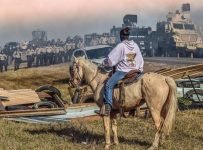
    A First Nation resident watches the official militia move in

    Police from 20 different forces across the USA who have converged on Standing Rock today used water cannon, tear gas and rubber bullets to break up a group of protestors on a bridge. 17 protestors were taken to hospital, some with hypothermia as a result of being soaked in sub-freezing temperatures.

    The protestors were trying to clear the bridge which has been blocked by police since October preventing emergency services from reaching the Sioux community in Standing Rock.

    The company behind the pipeline, Energy Transfer Partners, recommended to its shareholders today that they sell their shares in the company to Sunoco Logistics for 21billion.

    Vietnam Veteran organisations have announced they will deploy to Standing Rock on December 3rd in honour of their vow to go and fight where-ever evil resides.

    https://soundcloud.com/geoff-ebbs/standing-rock-writ-large

    https://theintercept.com/2016/11/21/medics-describe-how-police-sprayed-standing-rock-demonstrators-with-tear-gas-and-water-cannons/

    http://www.vox.com/2016/9/9/12862958/dakota-access-pipeline-fight

    https://www.democracynow.org/2016/11/16/indigenous_activist_zip_tied_locked_in

    http://www.businessinsider.com/veterans-deployment-standing-rock-protest-2016-11?IR=T
     

  • Pumicestone MP calls for Blackbird apology

    Pumicestone MP calls for Blackbird apology

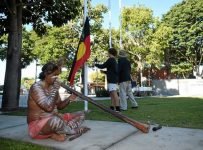
    Flag raising at NAIDOC
    Rick Williams called for an apology to enslaved islanders during NAIDOC week

    A speech by the Member for Pumicestone, Rick Williams, demanding an apology to the descendants of 62,000 enslaved Pacific Islanders has inspired Queenslanders to petition Parliament to issue a formal apology. The practice of capturing islanders and transporting them to Queensland as slaves on cane farms and coastal building projects was known as “black birding”. Mr Williams told Parliament “Queensland was built on the back of the blood, sweat and tears of these islanders. I say that no-one deserves the atrocity endured by these people.” The petition is available online via TheGenerator.News

    Sign the Petition!

    The South Sea Islanders’ history in Queensland is as horrific as the Stolen Generation’s and is largely intertwined with the Aboriginal people.

    More than 60,000 Islanders predominantly from Vanuatu and the Solomon Islands were kidnapped or “blackbirded” into coming to Australia during the 19th century.

    Member for Pumicestone Rick Williams said they were put to work as “slaves” on cotton farms and cane fields.

    “I grew up in the Mackay region and went to school with a lot of them,” Mr Williams said.

    “My great grandmother would tell stories of how you could hear their chains rattling from kilometres away as they were brought into town,” he said.

    http://www.caboolturenews.com.au/news/premier-planning-islanders-apology/3058632/


  • Only the rich can afford privacy says Sorghoian

    Only the rich can afford privacy says Sorghoian

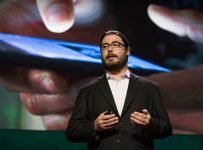
    Your smartphone security is a civil rights issue The smartphone you use reflects more than just personal taste ... it could determine how closely you can be tracked. Privacy expert Christopher Soghoian shows the glaring difference between the encryption used on Apple and Android devices and urges us to pay attention to a growing digital security divide. "If the only people who can protect themselves from the gaze of the government are the rich," he says, "that's a problem." http://www.ted.com/talks/christopher_soghoian_your_smartphone_is_a_civil_rights_issue
    Your smartphone security is a civil rights issue

    The stark difference between Apple and Android security is the first sign of a growing digital divide where on the wealthy can afford privacy, according to Christopher Soghoian, technologist at the Amercian Civil Liberties Union. Mr Soghoian says that Apple users pay for a premium for the improved security on their devices and the gap is growing. He told a TED talk recently, This is not a technology problem this is a civil rights problem.” Mr Soghoian invented the Do Not Track technology, employed by most websites to recognize people who wish not to have their online activity monitored.

    Your smartphone security is a civil rights issue

    The smartphone you use reflects more than just personal taste … it could determine how closely you can be tracked. Privacy expert Christopher Soghoian shows the glaring difference between the encryption used on Apple and Android devices and urges us to pay attention to a growing digital security divide. “If the only people who can protect themselves from the gaze of the government are the rich,” he says, “that’s a problem.”

    http://www.ted.com/talks/christopher_soghoian_your_smartphone_is_a_civil_rights_issue

  • California legalises marijuana

    California legalises marijuana

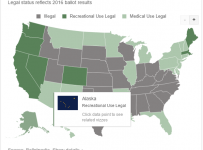
    Map of pot laws in USA
    25 states in the Union have legalised medical marijuana, 8 states have legalised recreational use.

    California voted to legalise marijuana for recreational use during the US election last week, joining Washington and Oregon to make marijuana legal along the length of the US West Coast and providing huge momentum for the legalisation movement. It is expected that California will raise one billion dollars each year in revenue from the measure. Other states passing similar legislation during the federal election include Nevada, Maine and Massachusetts. Florida, North Dakota and Arizona voted for the legalisation of marijuana for medical use but not recreational joining 19 other states with such laws. Eight states, including Alaska and Colorado, have legalized recreational use. Generating one third of the US economy and home to one in eight US citizens California has a significant role in influencing other states.

    Marijuana legalised

    California, the first state to approve medical marijuana two decades ago, was among five states weighing whether to go beyond medical use and permit pot for adults for recreational purposes. The other states were Arizona, Maine, Massachusetts and Nevada. With California “yes” vote, recreational cannabis will be legal along the entire West Coast, giving the legalization movement powerful momentum.

    http://www.fox5ny.com/news/216285833-story


  • Heroin floods USA post-Taliban

    Heroin floods USA post-Taliban

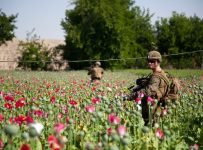
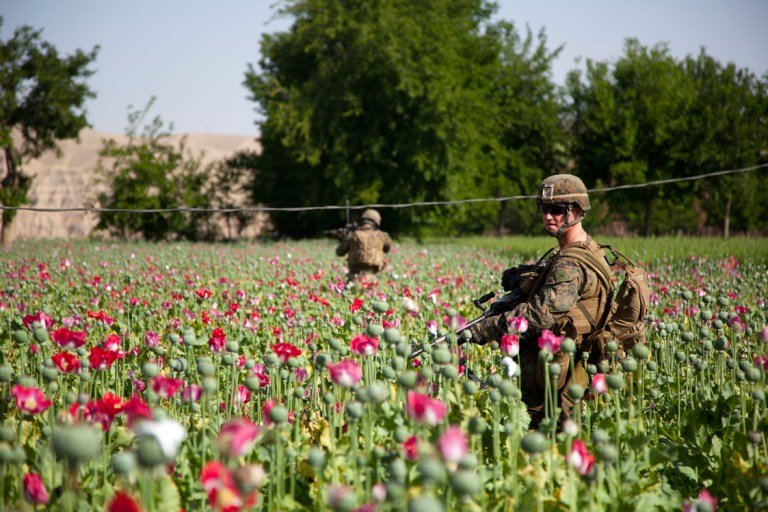
    US-occupied Afghanistan provide six sevenths of the world's heroin
    US-occupied Afghanistan provide six sevenths of the world’s heroin

    Seven thousand deaths from heroin in the USA during 2014 can be directly traced to opium sourced from US-occupied Afghanistan claims a report by NY Congressional Candidate Will Edstrom published last week.

    Six sevenths or Eighty Five percent of the world’s heroin, 6,400 tonnes, now comes from US-held Afghanistan. Ten thousand of the 4.5million US heroin users die every year.

    The Taliban banned opium production outright in 2000. Since 2001, the area under opium cultivation has increased from less than ten thousand hectares to over 200,000.

    Congress’s Take On The Heroin Epidemic

    Members of Congress and candidates comment on the Heroin epidemic in the US.

    http://www.countercurrents.org/2016/10/08/congresss-take-on-the-heroin-epidemic/

    A heroin epidemic is on fire all across America. Heroin deaths shot up from 1,779 in 2001 to 10,574 in 2014 as Afghan opium poppy fields metastasized from 7,600 hectares in 2001 (when the War in Afghanistan began) to 224,000 hectares currently. The Taliban outlawed opium in Afghanistan in 2000 and within a year it was all but gone, demonstrating that Afghan opium can be eradicated quickly for any administration that chooses to do so. Afghanistan is, by far, the number one source globally of both opium and heroin. In 2014, 7,554 tons of raw opium were produced worldwide, including 6,400 tons in US-occupied Afghanistan and 173 tons from Mexico and Colombia. US-occupied Afghanistan produces 85% of the world’s heroin. Mexico and Colombia produce only 2%.


  • US reintroduces slavery through prisons

    US reintroduces slavery through prisons

    Is Prison Obsolete runs at Brisbane's Royal on the Park from Wednesday 19th
    Is Prison Obsolete runs at Brisbane’s Royal on the Park from Wednesday 19th

    150 years since the abolition of slavery the practice has moved from the farms of the USA to the prisons, according to new documentary Locked Up: in the Land of the Free.

    The prison population is now 7 times larger than it was in 1970 and 40% of the prisoners in the US are African-American. You are six times more likely to be locked up as a black man than anyone else.

    The 8th “Is Prison Obsolete” conference takes place in Brisbane today, tomorrow and Friday. US activist Angela Davis is keynote speaker at the conference organised by Sisters Inside and held at the Royal on the Park.

    http://www.sistersinside.com.au/conference2016.htm

    https://www.facebook.com/Is-Prison-Obsolete-Conference-132372423464666/

    Mass incarceration in the US is the new form of slavery targeting Black people.

    The US prison population rose from 357,000 in 1970 to 2.3 million in 2014, the documentary notes. While Black men account for some 6.6% of the US population, they currently make up 40.2% of the prison population.

    http://www.telesurtv.net/english/news/13th-Film-Traces-US-Path-from-Slavery-to-Mass-Incarceration-20161009-0018.html