Category: General news

Managing director of Ebono Institute and major sponsor of The Generator, Geoff Ebbs, is running against Kevin Rudd in the seat of Griffith at the next Federal election. By the expression on their faces in this candid shot it looks like a pretty dull campaign. Read on

  • Renewables or oil? The former means betting each-way on energy storage. The latter means hoping to pull off a trifecta on carbon storage. Hans Engbers/Shutterstock.com

    The question of whether the future will be powered by coal and oil or by renewable energy is crucially important, both to the medium-term future of the Australian economy and to the long-term future of…

    Renewables or oil? The former means betting each-way on energy storage. The latter means hoping to pull off a trifecta on carbon storage. Hans Engbers/Shutterstock.com

    The question of whether the future will be powered by coal and oil or by renewable energy is crucially important, both to the medium-term future of the Australian economy and to the long-term future of the planet. For either to succeed, there is a storage problem to overcome.

    A future based on “clean coal” can only be achieved through the large-scale implementation of carbon capture and storage (CCS). That is, the carbon dioxide generated by fossil fuels must be captured at the point of combustion and then stored indefinitely in underground repositories, or perhaps in biomass such as trees.

    On the other hand, the main renewable energy sources – wind and solar panels – face a different storage problem. Wind is intermittent and solar power is generated only during the day, as well as being affected by cloud cover. So a system dominated by renewables must either use variable pricing to manage demand, or include some form of energy storage.

    Presented this way, the problem seems symmetrical. In reality, however, the problem of energy storage has many possible solutions, whereas that of CCS has only a handful, none of which look likely to work. To see why this is so, let’s first consider the broader phenomenon of renewable energy.

    Cost-competitive renewables

    Over the past decade, the cost of renewable electricity generation, most notably solar, has plummeted. It has now reached the point where, in many locations, it is cost-competitive with new coal-fired power, even in the absence of targets, subsidies or high carbon prices.

    At the same time, we have seen significant advances in electric and hybrid vehicles, although market shares remain small. The result is that it is now possible to contemplate an all-renewable energy system, encompassing both electricity generation and electric vehicles, developing over the next few decades.

    It is no coincidence that these developments have occurred at precisely the time when concerns about climate change have become pressing. The need to stop burning carbon-based fuels has created both market and non-market incentives to find solutions to the problem. Where carbon prices exist or are seen as likely to exist in the future, they create a demand for any carbon-free technology that will deliver energy in a useful form (electricity or vehicle power).

    Bright researchers, motivated both by the importance of the problem and the availability of research funds, have focused their attention on renewable energy and away from other topics that have declined in relative importance (the advice to Dustin Hoffman in The Graduate that “plastics” were the one-word key to a prosperous future comes to mind).

    The research funding committee will probably want a bit more detail.

    Emissions trading schemes and renewable energy mandates have encouraged firms to invest in the research and development work needed to turn theoretical advances into marketable products. Feed-in tariffs and other incentives have encouraged electricity generators and households alike to adopt these products. In turn, this has created a virtuous circle where growing demand drives cost reductions (because of the economy of scale), which then drives demand still further.

    The result is that solar panels are now being installed globally at a rate of a gigawatt every week, almost as much the total amount installed during the 20th century.

    There is nothing mysterious about the fact that research into carbon-free energy has been successful. The nature of the problem ensures that the range of potential solutions is vast. Anything that can turn a turbine can generate electricity. That includes physical forces like wind, waves and tides; fuels that can boil water to make steam; and heat differences like those that drive geothermal energy. The energy in sunlight can also be turned into electricity, either by concentrating its heat or through the photovoltaic effect in solar panels.

    When the push for renewable energy began in earnest at the beginning of this century, there was no way to know if any particular one of these technologies would be cost-effective or applicable on a large scale. Each represented a bet, at fairly long odds, that the limitations that had previously prevented large-scale deployment of these technologies could be overcome.

    But betting on a lot of horses, even if all of them are outsiders, gives a good chance of backing at least one winner. And so it has proved. While geothermal and concentrated solar energy have made only modest progress, and wave and tidal energy hardly any, bets on wind power and solar photovoltaics have proved successful.

    Storage solutions

    The problem of energy storage can be thought of in the same way. Any reversible process involving energy constitutes a potential storage technology. Going one way, the process uses energy derived from an electricity source that is in excess supply, such as solar panels at noon, or wind turbines turning late at night during low demand. Going the other way, the stored energy is turned back into electricity. Some energy is lost along the way, and other costs must be met, but if the difference in demand is great enough, there is still a net benefit.

    The general nature of the storage problem means that the range of possible solutions is vast. The reversible process might involve chemical energy (as in batteries), heat energy (as in off-peak hot water), kinetic energy (as in flywheels) or potential energy (as in pumped hydro). This means that solutions could be found to a wide range of energy storage problems, depending on whether the crucial requirement is cost, speed, or energy density.

    Power stations might prioritise cost-effectiveness, for example, or speed and flexibility. Car batteries, meanwhile, need dense energy storage. It will take some time to adapt existing solutions to new requirements, or to develop wholly new solutions. But this process is already under way, and substantial progress is being made.

    The carbon horse is a long shot

    The contrast with carbon capture and storage is striking. A CCS technology involves three stages, each with a limited range of technological options. First, the carbon dioxide from fossil fuels must be captured before it escapes into the atmosphere. Even the best available technologies involve the loss of up to 30% of the energy generated through combustion.

    Second, the captured carbon dioxide must be transported to a storage site. This could be avoided by building the power station close to a suitable site, but that would probably add costs in terms of fuel transport and long-distance power transmission.

    The final and most difficult step is the storage itself. The current best approach involves pumping the carbon dioxide into an underground repository, which must be stable enough to prevent leakage over an indefinite period. This approach has proved too expensive except, ironically, in places where the pressurized gas is used to help recover yet more crude oil from depleted wells.

    To sum up, if investing in energy storage is like backing every horse on a race, investing in CCS is like a parlay bet), which pays off only if we can pick the winners of several races in succession.

    When you think about it like that, it’s not surprising that the smart money is on storing energy, not carbon.

  • Koalas sew need your help this bushfire season

    1 of 3
    Web Clip
    ESPN.comBeckham will replace Megatron in Pro Bowl2 hours ago

    Koalas sew need your help this bushfire season

    Inbox
    x

    Isabel McCrea, International Fund for Animal Welfare <news@ifaw.org> Unsubscribe

    7:01 AM (1 hour ago)

    to me
    This message contains graphics. If you do not see the graphics, click here to view.

    IFAW logo

    Action Alert

    January 2015

    Follow Us  Facebook   twitter

    Whale

    Dear NEVILLE,

    Australia’s brutal bushfire season has already begun. We all need a plan to keep our loved ones safe including our pets. But who will look after the wildlife?

    Australia’s native animals are often the forgotten victims of disasters, including fires. Slow-moving koalas are extremely vulnerable. The few that survive a bushfire often need intensive care and specialist veterinary treatment. IFAW is working with rescuers, vets and nurses around the country to help supply training and equipment.

    Koalas need to have special burns cream applied daily, and their paws need to be protected by wearing special mittens. These mittens need changing daily so a good supply is critical.

    This is where you can help! Are you handy with a needle and thread? Even if you have never sewn before these mittens are so simple to make. And to make it even easier, we have prepared a pattern for you.

    I hope that you are able to help us, help them. Our wildlife needs you!

    Best wishes.

    Isabel McCrea Isabel McCrea signature

    Isabel McCrea
    Director, IFAW Oceania

  • 2014 was the hottest year on record globally by far CLIMATE CODE RED

    climate code red

    Inbox
    x

    Climate Code Red <noreply+feedproxy@google.com>

    8:34 PM (14 minutes ago)

    to me

    climate code red


    2014 was the hottest year on record globally by far

    Posted: 06 Jan 2015 09:51 PM PST

    by Joe Romm, Climate Progress

    JMA2014

    The Japan Meteorological Agency (JMA) has announced that 2014 was the hottest year in more than 120 years of record-keeping — by far. NOAA is expected to make a similar call in a couple of weeks and so is NASA.

    As the JMA graph shows, there has been no “hiatus” or “pause” in warming. In fact, there has not even been a slowdown. Yes, in JMA’s ranking of hottest years, 1998 is in (a distant) second place — but 1998 was an outlier as the graph shows. In fact, 1998 was boosted above the trendline by an unusual super-El Niño. It is usually the combination of the underlying long-term warming trend and the regional El Niño warming pattern that leads to new global temperature records.

    What makes setting the record for hottest year in 2014 doubly impressive is that it occurred despite the fact we’re still waiting for the start of El Niño. But this is what happens when a species keeps spewing record amounts of heat-trapping carbon pollution into the air, driving CO2 to levels in the air not seen for millions of years, when the planet was far hotter and sea levels tens of feet higher.

    The JMA is a World Meteorological Organization (WMO) Regional Climate Center of excellence. The WMO had announced a month ago that 2014 was on track to be hottest year on record. Different climate-tracking groups around the world use different data sets, so they can show different results for 2014 depending on how warm December turns out to be.

    But in mid-December, NOAA said it’s all but certain 2014 will be a record setter. It released this figure showing that all plausible scenarios for December still leave last year as the hottest ever (click to enlarge):

    NOAA-YTD-11-14

    Some of the hottest places in the world in 2014 included:

    • Europe was the hottest it’s been in 500 years. One new analysis concluded “global warming has made a temperature anomaly like the one observed in 2014 in Europe at least 80 times more likely.”
    • California had record-smashing heat, which helped create its “most severe drought in the last 1200 years.”
    • Australia broke heat records across the continent (for the second year running). Back in January, “temperatures soared higher than 120°F (49°C).”
    • Much of Siberia “defrosted in spring and early summer under temperatures more than 9°F (5°C) above its 1981 to 2010 average,” as Live Science noted. This is the second exceptionally hot summer in a row for the region, and scientists now think the huge crater discovered this year in the area “was probably caused by thawing permafrost.”

    The permafrost (soon to be renamed the permamelt) contains twice as much carbon as the entire atmosphere. If we don’t reverse emissions trends sharply and soon, then the carbon released from it this century alone could boost global warming as much as 1.5°F.

    Note (by David): The Australian Bureau of Meteorology has reported that for the state of NSW, 2014 was the hottest on the instrumental record.  For Australia overall, it was the third hottest on record.

  • Scientists issue doomsday warning for Irish cities

    Login•Subscribe
    Sunday World
    January 7th, 2015
    Today’s Paper

    Home
    Top Stories
    Sport
    Entertainment
    Worldwoman
    Lifestyle
    Dating

    Scientists issue doomsday warning for Irish cities
    Wednesday 7th January 2015
    ● NewsBy Lynne Kelleher
    1

    Irish scientists have issued a stark doomsday warning about large swathes of the country going under the sea to climate change.

    In a grim global warming special on RTE’s flagship environment series Eco Eye, it is warned that sea level rises due to climate change could leave two per cent of Dublin swallowed by the ocean.

    Professor Robert Devoy, from the Coastal Marine Research Centre (CMRC), estimates that it will cost at least €5bn to protect our most populated cities and the most critical areas of the Irish coastline.

    He warned the low-lying cities of Cork, Dublin, Belfast and Galway will find it “very difficult” to defend against violent storm surges and rising seas in the coming decades.

    Professor Devoy, who is one of the country’s leading experts on global warming, warned of a doomsday scenario if climate change continues at its current pace.

    He said: “Climate change is a reality. It’s here. That’s something as a society we haven’t bought into. It will be a very difficult problem for Dublin, Cork, Galway and Belfast.

    “What is coming down the tracks is a significant warming of the planet. The last time it warmed of this order, 88 per cent of life on earth disappeared.

    “Given the nature of politics being short-term, it’s the last thing on our politicians’ minds.

    “I have five grandchildren. Whatever time is left to me it doesn’t matter, but for them at the age of four and five I can see we have significant problems to solve.

    “We can’t wait any longer for reducing carbon emissions and making significant changes.”

    In RTE’s climate change special, a series of scientists give a hard-hitting message about the catastrophic dangers of global warming, which will make last year’s extreme storms and flooding seem tame.

    It catalogues how the last decade has been the hottest on record and how plant and animal species are going extinct at rates thousands of times faster than before due to the unprecedented changes taking place on the planet.

    Irish climate experts have predicted that houses and other assets along the coast may have to be abandoned to the rising tides of the sea as it will be too costly to protect them.

    Dr Barry Dwyer, environmental scientist with the Coastal Marine Research Centre at the Irish Naval Headquarters, said climate models show that two per cent of the capital is in dire danger of being swamped by the sea, along with more than three per cent of northern counties.

    He said: “The big problem is storm surges that we have in Ireland with sea level rises, and then add another storm surge on top of that and that becomes a two-metre storm surge.

    “In the more northerly counties we are looking at up to 3.5 per cent of the entire land area being inundated, and that doesn’t account for the big wash that would come off the storm surge and the destruction from that.”

    In Eco Eye,presenter Duncan Stewart travels to the geologically spectacular country of Iceland to show how melting glaciers across the planet are contributing to sea level rise and climate change at an alarming rate.

    Eco Eye reports how NASA scientists discovered just last year that a huge section of the west Antarctic ice shelf has begun an irreversible calving into the sea, which on its own will raise sea levels by an additional metre above the current accepted figures.

    As global warming increases, so will the quantity of rain, which will put huge pressure on our rivers, with the Office of Public Works identifying at least 300 areas of Ireland which will suffer from increased flooding.

    Cathal O’Mahony, Coastal research scientist with the CMRC, said: “We’ve concentrated a lot of things along our coastline. Be it our urban centres, our road or rail networks and even our leisure time.

    “The strategy is really going to involve a lot of agencies working side by side.

    “No one organisation is going to have the answer to climate change.

    He said certain areas of the coastline may have to be sacrificed.

    He said: “We need to make decisions on where perhaps we can defend and where we can retreat.”

    Eco Eye will be shown on RTE One on tonight at 7pm.

  • The Child Inside MONBIOT

    The Child Inside

    29

    Children are being airbrushed from our towns and cities. No wonder they stay indoors.


    By George Monbiot, published in the Guardian 7th January 2015

    Where do the children play? Where can they run around unsupervised? On most of the housing estates I visit, the answer is hardly anywhere.

    A community not built around children is no community at all. A place that functions socially is one in which they are drawn to play outdoors. As Jay Griffiths argues in her magnificent, heartrending book Kith(1), children fill the “unoccupied territories”, the spaces not controlled by tidy-minded adults, “the commons of mud, moss, roots and grass”. But such places are being purged from the land and their lives. “Today’s children are enclosed in school and home, enclosed in cars to shuttle between them, enclosed by fear, by surveillance and poverty and enclosed in rigid schedules of time.” Since the 1970s, the area in which children roam without adults has decreased by almost 90%.(2) “Childhood is losing its commons”.

    Given all that we know about the physical and psychological impacts of this confinement(3), you would expect the authorities to ensure that the remaining 10% of their diminished range is designed to draw children out of their homes. Yet almost everywhere they are designed out. Housing estates are built on the playing fields and rough patches children used to inhabit, and offer almost nothing in return.

    In the government’s masterplan for England – the national planning policy framework – children are mentioned only twice: in both occasions in a catalogue of housing types(4). In parliament’s review of these plans, they aren’t mentioned at all(5). Young people, around whom our lives should revolve, have been airbrushed from the planning system.

    I spent Monday wandering the new and newish developments on the east side of Northampton. I chose this area because the estates here are spacious and mostly built for families. In other words, there is no possible excuse for excluding young people.

    plenty for cars

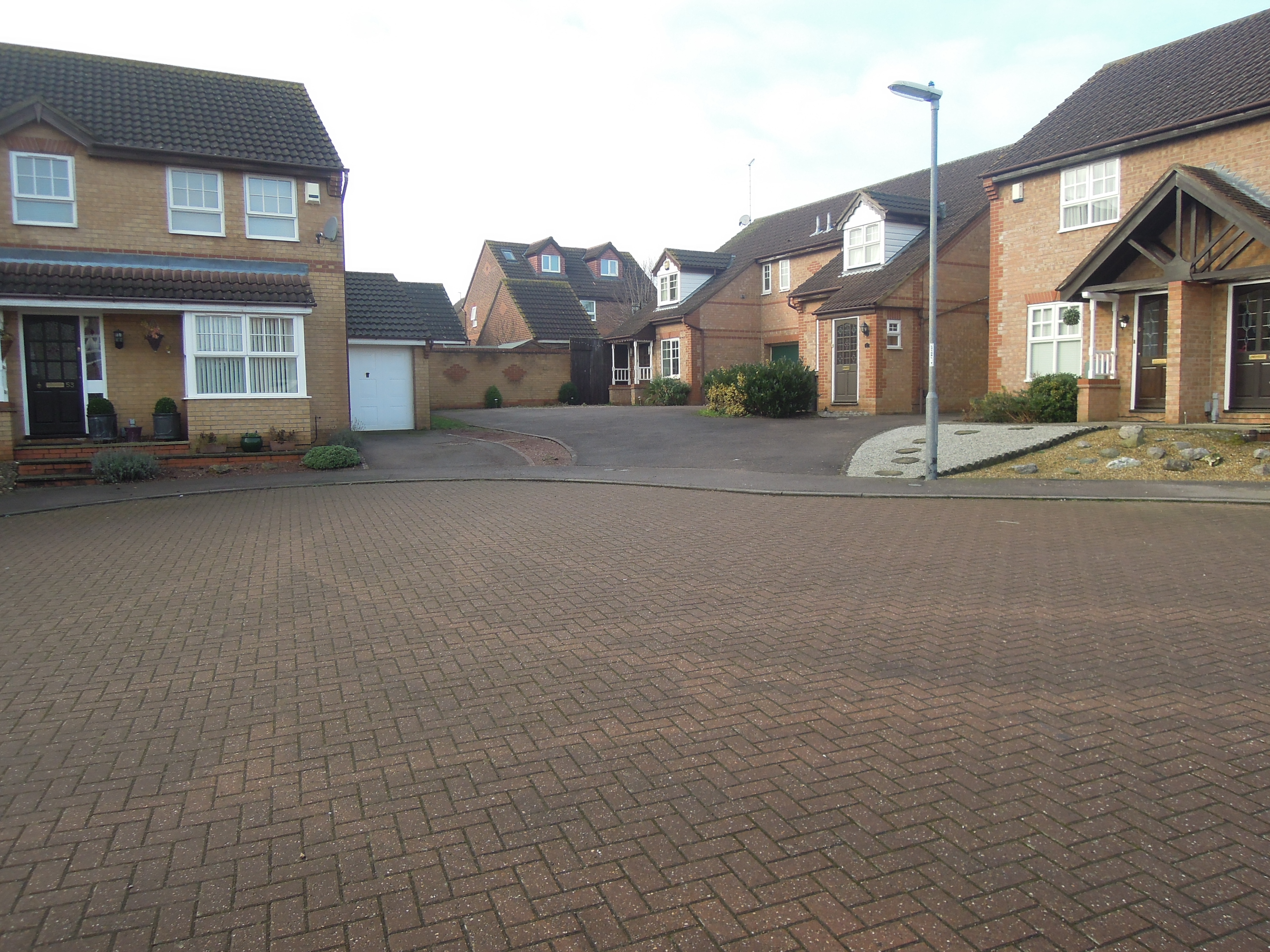
    In the places built 10 or 20 years ago, there’s plenty of shared space, but almost all of it is allocated to cars.

    ... but almost nothing for children


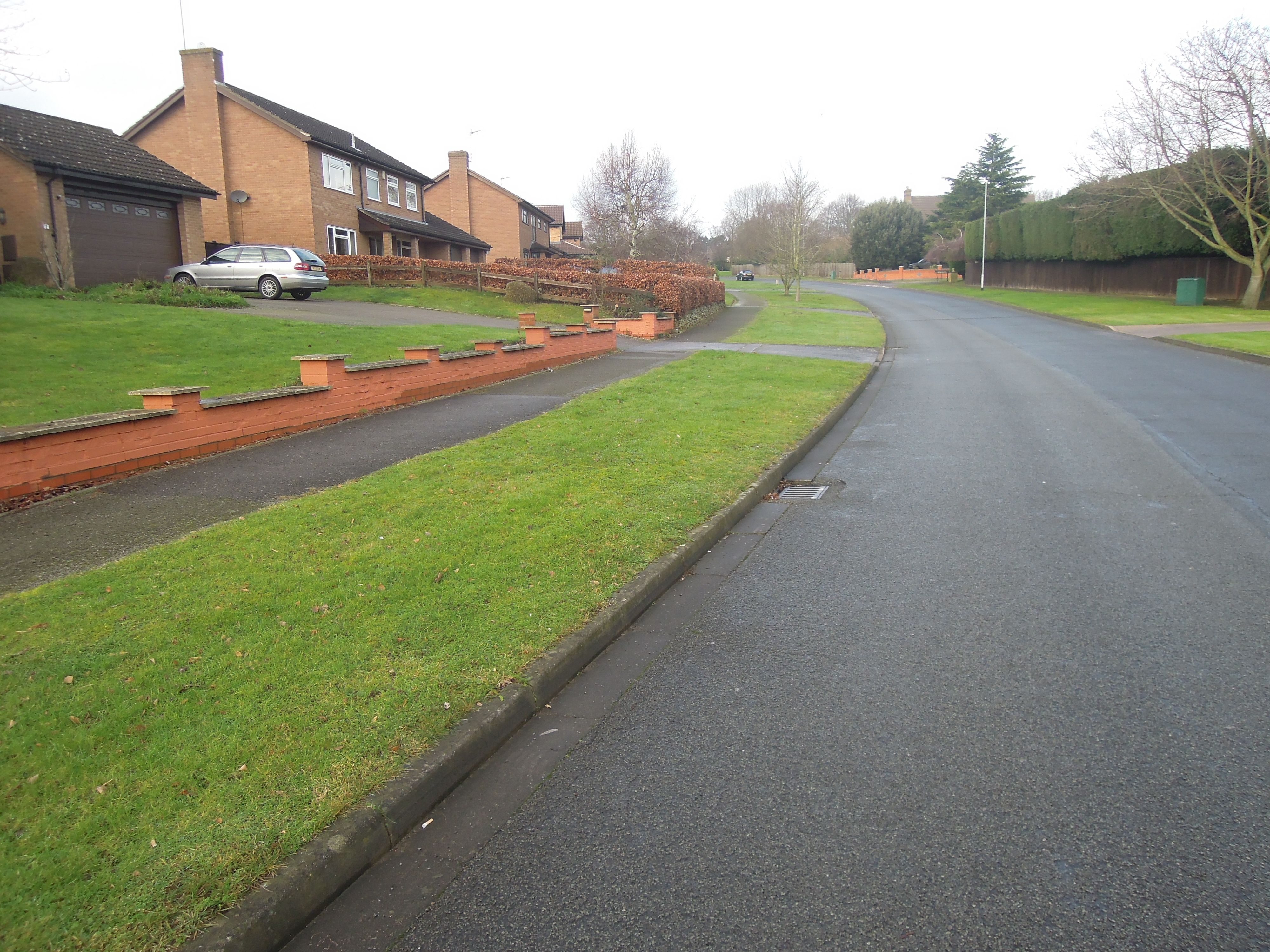
    Grass is confined to the roundabouts or to coffin-like gardens, in which you can’t turn a cartwheel without hitting the fence. I came across one exception: a street with wide grass verges. But they sloped towards the road: dangerous and useless, a perfect waste of space.

    A perfect waste of space

    This land of missed opportunities, designed by people without a spark of joy in their hearts, reifies the idea that there is no such thing as society. Had you set out to ensure that children are neither seen nor heard, you could not have done a better job. On the last day of the holidays, which was warm and dry, across four estates I saw only one child.

    By comparison, the Cherry Orchard estate just completed by Bellway Homes is a children’s paradise. But only by comparison. Next to the primary school, with plenty of three and four-bedroom houses, it’s designed to appeal to young families. But while plenty of thought has gone into the homes, it seems to me that almost none has gone into their surroundings.

    Still car mad

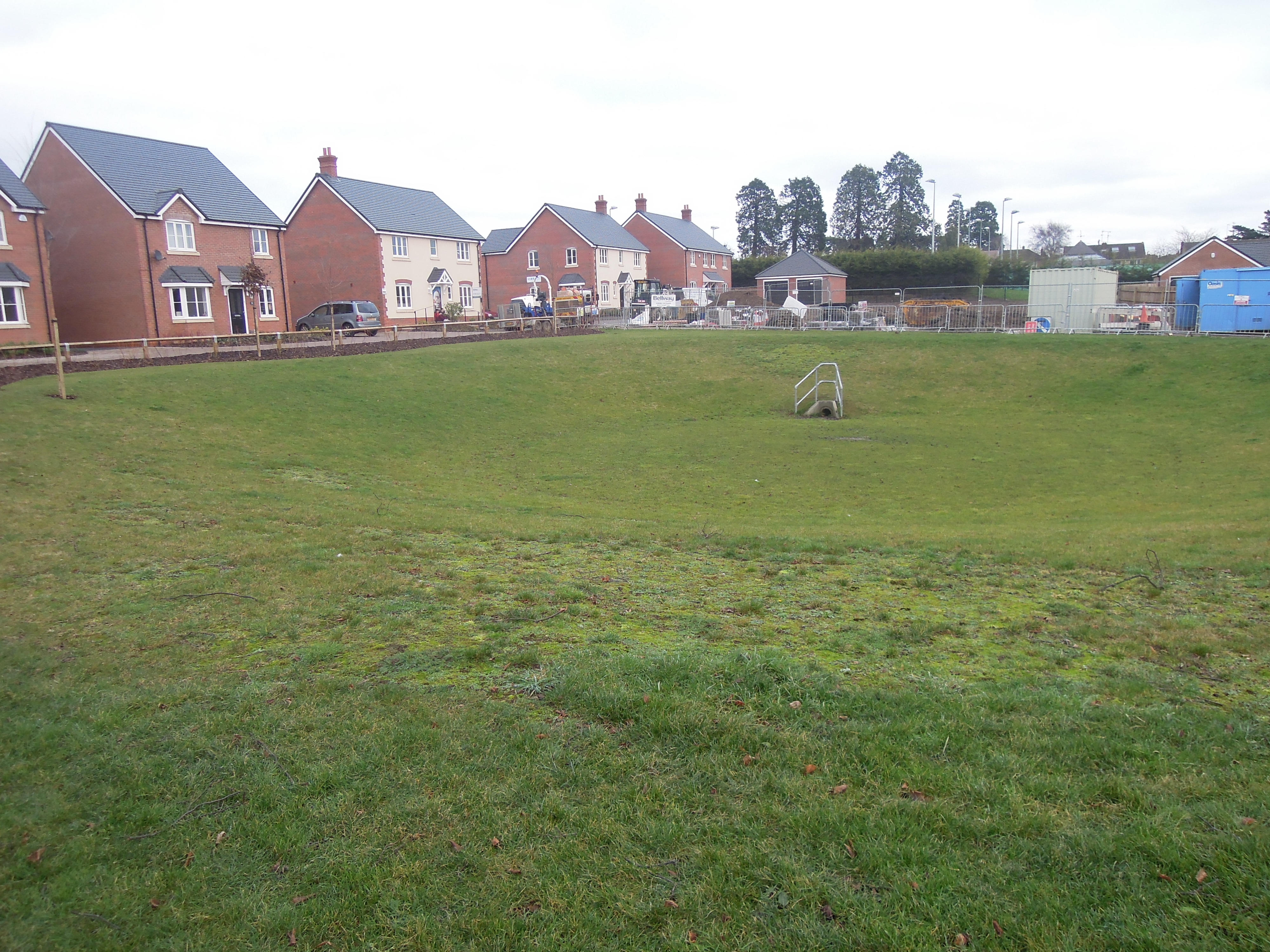
    In the middle of the development, where a village green might have been, there’s a strange grassy sump, surrounded by a low fence. It’s an empty balancing pond, to catch water during exceptional floods. Remove the fence, plant it with trees, throw in some rocks and logs, and you’d have a rough and mossy playground. But no such thing was in the plans.

    A balancing pond that could be so much more

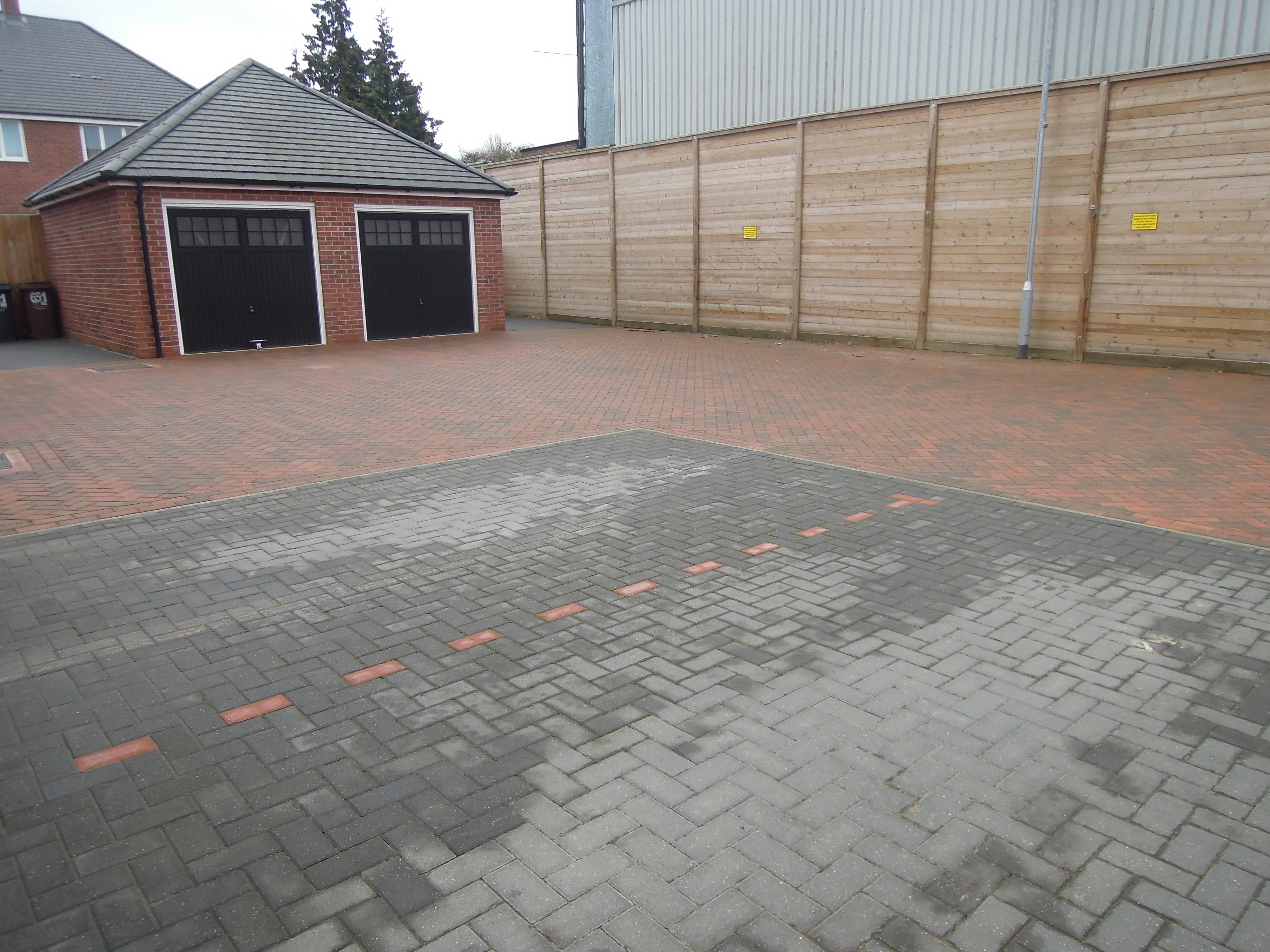
    Other shared spaces in the estate have the charming ambience of a prison yard: paved and surrounded by garden fences almost 9 feet high.

    Garden fences almost 9ft high

    And the charming ambience of a prison yard

    There were a few children outdoors, but they seemed pressed to the edges, sitting in doorways or leaning on the fences. Children don’t buy houses, so who cares?

    Throughout the country, they become prisoners of bad design, and so do adults(6). Without safe and engaging places in which they can come together, no tribe forms. So parents must play the games that children would otherwise play among themselves, and everyone is bored to tears.

    The exclusion of children arises from the same pathology that denies us decent housing. In the name of market freedom, the volume housebuilders, sitting on their land banks, are free to preside over speculative chaos, while we are free to buy dog kennels priced like palaces in placeless estates so badly designed that community is dead on arrival. Millions want to design and build their own homes, but almost no plots are available, as the big builders have seized them.

    In Scotland, the government is considering compulsory sale orders, which would pull down prices(7): essential when the speculative price of land has risen from 2% of the cost of a home in the 1930s to 70% today(8). A national housing land corporation would assemble the sites and supply the infrastructure, then sell plots to community groups, housing associations and people who want to build their own. It goes far beyond England’s feeble community right-to-build measures(9), which lack the muscular facilitation that only public authorities can provide. But still not far enough.

    What if people were entitled to buy an option for a plot on a new estate, which they would then help to plan? Not just the houses, but the entire estate would be built for and by those who would live there. The council or land corporation would specify the number and type of homes, then the future residents, including people on the social housing waiting list, would design the layout. Their children would help to create the public spaces. Communities would start to form even before people moved in, and the estates would doubtless look nothing like those built today.

    To the Westminster government, this probably sounds like communism. But as countries elsewhere in Europe have found, we don’t need volume house builders(8), except to construct high-rises. They do not assist the provision of decent, affordable homes. They impede it. What is good for them is bad for us.

    Bellway, its brochure reveals, asked children at the neighbouring primary school to paint a picture of a cherry orchard, and displayed the winning entries in its show home(10). “Why not pop over to say hello, view our wonderful development and sneak a peek?”. That’s the role the children were given: helping the company to sell the houses it had already built. Why can’t we shape the places that shape our lives?

    www.monbiot.com

    References:

    1. http://www.jaygriffiths.com/

    2. Stephen Moss, 2012. Natural Childhood. The National Trust. http://www.nationaltrust.org.uk/servlet/file/store5/item823323/version1/Natural%20Childhood%20Brochure.pdf

    3. http://www.monbiot.com/2012/11/19/housebroken/

    4. https://www.gov.uk/government/publications/national-planning-policy-framework–2

    5. http://www.publications.parliament.uk/pa/cm201415/cmselect/cmcomloc/190/19002.htm

    6. Please see the 1997 report by the Chartered Institute of Housing and the Joseph Rowntree Foundation for an excellent summary of what child centred design might involve. http://www.jrf.org.uk/publications/childs-play-facilitating-play-housing-estates

    7. http://www.scotland.gov.uk/Publications/2014/12/9659/7

    8. The Land Reform Review Group, 2014. The Land of Scotland and the Common Good.

    http://www.scotland.gov.uk/About/Review/land-reform/events/FinalReport23May2014

    9. See Stuart Gulliver and Steven Tolson, 2013. Delivering Great Places to Live: 10 Propositions aimed at transforming Placemaking in Scotland. http://bit.ly/1KiipiJ

    10. http://bit.ly/1DfziZx

  • Bushfires In Australia A ‘Wake-Up Call’ For Abbott Government To Commit To Climate Action Article

    U | Economy | Companies | Tech | Real Estate | Sports
    Bushfires In Australia A ‘Wake-Up Call’ For Abbott Government To Commit To Climate Action

    Article

    2

    Rate this Story
    0
    0

    Print
    Email
    Order Reprints
    Text Size

    By Reissa Su | January 6, 2015 10:03 AM EST

    The bushfires in South Australia and Victoria were described as the products of the government’s failure to address climate change. Australia Greens leader Christine Milne said the fires should be a wake-up call for the Abbott government to recognise the costs of global warming.
    View Full Image

    REUTERS/Country Fire Authority
    A helicopter dumps water on a bushfire burning near houses in the Grampians bushland in the southeastern Australian state of Victoria, about 300 km (186 miles) west of Melbourne, January 17, 2014. REUTERS/Country Fire Authority (CFA)/Handout via Reuters

    Related Articles
    Extremely Dry Conditions Spark Bushfires in Australia; CFS Issue Fire Danger Alerts

    As firefighters continue to contain the fires raging in the two states, dozens of homes were lost to the blaze. Milne warned that Australia is going to suffer the same extreme weather events. She said that the Abbott government must stop its climate change “denial” and get on with creating a plan in the face of extreme weather, ABC News reported.

    Milne said the government should look at the “suffering” of the people and commit to strong climate action. She recommended a number of actions in preparation for extreme heat, including the evaluation of current emergency services, increase in the number of firefighters and improvement in emergency response.

    Meanwhile, Minister for Justice Michael Keenan said that the Abbott government will need to hold talks with the state government to review how funds were spent before disasters happen. The federal government has indicated it wants to reduce spending on natural disaster recovery to focus on mitigating the risks before a catastrophic event strikes.

    Keenan and his South Australian counterpart Zoe Bettison have announced emergency grants of up to $280 per adult and $140 per child, The Guardian reported. The funds would be available for people affected by the bushfire in Sampson Flat to cover necessities like food and clothing.

    Firefighters are currently racing to contain a major bushfire before the weather will worsen the blaze. According to BBC News, more than 30 homes were feared destroyed behind the city of Adelaide. More than 500 firefighters have been monitoring the fires that have been burning since Jan 2. Fire authorities have declared that the bushfire was the worst in the area since the huge blaze in 1983, which left 75 people dead.

    Australia’s Bureau of Meteorology has predicted that temperatures will hit 34 degrees Celsius in Adelaide before reaching as high as 38C on Jan 7. South Australian Premier Jay Weatherill said the region is not yet safe from bushfires. He added that firefighters are trying to ensure the fire is contained before hotter conditions can spread it. He warned residents in South Australia to prepare for more severe bushfires.

    Contact email: r.su@IBTimes.com.au

    To contact the editor, e-mail: editor@ibtimes.com