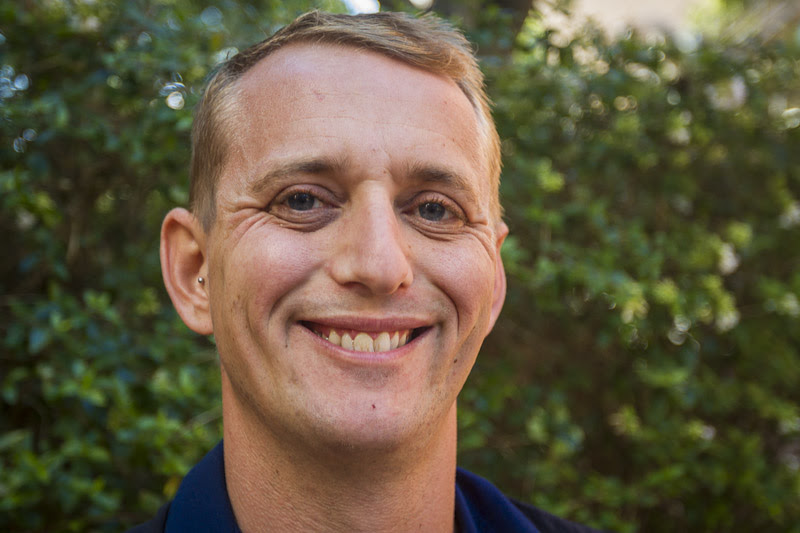
Managing director of Ebono Institute and major sponsor of The Generator, Geoff Ebbs, is running against Kevin Rudd in the seat of Griffith at the next Federal election. By the expression on their faces in this candid shot it looks like a pretty dull campaign. Read on
1 of 49
A QUESTION REGARDING TWITTER
Inbox
x
Andrew Glikson
Hi Neville Although I have entered Twitter, I will appreciate your advice reg…
1:48 PM (21 hours ago)
Neville Gillmore
Twitter will offer you people to follow based on how you describe yourself. S…
5:31 PM (17 hours ago)
Andrew Glikson
10:46 AM (7 minutes ago)
Hi NevilleThis is most helpful.Would you be able to re-tweet the book brochure and the Endorsements, appended below, to your distribution, following the statement: “Had humanity understood the full consequences of atmospheric CO2 above 400 ppm and 4 degrees Celsius it would have ceased carbon emissions today”(if this statement is too long, let me know and I will shorten it).Before you Twit this material on your distribution list please send me a draft so that I can see what the Twit looks like?Many thanksAndrew31-10-2015Endorsements:“Andrew Glikson and Colin Groves’ new book “Climate, Fire, and Human Evolution” traces the fascinating and complex history of the Earth over the past 4 billion years. It explores the fundamental context of the Earth’s climate system, the cycles of carbon, oxygen and nitrogen, and the crucial role of fire, to provide the critical baseline for our understanding of how a single species, Homo sapiens, has changed the atmosphere, oceans and biosphere. The fate of our species, and all the others with which the share this planet, is now in peril from the unintended consequences of our development, and especially our use of energy. I commend this scholarly yet readable work as a vital reference for understanding our past and present, and hopefully, for saving our future.”
Professor Lesley Hughes, Macquarie University“This is a most innovative and challenging book. One of its most interesting features is the explicit use of the stratigraphic record – the timeline of Earth History – to trace (or infer) the evolution of life on the planet (and not just human evolution). The co-evolution of life and the geosphere is fascinating. It certainly gave rise to the inter-discipline of biogeochemistry (the great element cycles of the planet), which in turn has become a key component of Earth System science. Importantly, this book uses the frame of Earth System science throughout, and shows the close nexus between the long-term geological record and Earth System science in its broadest sense.”
Professor Will Steffen, Australian National University“This masterful and overarching book could only have been written by geoscientists that had delved into both the earliest evidence preserved on Earth and into the youngest perturbations of our human-overwhelmed biosphere. Beginning with the earliest Earth systems, the crucial presence of liquid water and the dawn of simple life, the book traces the explosions of Phanerozoic life, interrupted only by several mass extinctions. And so, genetic evolution leads to the cultural evolution of humanity involving the iconic mastery of fire, the agricultural revolution and the explosion of human populations. The accelerating effects of human activities on the ecology and therefore on human health have become the focus of our modern world: the Anthropocene. Finally, this book tackles the perennial question, “Are we alone in this Universe” that involves the evolution of intelligence in the context of randomness or chaos. Congratulations to both authors.”
Professor Victor Gostin, University of Adelaide’ “With the continuing accumulation of CO2 in the upper atmosphere now exceeding the 400 ppm worrisome barrier with no sign of a diminishing trend, Andrew Glikson’s extended edition provides a timely and perhaps final alarm. It includes an anthropological dimension by Colin Groves that better contextualizes his message of grave concern and places it ever more firmly where it belongs: on the shoulders of those people who are complicit in promoting, directly and indirectly, the demise of life on Earth.”
Professor emeritus Colin L. Soskolne, University of Alberta
“This book is about the Earth, how its systems work, how it has evolved and where it may be heading.”The writing is clear and the sources of information are well documented, making this an excellent resource book for anyone who seeks a clear picture of the evolution of life on Planet Earth, and the forces that control our climate now, and have controlled our climate in the past. The book closes with consideration of the future and some philosophical words about human nature, the present situation, how it developed and how we have responded.”
Professor Hugh Davies, University of Papua New Guinea
Imagine a future where everyone can take control of their own power by generating and storing clean, cheap energy from the sun; where our highways are dotted with electric car charging stations, and our businesses and communities run off Australia’s plentiful clean energy resources.
Right now we have the opportunity to harness Australia’s bountiful solar resources to power our country, create jobs, generate investment and ensure a safe, clean future for our children and grandchildren. But to make this happen, we need our government to take decisive and innovative policies to the Paris United Nations Climate Summit in December.
That’s why, on the eve of the talks, thousands of Australians in every capital city will join millions of people in hundreds of major cities around the world to walk for a safe climate. We know that everyday Australians are way out in front of the Federal Government on solar and clean energy. By joining together, we can show Prime Minister Turnbull and his government that they need step up.
Solar owners and supporters like you are already taking steps to transition our energy system to what it needs to be. At the People’s Climate March we’ll join with health professionals, unions, farmers, faith groups, environmental organisations and many more to show our government just how strong, creative and diverse our movement for a renewable, sun-powered future is. Come along and make sure solar owners and supporters shine bright as part of this global moment.
Our world leaders have just one job to do in Paris: strike a global agreement to transition away from the dirty power sources of the past, and towards a clean, safe and sunny future. Together, with millions of people from around the globe, we’ll march to show them our future is too precious to risk.
Solar Citizens is an independent community-based organisation bringing together millions of solar owners and supporters to protect and grow solar in Australia. You can keep up with Solar Citizens on Twitter or like us on Facebook.
Why play with words dividing terrorists into moderate and not moderate. What’s the difference?
Vladimir Putin
Tampons, sterile cotton, sanitary pads contaminated with glyphosate
Monsanto’s Roundup is sprayed over GMO cotton crops. Traces remain in the cotton. GMO seeds have caused use of glyphosate to increase immensely since the 1990s
Long exposure to tiny amounts of Monsanto’s Roundup may damage liver, kidneys
Wide-scale alterations in liver and kidney gene expression occur with the consumption of small quantities of Roundup, even at admissible levels, with significant health implications.
Thick sea ice used to extend meters below the sea surface in the Arctic, where it could consume massive amounts of ocean heat through melting ice into water. Thick sea ice acted as a buffer. Over the years, Arctic sea ice thickness has declined dramatically. This means that the buffer that used to consume massive amounts of ocean heat carried by sea currents into the Arctic Ocean, has now largely gone.
The Iranian general who plotted the Syrian assault in Moscow
General Soleimani’ put the map of Syria on the table. The Russians were very alarmed, and felt matters were in steep decline and that there were real dangers to the regime. Soleimani played a role in assuring them that all was not lost.
World set to use more energy for cooling than heating
I have been waiting a long time for this penny to drop! Wake up to the inevitable!
Rising demand for air conditioning and refrigeration threatens to make planet hotter and undermine pledges to rein in emissions. Demand is growing and will surge 30-fold by 2100. Already, the US uses as much electricity to keep buildings cool as the whole of Africa uses on everything. China and India are fast catching up. By mid-century people will use more energy for cooling than heating. Emission targets agreed in Paris risk being blown away as governments struggle with the climate-change irony: KEEPING US COOL WILL MAKE THE PLANET HOTTER.
We should demand that all new cooling plants are solar driven. Why not? Its hottest when the sun is out.
Tens of millions of euros in unpaid taxes obtained through illegal tax deals: an unprecedented decision that risks blowing open thousands of corporate tax structures across Europe.
Potassium salts of hops beta acids (HBAs) — a biochemical (or naturally-occurring) pesticide that’s derived from hops — around honeycombs. Research has shown that HBAs have potential for repelling varroa mites.
Iceland did what the US didn’t: 26 top bankers sent to prison for role in financial crisis
“We were wise enough not to follow the tradition of the Western financial world in the last 30 years. We introduced currency controls, we let the banks fail, we provided support for the people and didn’t introduce austerity measures like you’re seeing in Europe.”
‘Fees Must Fall’: Student Uprising for Justice Sweeps South Africa
Continuing a week of mass demonstrations at 18 campuses across the country demanding the exorbitant fees… be lowered to open the gates of higher learning for all.
Battery Storage for Renewable Energy and Electric Cars
Australia is expected to be one of the largest markets for battery storage due to the high cost of electricity, the large number of households with solar panels and Australia’s excellent solar resources.
Historical floating ice appears to have been lost in the Arctic (= 5+ year old). It was predicted to melt by 2022. The ice melt is 6 years earlier than predicted. Previous estimates of when the average global temperature would reach 6°C was 2034, by which time massive global extinction would be proceeding. The new corrected time for this event is 2028 which is 13 years in the future. During the major Permian Extinction event, caused by a massive methane build-up, the mean temperature increased by 5°C over 13 years. As the present mean global temperature is already 1°C hotter, we will be looking at at least a 6°C increase by 2028. The predicted 6°C average global temperature that occurred during the Permian extinction event was caused by a massive buildup of methane in the atmosphere. We are clearly in for a very rough ride in the next decade as the terminal global extinction event approaches.
Following a doubling in carbon dioxide levels, the surface of the ocean turned acidic over a period of weeks or months and global temperatures rose by 5 degrees centigrade – all in 13 years.
Russia Asserts its Superiority in Conventional warfare
We know, since the incident of the USS Donald Cook in the Black Sea in April 2014, that Russia can jam all US communication systems. Completely. The entire NATO nervous system is presently jammed.
Israel is left with no transforming choices. It cannot go to war with Russia and win back domination over Levant skies and waters and America is not prepared to go to war with Russia on behalf of Israel.
Watch Out Tony Blair, The Legal Noose is Tightening
Sir Jeremy was Principal Private Secretary to Tony Blair from June 1999 to July 2003 and a party to every step of the plotting between Bush and Blair to attack, during their April 2002, three-day meeting in Texas
The above map shows how average October maximum daily temperatures have differed from the long-term average across Australia. Source: Bureau of Meteorology.
On the last weekend of November, let’s fill our cities with a sea of colourful homemade costumes, puppets, banners and flags. Grab a paintbrush, instrument or soapbox and make a buzz about the People’s Climate March!
Will you come to a march in your nearest city? Get all the details and RSVP to show your support: www.peoplesclimate.org.au.
Come dressed as a sun, a wind turbine or a superhero for the future. Carry a placard or banner calling for the world you want to see.
Think about what represents you – is it your favourite sport, your job, your culture, your hobby, your family? Get creative to show the world what you are marching for! Carry a family photo, wear your uniform or come in a suit or scrubs, high vis or high heels. Let’s show the world the diversity we represent.
Want to get your creative juices flowing?
Come to a People’s Climate March crafternoon! Each weekend before the march, people across Australia are hosting crafternoons for their friends and communities to make props, banners, costumes, puppets and placards.
Crafternoons can be big or small, simple or elaborate.Invite your friends and family or host a community crafternoon. Paint some cardboard placards in your backyard or sew some costumes at your kitchen table. Book a community hall or school art room and invite the community.
Register your crafternoon – we’ll send you a creative kit full of DIY tips and inspiration, free downloads and more. We can also connect you with other creative folks near you via the People’s Climate March website.
Then, in the last weekend of November, bring your banners, props and costumes and let’s walk together as a united, diverse and powerful community to show our political leaders our commitment to the better future we know is possible.
From here on in, we’re all in… with bells on 🙂
Thanks for being part of this,
Victoria
Victoria McKenzie-McHarg
Climate campaigner
Australian Conservation Foundation
How to make sense of ‘alarming’ sea level forecasts
August 7, 2015 4.22pm AEST
Sea level rise is one of the biggest worries of climate change. This image is from the Witness King Tides project, which aims to visualise sea level rise using large tides and storm surges. Witness King Tides/Flickr, CC BY-NC-SA
Earth and paleo-climate scientist, Australian National University
Disclosure statement
Andrew Glikson does not work for, consult, own shares in or receive funding from any company or organization that would benefit from this article, and has disclosed no relevant affiliations beyond the academic appointment above.
We believe in the free flow of information. We use a Creative Commons Attribution NoDerivatives licence, so you can republish our articles for free, online or in print.
You may have read recent reports about huge changes in sea level, inspired by new research from James Hansen, NASA’s former Chief Climate Scientist, at Columbia University. Sea level rise represents one of the most worrying aspects of global warming, potentially displacing millions of people along coasts, low river valleys, deltas and islands.
The Intergovernmental Panel on Climate Change, the UN’s scientific climate body, forecasts rises of approximately 40 to 60 cm by 2100. But other studies have found much greater rises are likely.
Hansen and 16 co-authors found that with warming of 2C sea levels could rise by several metres. Hansen’s study was published in the open-access journal Atmospheric Chemistry and Physics Discussion, and has not as yet been peer-reviewed. It received much media coverage for its “alarmist” findings.
So how should we make sense of these dire forecasts?
What we’re pretty sure about
According the to the IPCC sea level rise has accelerated from 0.05 cm each year during 1700-1900 to 0.32 cm each year during 1993-2010. Over the next century the IPCC expects an average rise of 0.2 to 0.8 cm each year.
Observed and projected sea level rise.IPCC AR5Sea level rise has accelerated.IPCC AR5
The collapse of the West Antarctic ice sheet would add several tens of centimetres to the total.
The IPCC report adds that “it is very likely that there will be a significant increase in the occurrence of future sea level extremes” and “it is virtually certain that global mean sea level rise will continue for many centuries beyond 2100, with the amount of rise dependent on future emissions”.
Looking to the past
The IPCC estimates stand in sharp contrast to projections made by some climate scientists, in particular James Hansen who pointed out in 2007 and in his and his colleagues’ latest study of the effects of ocean warming on the ice sheets.
The IPCC reports did not take into account rates of dynamic ice sheet breakdown, despite satellite gravity measurements reported in the peer-reviewed literature by other scientists.
In Greenland, ice loss reached around 280 gigatonnes of ice each year during 2003-2013, whereas in Antarctica the loss reached around 180 gigatonnes of ice each year during the same period. Both ice sheets appear to be undrgoing accelerated rates of ice melt, as shown in the diagrams.
Melting of the Greenland ice sheet recorded by satellites.GRACEMelting of the West Antarctic ice sheet recorded by satellites.GRACE
Hansen and his 16 colleagues reach their conclusion by looking at both the present and the past. During the Eemian interglacial, a period between ice ages around 130,000–115,000 years ago, average global temperatures were around 1C warmer than temperatures before the industrial revolution – that is, similar to today’s temperatures. In Greenland temperatures were about 8C warmer (the rise in polar temperatures is generally higher than the rise in tropical and subtropical temperatures, due to the ice-water albedo contrast effect). This led to sea level rise of around 6-7 metres, to a large extent due to melting of the Antarctic ice sheet.
The study points out that during the Eemian contact between the warming ocean and ice sheets led to abrupt disintegration of the ice, raising sea levels by several metres over period of 50-200 years, an extreme rate exceeding current IPCC estimates. The concern is that similar high rates of warming and of sea level rise may pertain in future.
For these reasons Hansen’s group considers sea level could reach several meters toward the end of the century.
These authors state: “We conclude that 2C global warming above the pre-industrial level, which would spur more ice shelf melt, is highly dangerous. Earth’s energy imbalance, which must be eliminated to stabilize climate, provides a crucial metric.”
Extensive criticism of this conclusion followed. Kevin Trenberth, of the US National Centre for Atmospheric Research, stated “there are way too many assumptions and extrapolations for anything here to be taken seriously other than to promote further studies.”
Greg Holland, also from the US National Centre for Atmospheric Research, stated: “There is no doubt that the sea level rise, within the IPCC, is a very conservative number, so the truth lies somewhere between IPCC and [James Hansen].”
Michael Mann stated Hansen’s estimates are prone to a very large “extrapolation error”.
Media comments range from positive to derogatory. However, few comments respond in detail to the comprehensive analysis by the authors of Hansen’s 2015 paper.
Could it be worse?
The consequences of advanced ice melt include the increased discharge of icebergs from a disintegrating ice sheet, as occurred in the past during stadial phases of interglacial periods. Stadials are sharp cooling phases following peak temperatures, caused by the discharge of cold melt water into the ocean. Such discharges constitute a negative feedback, namely cooling.
Past stadial phases, in the wake of peak temperatures, included the Younger dryas (12,900 – 11,700 years-ago) and melting of the Laurentian ice sheet 8,500 years-ago.
A stadial freeze, predicted due to a collapse of the North Atlantic Thermohaline Current would follow in the wake of large-scale melting and discharge of large parts of the Greenland ice sheet. With further rise in atmospheric CO2 this would constitute a transient stage in global warming.
Warming of 2-4C implies a rise in sea level by several to many metres. Future sea level rise, once it reaches equilibrium with temperature rise of about 2C above pre-industrial temperature, could reach levels on the scale of the Pliocene (pre-2.6 million years ago) around 25+/-12 metres. Temperature rise of 4C higher than pre-industrial would be consistent with peak Miocene (about 16 million years ago) equilibrium sea levels of about 40 meters.
We don’t know how long it would take for seas to rise that high with rising temperatures. However the extreme rise rate of atmospheric greenhouse gas concentrations, higher than 2 ppm CO2 per year, if continues, threatens an accelerating rate of sea level rise.
If so, it follows human civilisation has now begun to preside over a major change to the map of planet Earth.
You’re invited to help make history — by standing alongside tens of thousands of Australians from all walks of life in what will be Australia’s most diverse climate mobilisation ever.
On the eve of the Paris climate negotiations – we will come together in cities across Australia and around the world for the People’s Climate Mobilisation – to show the world what strength, unity and action on climate change is all about.
It’s clear that the agreement reached in Paris won’t reach far enough to ensure climate justice for all. That’s why Indigenous peoples, faith leaders, doctors, unionists, workers, families, grandparents and so many others will be standing in unity to show what real climate leadership looks like.
But this is about much more than one day and one march.
It is about building relationships with people from across our community and making a commitment to one another that we will stand strong, lead on climate and demand that our politicians do what it takes to build safe and fair future for all.
Next year’s Federal election will be a defining moment for Australia and for our climate movement. Putting climate action centre stage of the political agenda and showing that it’s time to put the people before the polluters starts with these mobilisations.