Category: General news

Managing director of Ebono Institute and major sponsor of The Generator, Geoff Ebbs, is running against Kevin Rudd in the seat of Griffith at the next Federal election. By the expression on their faces in this candid shot it looks like a pretty dull campaign. Read on

  • ‘Groundwater inundation’ doubles previous predictions of flooding with future sea level rise

    ScienceDaily: Oceanography News


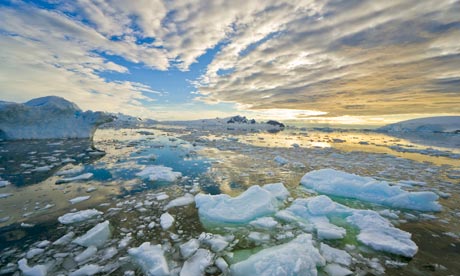
    Why Antarctic sea ice cover has increased under the effects of climate change

    Posted: 11 Nov 2012 12:38 PM PST

    Scientists have the first direct evidence that marked changes to Antarctic sea ice drift have occurred over the last 20 years, in response to changing winds. They can now explain why, unlike the dramatic losses reported in the Arctic, the Antarctic sea ice cover has increased under the effects of climate change.

    ‘Groundwater inundation’ doubles previous predictions of flooding with future sea level rise

    Posted: 11 Nov 2012 12:38 PM PST

    A new study by researchers in Hawaii shows that besides marine inundation (flooding), low-lying coastal areas may also be vulnerable to “groundwater inundation,” a factor largely unrecognized in earlier predictions on the effects of sea level rise.
  • Election 2012: America’s new mandate on climate change

    Election 2012: America’s new mandate on climate change

    In an election year already marked by extreme weather events, Superstorm Sandy put the environment back on the US agenda

    US voting: Poll worker helps voters by flashlight, New York

    Sandy, the worst storm to hit the mid-Atlantic states, left voters casting their ballots in unheated, makeshift tents. Photograph: Seth Wenig/AP

    For Americans concerned about the environment, disaster was avoided on Tuesday. President Obama – with his somewhat lackluster record, if decidedly more exalted rhetoric, on global warming – defeated the Republican challenger who had vowed to gut federal emissions standards, and kill loan programs and tax breaks for green energy companies.

    But activists say that it would be wrong to read the election as a stamp of approval for four more years of business as usual. They argue that voters have sent a clear signal that they want more aggressive action on the environment during the president’s second term.

    The League of Conservation Voters (LCV) cites the defeat of three members of their “Flat Earth Five” – Anne Marie Buerlke (Republican, New York), Francisco Canseco (Repub;lican, Texas) and Joe Walsh (Republican, Illinois) – Republican representatives who were outspoken for their anti-science stance on climate change. (One race remains too close to call.) And ten of the League’s “dirty dozen” candidates – targeted for “consistently voting against clean energy and conservation” – lost their election bids.

    Meanwhile, 11 out of 12 of the office-seekers dubbed “climate heroes” by a coalition led by environmental activist Bill McKibben, prevailed in Tuesday’s vote. The 12th “hero”, Jay Inslee, a gubernatorial candidate in Washington state who wants to jump-start the state’s lagging economy by transforming it into a national green-tech hub, continues to hold a small lead over Republican Rob McKenna and looks poised to win that race.

    The election results overturn the conventional wisdom that voters don’t care about green issues, according to LCV’s spokesperson Jeff Gohringer:

    “We went into this election cycle and the notion was that environmental champions were going to be wiped off the map. We did $3m-worth of advertising on climate change in places like Texas, and we won.”

    This sentiment was echoed by Frances Beinecke, the president of the Natural Resources Defense Council who wrote to her members on Wednesday that:

    “By rejecting Big Oil’s candidates, voters sent a message loud and clear that they want more clean energy, less climate denial and an end to the $4bn in taxpayer subsidies for fossil fuels.”

    Some environmentalists have characterized Obama’s very re-election as a mandate for strong action on climate change. This is a hard argument to make given that the topic scarcely came up during the presidential race. Obama, who frequently expressed concern about the climate during his first run for the presidency in 2008, failed to talk about it on the stump this time around. The president’s campaign advisers apparently calculated that there were few votes to be won, and potentially many to be lost, if Obama were to appear to advocate tougher regulations on industry at a time of low economic growth and high unemployment in America.

    Romney attacked Obama in TV ads broadcast in the swing state of Ohio for what he characterized as “job-killing” regulations on coal, which is a big player in mining and electricity production in much of the midwest. But the president’s bailout of the auto industry turned out to have been more persuasive to voters in the “rust belt” states, which went solidly for Obama on Tuesday.

    With the candidate’s relentless focus on the economy, climate change was a non-issue – until Nature herself brought it savagely into focus with Hurricane Sandy, the largest and most destructive weather event on record for the mid-Atlantic states. Climate scientists have been saying for years that warmer ocean temperatures, together with rising sea levels, would lead to an increase in punishing hurricanes. This prediction has tragically proved accurate ever since Hurricane Katrina, which killed over 1,800 people in New Orleans in 2005.

    Many political observers called the latest storm, Sandy, “a game-changer” in Tuesday’s election. It gave Obama a chance to “act presidential”, touring the coast of New Jersey with the state’s grateful Republican governor, Chris Christie, at a critical moment just days before the vote. It also earned the president a timely endorsement from New York City Mayor Michael Bloomberg, who applauded Obama for acting to stem climate change, taking steps to raise the fuel-efficiency standards on cars and tighten pollution rules on power plants.

    Americans’ views on global warming shifted markedly during the past summer, which saw record heat waves and drought in over two-thirds of the nation. As I reported in the Guardian last month, a Brookings survey conducted in July indicated that over 70% of Americans believed that climate change is happening, up from the 52% who held that view in 2010.

    The number of climate-change believers has undoubtedly risen still further since Superstorm Sandy, which powerfully demonstrated that global warming is not a theory about the indeterminate future, but a snowballing catastrophe that is with us right now. A study by insurance giant Munich, released days before Sandy struck, reported that North America has suffered $1.06tn in extreme weather damage since 1980. That mind-boggling number is five times the average loss in prior decades.

    It is perhaps no coincidence that six of the critical swing states which President Obama won – Colorado, Iowa, Ohio, Virginia, New Mexico and Wisconsin – all suffered an uptick of extreme weather events, including massive tornados and crop-destroying drought, within the past year. ThinkProgress reports that oil and gas companies, and political PACs poured in $270m to pay for TV ads in support of Mitt Romney and other, mostly Republican candidates. Billionaire oil magnates, the Koch brothers, added $400m of their own funds to the GOP kitty. With so many of its favorites going down in defeat, however, these fossil-fuel advocates have virtually nothing to show for their whopping investment.

    Environmental activists are urging President Obama to harness his victory at the polls to enact stringent new limits on CO2 emissions, and to push hard for concerted global action on the climate. In one of his first references to the threat of climate change since the convention, the president warned of “the destructive power of a warming planet” in his victory speech in Chicago.

    But Obama will, undoubtedly, face the same opposition in Congress in the next four years as he did in the last. Republicans in Congress last year voted no fewer than 247 times (nearly once a day for every day the House was in session) to weaken EPA protections that have been in place for decades, and to defeat proposed new climate legislation. This led Representatives Henry Waxman and Edward Markey to issue a report in June that called the 112th Congress the most anti-environment in history.

    That is the bad news. The good news is that, if the election results are to be trusted, the public’s patience for Republican obstructionism on the environment may have just run out.

    In an election year already marked by extreme weather events, Superstorm Sandy put the environment back on the agrenda

  • Poles apart: satellites reveal why Antarctic sea ice grows as Arctic melts

    Poles apart: satellites reveal why Antarctic sea ice grows as Arctic melts

    US military satellite data exposes complexity of climate change and impact of changing wind patterns on polar regions

    Antarctic sea ice

    Changing wind patterns around Antarctica, above, have led to an increase in sea ice, as cold winds off the continent blow ice away from the coastline. Photograph: Corbis

    The mystery of the expansion of sea ice around Antarctica, at the same time as global warming is melting swaths of Arctic sea ice, has been solved using data from US military satellites.

    Two decades of measurements show that changing wind patterns around Antarctica have caused a small increase in sea ice, the result of cold winds off the continent blowing ice away from the coastline.

    “Until now these changes in ice drift were only speculated upon using computer models,” said Paul Holland at the British Antarctic Survey. “Our study of direct satellite observations shows the complexity of climate change.

    “The Arctic is losing sea ice five times faster than the Antarctic is gaining it, so, on average, the Earth is losing sea ice very quickly. There is no inconsistency between our results and global warming.”

    The extent of sea ice is of global importance because the bright ice reflects sunlight far more than the ocean that melting uncovers, meaning temperature rises still further.

    This summer saw a record low in Arctic sea ice since satellite measurements began 30 years ago. Holland said the changing pattern of sea ice at both poles would also affect global ocean circulation, with unknown effects. He noted that while Antarctic sea ice was growing, the Antarctic ice cap – the glacier and snow pack on the continent – was losing mass, with the fresh water flowing into the ocean.

    The research on Antarctic sea ice, published in Nature Geoscience, revealed large regional variations. In places where warm winds blowing from the tropics towards Antarctica had become stronger, sea ice was being lost rapidly. “In some areas, such as the Bellingshausen Sea, the sea ice is being lost as fast as in the Arctic,” said Holland.

    But in other areas, sea ice was being added as sea water left behind ice being blown away from the coast froze. The net effect is that there has been an extra 17,000 sq km of sea ice each year since 1978 – about a tenth of a percent of the maximum sea ice cover.

    Antarctica is a continent surrounded by an ocean, whereas the Arctic is an ocean surrounded by a continent. For that reason, said Holland, sea ice was not able to expand by the same mechanism in the Arctic as at the southern pole, because if winds pushed the ice away from the pole it quickly hit land.

    Holland did the research with Ron Kwok at Nasa‘s jet propulsion laboratory in California, where maps of sea ice movements were created from more than 5m individual daily measurements collected over 19 years. The maps showed, for the first time, the long-term changes in sea ice drift around Antarctica.

    Kwok said: “The Antarctic sea ice cover interacts with the global climate system very differently than that of the Arctic, and these results highlight the sensitivity of the Antarctic ice coverage to changes in the strength of the winds around the continent.”

  • ACCC asks for comments on NBN pricing plan

    ACCC asks for comments on NBN pricing plan

    AAPUpdated November 12, 2012, 1:01 pm

    The competition regulator has called for public consultation on the latest plan by the national broadband network (NBN) builder on wholesale broadband pricing.

    The Australian Competition and Consumer Commission (ACCC) released its first consultation paper on the special access undertaking (SAU) lodged by the network’s builder, NBN Co, on September 28.

    The undertaking sets out the terms of conditions and access to the NBN’s fibre, wireless and satellite networks until 2040, while providing the framework for NBN Co to deliver wholesale broadband prices across Australia.

    ACCC chairman Rod Sims said the ACCC would assess the SAU before it could determine whether it was reasonable and promoted the long-term interests of retailers and consumers.

    “The consultation paper seeks the views of consumers and industry and is the first step in what will be a thorough assessment by the ACCC of the undertaking,” Mr Sims said in a statement on Monday.

    A spokeswoman for NBN Co said it looked forward to the outcome of the ACCC’s consultations.

    “NBN Co has pledged to freeze the wholesale price of its key consumer and business products for five year, and to peg any future rises to below the rate of inflation.

    Under the government’s $37.4 billion project, NBN Co is charged to deliver high-speed fibre optic cable broadband offering speeds up to 100 megabits a second to 93 per cent of Australian homes, schools and businesses by June 2021, with the remaining seven per cent to receive services by fixed wireless and satellite technologies within three years.

    AAPUpdated November 12, 2012, 1:01 pm

    The competition regulator has called for public consultation on the latest plan by the national broadband network (NBN) builder on wholesale broadband pricing.

    The Australian Competition and Consumer Commission (ACCC) released its first consultation paper on the special access undertaking (SAU) lodged by the network’s builder, NBN Co, on September 28.

    The undertaking sets out the terms of conditions and access to the NBN’s fibre, wireless and satellite networks until 2040, while providing the framework for NBN Co to deliver wholesale broadband prices across Australia.

    ACCC chairman Rod Sims said the ACCC would assess the SAU before it could determine whether it was reasonable and promoted the long-term interests of retailers and consumers.

    “The consultation paper seeks the views of consumers and industry and is the first step in what will be a thorough assessment by the ACCC of the undertaking,” Mr Sims said in a statement on Monday.

    A spokeswoman for NBN Co said it looked forward to the outcome of the ACCC’s consultations.

    “NBN Co has pledged to freeze the wholesale price of its key consumer and business products for five year, and to peg any future rises to below the rate of inflation.

    Under the government’s $37.4 billion project, NBN Co is charged to deliver high-speed fibre optic cable broadband offering speeds up to 100 megabits a second to 93 per cent of Australian homes, schools and businesses by June 2021, with the remaining seven per cent to receive services by fixed wireless and satellite technologies within three years.

  • For better transport, listen to the commuters

    For better transport, listen to the commuters

    Date
    November 12, 2012
    Category
    Opinion
    • 29 reading now

    Amanda Tattersall

    I was lucky enough to go to a Sydney selective high school. To get there I had to walk, catch a train and then a bus. It took time, and on the days that I had school band rehearsal, I left home at 6am. It was brilliant. The trains came no more than 15 minutes apart (usually between five and eight minutes) and the buses were the same. I had a school pass and that one ticket got me where I needed to go.

    For six years, I lived and breathed what is now the vision for public transport of the citizens’ coalition I lead. At the Sydney Alliance, we describe this vision in a formula – 400:15:1 SCA2. Public transport should be 400 metres from where you work or live (so you can walk to it) and come every 15 minutes (so you don’t need a timetable). You should be able to use it on one ticket (so it’s not complicated). It should be safe (S), clean (C), affordable (A) and accessible (A2).

    It’s a straightforward formula that has been enthusiastically embraced by our massive diverse coalition of 52 civil society organisations. In the Sydney Alliance, we bring together Catholics and construction workers, nurses and Cancer Council volunteers, Jews, Baptists and union leaders with one thing in common – we all agree that we need to make Sydney a better place to live.

    When we listened to 6500 people across our collective membership, transport was one of the top issues that brought us together. The vision we settled on was about making transport close (400) and, very importantly, frequent (15).

    In the maps by our transport chairman, Dr Kurt Iveson, a senior lecturer in urban geography at the University of Sydney, that were published by Fairfax Media on Sunday, you can see much of Sydney is out of reach of close and frequent public transport. The 500,000 or so people in the 52 partner organisations involved in our alliance believe this needs to change.

    This year the alliance has lobbied state and local governments to make our interchange train stations safer. Next year, we want to engage with the government’s master plan and look at affordable ways in which we can enhance the city’s transport system. We are pragmatic and ambitious in the solutions we are seeking.

    For years now in Sydney, the public transport debate has been dominated by proposals for competing infrastructure projects. The North West Rail Link, the Sydney light rail extension, metros, tunnels – all of these projects with their own relative merits and multibillion-dollar price tags.

    All are or were supposed to be the answer to our public transport problems. But at that price we want to be sure of what these projects are aiming to address.

    With two big reports on transport – one from Transport for NSW and one from Infrastructure NSW- our politicians look divided on the future of transport. In contrast, the Sydney Alliance plans to bring into this debate what has been missing – the commuters who do the daily grind by train and bus passengers stuck in peak traffic on the M2, often referred to each morning as a car park. Not advisory groups, committees, or current or former politicians.

    We know good public transport contributes to social inclusion. We know it is environmentally sound. And we know our city is clogged with cars, and that thousands of us spend hours stuck in traffic every day.

    For that reason, we should be working to provide public transport that offers a genuine alternative to driving, no matter where you live, what you do or when you do it.

    How do we make this happen? Fixing our public transport system is not all about multibillion-dollar investments that take decades to complete.

    Don’t get us wrong, some judicious infrastructure investment can go a long way. But we could also be doing a lot better with what we already have.

    The Sydney Alliance plans to bring into this debate the voices of citizens – the public transport users – who need to be at the centre of the discussion about the transport system, not stuck on the fringes. We are working together to fill in the gaps in the maps.

    Amanda Tattersall is the founding coalition director of the Sydney Alliance.

    Read more: http://www.smh.com.au/opinion/politics/for-better-transport-listen-to-the-commuters-20121111-296b6.html#ixzz2ByEJPSmW

  • ‘Brace yourselves’: scope widened in corruption probe

    ‘Brace yourselves’: scope widened in corruption probe

    Date
    November 12, 2012 – 11:20AM
    • 228 reading now

    Video settings

    Please Log in to update your video settings

    Video will begin in 5 seconds.

    Video settings

    Please Log in to update your video settings

    Obeid to face second stage of ICAC enquiry

    The Independent Commission Against Corruption moves on to the second potentially explosive stage of the Eddie Obeid inquiry. Kate McClymont reports.

    The Independent Commission Against Corruption is widening the scope of its explosive investigation into a series of coal leases issued by the disgraced former resources minister Ian Macdonald.

    “Brace yourselves,” Geoffrey Watson, SC, counsel assisting, has warned the ICAC hearing of his formal opening and the explanation of the corruption it is about to expose: “This could take most of the day.”

    The Commissioner, David Ipp, QC, earlier gave notice to the widening, which means the inquiry will now also examine how it was that the Obeid family and its associates purchased a series of farms in 2007 and 2008 which were in the vicinity of a key coal licence area.

    Ian Macdonald

    Former minister … Ian Macdonald. Photo: James Brickwood

    Mr Watson has begun outlining the complex and extensive corrupt network that allegedly disguised its operations to secure profits worth “hundreds of millions of dollars”. Its principals are allegedly ALP kingpin Eddie Obeid and the disgraced former resources minister, Ian Macdonald.

    Mr Watson told the inquiry this morning that just one of a number of coal deals being examined by the ICAC, dating from 2008 and 2009, was designed to secure $60 million profit for the Obeid family, which had invested just $200,000.

    “In all, decisions taken or influenced by Ian Macdonald may have enabled Eddie Obeid and his family to acquire profits in the order of $100 million,” Mr Watson said.

    ICAC inquiry into fromer NSW ALP Minister. Photo: Peter Rae. Former Goverment Minister, Edie Obeid ariives at the inquiry.

    Labor kingpin … Eddie Obeid. Photo: Peter Rae

    Mr Ipp said the inquiry would also examine whether Mr Macdonald or his staff “provided confidential information … to members of the Obeid family”, and whether they then used that information to their own benefit.

    Mr Obeid has declared he will be found innocent of the allegations of corruption levelled against him and his family by a big corruption inquiry.


    Read more: http://www.smh.com.au/nsw/brace-yourselves-scope-widened-in-corruption-probe-20121112-2978v.html#ixzz2ByD6JfQ1