Category: General news

Managing director of Ebono Institute and major sponsor of The Generator, Geoff Ebbs, is running against Kevin Rudd in the seat of Griffith at the next Federal election. By the expression on their faces in this candid shot it looks like a pretty dull campaign. Read on

  • WHO confirms diesel fumes carcinogenic

    WHO confirms diesel fumes carcinogenic

    By Lexi Metherell, ABCJune 13, 2012, 6:53 pm

    Experts at the World Health Organisation (WHO) say diesel engine exhaust fumes can cause cancer in humans.

    They say they belong in the same potentially deadly category as asbestos, arsenic and mustard gas.

    After a week-long meeting, the International Agency for Research on Cancer reclassified diesel exhausts from its group of probable carcinogens, to its group of substances that have definite links to cancer.

    It says diesel emissions cause lung cancer and increase the risk of bladder cancer.

    They say their decision was unanimous and based on “compelling” scientific evidence.

    The director of New York’s Clean Fuels and Vehicles Project, Rich Kassel, has told CNN the WHO has confirmed what has been suspected for some time.

    “Anybody who lives in Beijing, Mexico, New York or any congested city has probably felt the feeling of holding their breath when the bus pulls away from the curb leaving you in a … puff of black smoke,” he said.

    “This study basically confirms that we’re right to hold our breath when the bus pulls away.”

    The pollution that we care about from diesel – buses, trucks and other diesel engines – is technically called particulate matter. We all know it is soot. It’s fine, fine particles that are small enough to get past our throat, past our lungs into the deepest part, the deepest of our lungs, where they trigger asthma attacks, bronchitis, emphysema, heart disease and now of course we’ve learned cancer.”

    The WHO has acknowledged tougher fuel regulation has led to improved diesel quality and trucks do not billow big clouds of soot so often anymore.

    But it says it is not yet clear whether these changes have reduced the risks.

    The Cancer Council’s chief executive, Professor Ian Olver, says the WHO also has not confirmed what levels of exposure cause cancer.

    “Most of the data in the world relates to occupational exposure, such as diesel equipment in mines, or transport, particularly railway workers, exposed to diesel,” he said.

    “So the first group that we ought to be looking at are those that [are exposed] to the heavy diesel output machinery.”

    Professor Olver says there is no data available for the levels of exposure in cities.

    “The difficulty is that all the pollutants, whether it is a petrol engine or a diesel engine, are all mixed together and that is why the data upon which this was based had to be the more specialised sort of high-level exposure of various occupations,” he said.

    Andrew Bourne has been in the diesel fuel injection industry for more than 30 years, and runs a diesel business in Toowoomba in Queensland.

    “We’re certainly dealing with emissions every day,” he said.

    “The machines that we see coming through our business have health problems with either the engine or the fuel system and as a result of that, often their emissions are one of the main telltales.

    But he says although his workplace may be more exposed to exhaust than most – his workers’ general health is fine.

    “It’s not as if we actively breathe in exhaust fumes. When we are testing vehicles, we tend to try and avoid it [and have] an open-air area to do that,” he said.

    Mr Bourne says the WHO’s announcement is a good reminder.

    “Perhaps we might be more aware. We already do take measures to protect ourselves from those fumes,” he said.

    “We direct exhaust fumes outside of our building through piping from the exhaust. Perhaps with these findings we might be a little more careful with making sure that we evacuate that gas more actively.”

  • Climate change to alter global fire risk

    ScienceDaily: Earth Science News


    Climate change to alter global fire risk

    Posted: 12 Jun 2012 11:48 AM PDT

    Climate change is widely expected to disrupt future fire patterns around the world, with some regions, such as the western United States, seeing more frequent fires within the next 30 years, according to a new analysis. The study used 16 different climate change models to generate what the researchers said is one of the most comprehensive projections to date of how climate change might affect global fire patterns.

    Satellite sees smoke from Siberian fires reach the US coast

    Posted: 12 Jun 2012 07:16 AM PDT

    Fires burning in Siberia recently sent smoke across the Pacific Ocean and into the US and Canada. Images of data taken by the nation’s newest Earth-observing satellite tracked aerosols from the fires taking six days to reach America’s shores.
    You are subscribed to email updates from ScienceDaily: Earth Science News
    To stop receiving these emails, you may unsubscribe now.
    Email delivery powered by Google
    Google Inc., 20 West Kinzie, Chicago IL USA 60610
  • Ancient volcanoes destroyed ozone

    Ancient volcanoes destroyed ozone
    Science News
    Volcanoes at tropical latitudes are good at injecting the stuff they erupt into the stratosphere, some 16 kilometers up. When elements such as chlorine and bromine reach that high, they help trigger a series of reactions in which ozone’s three oxygen
    See all stories on this topic »
    How microbes found living off gasses on a volcano gives a clue to how life
    Daily Mail
    By Daily Mail Reporter Microbes have been discovered living in Martian-like conditions on volcanoes in South America with no water, extreme temperatures and such high UV radiation that most tiny organisms would be killed instantly.
    See all stories on this topic »

    Daily Mail
    Volcanoes could damage ozone layer
    UPI.com
    They based that on the levels of the chemicals released from 14 volcanoes in Nicaragua during the past 70000 years, LiveScience.com reported Tuesday. Bromine and chlorine “love to react — especially with ozone,” researcher Kirstin Kruger,
    See all stories on this topic »
  • Severe weather warning for Wales and south-west with more rain forecast

    More proof of changing weather patterns due to Climate and ocean warming.

    Severe weather warning for Wales and south-west with more rain forecast

    Incessant downpours continue to bring risk of flooding across England and Wales as 250 homes are cut off in West Sussex

    Flooding hits UK

    Resident John Sanson looks at a flooded road in Felpham, near Bognor Regis, in West Sussex. Photograph: Steve Parsons/PA

    More torrential showers are expected to sweep across Britain on Wednesday, bringing the risk of flooding to areas that have so far escaped the deluge.

    The Met Office said parts of south-west England were likely to bear the brunt of the next wave of heavy showers, with up to 60mm (more than 2in) of rain, about the average for all of June, threatening to fall in Cornwall.

    Further effects of the recent weather were predicted for west Wales, still mopping up after the “once-in-a-lifetime” floods that wreaked havoc over the weekend. Up to 30mm of rain could fall on the saturated ground.

    And scientists were investigating whether the rain could have swept potentially harmful metals, such as lead and zinc, from old mines into farmer’s fields and close to villages and towns.

    Surveyors were checking roads, bridges and dams that might have been damaged in the downpour and the Welsh government promised to treat sympathetically any appeals from local authorities to help with rebuilding.

    The Met Office issued a severe weather warning for Wales and for the south-west of England. Andy Page, the chief forecaster, said: “Due to the nature of showers some areas will miss them altogether, but where they do occur large amounts of rainfall are possible in a short space of time which has the potential to cause flooding.”

    David Bunt, the Environment Agency‘s emergency planning manager for the south-west region, said: “We are keeping a close watch on river levels, as the weekend’s heavy rain has left many areas more vulnerable to flooding.

    “Environment Agency teams have been working round the clock, with other emergency responders, checking flood defences, clearing blockages, monitoring river levels and issuing flood alerts or flood warnings where necessary.”

    By Tuesday night more than 30 flood alerts (signalling flooding a possibility) were in place in all areas of England except the north-west. Four of the more serious flood warnings had been issued, two in the south-east, two in Bedfordshire.

    One of the worst affected areas in England was West Sussex, where firefighters had to use boats to reach about 250 homes cut off in Elmer, near Bognor Regis. More than 30 people were rescued from holiday parks in Sussex.

    People who had been driven out of their homes were sheltered in rest centres and in bed and breakfast accommodation.

    Some schools were closed and A-roads shut. There were lengthy delays on the M3 in Hampshire after two lanes were closed because of flooding.

    It was not only people who found themselves in danger. The RSPCA rescued a herd of 21 cows marooned on a patch of high ground when the river Arun broke its banks in West Sussex.

    In the Welsh assembly, Carl Sargeant, minister for local government and communities, said the devastation in west Wales had been astonishing. He said that at one point a device to measure flow recorded 250 tonnes of water passing every second.

    Sargeant said he was shocked at reports of some insurance company representatives telling people to put furniture contaminated with raw sewage back into their homes, and he said officials would be talking with the industry to make sure people got the right advice.

    Assembly members representing some of the areas that were affected expressed concern that tourism in west and mid Wales would be harmed by the pictures of devastation being transmitted around the world. Sergeant emphasised that the flooding was very localised and Wales was “open for business”.

  • Car reversing device a ‘lifesaver’

    Some larger 4 wheel drive vehicles are being fitted with mirrors enabling drivers to see what is at the rear of the vehicle.


    Car reversing device a ‘lifesaver’

    0

    NEW technology that overrides the driver of a reversing car and automatically brakes when it recognises objects too close could prevent children being injured or killed.

    Vehicle deaths are the second biggest accidental killer of Australian children after pool drownings, with eight children killed and hundreds more injured each year.

    World-class braking device Reverse Alert comes just two months after The Daily Telegraph’s Check, See, Turn The Key campaign was launched. Surveillance Guard director Glenn Gaudet, who developed the Reverse Alert, said the device would save lives.

    “It works when ultrasonic sensors in the rear bumper bar detect small and large objects behind the reversing vehicle,” Mr Gaudet said.

    “Immediately the sensors send a message to a motherboard, which then activates a solenoid which hits the brakes, in a split second.”

    Sensors start reading the situation at 2m and trigger the brakes at 1.6.

    “That is more than enough room to safely avoid hitting whatever is behind you especially if it’s a child,” he said.


  • Laying down the law on nanotechnology

    Laying down the law on nanotechnology

    Regulating nanotechnology is fraught with difficulties. Current environmental law simply doesn’t apply on the nano-scale

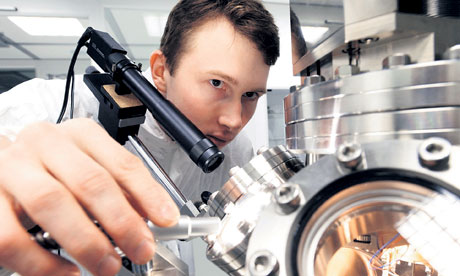
    Scientist at work in a nanotechnology laboratory

    A huge number of labs are now working with the nanotechnology ‘toolbox’ to develop new products and applications. Photograph: Science photo library

    The first asbestos mine opened in Quebec in 1874. By the 1950s, asbestos was being widely used as an insulator, a flame retardant and as ‘flocking’ (fake snow). Today, we know that asbestos fibres can burrow into the lungs and cause asbestosis, lung cancer and mesothelioma.

    While concerns about the safety of asbestos were raised as early as 1900, it was not until 1999 that the use of asbestos was fully banned in the UK. Every year, 4,000 people die in the UK from asbestos related diseases. This trend is likely to continue till at least the 2050s. As a society, we have learned a late lesson in the control of asbestos, despite early warnings as to possible side effects.

    New and emerging technologies (GM, synthetic biology and nanotechnology, for instance) offer the potential for a cleaner, healthier and better future. However, the risks from these technologies are not fully known. Will a future generation look back on our current wave of scientific innovation much as we regard the introduction of asbestos to the market?

    One nanometre is one billionth of a metre. To put this into perspective, a single strand of human hair is around 80,000 nanometres in width. In the time it takes you to say the word ‘nanotechnology’, your hair will have grown by 10 nanometres. That mankind can engineer and create on this scale seems somewhat unbelievable, but the promises of nanotechnology are legion. In the medical arena, nano-robots could be programmed to repair damaged cells and mimic our own natural healing processes (just like ‘Innerspace’, only minus Meg Ryan). In the context of climate change, the effects of man on the environment could be halted and reversed through nano filters designed to remove carbon dioxide from the atmosphere. It is estimated that there are over 1,000 nanotechnology enhanced products already on the market: everything from tennis balls to sunscreen and odour-free socks.

    As chemical substances get smaller, their behaviours and characteristics may change, with certain nanomaterials possessing properties not found in their bulk counterparts. The nano form of gold may be red or blue in colour; platinum is inert in its bulk form, but a catalyst at the nano-scale. While nanotechnology may hold the key to a cleaner, healthier, odour-free future, the novel properties that nanomaterials can possess give rise to new forms of risk. Potential risks from nano are both unknown and unknowable. Unknown because little risk assessment has take place to date (less than 2% of the money being poured into nano research is devoted to risk analysis) and unknowable because scientific expertise in chemical assessment has not kept pace with scientific expertise in nanotechnology. Put simply, we are not currently capable of testing all of the inherent properties of all nanomaterials.

    Regulatory efforts to control the use of nanotechnology at UK and EU levels have been limited. The previous government had a UK Nanotechnologies Strategy which prioritised the commercial development and application of nanotechnology. In the context of risk and regulation, their view was that existing laws would be sufficient. However, as demonstrated by the Cardiff-based BRASS Centre in great detail in 2008, while existing laws can and do regulate nanotechnology, they do so imperfectly. Put simply, there are gaps in existing regulatory frameworks which mean that nanotechnology is not wholly covered.

    Some of these gaps exist because of a misplaced notion that nanomaterials are equivalent to their bulk counterparts. For example, the Environmental Permitting Regulations (England and Wales) 2010 make it an offence to release hazardous chemicals into groundwater without a permit. Hazardous substances are those which are toxic, persistent and liable to bio-accumulate, and other substances which give rise to an equivalent level of concern. This leaves us in a chicken and egg situation. For a substance to be characterised as hazardous, there must be evidence that that substance poses unacceptable risks. However, we still await testing methodologies sufficient to adequately evaluate the potential risks of nanosubstances (as well as internationally accepted standards by which testing may occur). On a practical level, this likely means that most nanosubstances will not be classified as hazardous and so can be discharged into groundwater or disposed of as non-hazardous waste.

    Other gaps in existing regulatory regimes in the UK exist because legislation is based on thresholds or concentrations. Health and safety regulation is partly premised on occupational exposure levels; environmental permits are granted on the basis of emission levels; chemicals fall within or without rigorous testing requirements based on tonnage production thresholds. Given that nanotechnology is the technology of the very, very tiny, using thresholds in regulation means that much nanotechnology will fall below the relevant tonnage or concentration criteria and so fail to be fully regulated.

    The approach of the EU has been little better. The 2008 EU Regulation on Food Additives contains the first targeted legislative provision on nanomaterials. The effect of this provision is that food additives which are produced using “nanotechnology” or which have undergone a “change in particle size” need to undergo a safety evaluation. As a regulatory technique, there is nothing novel about pre-market approvals. However, there is no definition of “nanotechnology” in this Regulation and no guidance on what a “change in particle size” might mean — is this only a change to a particle size under 100nm, or something else entirely?

    We also come back (once again) to our scientific inability to assess the full suite of inherent nanochemical properties. Given these issues, it questionable whether this provision will have any practical impact whatsoever.

    As from 2013, the EU Cosmetics Regulation requires that any cosmetic which contains nanomaterials (and here there is a definition) must be labelled. This obligation is limited: a requirement to put “(nano)” next to the relevant ingredient on the ingredients list. There is no need to label the product with “contains nano” or any requirement to put a notice on the relevant packaging. Regulatory theory says that labels allow consumers free choice to choose between alternate products on the market. But, as my colleague Elen Stokes has observed, nano labels have been rejected in other jurisdictions (including the US) for being ineffective.

    Simply ask yourself this question: when was the last time you ever picked up your body wash in the shower and scrutinised the ingredients list? And, even if you did notice “(nano)” next to an ingredient, what would that mean to you: a warning as to possible side effects? A selling point as to unique properties? Something else?

    Regulating nanotechnology is difficult because of the myriad ways in which nanomaterials can be used and due to their global impact – the fact that product X made in the US can travel via Europe and be sold in China. There is also a real issue in knowing when and how to regulate: with hindsight it may be too little, too late or too much, too soon. A balance needs to be struck between the benefits from nano (societal, environmental and economic) and the potential risks. How we as a society deal with uncertainty, how we respond to scientific innovation and how we frame the debate on risk and regulation – these are all so very important. As we saw with asbestos, it may be the difference between life and death. Sometimes, size really does matter.

    A fuller version of this paper was given at the Hay Festival on June 3 2012