Category: General news

Managing director of Ebono Institute and major sponsor of The Generator, Geoff Ebbs, is running against Kevin Rudd in the seat of Griffith at the next Federal election. By the expression on their faces in this candid shot it looks like a pretty dull campaign. Read on

  • Fresh allegations against Ian Macdonald

    Fresh allegations against Ian Macdonald

    Kate McClymont

    May 23, 2012 – 12:39PM

    Resigned ... Ian Macdonald.

    Fresh allegations … Ian Macdonald. Photo: Louie Douvis

    Disgraced former NSW minister for energy Ian Macdonald is to face a new corruption inquiry into the granting of coal exploration licences.

    “The Commission has been investigating allegations that corrupt conduct has occurred in connection with the granting of certain coalmining tenements in NSW,” the Independent Commission Against Inquiry said in a statement.

    The Herald reported this week that Andrew Kaidbay, a friend and adviser to former minister Eddie Obeid and his family, who had no mining background and a $1 company, won a coal exploration licence in the Hunter Valley worth millions of dollars in a controversial tender run by then minister Mr Macdonald.

    The Obeid family also received at least $10 million after they sold an option over their land to another of the successful bidders in this tender process.

    Nine months before Mr Macdonald announced the invitation-only tender, the Obeids bought a farm in the Bylong Valley, near Mount Penny, for $3.65 million.

    One of the exploration licences the commission has confirmed it is investigating relates to a licence at Doyle’s Creek.

    In December 2008, Mr Macdonald granted this licence – without going to tender – to a company associated with John Maitland, the former general secretary of the Construction, Forestry, Mining and Energy Union.

    Mr Maitland paid $165,000 for his 11 per cent share in NuCoal Resources, which was later valued at $12million.

    In a statement, the ICAC said because of the fresh allegations against the former minister, the commission was delaying announcing the findings of a previous corruption inquiry into Mr Macdonald.

    Last year, the ICAC held a public hearing into allegations that businessmen Lucky Gattellari and Ronald Medich, who are facing murder charges, offered escort services in return for Mr Macdonald arranging meetings with state energy executives.

    No date has been set for the new public inquiry.

    Mr Macdonald resigned from NSW parliament in June 2010 following allegations that he made “errors” in his travel expenses relating to a 2008 trip to Italy and Dubai.

    Read more: http://www.smh.com.au/nsw/fresh-allegations-against-ian-macdonald-20120523-1z49g.html#ixzz1verBOrgz

  • Protect Antarctic waters before it’s too late, says environment coalition

    Protect Antarctic waters before it’s too late, says environment coalition

    The Antarctic Ocean Alliance is urging the UK government to protect one of the last true frontier areas before it is damaged irreparably by human interference

    • guardian.co.uk, Tuesday 22 May 2012 12.34 BST
    • Comments (2)
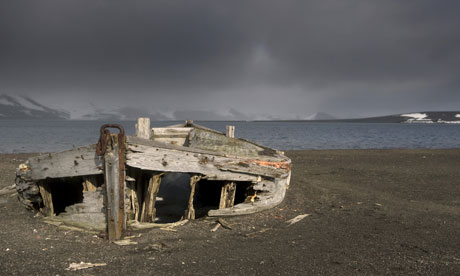
    • Fishing in Antarctic : remains of a whaling station on Deception Island

      The remains of a whaling station on Deception Island, Antarctica. Photograph: Martin Bureau/AFP/Getty

      A huge swath of the waters off Antarctica must be protected from fishing and other industries, environmental groups said on Monday.

      More than 40% of the region needs to be given protection before one of the world’s last true frontier areas is damaged irreparably by human activity, the Antarctic Ocean Alliance (AOA) said.

      The group, whose members include Greenpeace and WWF, has identified 19 “key Antarctic marine habitats” that it argues must be protected as part of the largest network of marine protected areas ever created. It is urging the UK government to throw its weight behind the proposals.

      Steve Campbell, the AOA’s co-ordinator, said the UK would be an ideal champion because it has already taken a lead in creating protected areas in the Southern Ocean, such as the Southern Orkney Islands Southern Shelf marine protected area.

      The alliance says Antarctic marine ecosystems are under increasing pressure, including the rising demands of the fishing industry, which threaten the health of animal populations such as penguins, whales, seals, fish and krill.

      The report, Antarctic Ocean Legacy: A Vision for Circumpolar Protection, noted that the Southern Ocean accounts for 10% of the world’s seas, yet less than 1% of it is “strictly protected” despite being home to vast numbers of animals, many of them vulnerable to interference.

      “Although often depicted as a frozen region dominated by breathtakingly beautiful but sterile glaciers, Antarctica is bursting with life – but mostly marine life. Below the icy ocean surface, bright-colored seastars, sponges and other bottom-dwelling creatures of all shapes and sizes blanket the seafloor.

      “Strange fish, with clear white blood and antifreeze in their bodies, lurk throughout the water column. On the surface, penguins, flying seabirds, seals and whales abound amidst the ice, foraging in krill-rich waters. The Antarctic truly remains one of the world’s last wild frontiers.”

      Protecting large areas of Antarctic waters should help prevent a repeat of the overfishing that since the 1960s has devastated several species, including marbled rockcod, which by the 1990s had declined in population by 95%. Patagonian toothfish, marketed as Chilean sea bass, were similarly targeted, and by the mid-1990s there were catches of more than 100,000 tonnes annually.

  • Toxic mercury, accumulating in the Arctic, springs from a hidden source

    Toxic mercury, accumulating in the Arctic, springs from a hidden source

    Posted: 21 May 2012 07:41 AM PDT

    Environmental scientists have discovered that the Arctic accumulation of mercury, a toxic element, is caused by both atmospheric forces and the flow of circumpolar rivers that carry the element north into the Arctic Ocean. While the atmospheric source was previously recognized, it now appears that twice as much mercury actually comes from the rivers. The revelation implies that concentrations of the toxin may further increase as climate change continues to modify the region’s hydrological cycle and release mercury from warming Arctic soils.
    You are subscribed to email updates from ScienceDaily: Oceanography News
    To stop receiving these emails, you may unsubscribe now.
    Email delivery powered by Google
    Google Inc., 20 West Kinzie, Chicago IL USA 60610
  • Latest Southern Ocean research shows continuing deep ocean change

    ScienceDaily: Earth Science News


    Stunning view of Lyrids and Earth at night

    Posted: 21 May 2012 12:33 PM PDT

    On the night of April 21, the 2012 Lyrid meteor shower peaked in the skies over Earth. While NASA allsky cameras were looking up at the night skies, astronaut Don Pettit aboard the International Space Station trained his camera on Earth. Video footage from that night is now revealing breathtaking images of Earth with meteors ablating — or burning up — in the atmosphere.

    Understanding Arctic Ocean’s carbon cycle

    Posted: 21 May 2012 10:28 AM PDT

    Scientists have conducted a new study to measure levels of carbon at various depths in the Arctic Ocean. The study provides data that will help researchers better understand the Arctic Ocean’s carbon cycle — the pathway through which carbon enters and is used by the marine ecosystem.

    Latest Southern Ocean research shows continuing deep ocean change

    Posted: 21 May 2012 07:46 AM PDT

    There has been a massive reduction in the amount of Antarctic bottom water found off the coast of Antarctica, new research shows.

    Dry lands getting drier, wet getting wetter: Earth’s water cycle intensifying with atmospheric warming

    Posted: 21 May 2012 07:46 AM PDT

    A clear change in salinity has been detected in the world’s oceans, signaling shifts and an acceleration in the global rainfall and evaporation cycle. The patterns are not uniform, with regional variations agreeing with the ‘rich get richer’ mechanism, where wet regions get wetter and dry regions drier.

    Toxic mercury, accumulating in the Arctic, springs from a hidden source

    Posted: 21 May 2012 07:41 AM PDT

    Environmental scientists have discovered that the Arctic accumulation of mercury, a toxic element, is caused by both atmospheric forces and the flow of circumpolar rivers that carry the element north into the Arctic Ocean. While the atmospheric source was previously recognized, it now appears that twice as much mercury actually comes from the rivers. The revelation implies that concentrations of the toxin may further increase as climate change continues to modify the region’s hydrological cycle and release mercury from warming Arctic soils.
    You are subscribed to email updates from ScienceDaily: Earth Science News
    To stop receiving these emails, you may unsubscribe now.
    Email delivery powered by Google
    Google Inc., 20 West Kinzie, Chicago IL USA 60610
    Reply
    Forward
    Click here to Reply or Forward
  • Rail lines shut down for weekend

    Rail lines shut down for weekend

    Jacob Saulwick

    May 22, 2012

    The Airport Link Railway Line.  The Mascot Railway Station.  Rail 050530 SMH News.Pic Steven Siewert SPECIALX SS050530

    Track closures … commuters are facing a weekend without rail services through the city. Photo: Steven Siewert

    TRAIN users face a weekend without services through the city, a week after the Transport Minister, Gladys Berejiklian, declared RailCorp has been incapable of properly managing trackwork.

    Trains through the city and on the Airport Line will be shut down this weekend, which is the first of the Vivid festival, and there will be another CBD shutdown next month.

    The track closure follows an admission issued on RailCorp’s behalf by Ms Berejiklian that it had shut down the Northern Line one weekend in November but had failed to organise for much work to be done.

    Trackwork was ”not always managed to an optimal level – resulting in waste and unnecessary disruption to customers”, Ms Berejiklian said.

    Asked if her reforms would lead to less weekend trackwork, Ms Berejiklian said: ”We want to ensure shutdowns are optimised in a way that minimises disruption to customers but safety and having well maintained network will always remain paramount.”

    On Saturday and Sunday, buses will replace trains through the CBD, on the Airport Line, and for all stops between Summer Hill and Macdonaldtown on the Inner West Line. Trains would also be shut down through the CBD on the weekend of June 16 and 17, said RailCorp’s acting chief operating officer, Tony Eid, as part of a $4 million upgrade.

    Timber sleepers are being replaced with concrete sleepers between Redfern and Central.

    In January, Mr Eid told the Herald RailCorp was about two years away from replacing all wooden sleepers with concrete on the train network.

    An international rail management expert, Rolf Bergmaier, has noted it is relatively rare for operators to regularly shut down entire train lines for weekend maintenance.

    Read more: http://www.smh.com.au/nsw/rail-lines-shut-down-for-weekend-20120521-1z1ds.html#ixzz1vYIhOmqV

  • Bonn climate talks: EU plays down talk of Kyoto protocol rift

    Bonn climate talks: EU plays down talk of Kyoto protocol rift

    Officials insist agreement can be reached despite row over length of new Kyoto deal

    • guardian.co.uk, Wednesday 16 May 2012 15.17 BST
    • 2012 Bonn Climate Change Conference

      A plenary session at the UN climate talks in Bonn, where talks of a rift over the future of the Kyoto protocol were downplayed. Photograph: UNFCCC

      Divisions have again emerged on the first few days of the latest round of international climate change talks in Bonn, with the EU and groups of developing countries clashing over the future of the controversial Kyoto protocol.

      Under the terms of the Durban Platform agreed at last year’s UN climate summit, the EU said it would sign on to an extension of the Kyoto protocol before it lapses at the end of this year in return for an agreement from all nations that a new binding treaty will be finalised by 2015 and enacted by 2020.

      The fortnight-long Bonn talks are intended to develop a timetable for agreeing the new treaty and finalise details for how the so-called “Kyoto 2” extension will work for the countries that have agreed to sign up to the treaty.

      However, negotiators are divided over how long the extended Kyoto protocol should operate, with developing countries insisting the treaty should continue to be enforced over five-year commitment periods, and the EU expressing its preference for an eight-year commitment period that would allow it to be replaced by the new international treaty in 2020.

      Negotiators for the group of Least Developed Countries (LDCs) and the Alliance for Small Island States issued a joint statement earlier this week warning that an eight-year commitment would allow industrialised nations to delay action to curb emissions. They also hinted that failure to agree to a five-year period could undermine the alliance between the EU and poorer nations, which provided an effective negotiating bloc at the Durban Summit.

      “The environmental integrity of the Kyoto protocol… depends on having a five-year commitment period to avoid locking in inadequate level of ambition,” said the statement, arguing that longer term targets tend to be ignored by governments.

      Writing on Twitter, EU climate change commissioner Connie Hedegaard said the EU’s preference for an eight-year period was simply intended as a means of smoothing the transition between Kyoto and the new treaty that should come into force in 2020.

      “In Durban, EU declared willingness for both 5 & 8-year CP2. A 8-year period will avoid gap btw end CP2 & start of new regime,” she wrote. “So just for the record: the 8-year CP2 is the result of the parties’ decision to start new regime in 2020.”

      Her comments were echoed by Artur Runge-Metzger, the head of climate strategy at the European Commission, who told reporters that he remained confident an agreement could be reached at the annual UN climate summit in Doha, Qatar at the end of the year.

      “We want to move in the same direction, even if in terms of instruments we might have some different views,” he said. “By Doha, I’m sure we will have sorted them out. And hopefully we can show to the world that we have been able to close that ambition gap.”

      A number of large emitters, including the US, Japan, Russia, and Canada, have signalled they will not sign up to an extension of Kyoto, while large emerging economies will only sign up to an agreement that does not impose binding emission reduction targets on them.

      As such critics have noted that only around 15 per cent of global emissions will be covered by any extended treaty.

      However, the finalisation of the extension to Kyoto will be crucial for large numbers of businesses as it will further codify emission reduction targets for the EU and other signatory countries, while also extending the legal foundations for UN-backed carbon trading schemes such as the Clean Development Mechanism.

      In addition, the first two days of talks in Bonn have seen continued negotiations over the UN’s proposed Green Climate Fund, which is expected to provide up to $100bn of climate funding a year from 2020.

      UN Climate Chief Christiana Figueres insisted it was critical the Bonn talks made further progress on how the funds will be raised post-2020 and how funding will be directed to poorer countries in the year’s running up to 2020.

      It had been hoped that a parallel meeting of EU finance ministers taking place earlier this week would provide some clarification on funding commitments from 2013 onwards, but the talks delivered only a vague pledge to “work in a constructive manner towards the identification of a path for scaling up climate finance from 2013 to 2020”.

      Developing countries are fearful that with industrialised nations facing increasingly severe budget deficits there could be a funding gap for green projects after the current commitment to provide up to $30bn of “fast-track” climate funding lapses in 2013.

      However, Hedegaard hinted the EU could continue to provide funding by diverting the revenue raised from its controversial levy on aviation emissions to help fund climate initiatives in developing countries.