Category: General news

Managing director of Ebono Institute and major sponsor of The Generator, Geoff Ebbs, is running against Kevin Rudd in the seat of Griffith at the next Federal election. By the expression on their faces in this candid shot it looks like a pretty dull campaign. Read on

  • NBN labelled a waste to set labor back years

    NBN labelled a waste to set Labor back years

    Peter Martin

    April 5, 2012

    alt

    “Kevin’s style was to lock himself in a cave … then emerge as Moses from the mountain” … president of the Australian Institute of Public Administration Percy Allan. Photo: AP

    IT MAY be popular now, but Labor’s $36 billion national broadband network is shaping up to be a financial disaster that will set Labor’s image back decades, rebranding it the party of waste and extravagance.

    That’s the view of Percy Allan, president of the Australian Institute of Public Administration and a former head of the NSW Treasury under premiers Wran, Greiner and Fahey.

    Releasing a report card on “public policy drift”, he told the Herald that Kevin Rudd came to office in 2007 promising “evidence-based” decision-making, but never spelled out what the term meant.

    “True evidence-based decision making requires consultation. Kevin’s style was to lock himself in a cave and put in all the evidence and then emerge as Moses from the mountain with the tablets to tell the people what they would get.”

    The broadband network is a case in point.

    “It would have been quite possible to say ahead of the election ‘we are going to ensure everybody can have an opportunity to be hooked up to the internet at good speeds, and when we get into power we are going to put out a green paper on the options for doing that and we are going to get feedback and make a choice,’ ” Mr Allan said.

    “That choice might be to spend $36 billion ripping out copper wire and disconnecting Foxtel cables and starting afresh, which is the proposition we are facing. But had they examined the need, examined options and consulted they might have discovered cheaper ways to fill the need.

    “If a lower than expected proportion of people end up subscribing to it because they don’t want to pay Rolls-Royce prices for a Rolls-Royce service, this thing is going to be a financial disaster – watch public opinion then.”

    From the Opposition, Labor would be tarred as a party of waste.

    “It already has an image problem from the Whitlam years. If this thing goes under, the Liberal National Party will be able to say here’s just another example of waste and extravagance by Labor, the Labor brand.

    “It may not take that long to backfire. When 10 per cent of it is rolled out we will have a good idea of the take-up rate.”

    The institute asked the management consultants Howard Partners to examine 18 high-profile federal projects for the quality of decision-making that brought them about. It found 10 deficient – the alcopops tax, Building the Education Revolution, the broadband network, the Darwin to Alice Springs railway, FuelWatch, the green car innovation fund, the green loans program, the home insulation scheme, Grocery Watch and the set-top boxes for pensioners program.

    Passing the test were the national disability insurance scheme, the minerals resource rent tax and the emissions trading scheme.

    The institute wants projects worth more than $100 million to be subject to a 10-step process.

    Read more: http://www.smh.com.au/it-pro/government-it/nbn-labelled-a-waste-to-set-labor-back-years-20120404-1wd9l.html#ixzz1r7KkkCOV

  • China Plays Politics with Rare Earth Elements

    China Plays Politics with Rare Earth Elements

    Posted: 03 Apr 2012 03:44 PM PDT

    The race to control and discover rare earth (RRE) minerals whose production plays a significant role in modern warfare equipment and consumer electronics is on as the US, EU and Japan take on China, which controls 95% of RRE production. RREs such as tungsten, niobium, dysprosium, yttrium and neodymium are used in the production of defense technology, from guided missiles and drones to fighter jets and night vision equipment, and a recent report by the US Government Accountability Office (GAO) says that its supply of RREs is not secure and that… Read more…

  • CarbonTax not on radar at western Sydney forum

    Tax not on radar at western Sydney forum

    0
    Julia Gillard

    She’s here for you … Prime Minister Julia Gillard addresses the western Sydney forum / Pic: Adam Ward Source: The Daily Telegraph

    THE people of western Sydney last night got their chance to talk about issues affecting them when the nation’s leaders came to Parramatta.

    But there were few questions about big issues like carbon tax or the NBN.

    Instead they wanted answers about forced marriages, the heritage status of an 18th-century square and funding cuts for pregnancy support.

    Prime Minister Julia Gillard and members of her community cabinet also fielded questions about the future of the Australian economy and the withdrawal of troops from Afghanistan as they fronted a 300-strong crowd who had registered for the event at Macarthur Girls High School.

    Other issues raised included funding for women’s sport, education for children who are deaf or have a disability, and even the lack of a secure fence at a local primary school.

    Among the ministers attending were Foreign Minister Bob Carr, who left during the forum to take a call, and Treasurer Wayne Swan.

    A Year 12 student from the school asked about the laptop scheme and why, given it was government property, they had to help pay for any repairs.

    “It’s an incentive for students to keep them safe and secure so there’s a consequence if they aren’t looked after,” Ms Gillard said.

    In her opening address Ms Gillard said the government was “making big decisions”.

    “The requirement in the future is going to be for an economy that’s cleaner and greener,” she said.

    “What we’re trying to do during this time of change in the Australian economy … is manage it in the interests of working people.

    “We want to make sure this economy works for you.”

  • Melting Arctic may redraw global geopolitical map

    Melting Arctic may redraw global geopolitical map

    April 4, 2012 – 6:59AM

    This year’s frenzy of oil and gas exploration in newly accessible Arctic waters could be the harbinger of even starker changes to come.

    If, as many scientists predict, currently inaccessible sea lanes across the top of the world become navigable in the coming decades, they could redraw global trading routes – and perhaps geopolitics – forever.

    This summer will see more human activity in the Arctic than ever before, with oil giant Shell engaged in major exploration and an expected further rise in fishing, tourism and regional shipping. But that, experts warn, brings with it a rising risk of environmental disaster not to mention criminal activity from illegal fishing to smuggling and terrorism.

    “By bringing more human activity into the Arctic you bring both the good and the bad,” Lt Gen Walter Semianiw, head of Canada Command and one of Ottawa’s most senior military officers responsible for the Arctic, told an event at Washington DC think tank the Centre For Strategic and International Studies last week. “You will see the change whether you wish to or not.”

    With indigenous populations, researchers and military forces reporting the ice receding faster than many had expected, some estimates suggest the polar ice cap might disappear completely during the summer season as soon as 2040, perhaps much earlier.

    That could slash the journey time from Europe to Chinese and Japanese ports by well over a week, possibly taking traffic from the southern Suez Canal route. But with many of those key sea routes passing through already disputed waters believed to contain much of the world’s untapped energy reserves, some already fear a rising risk of confrontation.

    There are fledging signs of growing cooperation — the first ever meeting of Arctic defense chiefs in Canada later this month, joint tabletop exercises on polar search and rescue operations organized through the Arctic Council. But growing unease is also clear.

    Norway and Canada, for example, have spent recent years quietly re-equipping its military and moving troops and other forces to new or enlarged bases further north.

    Having largely withdrawn most of its forces from the region in the aftermath of the Cold War, officials and experts say the United States is now only just rediscovering its significance.

    But for now, Washington has no concrete plans to build even a single new icebreaker – in part because experts estimate the pricetag for a single ship could be as high as $1 billion.

    For the first time, some officers worry the United States is losing its foothold as new rivals such as China prepare to muscle in.

    “We are in many ways an Arctic nation without an Arctic strategy,” United States Coast Guard Vice Adml Brian M Salerno told the same Washington DC event.

    “ARCTIC BATTALIONS”

    The United States has yet to ratify the United Nations Convention on the Law of the Sea (UNCLOS), which most countries use as the basis for discussing thorny Arctic territorial issues.

    Arctic experts point to at least nine separate disputes within the region, from disagreements between the United States and Canada over parts of the Northwest passage to fishing conflicts that also drag in China, Russia, South Korea, Japan and others.

    Russia in particular is seen to be keen to assert its presence in a region in which it has long been the dominant power.

    It operates almost all of the world’s 34 or so icebreakers – albeit many of them ageing Cold War-era vessels, some powered by nuclear reactors that Western experts say could be a major danger in their own right.

    Perhaps just as importantly, its navy continues to view the Arctic as its backyard, vital not just for natural resources essential to maintaining Moscow’s economic clout but also the hiding ground for its ballistic missile-carrying nuclear submarine fleet.

    But its greatest advantages may be simply demographic.

    “They have cities in the Arctic, we only have villages,” says Melissa Bert, U.S. Coast Guard captain and currently a military fellow at the Council on Foreign Relations in New York. “We simply need more of a presence there.”

    Western military strategists have long worried that – if economic woes or unrest at home prompted Russia towards a more bellicose foreign policy – it could escalate regional tensions.

    Norway and Russia in particular have long had awkward relations over the Svalbard islands, broadly internationally agreed to be Norwegian but with a growing population of Russian emigres.

    This year, Oslo announced it was creating a specialist “Arctic battalion”, explicitly linked to a similar move by Russia’s military just across their shared border.

    CONFRONTATION OR COOPERATION?

    Some of the most awkward choices, however, will be faced by the Arctic’s least powerful states.

    NATO member Iceland raised eyebrows after its 2008 financial implosion when it approached Russia for a bailout, prompting suggestions it might be willing to offer use of a former US airbase and port facilities to Moscow.

    Ultimately, it turned instead to the International Monetary Fund and European Union. But similar questions were raised again last year after a Chinese businessman offered to buy a large area of rural Iceland for what he said was a leisure project and golf course.

    While he always denied any links to the Chinese government, the sale was ultimately blocked by Icelandic officials citing security concerns.

    Greenland, one of Europe’s largest countries but with one of its smallest populations — less than 57,000 people — could face particular challenges.

    As its territory opens up more for exploration and mineral extraction, it could find its population swelling rapidly, driven by an influx from Asian investor-countries, notably China.

    Nevertheless, some experts believe that if handled properly, the opening of the Arctic could benefit many if not all countries in the northern hemisphere.

    “I see the Arctic as ultimately more of a venue for cooperation than confrontation,” says Christian le Miere, senior fellow for maritime affairs at London’s International Institute for Strategic Studies. “China, Northern Europe, Russia will all benefit in particular from the new sea routes. The only real losers will be countries much further south that cannot take advantage.”

    For US Coast Guard captain Bert, having spent much of her career in the north, the greatest real enemies remain the vast distances, harsh climate and lack of resources.

    Even with the icecaps gone for some of the year, icebergs will still drift through shipping lanes and harsh storms and poor maps provide ever present danger.

    “I don’t worry about a war in the Arctic,” she says. “But I do worry that we’re not prepared to deal with a major disaster there. No one is, but as more people go there, it becomes much more likely.”.

    Reuters

    Read more: http://www.smh.com.au/environment/climate-change/melting-arctic-may-redraw-global-geopolitical-map-20120404-1wbho.html#ixzz1r4uY13h4

  • Green News Roundup ( The guardian)

    Green news roundup: Drought-hit fish, carbon capture and Rick Perry

    The week’s top environment news stories and green events

    If you’re not already receiving this roundup, sign up here to get the briefing delivered to your inbox

    Fish rescue teams on the river Rye 3/4/12

    Fish rescue teams on the river Rye near Helmsley. Photograph: Mark Pinder

    Environment news

    New push for carbon capture and storage with £1bn competition
    David Cameron to make keynote environment speech
    Rescue squads sent in to save drought-hit fish
    Rick Perry criticises UK initiative to influence US climate sceptics
    Multinationals vow to boycott APP after outcry over illegal logging

    On the blogs

    Bike blog : Woman mountain biker cycling across extreme terrain in bright sunlight

    Is the UK right to invest in carbon capture technology?
    How women can stop cycling from being a pain in the arse
    The Arctic Sunrise plays a game of bluff and counter bluff
    Nuclear and gas blow outs show where the dumb money is

    Multimedia

    Carbon Trust Footprinting Gallery Exhibition

    The Carbon Trust’s footprinting exhibition – in pictures
    Satellite eye on Earth: March 2012 – in pictures
    Earth Hour plunges global landmarks into darkness – video
    A guide to carbon capture technologies – interactive
    • The week in wildlife – in pictures

    Features and comment

    Is the EU taking its over-fishing habits to west African waters?
    Photographing bees offers a great insight into their fascinating world
    Connie Hedegaard: ‘Polluter pays’ is the only principle that can limit aviation emissions
    Dustin Benton: New plans for carbon capture must not repeat mistakes of the past
    •  Andrew Simms: Cut the country some slack and introduce national gardening leave

    Best of the web

    Yale Environment 360: Bill McKibben on Keystone XL and the power of fossil fuel industry
    EurActiv: EU carbon target threatened by biomass ‘insanity’
    BusinessGreen: Ford Focus Electric will use ‘build-to-order’ sales model
    For more of the best environment comment and news from around the web, visit the Guardian Environment Network.

    …And finally

    Earth Hour watched over from space as the lights go out
    The event had live commentary from space as landmarks from the Eiffel Tower to the Sydney Opera House switched off their lights

    • SKY_Int_Dev_Awards_030512
    • Email Services


    You are receiving this email because you are a Green Light subscriber.

    Click here if you do not wish to receive Green Light emails from the Guardian News and Media.
    Click here to find out about other Email Services from the Guardian.

    Guardian News & Media Limited – a member of Guardian Media Group PLC. Registered Office: Kings Place, 90 York Way, London, N1 9GU. Registered in England No. 908396

  • EU carbon target threatened by biomass ‘insanity’

    EU carbon target threatened by biomass ‘insanity’

    Renewable energy targets are driving tree-cutting for biomass energy – and may cause Europe to miss its 2020 carbon target

    • guardian.co.uk, Monday 2 April 2012 13.43 BST
    • Article history
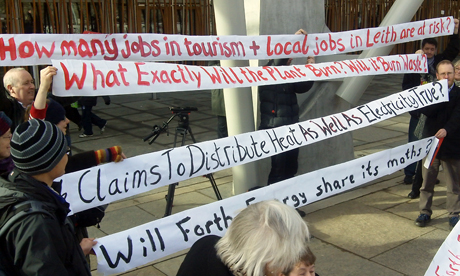
    • Leith's anti-biomass campaigners outside the Scottish Parliament | picture: Michael MacLeod, guardian.co.uk

      Anti-biomass campaigners in Scotland. A rush to biomass energy to meet renewable energy targets could actually increase carbon emissions, EU officials warn. Michael MacLeod, guardian.co.uk

      The EU’s emissions reduction target for 2020 could be facing an unlikely but grave obstacle, according to a growing number of scientists, EU officials and NGOs: the contribution of biomass to the EU’s renewable energy objectives for 2020.

      On 29 March, a call was launched at the European Parliament for Brussels to reconsider its carbon accounting rules for biomass emissions, and EurActiv has learned that the issue is provoking widespread alarm in policy-making circles.

      “We’re paying people to cut their forests down in the name of reducing greenhouse gas emissions, and yet we are actually increasing them. No-one is apparently bothering to do any analysis about this,” one Brussels insider told EurActiv.

      “They’re just sleepwalking into this insanity,” he added.

      Around half of the EU’s target for providing 20% of energy from renewable sources by 2020 will be made up by biomass energy from sources such as wood, waste and agricultural crops and residues, according to EU member states’ national action plans.

      Wood makes up the bulk of this target and is counted by the EU as ‘carbon neutral’, giving it access to subsidies, feed-in tariffs and electricity premiums at national level.

      But because there is a time lag between the carbon debt that is created when a tree is cut down, transported and combusted – and the carbon credit that occurs when a new tree has grown to absorb as much carbon as the old one – biomass will increase atmospheric CO2 concentrations in the interim.

      “It is wrong to assume that bio-energy is ‘carbon neutral’ by definition, it depends what you replace it with” Professor Detlef Sprinz, a scientist with the European Environmental Agency (EEA) told EurActiv.

      “If you replace a growing forest by energy crops under the current accounting rules of the EU, you may very well increase greenhouse gas emissions.”

      A report last September by the EEA, argued that “legislation that encourages substitution of fossil fuels by bioenergy, irrespective of the biomass source, may even result in increased carbon emissions – thereby accelerating global warming.”

      The Intergovernmental Panel on Climate Change (IPCC) also says that biomass can only be considered carbon neutral if all land use impacts have been considered first.

      The EU is aware of the issue and a proposal that could impose binding criteria for biomass for energy production, delayed many times, had been expected later this year but may be delayed again.

      Forest-rich Scandinavian countries oppose binding biomass criteria – Finland and Sweden produce 20% and 16% of their energy from biomass – while industrial interests tend to support criteria that ignore combustion emissions and carbon stock losses from burning wood.

      Sustainability criteria are one climate area in which the US leads Europe. The Environmental Protection Agency there has already conducted a public consultation on how to account for emissions from biomass burning, and submitted a legislative proposal.

      Several EU officials spoken to by EurActiv expressed despair at the lack of enthusiasm for tougher accounting rules by the EU’s energy directorate, which holds the biomass portfolio.

      “I don’t think they have any intention of considering the carbon emissions from wood combustion. They are not convinced that it’s an important enough issue,” one said.

      Asked whether the current pattern of biomass production and use would prevent a 20% reduction of carbon emissions by 2020, he replied “the certainty is 100% because there is hardly any [wood-based] biomass that wouldn’t increase emissions. The question is for how long?”

      There are no reliable accounting figures measuring the length of time that Europe will suffer a ‘carbon deficit’ caused by the use of biomass for energy, in particular harvesting timber for that.

      But “the risk of having emissions for too long I think is very high,” the official said. “I see a very significant risk that we will increase emissions for several decades to come.”

      There is consensus that when a carbon deficit extends beyond 30-50 years, it is no longer of use in the EU’s present strategy to decarbonise Europe by 2050.

      One report last month by the US-based Southern Environmental Law Center using woody biomass for a modelled expansion of power generation, found that it would take 35-50 years to provide an ongoing carbon reduction benefit.

      Biomass from composted waste or agricultural residues is a highly efficient way of reducing carbon emissions, but critics say that the EU has vague and ill-conceived definitions of what constitutes residue in many cases.

      It does not, for instance, take into account the impact that removing crop residues such as straw can have in depleting the soil’s carbon stock, with resulting increases in fertiliser and irrigation use, and lower yields.

      Equally, a felled tree instantly produces wood with a higher carbon footprint than coal because burning a 100-year-old tree will release all the carbon it has absorbed into the atmosphere, and it its replacement will take 100 years to reabsorb the same amount of carbon.

      The EU’s current accounting rules do not distinguish between residues or woods used in this way, and more sustainable biomass, terming them both ‘carbon neutral’ without consideration of bio-recovery times .

      “These calculations have just not been done,” an EU source told EurActiv. “No one has looked at this in sufficient seriousness.”

      Positions

      The debate around biomass has split the environmental movement along unexpected lines. Claude Turmes, the vice-chair of the Green Party in the European Parliament, was instrumental in negotiating the original Renewable Energy Directive, which included biomass. He told EurActiv that the debate around carbon accounting rules was “not black and white”.

      “If you don’t take trees out of a forest at a certain moment, the carbon balance will stabilise and even become negative so removing some trees does not damage the overall capacity of the forest to capture CO2. Of course we are also promoting cascade-using, so we should use stems for furniture and paper and pulp and use the byproducts of tehse for production and energy. That is already the case today and should be improved.”

      “You have to bear in mind that if wood is replacing coal then it can have a more positive CO2 contribution because new trees fix carbon again,” he went on. “Burning stems should however stay the exception. Cascade use of biomass is where the EU has to go to.”

      But another Green MEP, Bas Eickhout, had a different take. “There are good scientific reasons to distinguish between infinite renewable sources – like wind and solar and hydro on the one hand – and biomass, which is like fossil fuels but on a shorter rotation time,” he told EurActiv. “It makes good sense to distinguish between the two and with the renewables target, we’re dedicating half to biomass which isn’t thought through.”

      But Filip de Jaeger, the secretary general of the European Confederation of Woodworking Industries echoed many of Turmes points. “We have a principle of cascade use, where you first use the wood for products and then have a reuse or recycling phase because you can use old wood material for biomass,” he said. “It is only at the end of their lifecycle that the energy is then released so the timespan of use is much longer.”

      “I wouldn’t argue that you always have a strong carbon debt risk,” he continued. “It also depends on the soil and the way that the logging is being done. In some cases we have a situation where growing [older] trees that no longer continue storing carbon [is less effective] that growing new ones in younger plantations that will pick up more carbon from the atmosphere. So it is not a black and white situation.”

      Ariel Brunner, the head of EU policy for Birdlife, a conservation organisation disputed Turmes and de Jaeger’s arguments head on. It was “partially true” that mature forests became saturated and stopped absorbing carbon, he said. “But it is beside the point. If you’re moving carbon into the atmosphere faster than you take it out, you’re causing more climate change. Young forests capture carbon at a faster rate than older ones, but older forests have more carbon locked into them. That’s what matters.”

      The EU was not properly promoting cascade use either he said. “We think that cascade use is absolutely crucial but it is only happening very, very partially through EU legislation which is poorly implemented,” he explained. “We are seeing a lot of energy production from virgin forests and a lot of paper or wood waste is not being recovered or recycled. There has actually been a decrease in separate collections of organic waste and more going into incineration and landfill.”

      Replacing coal with wood caused a problem in terms of “the length of the carbon debt,” he added. “We all agree that if you replace coal with bio-energy, you’ll get a benefit in the long term – but how long is the long term? If it is five years it is a good idea. If its 500 years, it is making things worse. If it is 30 years, we can have a discussion, but we have to reduce emissions in the coming three to four decades, anything more than that is a big problem.”