Category: General news

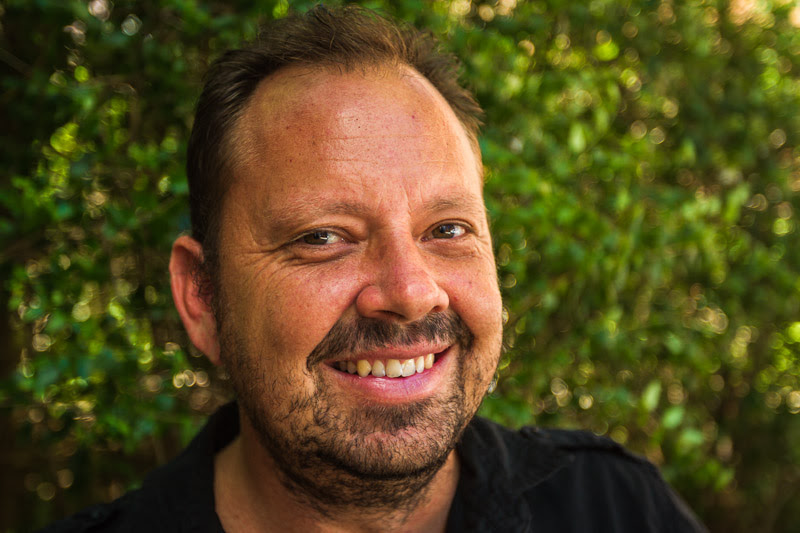
Managing director of Ebono Institute and major sponsor of The Generator, Geoff Ebbs, is running against Kevin Rudd in the seat of Griffith at the next Federal election. By the expression on their faces in this candid shot it looks like a pretty dull campaign. Read on

  • The John James Newsletter 55

    Click here to enable desktop notifications for Gmail.   Learn more  Hide


    More


    2 of 26


    The John James Newsletter 55

    Inbox x

    John James

    4:38 AM (3 hours ago)

    The John James Newsletter 55
    17 April 2015

    Information is the currency of democracyThomas Jefferson.
    The volume of major military deals concluded by the Obama administration in its first FIVE years exceeds the amount approved by the Bush administration in its entire EIGHT years in office by nearly $30 billion.

    Open this interactive and be amazedKeep it in the groundHow much fossil fuel has been extracted since you arrived at this page? Or since you were born? The numbers below highlight the staggering amount of oil, coal and gas we take out of the ground – and how quickly change is needed.http://www.theguardian.com/environment/ng-interactive/2015/apr/10/how-much-fossil-fuel-are-we-using-right-now?CMP=EMCENVEML1631
    City of Vancouver votes to go 100% renewableVancouver joins Sydney; San Diego, California; San Francisco, California; Stockholm, Sweden; Munich, Germany; and others set aim on 100% renewables and for 100% of heating + cooling coming from renewable energy sources. http://reneweconomy.com.au/2015/city-of-vancouver-votes-to-go-100-renewable-35733
    Video Message From Gaza: We Are Still Under The RubbleMore than 7 months after the ceasefire announcement in #Gaza, not a single totally destroyed home has been rebuilt.https://www.youtube.com/watch?v=pMzCzaQECGE ‘Gaza Is a Tomb’In the rubble of the Gaza Strip, the militias are once again arming, training and preparing for the inevitable war with Israel. “The war could start any minute,” says Abu Mujahid.https://foreignpolicy.com/2015/04/13/gaza-is-a-tomb-israel-palestine-militias/
    Record sea-surface temperatures in Pacific point to record warmth in 2015 and 2016 http://www.bom.gov.au/climate/change/about/sst_timeseries.shtml and A 1,000 Mile Stretch Of The Pacific Ocean Has Heated Up Several Degreeshttp://endoftheamericandream.com/archives/a-1000-mile-stretch-of-the-pacific-ocean-has-heated-up-several-degrees-and-scientists-dont-know-why
    Electric Car Batteries Just Hit A Key Price PointElectric vehicle demand in the past five years has soared worldwide. By the end of 2014, more than 700,000 total plug-in vehicles had been sold (plug-in hybrids and pure battery electrics), up from about 400,000 at the end of 2013. As of 2015, dozens of models of electric cars and vans are available. A major reason is the rapid drop in the cost of their batteries. http://thinkprogress.org/climate/2015/04/13/3646004/electric-car-batteries-price/
    North Siberian Arctic Permafrost Methane Eruption Vents The world is predicted to produce exactly the same mantle methane release from permafrost eruption vents by the 2050’s as occurred in the Late Permian Extinction Event of 252m years ago: called The Great Dying when over 93% of all species were extinguished. Mankind has released a giant, long dormant methane preserve generated between 100 km and 300 km depth and at temperatures of above 1200°C. This is now a region of massive methane emissions with no easy way to reseal.http://arctic-news.blogspot.com.au/2015/04/north-siberian-arctic-permafrost-methane-eruption-vents.html Map shows where the Trapp Volcanics released the gasses that instigated the Great Dying
    How to Deal With the Iranian Genii? What Israel really feared was not Iran’s non-existent nuclear threat but its ongoing support for the Palestinians. US policy has been to keep the infectious, troublesome Iranians isolated and contained. While the reason was Iran’s nuclear threat, the sanctions regime was really aimed at fatally weakening Iran’s economy and provoking the overthrow of the Islamic government and its replacement by tame Iranian exiles.http://www.informationclearinghouse.info/article41521.htm
    Iran approved to join China-backed infrastructure bankMore than 50 countries have now applied to join the bank in a diplomatic coup for Beijing after Washington initially opposed its allies becoming members.http://news.yahoo.com/iran-approved-join-china-backed-infrastructure-bank-103455398.html
    All options including military action open on IranIsraeli Intelligence Minister Yuval Steinitz said that all options including military action were on the table in the face of the “threat” of a nuclear-armed Iran.AND I THOUGHT WE HAD AN AGREEMENT TO END IRAN’S NUCLEAR PROGRAM?HOW SOME PEOPLE WANT WAR, NO MATTER WHAT THE CONSEQUENCES.http://news.yahoo.com/options-including-military-action-open-iran-israel-105611579.html
    The downing of Malaysia Airlines MH17 (as observed from Australia)
    A multi-part analysis that asks “Is it correct that on 7 August 2014 The New Straits Times lay out evidence that Ukrainian fighter aircraft attacked the jetliner with first a missile, then with bursts of 30-millimetre machine gun fire from both sides, and that the Russian army has already presented detailed radar and satellite data showing a Ukrainian Sukhoi-25 fighter jet tailing MH17 shortly before the jetliner crashed?” http://theaimn.com/downing-malaysia-airlines-mh17-observed-australia-part-1/
    Guatemalans claim they were deliberately infected with STDs sue Johns Hopkins for $1bnLawsuit with 800 plaintiffs seeks damages deliberate infection with STDs against Johns Hopkins University over its alleged role in the deliberate infection of hundreds of vulnerable Guatemalans with syphilis and gonorrhoea, during a medical experiment programme in the 1940s and 1950s.http://www.theguardian.com/us-news/2015/apr/02/johns-hopkins-lawsuit-deliberate-std-infections-guatemala
    At Behest of IMF, Jamaicans Face the Harshest Austerity Policies in WorldThis poverty- and debt- stricken nation faces budget more severe even than Greece’s. Thanks to policies imposed by the IMF Jamaica has the most severe austerity budget on the planet. The country’s debt-to-GDP ratio stands at nearly 140%, and it has some of the highest interest payments in the world at 8 percent of GDP last year. http://www.commondreams.org/news/2015/04/07/behest-imf-jamaicans-face-harshest-austerity-policies-world-report
    $45 Billion in Tax Dollars Goes Missing in Afghanistan http://www.thefiscaltimes.com/2015/04/01/45-Billion-Tax-Dollars-Goes-Missing-Afghanistan
    US secretly tracked billions of calls nearly a decade BEFORE 9/11 Secret records of international telephone calls harvesting billions of calls to as many as 116 countries in a program that provided a blueprint for the far broader NSA surveillance that followed. The data collection began in 1992. It was approved by top Justice Department officials in four presidential administrations with little independent oversight. [Ergo, Bush and his successor Obama had/have been lying to the public for years about the ‘need’ for blanket NSA surveillance to avoid another 9/11–when all the surveillance in the world didn’t prevent the first.] http://www.wtsp.com/story/news/2015/04/07/us-secretly-tracked-billions-of-calls-for-decades/25434673/
    China Spoils Washington’s Economic War against VenezuelaIn countering US economic aggression against Venezuela, China steps in with a 10 billion dollar loan – China is making a habit of bailing out countries targeted by US sanctionshttp://russia-insider.com/en/financial-war-us-china-granted-venezuela-billion-loan/5220
    Spain obtained 47% of its electricity from renewables in MarchMost of the renewable electricity being generated in Spain comes from wind, which alone provided 22% of the country’s electricity last month.http://reneweconomy.com.au/2015/spain-got-47-of-its-electricity-from-renewables-in-march-21961
    Saudi firm buys Australia big solar projectsA company based in the world’s largest oil exporting nation, Saudi Arabia, has become the new owner of Australia’s second-largest solar plant – the under-construction 72MW Moree PV project.http://reneweconomy.com.au/2015/opec-nations-turn-to-sun-as-saudi-firm-buys-australia-big-solar-projects-87764
    Rwanda revisitedFormer President Clinton said he never knew the extent of suffering during Rwanda’s genocide. But America’s diplomats on the ground knew exactly what was happening — and they told Washington.https://foreignpolicy.com/2015/04/05/rwanda-revisited-genocide-united-states-state-department/
    Dogs trained to detect prostate cancer with more than 90% accuracy An Italian team in several studies stretching back decades raises the prospect of canines’ sense of smell helping doctors identify a number of human cancers and infectious diseases. The two female dogs sniffed urine samples from 900 men, 360 with prostate cancer and 540 without. Both animals were right over 90%.http://www.theguardian.com/society/2015/apr/11/dogs-trained-detect-prostate-cancer-accuracy?CMP=ema_565
    China will build a pipeline to bring natural gas from Iran to PakistanThe pipeline would be an early benefit from the framework agreement reached earlier this month between Tehran and the US to prevent Iran from developing nuclear weapons. http://www.wsj.com/articles/china-to-build-pipeline-from-iran-to-pakistan-1428515277

    The US Can Download the Entire Contents of Your Computer at Border CrossingsNone of the hundreds of thousands of travellers who cross US borders every day have any right to privacy, Based upon little more than the opinion of a single Customs and Border officer, any device can be searched and its contents read, and even seized and its contents copied.http://motherboard.vice.com/read/you-have-no-right-to-electronic-privacy-when-you-cross-the-us-border
    Defence Housing to create solar suburb in Darwin, ready for electric vehiclesNew development to create 337kW solar suburb, producing 600,000kWh of electricity a year and saving Defence members more than $4m in electricity costs.http://reneweconomy.com.au/2015/defence-housing-to-create-solar-suburb-in-darwin-ready-for-evs-29977
    Australia Powered by the People. Help map solar installations around Australia. The team at the Australian PV Institute have created some amazing maps around solar energy installations. https://www.indiegogo.com/projects/australian-solar-map
    Russian man to undergo first head-to-body transplantDoctors seem to be a step closer to performing a breakthrough surgery by transplanting a human head onto another body. A Russian man with a rare genetic muscle-wasting disorder has volunteered to be the first to try the procedure.http://rt.com/news/248473-transplant-head-body-canavero/
    Documents Showing How the Empire Plans to Overthrow PutinThis information was posted on an anonymous blog Drakula’s blog.http://drakulablog.com/2015/04/01/west-and-ukraine-against-putin-and-his-politicians/.  It looks very credible, so , so take a look here for comparison purposes.http://www.informationclearinghouse.info/article41514.htm

    to John
  • Raise the Heat near you 350 org

    1 of 22

    Raise the Heat near you

    Inbox
    x

    Josh Creaser josh.creaser@350.org.au via list.350.org 

    8:37 PM (17 minutes ago)

    to me

    Dear friends,

    Last week we launched Raise the Heat – a week of actions at CommBank branches around the country to show Australia’s largest bank that it’s time to rule out funding for the Galilee Basin mega coal mines.

    The response was huge! Over 30 CommBank branches have already been registered across the country — from Perth to Mackay, Parramatta to Melbourne and many places in between.

    Click here to join actions at your nearest CommBank from 19-23 May.

    If the Galilee Basin was a country it would be the seventh largest source of carbon emissions on the planet – it’s literally a ticking carbon bomb. If we can build enough pressure and push CommBank to rule out funding it will be a massive nail in the coffin of this disastrous project.

    There’ll be something for everyone during the week of action. From sharing information and creating powerful images, switching accounts to fossil free banks and taking part in creative stunts, bold actions and big rallies — together we’ll put CommBank’s reputation on the line.

    Get on board today by signing up for an action at your nearest CommBank branch.

    CommBank won’t just feel the heat at home. Solidarity actions are being organised in countries around the world to demonstrate that the Galilee Basin is a truly global threat and will face global resistance.

    Join with people in your community and thousands of others across Australia and the world to Raise the Heat on CommBank

    Yours for a safe climate and reef,

    Josh and Janelle for the 350.org Australia Team

    P.s Can’t see a CommBank branch near you? New branches can be registered up until Monday night. Click here to adopt your local branch.


    350.org is building a global climate movement.You can connect with us on Facebook, follow us on Twitter, and become a sustaining donor to keep this movement strong and growing.

  • [New post] iVote – how did it go so wrong?

    Click here to enable desktop notifications for Gmail.   Learn more  Hide
    Something’s not right.
    We’re having trouble connecting to Google. We’ll keep trying…
    More

    1 of 23

    [New post] iVote – how did it go so wrong?

    Inbox
    x

    The Tally Room <donotreply@wordpress.com> Unsubscribe

    1:00 PM (40 minutes ago)

    to me

    New post on The Tally Room

    iVote – how did it go so wrong?

    by Ben Raue

    At the recent NSW state election, the iVote internet voting system was used for the second time. The internet voting system is one of the first in the world, and was used by a much larger number of voters in 2011, but not without significant problems during the process, involving breaches in security, errors on the ballot resulting in votes being possibly invalidated, and a big increase in donkey votes due to difficulty in reading the entire ballot.

    iVote was first introduced for the 2011 election. Originally, iVote was entirely focused on voters who are blind or have low vision. When the legislation was brought to Parliament in December 2010, the scope of iVote was extended significantly, with the right to use iVote extended to voters who live more than 20km from a polling place, will be overseas or interstate on election day, or have other disabilities

    At that election, 46,864 votes were cast using iVote, which made up 1.09% of all votes (formal and informal) cast at the election. Overall, iVote was equivalent to one whole electorate. Despite the original intention, most of those who used iVote were voters who were outside NSW on election day.


    In the lead-up to the 2015 election, other options were closed down for voters eligible to use iVote.

    In the past, overseas voters have been able to vote at a number of Australian embassies, high commissions and consulates in cities with a large Australian expat and tourist population – the most prominent example being Australia House in London. In 2015, these overseas booths were shut down. While overseas voters still had the option of using a postal vote, casting a postal vote from overseas requires substantial lead time, so for voters voting at the last minute or wanting to vote conveniently, iVote became the only option.

    These factors saw iVote shoot up in popularity in 2015. On the final Legislative Assembly figures, 283,669 votes were cast through iVote, which made up 6.22% of all votes cast. This is more than the number of postal votes (4.46%) and almost as big as the number of absent votes (6.33%).

    In western democracies, voting over the internet is still very rare, and iVote remains the only case of voting over the internet being available in an Australian election.

    The Australian Capital Territory has used electronic voting since 2001, but only within particular large polling places. This means that, unlike with iVote, the votes are cast on Electoral Commission machines in a controlled setting, not on your personal computer, and the votes are not transferred across the internet. Similar processes apply with electronic voting in New Zealand.

    There have been a number of problems with iVote this year, some bad enough that they could possibly force NSW voters back to the polls.

    Crikey‘s “tips and rumours” section ran with a story in March about people who had trouble with the iVote system calling the NSWEC hotline, with the person answering the phone suggesting they be removed from the electoral roll as a solution to the problem (which also overlaps with the ongoing problems that electoral commissions have in effectively selecting and training the armies of temporary staff employed at each election).

    During the campaign, a security flaw in iVote was discovered by researchers outside the NSWEC, and the patch was closed. It’s not known whether this theoretical flaw resulted any votes being cast insecurely, or actually being tampered with.

    The most obvious problem with iVote came 36 hours after voting started, when it emerged that the online ballot paper did not include above-the-line boxes for two groups: the Outdoor Recreation Party and the Animal Justice Party. This problem could potentially imperil the entire election, with Animal Justice in with a chance to win. If the party falls just short, it’s possible they could argue that they would have gained sufficient votes from the iVotes cast in those first 36 hours when they weren’t properly listed on the ballot, and this could invalidate the entire election.

    There are also problems with how the iVote system looks on a computer when you are voting. You can see how it looks by trying out the iVote practice website.

    When I use the website on my 13-inch screen, I can only see the first five columns on my screen without scrolling – a small proportion of the ballot. Considering that the Legislative Council paper ballot is much bigger than a regular laptop screen (let alone a smartphone screen), it’s not surprising that iVote is unable to show the whole ballot at the one time.

    Antony Green demonstrated that the first four groups on the ballot, all minor parties or independents, had a massive increase in their vote on iVote compared to other vote types. For all four groups, their percentage of the iVote is at least twice as high as their percentage of the total vote, with the independent Group D polling 2.8 times as many votes proportionally on the iVote compared to the total statewide vote.

    The major parties naturally experience variations in vote between different vote types (iVotes tend to be cast by younger people who move around more, which favours the Greens and is not favourable to the Coalition), so it’s not possible to say whether the ballot layout helped the Coalition, in Group E, but there is also a substantial uptick in the vote for the minor parties in Groups F and G.

    Of course, there is an advantage for being on the left-hand side of a large paper ballot, but the effect is nowhere near as big as we are seeing for groups near the left in the iVote figures. It is conceivable you could reduce the effect by randomising the order of groups on the ballot, but it’s still concerning that iVote only shows you such a small part of the ballot.

    Despite these problems, iVote has been popular with those who have used it, and if it continues to exist it’s likely that more people will wish to use it, and any potential or actual problems with the system will become more and more significant.

    The concept of electronic voting in general, and even internet voting, is popular amongst the general public, while technology and electoral experts are sceptical, for cost, security and transparency reasons. This Youtube video explains much of the technological objections to internet voting.

    Internet voting hasn’t been used anywhere else in Australia (although it will be trialled for New Zealand local elections in 2016), but electronic voting has been used at limited polling places, in particular in the ACT and Victoria, as well as for defence personnel and voters who are blind or have low vision at Commonwealth elections since 2007. This has not involved votes being transmitted across the internet, and has involved the use of consistent hardware owned by the electoral administration authority.

    In addition to concerns about the system being secure, and the voting experience being consistent for different voters, there are also concerns about transparency in electronic systems used for the casting and counting of votes.

    The iVote software is not open source, which makes it hard for outside security experts to the review the system and ensure there are no problems with it. There have also been complaints on the same basis with regard to the “EasyVote” software used by the Australian Electoral Commission to calculate the distribution of preferences (after data-entering votes cast on paper). The AEC has refused requests to release the source code, which would allow others to verify the accuracy of the counting system.

    Similar counting systems are used for most multi-member elections around Australia, including the NSW Legislative Council, and NSW in 2015 is the first state to introduce the use of counting software and data entry for single-member electorates in the Legislative Assembly. There should be a shout-out to Elections ACT for using open source software for both their electronic voting system and their electronic counting system.

    Overall, it seems inevitable that electronic software will become more and more common for counting ballots, electronic voting is likely to spread for major central polling places (although cost measures make it impractical for every booth), and demands for internet voting for convenience reasons are likely to persist. Despite this trend, it’s important that moves to introduce technology where we have perfectly good manual electoral processes should be looked on with caution.

    Ben Raue | April 16, 2015 at 1:00 pm | Tags: New South Wales 2015 | Categories: Uncategorized | URL: http://wp.me/ppI95-6PG
  • Macfarlane’s judgement questioned as the RET fallout spreads

    Climate Spectator

    Home
    Spectators
    DataRoom
    Economy
    Markets
    Politics
    Technology
    Climate
    Industries
    Video

    Share

    Share on Facebook
    Share on LinkedIn
    Share on Twitter
    Share on Google Plus

    Print

    Print

    Email

    Send to email

    Macfarlane’s judgement questioned as the RET fallout spreads

    Tristan Edis 1 hour ago 4

    Climate Carbon markets Energy markets Policy & Politics Renewable energy Solar energy Wind power

    As investment in large-scale renewables hits rock bottom, stakeholders from across the spectrum of the debate on the Renewable Energy Target are questioning whether Industry Minister Ian Macfarlane has let ego cloud his judgement.

    Even though Labor’s position on the level of the large-scale RET at 33,500GWh represents:

    a 30% cut in renewable capacity additions relative to Labor’s election platform; and
    is endorsed not just by the renewable energy industry but also the Energy Users Association, the Business Council of Australia, the Australian Industry Group, the Aluminium Council, the Cement Federation and (for Senator Jacqui Lambie’s benefit) the Tasmanian Minerals and Energy Council;

    Macfarlane continues to claim Labor are asking too much.

    Only 32,000GWh is reasonable and sensible, says Macfarlane, even though the speed with which you’d need to construct new projects is virtually indistinguishable from that required under 33,500GWh.

    More from Tristan Edis

    15 Apr Energy demand disconnects from economic growth
    14 Apr Direct Action: a billion-dollar party no one wants to attend?
    13 Apr The hidden agenda behind the NSW gas crisis hysteria
    13 Apr Talk of Abbott abandoning 2-degree goal causes alarm
    10 Apr Grim and grimmer: Analysts deliver double blow to coal

    Source: Climate Spectator analysis

    Of course, if the government was really worried about running out of time to reach the target, you wonder why they put the industry into suspended animation the moment they were elected by committing to a review of the RET within 12 months of it already having been reviewed.

    If we look at the latest Australian utility-scale investment figures from Bloomberg New Energy Finance (below) we see the real problem with achieving the level of construction to meet the target is the government doing reviews, not the industry’s capacity to deliver. From the fourth quarter of 2012 to Q1 2013 (calendar year), investment died while the industry waited to hear the prior Labor government’s response to the Climate Change Authority review. Once resolved it spiked back up to levels of $800 million per quarter in Q2 and Q3.

    If we’d just kept investment at about this level then we’d have been able to build the 8000 megawatts or so of capacity to meet the original 41,000GWh target, let alone 33,500GWh.

    Figure 2: Investment in new large-scale renewable energy projects in Australia, Q1 2011 to Q1 2015 ($USm)

    Alas in Q4 of 2013 the Abbott Government was elected saying they’d like to review the scheme all over again, and investment dived. Were it not for the Australian Renewable Energy Agency (which the government wants abolished) then even the Q3 2014 $174 million investment largely associated with the Moree Solar Farm would have been obliterated.

    What’s interesting is that it’s now reached a point where industry stakeholders outside the renewable energy sector wonder out aloud to you what on earth Macfarlane is trying to prove.

    He’s arguing over an amount of energy and a level of cost that is inconsequential for the wider energy market (but very important to the renewable energy sector). Not even the big power incumbents see much of a benefit from his position. Meanwhile, he’s spooking the banks and foreign investors that the electricity sector more generally is now captive to the culture wars.

    His claim he’ll do a deal with the cross-bench is laughed off as a hollow threat. Glen Lazarus, Dio Wang and Ricky Muir have all made very public, unambiguous statements that they don’t want to change the RET.

    But on top of getting one of them to change their mind, he then needs to cobble together a coalition which includes an extreme libertarian; a social conservative socialist and trade protectionist; a defender of Tasmania as a welfare dependent state; Nick Xenophon, who partly counts on voters that would otherwise vote Greens; as well as Bob Day (but he’s really a Liberal Party person in disguise, so not much problem there).

    The one thing in Macfarlane’s favour is that this rabble of five are united in their distaste for wind farms. But Lambie wants another free-kick for Tasmanian Hydro. Madigan wants a range of restrictions placed on wind farms that would slow development, threatening timely achievement of the targets and blowing out the cost. While Xenophon wants the scheme’s target banded into separate sections to support geothermal and large-scale solar, which will increase administrative complexity and also blow out cost. Even then, Xenophon would need to think twice before signing onto such a deal because it will cost him an important segment of his voters with a green tinge.

    The end result, if Macfarlane can manage to pull it off, is a scheme that’s an administrative headache and risk management nightmare for the big three power retailers, and that would cost consumers more money than if Macfarlane just agreed to 33,500GWh. It has stakeholders from all sides of the debate shaking their heads.

    Meanwhile, Coalition backbenchers with the most at stake are finding it hard to hide their frustration with Macfarlane. Ken O’Dowd was the first to speak out. Regional South Australia MP Rowan Ramsay is also feeling the heat from local constituents who can see first-hand significant economic benefits from the substantial wind farm development in that seat. Sarah Henderson wants a deal urgently knowing her Victorian seachanger seat of Corangamite hangs on a knife edge. And even Dan Tehan, who sits in the safe western Victorian seat formerly held by Malcolm Fraser, was driven to publicly urge a deal last week. While being careful to not directly criticise Macfarlane, Tehan said jobs were on the line. Local employer and wind tower manufacturer Keppel Prince has already had to lay off a large proportion of its workforce due to uncertainty over the RET, and there’s a few billion dollars of wind farm investment on the line in that seat. On top of this, Tehan’s seat includes an aluminium smelter desperate to get the exemption currently on offer from Labor.

    Given Macfarlane has so publicly dug himself into resisting calls from stakeholders to agree to 33,500GWh, hopes have switched to Tony Abbott intervening to overrule his minister. But so far Abbott doesn’t appear too concerned.
    Connect with Tristan Edis on Google+
    More from Business Spectator
    Technology
    Carbon markets
    Family Business
    Financial Services
    Comments Policy »
    4 comments
    Sign in
    110 people listening
    johnDavidGregGraham

  • Can we spark a race to the top? Jason, Solar Citizens

    Click here to enable desktop notifications for Gmail.   Learn more  Hide
    1 of 23

    Can we spark a race to the top?

    Inbox
    x

    Jason, Solar Citizens

    3:37 PM (12 minutes ago)

    to me

    Dear Neville —

    The Abbott Government has led a race to the bottom on the Renewable Energy Target – dragging the ALP and some parts of industry down with them. It’s time for us to spark the race to the top.

    Last week Labor Leader Bill Shorten and Mark Butler caved under pressure and said they would accept a huge cut to the Renewable Energy Target. But negotiations remain at a standstill with the Coalition refusing to budge on their woefully low 32,000 gigawatt hour offer.

    Our best chance of transcending this impasse is to start thinking ahead. Right now what needs to happen is for all major parties to do what the majority of voters want – take ambitious solar and renewable energy policy to the 2016 election.

    We may be in a deadlock now – but a solar bidding war in the lead up to 2016 will break it. With pressure from Solar Citizens like you, we can get Labor to kick things off.

    Can you write to your ALP representative today, asking them to commit to our Stand Up For Solar plan at their upcoming National Conference? Click here to send your message using our easy form.

    In July the ALP will hold their National Conference to decide their policy platform. We need Labor to deliver a strong solar and renewable energy policy so they can throw down the gauntlet to the Coalition in the lead up to the next Federal election.

    Getting stronger, clearer policy commitments from the ALP is just the first step. To guarantee Australia’s solar future we need bipartisan support from all major parties, but so far the Coalition hasn’t come to the table. That’s why we need Labor to follow through with ambitious solar policy leadership.

    Under intense pressure from Solar Citizens like you, Labor has indicated they may be willing to increase the Renewable Energy Target if elected in 2016 and will be consulting in coming months about a more ambitious post-2020 Target*. Now is the time to send them a clear message to go for gold and commit to at least 50% renewables by 2030, a Target that will lock in a strong solar future for Australia. Click here to use our online tool to write to your ALP representative today, asking them to commit to our Stand Up For Solar plan at their National Conference.

    Solar has the potential to make or break a government. Polls show that 89% of Australians want to keep or strengthen the Target, including 64% of self-identified Liberal voters**. It’s time for us to prove these polls have teeth – that Australians will raise their voices, take action and use their votes to ensure that we as a nation move forwards rather than backwards.

    So email your Labor Representative and tell them you want them to Stand Up For Solar at the ALP National Conference. Just click here to fill out the email template. When you receive a response, make sure you forward it to us at info@solarcitizens.org.au so we can hold your representative to their commitments.

    And remember, leadership on solar and renewables starts with people like you and me – so let’s get cracking.

    For a sun-powered future,

    Jason Lyddieth, Community Organiser

    Jason Lyddieth, Community Organiser

    P.S. Have you signed the Stand Up For Solar pledge yet? We want to see every solar owner and supporter in the country add their name so we can show our politicians how much active support there is for our plan. Click here to see the Stand Up For Solar plan and pledge today.

    *http://reneweconomy.com.au/2015/coalition-deepens-attack-on-renewables-as-labor-takes-long-term-view-88735

    **http://www.theguardian.com/environment/2014/dec/02/almost-90-of-australians-support-renewable-energy-target-says-poll

    Solar Citizens
    http://www.solarcitizens.org.au/