Category: Energy Matters

The twentieth century way of life has been made available, largely due to the miracle of cheap energy. The price of energy has been at record lows for the past century and a half.As oil becomes increasingly scarce, it is becoming obvious to everyone, that the rapid economic and industrial growth we have enjoyed for that time is not sustainable.Now, the hunt is on. For renewable sources of energy, for alternative sources of energy, for a way of life that is less dependent on cheap energy. 

  • Hydrogen fix for Japanese reactors

    Hydrogen fix for Japanese reactors

    19 October 2012

    Areva is to fit all 23 Japanese pressurized water reactors with hydrogen recombiners that help to prevent the explosive gas building up in emergency situations.

    The French company announced a contract to provide a bulk order of its passive autocatalytic recombiners. The devices use catalytic oxidation to turn traces of hydrogen into steam, a process that works constantly and requires no power. They will be fitted in the reactor unit containment vessels to help prevent hydrogen explosions and “preserve the integrity of the reactor,” said Areva.

    Many nuclear operators installed systems to manage hydrogen after the partial core melt at Three Mile Island in 1979. Unfortunately, this was not the case in Japan. During the accident at Fukushima Daiichi last year, many hours without power for cooling water pumps saw nuclear fuel in the cores of units 1, 2 and 3 overheat to the point that zirconium fuel cladding oxidised in the presence of steam, producing hydrogen and oxygen. At units 1 and 3 this was able to escape the containment and concentrate in the tops of the buildings, where it eventually exploded and caused extensive physical damage to those units as well as unit 4.

    Areva said it will install more than 100 of its devices at the Japanese pressurized water reactors, which make up 23 of the country’s 50-reactor fleet. The reactor type is used at the following Japanese nuclear power plants: Ikata, Mihama, Ohi, Sendai, Takahama, Tsuruga, Tomari and Genkai.

    Researched and written
    by World Nuclear News

  • After oil, methane to be produced in Barmer

    After oil, methane to be produced in Barmer
    Times of India
    BARMER/JAIPUR: After oil, the deserts of Barmer are poised to produce methane gas. For the first time in the country, methane gas will be extracted from the coals fields of Barmer through the ‘microbial coal conversion’ technology, developed in the
    See all stories on this topic »
    Methane On Mars Could Lead To Evidence Of Life
    RedOrbit
    “There have been several claims of methane detection in the past decade, but it is controversial whether or not there is really methane on Mars, because we do not understand how it would get there, and scientists’ observations suggest that it’s varying
    See all stories on this topic »

    RedOrbit
    Efficient way to turn waste into resource
    The Hindu
    “Conventional gobar gas plants have a single digester and produce biogas containing 55-65 per cent of methane and 45-35 per cent of carbon dioxide. But the Nisargruna plants are biphasic (aerobic followed by anaerobic phase) and produce biogas
    See all stories on this topic »

    The Hindu
    Karen Avagyan: RPA could not have been warned about risk of filling balloons
    Panorama.am
    The defendant has admitted his guilt and the court made a decision in the case. So what’s the question? – The defendant’s lawyer told the court today that Serob Bozoyan had warned RPA about the risk of filling balloons with methane. What can you say
    See all stories on this topic »
    Council could become first in UK to adopt unique waste burning scheme
    Your Local Guardian
    The scheme, a UK first, involves capturing heat from engines that convert methane into electricity at the Beddington Lane landfill site and piping it as hot water to nearby homes and businesses. According to Sutton Council residents could save as much
    See all stories on this topic »
    Chapter sends two teams to national agriscience fair
    Agri News
    But he wasn’t pleased with his method of collecting methane gas data. He mentioned his frustration to Mansfield, a neighbor, who’d also entered in the same science fair. The two have continued the discussions and brought their research and findings to
    See all stories on this topic »
    Marcellus trade group issues guidelines for managing stray gas
    State Journal
    When methane is detected in a water source servicing a structure, the operator should consider providing an alternate water source until additional testing determines the source of the stray gas. The document prioritizes public and employee safety and
    See all stories on this topic »


    Tip: Use site restrict in your query to search within a site (site:nytimes.com or site:.edu). Learn more.

    Delete this alert.
    Create another alert.
    Manage your alerts.

  • Motion backed for solar thermal inquiry

    Motion backed for solar thermal inquiry

    Posted 58 minutes ago

    The South Australian Government has supported an Opposition motion to form a parliamentary select committee to investigate renewable energy options to replace the two coal-fired power stations at Port Augusta.

    The motion was moved by the member for Stuart, Dan van Holst Pellekaan, whose electorate takes in the region.

    He said it was important to investigate whether solar thermal energy – which uses the sun’s heat for electricity generation – can provide the state’s future base-load power requirements.

    “I want solar thermal to be investigated very, very thoroughly so that we can know ‘Is it going to be the solution to the problem we will have when the Leigh Creek coal runs out?’ There’s no politics in this for me. This is nothing mischievous,” he said.

    SA Energy Minister Tom Koutsantonis said the Government backed the motion because it believed in renewable energy sources.

    Vision

    Mr Koutsantonis said Opposition Leader Isobel Redmond needed to embrace the vision demonstrated by her regional development spokesman.

    “Ms Redmond said recently that if every industry that created wind turbines fell over she wouldn’t lose any sleep over it,” he said.

    “Here we’ve got one of her young rising stars saying ‘ No I want to investigate it for Port Augusta. It’s captured the imagination of South Australians’.”

    Mr van Holst Pellekaan said he disagreed with Mr Koutsantonis’s criticism of the Opposition Leader and her deputy.

    “I think what’s happening there is the Minister’s putting words into their mouths that are not accurate,” he said.

    “As far as I’m concerned this is a very specific, single purpose motion.”

    Topics:alternative-energy, environment, government-and-politics, states-and-territories, state-parliament, parliament, federal—state-issues, port-augusta-5700, adelaide-5000, sa, port-pirie-5540, port-lincoln-56

  • Greenpeace threatens wetlands legal stoush against coal terminal

    Greenpeace threatens wetlands legal stoush against coal terminal

    By Brock Taylor, ABCOctober 16, 2012, 9:25 am

    Greenpeace says it is considering legal action to stop the construction of another north Queensland coal terminal at Abbot Point, north of Bowen.

    The Federal Government last week approved GVK Hancock’s application to build another terminal at the facility, north of Mackay.

    Greenpeace community campaigner Louise Matthiesson says a report into the nearby Caley Valley Wetlands was not considered during the approval process.

    “We think the report from the scientists makes it clear that this wetland is of international significance and does support an important population of threatened migratory birds,” she said.

    “There’s another legal problem in that there’s a legal responsibility for the proponent to provide all the information to the Government to make its decision.

    “The fact that the information wasn’t passed on is a real issue and serious questions have to be asked.”

  • Environmental science agencies told to help oil firms drilling in polar regions

    Environmental science agencies told to help oil firms drilling in polar regions

    Natural Environment Research Council says science agencies should help ‘de-risk’ investment by UK oil companies

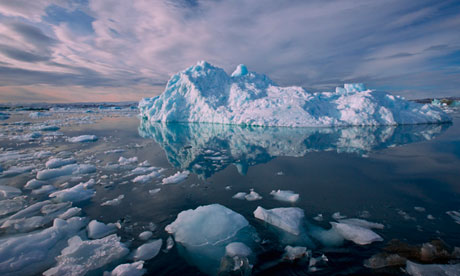
    Arctic iceberg

    A House of Commons committee has called on the government to stop drilling by Shell in the Arctic. Photograph: Jenny E Ross/Corbis

    Some of Britain’s top environmental science agencies are being told to use their skills to help “de-risk” investment for UK oil companies in the polar regions.

    The demands are contained in a consultation document on an already controversial move to merge the British Antarctic Survey (BAS) with the National Oceanographic Centre.

    The “outrageous” new strategy direction is at odds with a House of Commons committee calling on the government to stop drilling by Shell in the Arctic over safety concerns and worries that the sea ice is melting faster than ever, warn critics.

    Some banks have already decided they will not support operations in the far north, but the Natural Environment Research Council (NERC), which is pushing the tie-up between the BAS and the National Oceanographic Centre, says in its consultation brief: “A long-term vision is needed to equip UK business and UK investors with the edge needed for de-risking major investment decisions in hostile, unfamiliar environments.”

    The merged group would seek to exploit opportunities by “strengthening the business and commercial expertise within a reshaped leadership team” while “building and broadening business engagement, particularly in the seeking of regional innovation clusters”, adds the NERC document, which was sent out ahead of a consultation exercise which ended earlier this week.

    NERC is the UK’s main agency for funding and managing research in the environmental sciences and its desire to merge the two highly respected institutions has upset scientists and even some Conservative backbenchers.

    Critics presumed the real reason for the merger was the desire to cut budgets but the consultation documents suggest it could also be partly about turning the combined body into a better support system for the business community.

    Duncan Wingham, the NERC chief executive, said all scientific institutes were now under pressure to ensure they were providing value to the UK economy.

    But he denied that a more business-focused approach meant that the council necessarily supported drilling in the Arctic, although future work would provide relevant information to oil companies.

    “It is not the function of NERC to take a policy decision but to provide scientific information upon which someone else can make such a decision. There is no question there is a perceived tension between the regulatory approach to retaining a clean environment and on the other hand our [the UK’s] need to provide new energy supplies,” he said.

    Greenpeace has recently launched a major campaign to make parts of the far north off limits to Big Oil and fears for the future of Antarctica as drilling picks up in areas such as the South Atlantic.

    “The British Antarctic Survey is a world-renowned institution, and has done great work in helping us to understand and protect one of the most fragile and wonderful regions on the planet,” said the Greenpeace head, John Sauven.

    “So dismantling this leading scientific centre and using the leftovers to do the bidding of oil companies is both wrong and outrageous. BAS must not be used to make it easier to extract resources from the Arctic and Antarctic. These regions need to be protected.”

    NERC argues that putting the Cambridge-based BAS together with the National Oceanographic Centre in Southampton should make it more dynamic and insists budgets have been protected.

    The environmental audit committee of the House of Commons warned in its report that the vulnerable Arctic region was being endangered by a misguided search for hydrocarbons.

    “The shocking speed at which the Arctic sea ice is melting should be a wake-up call to the world that we need to phase out fossil fuels fast,” said the committee chair, Joan Walley MP. “Instead we are witnessing a reckless gold rush in this pristine wilderness as big companies and governments make a grab for the world’s last untapped oil and gas reserves.”

    Since the report was unveiled last month, one of the world’s major oil companies, Total of France, has declared that it will not drill for oil, saying it realised a spill would ruin its corporate reputation.

  • UK tidal power potential estimated at 153GW

    UK tidal power potential estimated at 153GW

    Crown Estate unveils findings of a new study designed to help predict the future growth of the marine energy industry

    Wave and tidal energy

    The UK has the largest wave and tidal resource in Europe. Photograph: Matt Oldfield/Getty Images/Dorling Kindersley

    The UK has the potential to install tens of gigawatts (GW) of tidal and wave power capacity, according to a new report from the Crown Estate designed to help predict the future growth of the marine energy industry.

    The Crown Estate today unveiled the findings of a new study into the UK’s potential marine energy resource, which show that there is the potential to harness up to 153GW of tidal power capacity in the UK, using three types of technology.

    The report predicts tidal stream devices could produce 95 terawatt hours (TWh) a year from 32GW of installed capacity, tidal range barrage schemes could supply 96 TWh/year from 45GW of capacity, and tidal range lagoon schemes could produce 25TWh/year, drawing on 14GW of capacity.

    Meanwhile, there is the potential for 27GW of wave energy capacity, which could produce 69TWh of electricity a year.

    However, the report stresses that the figures for different technologies should be read separately and that the results are theoretical.

    Rob Hastings, director of the Crown Estate energy and infrastructure portfolio, said the report was designed as a reference to help inform the development of the industry.

    “While the science of wave and tidal resource assessment is still emerging, and future work will clarify the resources that are practically available, it is clear that wave and tidal energy could contribute substantially to the UK’s electricity needs.,” he said.

    “Improving understanding about the extent and locations of resources will help to accelerate development in a sustainable way.”

    In related news, Secretary of State for Energy and Climate Change Ed Davey, yesterday visited the European Marine Energy Centre (EMEC) in Orkney and hailed the potential growth of wave and tidal power.

    “[EMEC is a huge asset to the development of wave and tidal energy in the UK and has helped secure UK leadership in the global market,” he said.

    “The UK has the largest wave and tidal resource in Europe, which could produce 20 per cent of current UK electricity demand and cut carbon emissions.”