Category: Energy Matters

The twentieth century way of life has been made available, largely due to the miracle of cheap energy. The price of energy has been at record lows for the past century and a half.As oil becomes increasingly scarce, it is becoming obvious to everyone, that the rapid economic and industrial growth we have enjoyed for that time is not sustainable.Now, the hunt is on. For renewable sources of energy, for alternative sources of energy, for a way of life that is less dependent on cheap energy. 

  • Twenty-three nuclear power plants found to be in tsunami risk areas

    Study outlines supply chain challenges for lithium future

    Posted: 21 Sep 2012 11:01 AM PDT

    As demand increases for lithium, the essential element in batteries for everything from cameras to automobiles, a researcher is studying potential disruptions to the long-term supply chain the world’s lightest metal.

    Twenty-three nuclear power plants found to be in tsunami risk areas

    Posted: 21 Sep 2012 05:32 AM PDT

    Tsunamis are synonymous with the destruction of cities, and homes and since the Japanese coast was devastated in March 2011 we now know that they cause nuclear disaster, endanger the safety of the population and pollute the environment. As such phenomena are still difficult to predict, a team of scientists has assessed “potentially dangerous” areas that are home to completed nuclear plants or those under construction.

  • MPs demand moratorium on Arctic oil drilling

    MPs demand moratorium on Arctic oil drilling

    Commons environment committee urges halt to exploration until safety improves, and calls for unlimited pollution penalties and creation of ‘no-drill zone’

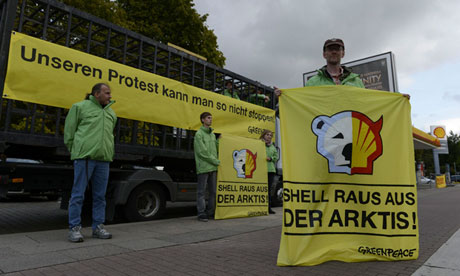
    Greenpeace protesters in Germany

    Greenpeace protesters in Germany demonstrate against Shell’s Arctic oil drilling. Photograph: Reuters

    British MPs are calling on Shell and others to halt “reckless” oil and gas drilling in the Arctic until stronger safety measures are put in place.

    Politicians also want to impose “unlimited” financial liability on operators and the creation of a “no-drill zone” in a new environmental sanctuary.

    The uncompromising demands have angered the energy industry but come just days after alarming new evidence has emerged about Arctic sea ice melting at record levels. They also come on the day that an environment committee of MEPs in Brussels called for tougher financial guarantees from oil companies to ensure they could pay for spills in European waters.

    The British initiatives are contained in a report published on Thursday from the cross-party environmental audit committee (EAC) of the House of Commons, which warns that the vulnerable Arctic region is being endangered by a misguided search for hydrocarbons.

    “The shocking speed at which the Arctic sea ice is melting should be a wake-up call to the world that we need to phase out fossil fuels fast,” said the committee chair, Joan Walley MP. “Instead we are witnessing a reckless gold rush in this pristine wilderness as big companies and governments make a grab for the world’s last untapped oil and gas reserves.”

    She told Radio 4’s Today programme on Thursday: “I think the particular problem is that when you are talking about offshore drilling and you are talking about drilling in such harsh circumstances as the Arctic, we have to have proven techniques in place first of all, and we’re not convinced that that is currently the case. It is for that reason that we want to see all drilling halted until we’ve got the highest available environmental standards in place.”

    The EAC said it had heard “compelling evidence” from experts during several months of hearings that if a blowout occurred just before the dark Arctic winter returned it would not be possible to cap any oil spill until the following summer.

    Shell is currently in the middle of an exploration attempt in the Chukchi Sea, Alaska, but has had to call off immediate drilling due to dangers from ice and a faulty safety dome, which would be used for capping wells in the event of a blowout. The Anglo-Dutch group has already been heavily criticised for allegedly failing to properly test a new dome.

    ExxonMobil, Gazprom and others are either already working or preparing to operate in the Arctic region off Russia, Greenland or Alaska.

    The first report by MPs into the new rush for resources, entitled “Protecting the Arctic”, says there should be a drilling moratorium until “the highest available” environmental standards can be imposed right across the far north.

    The committee believes that a “preferably unlimited” financial liability regime should be imposed for all oil and gas operations in the area. And it says the petroleum industry should set up a special group to peer-review and publicly report on all safety-related operating practices.

    The British government has no legal rights to limit drilling around the waters of the far north but is an observer on the Arctic Council. However the committee believes that the UK should be pushing for a special zone to be created that would be off limits for all drilling – as in Antarctica: “We see the development of such a sanctuary as a prerequisite for further development of the Arctic’s natural resources.”

    But the committee also expresses deeper concerns about the British government’s support for UK companies drilling worldwide at a time when it is trying to reduce carbon emissions at home.

    The energy industry argues that new oil reserves must be found to meet growing demands worldwide and says it can operate safely, having learned lessons from BP’s catastrophic accident with the Deepwater Horizon rig in the Gulf of Mexico in 2010.

    “Our record throughout 50 years’ experience of operating in Arctic and sub-Arctic regions demonstrates that we have the technical expertise to explore for and produce oil and gas safely and responsibly,” said a Shell spokesman.

    Cairn Energy, which has been at the forefront of drilling off Greenland, said British MPs should not interfere. “Cairn believes that governments and their people have the right to explore for natural resources in their sovereign territory, with the potential to strengthen both their energy security and economy,” it added.

    But the Green party MP Caroline Lucas, another member of the EAC who has campaigned hard on the issue for many years, believes otherwise.

    She said: “The UK government now has a responsibility to respond to this EAC report and show vital leadership on the issue by doing all it can to urgently secure a moratorium on Arctic drilling – starting with companies registered in this country.”

  • Future of Shell Vic refinery in doubt

    Future of Shell Vic refinery in doubt

    Updated: 20:31, Tuesday September 18, 2012

    An executive of Shell has said the future of the oil company’s Geelong refinery is ‘borderline’.

    Shell global downstream director Mark Williams said the operation of the refinery at Geelong was ‘questionable’ given the challenges faced.

    ‘It’s borderline,’ Mr Williams told the Australian Financial Review.

    ‘It depends a lot on how it performs over the next few years whether or not it will ultimately be a survivor.

    ‘I think you can see the rest of the industry struggling with the same dynamics.’

    In a statement, Shell said Australian refining was part of a highly competitive global market and the Geelong refinery faced challenges.

    ‘Geelong Refinery faces challenges, including increased competition from new mega-refineries in Asia,’ company spokesman Paul Zennaro said.

    ‘Shell employees are working to make the refinery more competitive with a continued focus on safety while enhancing profitable niche products including Avgas, bitumen and solvents.’

    Shell had recently invested $47.5 million in a new water processing plant and $20 million in new bitumen facilities at the Geelong plant.

    The plant, one of the largest hydrocarbon refineries in Australia, employs more than 400 people on site.

    Shell in June decided to close its refinery in Clyde, Sydney.

    The 79,000 barrel refinery will stop from September 30 and will be converted into a fuel terminal.

    Caltex Australia announced in July that it would convert its Sydney refinery into an import terminal.

    The Kurnell refinery will close in 2014 at the expense of 330 jobs.

    The decision follows a review of the company’s operations announced in August last year.

    The Victorian government committed $4 million to a Geelong-focused assistance fund in June, a spokeswoman said.

    ‘The Australian refining sector, like others, is facing major challenges,’ she said.

    ‘Remaining competitive is a key part of dealing with those challenges.

    ‘That’s why we have been calling on the Gillard government to address issues that impact Australia’s competitiveness.’

    She said issues undermining the nation’s competitiveness included rising energy prices and the carbon tax.

    ‘Our focus is on assisting regional communities to transition,’ she said.

    When asked whether the government was in talks with Shell the government spokeswoman said the coalition regularly met major employers and those discussions were commercial in confidence.

  • Re: Stop T4: Reject the PWCS proposal to construct a fourth coal terminal in Newcastle

    Re: Stop T4: Reject the PWCS proposal to construct a fourth coal terminal in Newcastle

    Inbox
    x

    ElectorateOffice Newcastle ElectorateOffice.Newcastle@parliament.nsw.gov.au
    11:00 AM (52 minutes ago)

    to me
    Thank you for your email to the Office of Tim Owen AM MP, State Member for Newcastle.

    The office receives a very high volume of emails daily and we kindly ask that you please be patient while we address your inquiry.

    If you are a constituent of the Newcastle electorate, to ensure a timely response please provide your current electoral address and daytime contact telephone number.

    Kind regards,

    Office of Tim Owen AM MP
    Member for Newcastle

  • Walkers urge power stations’ conversion

    Walkers urge power stations’ conversion

    Updated Tue Sep 18, 2012 10:25am AEST

    About 80 people are walking from Port Augusta to Adelaide as part of a campaign for Port Augusta’s two coal-fired power stations to be converted to solar thermal energy.

    Solar panels are used to generate heat for conversion into power.

    Gary Rowbottom works for the stations’ operator Alinta Energy and has taken time off to be part of the walk.

    He thinks a conversion would benefit both Port Augusta and Australia more generally.

    “The benefits spread across a great range of things, from potential new employees of the new facilities through to every citizen of planet Earth. Different people might rate benefits differently but they’re there and they’re all important to me,” he said.

    Ellen Sandell of the Australian Youth Climate Coalition said the solar thermal idea had plenty of support in Port Augusta.

    “In July we helped the community hold a vote and over 30 per cent of the community actually turned out to vote and 98 per cent of them voted to replace the coal plants with a solar plant rather than a gas plant, which would take the jobs outside the town, so the community’s definitely behind it,” she said.

    Topics:activism-and-lobbying, pollution, environment, port-augusta-5700, adelaide-5000, sa

    First posted Mon Sep 17, 2012 8:56am AEST

  • UK windfarms generate record amount of power

    UK windfarms generate record amount of power

    4.1GW total from wind turbines is enough to light and heat more than 3m British homes

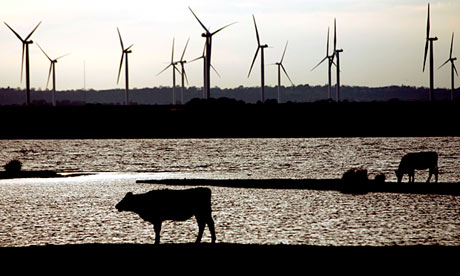
    Little Cheyne Court wind farm in Camber, Kent

    A wind farm in Kent. The 4.1GW generated by Britain’s wind turbines on Friday compares with Drax, the UK’s largest coal and biomass-fired power station. Photograph: Haydn West/Rex Features

    Britain’s windfarms broke a new record on Friday by providing over four gigawatts of power to the National Grid – enough to light and heat more than 3m British homes.

    It beats a previous high of 3.8GW set in May and comes as a further 4GW of wind turbines are being installed, half on land and half offshore.

    Just before 10am, wind turbines were supplying 10.8% of the total amount of electricity going into the grid while an additional 2.2GW of “green” power was going directly into local electricity networks.

    “This record high shows that wind energy is providing a reliable, secure supply of clean electricity to an ever-greater number of British homes and businesses,” said Maria McCaffery, chief executive at the campaign group RenewableUK. “As our wind energy capacity increases, the need to import expensive fossil fuels starts to diminish. The transition to a low-carbon economy is well under way and harnessing this bountiful, free resource will help us to drive down energy bills for all users in the long term.”

    Critics will point out that the 4.1GW total compares with the UK’s largest coal and biomass-fired power station, Drax in North Yorkshire, which produces almost that amount of power on its own.