Category: Energy Matters

The twentieth century way of life has been made available, largely due to the miracle of cheap energy. The price of energy has been at record lows for the past century and a half.As oil becomes increasingly scarce, it is becoming obvious to everyone, that the rapid economic and industrial growth we have enjoyed for that time is not sustainable.Now, the hunt is on. For renewable sources of energy, for alternative sources of energy, for a way of life that is less dependent on cheap energy. 

  • Shell to Invest $300 Million on LNG Refuelling Station Network

    Shell to Invest $300 Million on LNG Refuelling Station Network

    Posted: 15 Jun 2012 03:01 PM PDT

    In an attempt to entice owners of trucking fleets to invest in trucks that run on super chilled natural gas the oil major Royal Dutch Shell is set to invest more than $300 million on creating a series of liquefied natural gas filling stations across the US.James Burn, Shell’s manager of LNG transportation fuels, said that they will develop 200 LNG pumps across 100 Travel Centers of America refuelling stations in such a way as to allow LNG trucks to travel throughout the whole US. Burns said that trucking companies are reluctant to invest…Read more…

  • The Daily Telegraph is urging readers to join our People Power campaign to beat the carbon tax and power prices

    The Daily Telegraph is urging readers to join our People Power campaign to beat the carbon tax and power prices

    Big Electricity Switch – Campaign launch

    One Big Switch wants 25,000 signatures to secure big discounts on power bills for Australians. Hear campaign director Christopher Zinn laun…

    Christopher Zinn

    Big Electricity Switch campaign director Christopher Zinn. Picture: Toby Zerna Source: The Daily Telegraph

    power prices

    The Edgeworth family from North Narrabeen. (L to R) Abbey, eight, Flynn, eight, Chris and Kelly Edgeworth, Kieran, 16, and Ben, 13, Picture: Show More Source: The Daily Telegraph

    < Prev

    1 of 2

    Next >

    Big Electricity Switch – Neutralise the power rise

    Want to save on your power bill? One Big Switch’s Christopher Zinn shows you how by logging onto the One Big Switch website www.bigelectric…

    THE groundswell of discontent over electricity price rises has this morning morphed into decisive action with Aussies rushing our People Power campaign.

    By midday more than 4300 people had registered their interest in getting a better deal on electricity through the website www.bigelectricityswitch.com.au.

    The Daily Telegraph has joined forces with our sister mastheads across the country to push for bulk discounts large enough to neutralise an electricity price rise the federal Treasury estimates could be as high as 10 per cent.

    The campaign, officially launched this morning in Sydney, is being led by one of the country’s most respected consumer crusaders, the former face of Choice Christopher Zinn. Mr Zinn believes it will be possible to negotiate price cuts of at least 12 per cent if the campaign can attract support from 25,000 households and businesses.

    SUPPORT THE CAMPAIGN HERE

    The Daily Telegraph, Melbourne’s Herald Sun, the Adelaide Advertiser and news.com.au are collaborating with Mr Zinn and the One Big Switch organisation because of growing frustration about the cost of energy.

    Many households are dreading the carbon tax, which starts on July 1, because the pace of price rises will be so rapid it will be all but impossible to contain bills by cutting consumption – despite their best efforts. Those in the eastern half of Sydney, Central Coast, Newcastle and the Hunter region will be slugged an extra 20.6 per cent on their power bills, of which almost half – 9.4 per cent – is down to the carbon tax.

    The Independent Pricing and Regulatory Tribunal last week said that those living in western Sydney, Wollongong, the Blue Mountains and Southern Highlands would pay an average 11.8 per cent more, including the 9.4 per cent carbon tax slug.

    Costs will rise by an average of 19.7 per cent across the rest of the state, of which 7.9 per cent is down to the tax.

    Two-thirds of Australians oppose the controversial tax, a recent poll by the independent Lowy Institute revealed. Yet despite this, the Gillard government has refused to even consider reducing its impact.

    In a poll on this site today, nearly 90 per cent of 5500 respondents said they would switch electricity providers to beat the carbon tax.

    “People are disconnected from their electricity bills and as prices go up, they feel powerless to do anything,” Mr Zinn said yesterday. “One thing people can do (to save money) is become more energy efficient, but they are already doing that. People will drive around to find the cheapest petrol but they don’t do that with electricity.

    “What we want to do is reconnect people with their bills. Consumers have the power in this to achieve better deals.”

    Under the campaign, households must register for the bulk discount at bigelectricityswitch.com.au by midnight on July 15. Mr Zinn said people who registered didn’t even have to accept the discount – instead they could use the offers to shop around or negotiate a better deal with their current supplier.

    “We’re keen to get people who haven’t switched to join the group and drive competition in the market. That is, to make electricity retailers work even harder to get your custom.”

    While The Daily Telegraph is focusing on the carbon tax because it is the single biggest driver of the upcoming increases, those who support the policy can still register for the discount deal – because other factors will send prices up as much as 13 per cent.

    Australian Energy Regulator chairman Andrew Reeves, whose group sets the amount network owners can charge and earn, said: “We are aware any increase is a burden on households. Electricity bills are the largest single bill most households see and any increase is a concern.

    “Customers are responding to higher prices by reducing consumption. We consider under current rules, the allowances reward the electricity businesses with returns that are greater than the costs they reasonably should incur, in particular the cost to finance the new investment.”

    The campaign is Mr Zinn’s first since joining One Big Switch, which was set up in 2011 by Lachlan Harris, a former adviser to ex-prime minister Kevin Rudd.

    Choice and One Big Switch collaborated on a banking campaign last year.

    Households can register to join in the deal by logging on HERE by midnight on July 15

  • Mining boom benefits for few, report

    Mining boom benefits for few, report

    Updated: 13:27, Sunday June 17, 2012

    Mining boom benefits for few, report

    The benefits of the mining boom have been concentrated in one state, with all others seeing only a marginal impact or none at all, a major new report says.

    The research conducted for the Australian Local Government Association (ALGA) suggests the nation has mostly squandered the advantages because the upsurge in resources sector activity effectively crowded out other industries.

    ‘Western Australia and its regions are clear winners from the boom, along with some of the regions in Queensland and New South Wales,’ the 2012/13 state of the regions report found.

    ‘However, the crowding out of activity from the expansion has clearly had a negative impact in other states and regions.’

    The 151-page report was released on Sunday ahead of the start of the ALGA’s annual national general assembly in Canberra and appears to support the federal government’s claim the benefits of the boom are not being felt by most Australians.

    Unlike Norway, which set up a sovereign wealth fund to invest excess proceeds from its massive petroleum reserves and uses some of the capital gains for government projects, Australia had failed to extract the most out of its boom.

    ‘Norway adopted a comprehensive planning process to maximise the long-run benefits of its resource expansion and endowed this process with resources sufficient to make a difference,’ the report said.

    ‘Australia did not and still has not.’

    The report proposes a commission of inquiry be set up to examine the inequality across Australian regions exacerbated by the mining boom and how it could be addressed.

    ‘We would have a catalyst to start the process for a productive redesign of regional planning in Australia,’ report co-author Dr Peter Brain said in a statement.

    ALGA president Genia McCaffery said regional development increased jobs, wages and productivity.

    ‘Local governments need to be involved in decisions concerning Commonwealth investment in regional infrastructure and development,’ she said.

  • Mining firm Bumi accused of human rights abuses

    Mining firm Bumi accused of human rights abuses

    Indonesian miner founded by Nat Rothschild faces allegations of polluting coral reefs and mistreating workers at heated AGM

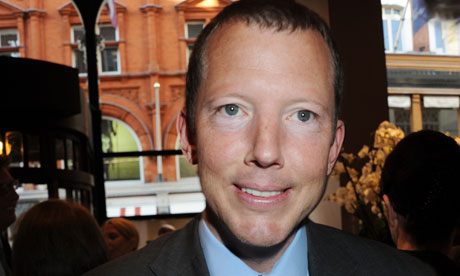
    Nat Rothschild

    Financier Nat Rothschild has stepped down as co-chair of Bumi after calling for it to reform its balance sheet. Photograph: Richard Young /Rex Features

    Indonesian mining company Bumi, founded by financier Nat Rothschild, was on Thursday accused of human rights abuses at a heated annual general meeting.

    Campaigning shareholders raised concerns over the alleged dumping of coal and chemicals into coral reefs, the mistreatment of workers and the company’s lack of transparency.

    But they were left disappointed after the board, which had co-chairman and biggest shareholder Indra Bakrie missing from the meeting, accused the representatives of “grandstanding” and “ranting”.

    After the meeting the campaigners, who go to around 20 mining AGMs a year, said Bumi’s was one of the most poorly organised and least transparent they have attended. It lasted just 42 minutes.

    Rothschild recently called on the company’s chief executive, Ari Hudaya, for a “radical clean up” of the firm’s complex ownership structure which involves some of the biggest businessmen in Indonesia.

    During the AGM in London – the first time the FTSE-listed firm has held the shareholder meeting in the UK – Roger Moody from Nostromo Research was accused of “ranting” by the company’s senior non-executive, Sir Julian Horn-Smith.

    Moody raised concerns over the company’s transparency but, in heated exchanges, he was told by Horn-Smith: “I will not be lectured to about human rights but will hear specific substantive points that you feel should be investigated.

    “These are important questions, by the way, so don’t misunderstand me because I’m not being dismissive, but let’s do it in a way where we can engage and do something about it and address the points, rather than grandstanding.”

    He added: “I think you have come here with a policy of not wishing to engage with us. If you wish to engage with me I am happy to engage with you and any other shareholder who has a matter of such seriousness. We are not here to have a debate about human rights that will go on for several hours.”

    Chairman Samin Tan added: “The transparency is exactly why we are here. Things cannot be changed overnight.”

    Andrew Hickman, from Down to Earth, raised concerns over recent reports of coal and chemicals being dumped in a coral reef in Indonesia by the company.

    He said: “This happened at various times and we’d like to know what is the credibility of the company if that is allowed to happen?”

    Graciela Romero from War on Want added: “I understand from March 2011 there were workers who were mistreated after striking in order to have collective bargaining.”

    But the board said it was the first they had heard of the allegations and therefore could not respond immediately and would be happy to meet to discuss them in private.

    After the meeting Hickman said: “I am quite shocked. The fact Bakrie doesn’t take the time to come here is disgraceful. You’d have thought he would have faced up to the questions.”

    Richard Solley, from the London Mining Network,said: “The AGM was unique for its level of discourtesy and obfuscation. I’ve been to many mining AGMs and the thought that they would not have an answer to our questions is ridiculous. Bumi’s refusal is unacceptable.

    To suggest they don’t know about the issues we raised, despite press reports and mentions in parliament, is ridiculous.”

    The company, which floated in 2010, had started trading at £10 a share and raised $1.1bn. On Thursday it closed at £3.15.

    It was set up through a cash shell launched by Rothschild to fund acquisitions in the mining industry, but has been criticised for its complicated structure which involved the Bakrie family.

    It led to Rothschild writing to the chief executive last year calling for reforms of its balance sheet.

    But rather than take the advice, the board instead attempted to oust Rothschild as co-chairman. In the end the financier stepped down as co-chair, but maintains a position on the board.

    At Thursday’s meeting he sat at the far end of the long table laid out for the board at the Insititute of Directors and afterwards declined to discuss his previous misgivings. He said: “It would be inappropriate for me to comment.”

    A spokesman for company said: “We listened to the points raised and will be happy to engage.” He added that Bakrie was unable to attend the proceedings because of other business commitments in the Far East.

  • Holden’s Volt to be sold by 49 dealers

    Holden’s Volt to be sold by 49 dealers

    Updated: 16:39, Monday June 11, 2012

    Holden's Volt to be sold by 49 dealers

    Holden says 49 dealers across the country will sell and service the new Volt electric car when it goes on sale later this year.

    The company said country dealers had been included in the list to ensure electric car ownership was not restricted to city customers.

    Dealers to sell the Volt will install a dedicated charging station and invest in new tooling and training to ensure the highest standard of service.

    Holden’s executive director of sales and marketing John Elsworth said Volt dealers must take their environmental responsibilities seriously by implementing a minimum number of environmental management practices across their business.

    This could include recycling, efficient energy usage and reduction in the use and disposal of toxic chemicals.

    Mr Elsworth said Volt dealers were asked to place their first order last month and while it was too early to confirm numbers, there appeared to be strong customer interest.

    ‘We would urge all customers to contact their dealer in the first instance if they want to secure one of the first Volts when they arrive in Australia.’

    Among the Volt dealers confirmed, 18 will be in Victoria, 11 in NSW, nine in Queensland, seven in Western Australia and four in South Australia.

    Holden began trials with right-hand-drive versions of Volt in Melbourne last week.

    The car has enough electric power to be a zero-emissions daily commuter for most people.

    But even when the lithium-ion battery runs low, it can use a petrol engine to recharge and extend the range.

    The batteries can also be fully recharged in six to eight hours from a standard electrical outlet.

    SHARE THIS ARTICLE:
  • ‘The problem for coal right now is entirely economic’ – EPA’s Lisa Jackson

    ‘The problem for coal right now is entirely economic’ – EPA’s Lisa Jackson

    Lisa Jackson, administrator for the US Environmental Protection Agency, on energy, climate change and ‘screaming’ headlines

    Lisa Jackson announcing the new US government position on greenhouse gases

    Lisa Jackson announcing the new US government position that greenhouse gases are a threat to public health. Photograph: Jonathan Ernst/Reuters

    It’s been a bumpy road for Lisa Jackson through three and a half years as chief administrator of the Environmental Protection Agency. But the 50-year-old chemical engineer doesn’t look fazed or fed up. A scientist-turned-insider who has learned that the levers of power don’t always budge without a fight, she shows a little steel in her eyes as she ticks off achievements and notes setbacks. But she also lets mischief color her laugh as she acknowledges what she calls the “toxic attitude of absolute certainty” that paralyzes progress on climate and other issues.

    In 2009 President Obama appointed Jackson to lead the EPA, the agency she’d worked at for 16 years before serving in New Jersey’s environmental agency, where she became commissioner in 2006. Jackson took the EPA helm at a moment of high hopes for green advocates in the U.S. They’d spent eight years in George Bush’s wilderness; now they felt they were on the verge of passing climate legislation at home and a global carbon accord at the Copenhagen talks.

    What could go wrong? Only everything.

    Today progress on climate at the federal level seems less likely than ever. Certainly, Jackson can point to a passel of signal achievements: she has reinvigorated the agency, presided over a plan to double automobile fuel-efficiency standards over the next decade, established EPA’s right to regulate greenhouse gases like carbon dioxide as pollutants, and placed new controls on mercury and other toxic power-plant emissions.

    But Jackson has also watched as the faltering economy and a partisan civil war in Congress have placed environmental issues on a low-simmering back burner — and placed EPA itself in the crosshairs of an increasingly radical conservative movement that aims to defang, defund, and ultimately destroy it. Even if it dodges that bullet, her EPA must use the narrow statutory authority of a handful of increasingly outdated laws to tackle an endlessly multiplying set of problems. Meanwhile, new laws are out of reach, and old-fashioned regulations get held hostage to competing agendas: Her agency’s proposal to tighten ozone standards met sudden death at the hands of the White House that had appointed her.

    Jackson has stuck to her post, despite rumors that she might resign in the wake of that ozone reversal. At the end of last week, she visited Seattle to drop in on Boeing, speak at the annual Climate Solutions breakfast, and deliver a commencement address at the University of Washington. She also took time to talk informally at an event with Grist supporters, and sat down with us for an interview.

    We knew there was little chance that Jackson would go off message or make unscripted news, and we weren’t going to play gotcha with her. But we did get some intriguing glimpses of the mind of the woman who’s still trying to push the Obama Administration’s hope wagon over all those bumps.

    Q. Right now U.S. fossil fuel production is ramping up, and a lot of people are enthusiastic about energy independence and jobs in that industry. So national security and employment are set up to be at odds with the environment. Can we get beyond that?

    A. First of all there’s two sides of the energy discussion: there’s production, and there’s also use. America as a consumer-oriented country is seeing real choices for the first time in using less energy. That’s very good for the American pocketbook. There’s simply no reason why American cars can’t be efficient and still be cool and be a part of what drives our economy. And if you want proof of that, look at what’s happening right now in Detroit. I have conversations all the time with young people, and they’re not feeling like they’re losing anything by the fact that they’ll be able to have choices and much more fuel-efficient cars should they choose to buy them.

    The president talks about “all of the above” energy, and I think we don’t realize enough how important that is. There are those who would like us to drop everything and say, time for another, a second fossil fuel boom, and the president is saying, but the future for our country is around clean energy, renewables, and getting that technology perfected and ready at a commercial scale here so we can sell it abroad. That will make our country stronger and create jobs as well. We should not put all our eggs in any one basket. And we should not, just because we have it, assume that means we should use fuels as though we have it — because energy independence requires a certain reduced demand. We saw reduction in demand for gasoline, refined oil, this year, and part of the reason is that Americans have a choice to buy cars and trucks that use less of it. And that’s good for our economy. So the money can go somewhere else.

    Q. So when people who are passionate about the environment hear “all of the above,” they’ll think of the list of things in “all of the above,” and one of them’s going to be coal. Is that part of the definition of “all of the above?”

    A. What we’ve done at EPA, because we’ve had to from court order, and it’s long overdue in my opinion, is deal with pollution from coal-fired power plants. Pollution from coal-fired power plants comes from the extraction of the coal in some cases, the burning of the coal, which gives soot and smog-forming pollution, and mercury and lead and arsenic and cadmium and acid gases and then you’ve got to get rid of the ash! …One form of energy has to at least be subject to the same laws as the other forms are. That’s what we’ve been working on as far as coal. I always tell people, it’s not about coal, it’s about the pollution that for too long has been associated with coal.

    And then coal has another pollution problem, and that’s carbon pollution: it’s the most carbon-intense fossil fuel. And the president invested in carbon capture and sequestration technology as part of the Recovery Act. He said all along, I’m from a coal state, so I believe that if there’s going to be a future for coal it has to be one that deals with carbon pollution, with climate change. So in my opinion the problem for coal right now is entirely economic. The natural gas that this country has and is continuing to develop is cheaper right now on average. And so people who are making investment decisions are not unmindful of that — how could you expect them to be? It just happens that at the same time, these rules are coming in place that make it clear that you cannot continue to operate a 30-, 40-, or 50-year old plant and not control the pollution that comes with it.

    Q. You’re a career scientist, and public dialogue in this debate today sometimes seems to have moved completely away from science and facts. People are talking about how we live in a post-fact society. What can we do about that? Do you think that’s accurate? What do we do about it, and what can scientists do to speak more effectively and get facts back into the mix?

    A. All scientists should in my opinion take heed of the importance of the peer review process. Inside the Washington Beltway is very different than outside. Inside the Washington Beltway I’m not sure whether facts always matter, and that’s a sad thing for our country. But oftentimes EPA’s work is peer-reviewed and then peer-reviewed again — and yet it will be challenged by some report that hasn’t been peer-reviewed at all. There needs to be equivalence there — inside, for policy-makers. That would be one thing I’d ask. More and more when people pull up some, um, interesting report, my first question is, who reviewed it? Where is the peer review? Because you would never allow me to submit something that wasn’t peer-reviewed. And I think that’s fair, and I think on both sides it should be that way — on the EPA side, or the government side, the public sector side, and on those who might challenge it.

    The second thing I’d say is that the American people, when given an opportunity to sit down and understand what’s going on, are very, very reasonable. The battle today is about who can get the screaming headline out first. Because, unfortunately, the way the media works, the screaming headline lives forever, and then you spend forever trying to get a headline even half as big that says oh, that wasn’t true. So whether it’s climate change and the myriad reports about that, whether it’s people in rural America who’ve been told all manner of untruths about the work we’re doing — whether it’s that we’re going to regulate farm dust further, or that we’re going to regulate spilled milk, no matter how many times we say it, because their main sources of information are not really being truthful in how they’re giving them information, we spend an awful lot of time trying to explain to people what we’re really doing. And it’s not just on the environmental front, but that’s emblematic of how folks have learned to use this new media world.

    Q. This [at the Climate Solutions Breakfast] was a primarily white audience. You’ve brought a more inclusive air to the EPA. How do we get these issues out there so that all of America is on board and acting, and environmentalism is not just a province of the privileged?

    A. It’s a very good point. We cannot have clean energy or health issues be the province of the privileged, right? because what happens is that those who are lower on the economic rungs feel as though this is something else that is being done to them. Everywhere I go we try to meet with communities of color, we meet with young advocates, and they totally believe that this is an important moment for their health, and for the future of our planet, when it comes to climate change. We need more partnerships that bridge that gap. There are wonderful groups at the community grassroots level; we don’t need to invent any more. We need to find them and link them up with partnerships.

    I heard a wonderful story, it’s told by a guy from the Turkey Creek Watershed group in Mississippi. They are a small African American/Native American group of residents who live in this community, and they were concerned about a new highway that was going to come through yet again — wasn’t the first one — to another part of their community. And they have been dealing with the state of Mississippi on it. And he tells a funny story about how here they are working, and working, and trying to get traction about the injustice of them having to have all of this runoff. Basically, they love to fish, it’s a watershed where they do a lot of fishing. And they really didn’t start to get traction until they worked with one of the traditional groups who helped them see that not only is this a watershed, but it’s a really important flyway for migratory birds. It brought a lens to their issues at the national level, but it also brought national issues to them. It was a two-way street. So those partnerships are really important. We shouldn’t be afraid of them. We should be finding them….

    There are groups out there who care. They may speak literally a different language, or they may see their issues in a different way. But there’s a willingness to sit down at the table and say, okay, how can we make this all work? And it’s happening in communities out here, around the country. California’s doing it; New York; Chicago. We’re finding ways.

    In Chicago, here’s Mayor Emanuel saying, how about we put some boathouses on the Chicago River? And all of a sudden communities that have lived on that river their whole life and turned their back to it, go, wait a second, we can have the kind of amenity that people on the Magnificent Mile have downtown. It changes the conversation. It’s all about finding a way to combine the issues. Nothing wrong with that. You’re not cheating if the issues, just like climate, happen to have many problems with one really cool solution.

    Q. If you were writing a headline for your work on the climate issue at EPA, up to now, or for whenever your work is done at EPA, what would you want it to be?

    A. “In accordance with the law, we moved forward with sensible, cost effective steps at the federal level on climate, using the Clean Air Act.” And I would have a second sentence — see, I can’t write headlines! But it would be something like, “The progress at state and local levels, combined with the federal level, does not obviate the need” — you can’t use obviate, it’s above fifth-grade level! — “does not obviate the need for federal legislation to address this incredibly important challenge for this and future generations.”