Category: News

Add your news
You can add news from your networks or groups through the website by becoming an author. Simply register as a member of the Generator, and then email Giovanni asking to become an author. He will then work with you to integrate your content into the site as effectively as possible.
Listen to the Generator News online

 
The Generator news service publishes articles on sustainable development, agriculture and energy as well as observations on current affairs. The news service is used on the weekly radio show, The Generator, as well as by a number of monthly and quarterly magazines. A podcast of the Generator news is also available.
As well as Giovanni’s articles it picks up the most pertinent articles from a range of other news services. You can publish the news feed on your website using RSS, free of charge.
 

  • They’re just kids Graeme, Amnesty International Australia

    1 of 7

    They’re just kids

    Inbox
    x

    Graeme, Amnesty International Australia <actioncentre@amnesty.org.au> Unsubscribe

    7:03 PM (15 minutes ago)

    to me
    There are 81 kids locked up in detention on Nauru.

    What will their childhood memories be?


    Dear Neville,

    It’s International Refugee Week. People around the world are celebrating the incredible achievements and contributions made by refugees to the countries that offer them safety.
    That safety is more important than ever.  
    We’re in the middle of a global refugee crisis — the worst since World War II. It’s forced almost 20 million refugees from their homes, fleeing war and persecution in countries like Syria and Burma.
    Half of them are children, who have a right to a real childhood.
    Australia could make a real difference to the lives of these children and their families.
    Instead, for almost two years, children have been locked up in Australia’s detention centre on Nauru in inhumane conditions.
    Just this month, former Nauru staff came forward with testimony that has brought to light numerous cases and allegations of sexual harassment, assault and rape of women and children on Nauru, including the abuse of children as young as two years old.
    It’s heartwrenching. Nothing can justify exposing children to this.
    In June 2013 — with the support of people like you — we got all children released from detention on Manus Island. We can give the kids on Nauru the same chance to have a safe, happy childhood in Australia.
    But we need your help.
    If you haven’t already, please share your favourite childhood memory. If you already have, please share our Lost Children page on Facebook and Twitter.

    We’ll present your memory — alongside thousands of others — to the government to show them just what they’re taking away from refugee kids by detaining them. We’ll demand that these children are no longer denied their childhood.

    In hope,
    Graeme McGregor
    Refugee Campaign Coordinator
    Amnesty International Australia
    
PS. The more people take action, the more powerful our message will be. Please forward this email to your friends and family and ask them to help the children on Nauru.
  • ACT NOW: Stop AGL’s unfair solar charge Solar Citizens

    Click here to enable desktop notifications for Gmail.   Learn more  Hide
    More

    1 of 25

    ACT NOW: Stop AGL’s unfair solar charge

    Inbox
    x

    Dan, Solar Citizens

    6:46 PM (15 minutes ago)

    to me
    Dear Neville —

    We’re shocked: disturbing reports today* revealed that AGL plans to charge up to an extra $434 for new solar meters in the ACT and NSW. These unfair charges will make it harder for thousands of households to take control of their electricity bills and go solar.

    SIGN AND SHARE: Tell the NSW and ACT energy ministers to stop these outrageous and unfair charges.
    Here’s the situation. New rules set by the Australian Energy Regulator mean that from July 1, electricity giant AGL will push up the price of new meters from $66 to $500 in the ACT, and by about $200 in NSW.

    Recent polling shows that 71% of people think Australia should put more emphasis on solar power ahead of all other forms of electricity generation**. What’s more galling is that only last month, AGL launched extensive TV and digital advertising pushing its expertise in solar products with the tagline “Not all solar is created equal” – now they want to make it harder for Australians to go solar!

    AGL has actively campaigned to cut the Renewable Energy Target and is now putting the proverbial boot in to everyday consumers by ratcheting up these enormous charges.

    These increases will create a huge disincentive to the many thousands of people who want to go solar in New South Wales and the ACT – not to mention the huge precedent this could set for other big power companies to try and charge solar owners more. People switching to solar are making the sensible decision to generate cheap, clean electricity from the sun. This decision should be easy, but AGL wants to price ordinary people out of the solar market.

    Sign our petition now – call on the ACT and NSW governments to stop AGL introducing these outrageous charges for new meters.

    For a fair, sun-powered country,

    Dan, Campaigns Director

    P.S. The more solar supporters who sign the petition, the stronger our voice will be. Click here to share the petition with friends and family. 

    *http://reneweconomy.com.au/2015/nsw-act-households-face-big-hike-in-cost-of-installing-solar-pv-77179
    ** http://www.essentialvision.com.au/energy-sources-2

    Solar Citizens
    http://www.solarcitizens.org.au/

  • The Pope said what?! AVAAZ

    Something’s not right.
    We’re having trouble connecting to Google. We’ll keep trying…
    Errors: 101
    More

    2 of 27

    The Pope said what?!

    Inbox
    x

    Emily Mulligan – Avaaz Unsubscribe

    11:58 AM (8 minutes ago)

    to me

    Dear friends,

    Pope Francis just made history. He’s taken the climate debate to a new level — more than an environmental issue, he’s declared a clear moral imperative to protect our planet, and it’s front page news.

    Our Prime Minister has made dozens of excuses not to act on climate change, but a call from the head of his own church could be the tipping point. And it can’t come soon enough — Abbott’s deciding Australia’s climate targets right now!

    Let’s help our PM ‘see the light’ on climate. If we flood the PM’s office with calls while the encyclical is in the headlines, we can amplify Pope Francis’ message and get Abbott to commit to targets worthy of the Pope’s call.

    Phone the PM’s office now:

    (02) 6277 7700

    Here are some talking points to help with your call. Don’t forget to let the PM’s office know if you’re Catholic!

    1. I read about the Pope’s encyclical on climate change and I think he’s got it right. I hope Mr Abbott will listen to Pope Francis’ call for bold climate action in Australia.
    2. I understand that Cabinet is considering Australia’s climate targets right now. This is a great place for Mr Abbott to show he’s heard the Pope by putting us on track to a pollution free future by 2050.
    3. It’s not too late for Australia to lead on climate action. Our nation has huge potential to benefit from a clean energy future, and we can play a powerful and constructive role in global negotiations if we commit to doing so.

    Remember to be polite and succinct — the PM’s staff will take a note of your message and pass on your comments.

    Tell us how the call went:

    https://secure.avaaz.org/en/pope_encyclical_abbott_call_in/?bhPqncb&v=60566

    The Pope’s encyclical is a demonstration of faith, love and hope for a brighter future in which we all act to protect our climate. There’s still a chance for Australia to show the leadership we’re capable of and present strong targets at the Paris summit this year.

    Make a call to ensure the messages from the Pope’s encyclical reach the politicians that are deciding our climate targets right now:

    (02) 6277 7700

    Our movement is a source of determination and inspiration in the fight against climate change. We’re always looking for key moments to shift the dial towards a pollution free future in Australia and around the world. This is a moment — let’s seize it together.

    With hope,

    Emily, Oli, Nic, Iain, David, Mais and the whole Avaaz team

    MORE INFORMATION:
    Pope Francis calls for action ‘here and now’ to tackle climate change and halt ‘unprecedented destruction’ of ecosystems (ABC)
    http://www.abc.net.au/news/2015-06-19/pope-urges-world-to-act-before-climate-change-destroys-planet/6557540

    Pope Francis, in Sweeping Encyclical, Calls for Swift Action on Climate Change (New York Times)
    http://www.nytimes.com/2015/06/19/world/europe/pope-francis-in-sweeping-encyclical-calls-for-swift-action-on-climate-change.html?_r=0


    Avaaz.org is a 41-million-person global campaign network
    that works to ensure that the views and values of the world’s people shape global decision-making. (“Avaaz” means “voice” or “song” in many languages.) Avaaz members live in every nation of the world; our team is spread across 18 countries on 6 continents and operates in 17 languages. Learn about some of Avaaz’s biggest campaigns here, or follow us on Facebook or Twitter.

  • The evolution of end-member continental waters: The origin of acidity in southern Western Australia,” by Kathleen Benison and Brenda Bowen.

    1 June 2015
    GSA Release No. 15-40
    Contact:
    Kea Giles
    Managing Editor,
    GSA Communications
    +1-303-357-1057
    kgiles@geosociety.org
    Shallow acid saline water in Gneiss Lake, near Grass Patch in Western Australia
    Shallow acid saline water in Gneiss Lake, near Grass Patch in Western Australia, is an example of end-member continental brines. Orange iron oxide staining and white halite and gypsum precipitate on Precambrian quartzite gravel in lake. Photo taken in January 2008, when lake water was undergoing evapo-concentration and had pH 2.0 and salinity 28% total dissolved solids. Photo by Kathleen Benison. See “The evolution of end-member continental waters: The origin of acidity in southern Western Australia,” by Kathleen Benison and Brenda Bowen.
    Ausgeolbasic Licensed under CC BY-SA 3.0 via Wikimedia Commons

    Basic geological units of Australia, after Addario et al., created in Arcinfo GIS from pblic domain geological mapping data, GFDL free use. Dark brown: Craton.

    Bookmark and Share

    Acid Saline Groundwaters and Lakes of Southern Western Australia

    Boulder, Colorado, USA –The “wheat belt” and “gold fields” of southern Western Australia are associated with a regional acid saline groundwater system. Groundwaters hosted in the Yilgarn Craton there have pH levels as low as 2.4 and salinities as high as 28%, which have greatly affected bedrock and subsurface sediments. This is manifested above ground as hundreds of shallow, ephemeral acid saline lakes.

    In the June issue of GSA Today, Kathleen Benison of West Virginia University and Brenda Bowen of the University of Utah write that the limited volume of groundwater, in combination with its acidity, salinity, and high concentrations of some metals, make southern Western Australia a difficult place for human habitation.

    The overarching question addressed by this study is “How did the extreme acidity form here?” The authors discuss the combination of processes that make up these shallow lakes and the groundwater that feeds them, which is not only dependent upon the host rock lithology, mineralogy, climate, weathering, organisms, and time, but also on mining and agriculture in the region.

    Benison and Bowen write, “In the twentieth century both agriculture and mining had local influence on acid brine groundwater. A government-sponsored effort to turn the semi-arid eucalypt forests of inland southern Western Australia to crop and ranchland promoted the deforestation of the ‘wheat belt’ region. With fewer trees to soak up the acid saline groundwater, the water table rose. Ranchers realized that cattle and sheep did not thrive with acid brines. Farmers found the only successful crops were grown high above the water table and irrigated with desalinized seawater piped a distance of hundreds of kilometers.”

    Mining efforts have also used desalinized seawater pipelines. Both mining and agriculture import fresher water to the groundwater system and may be responsible for changing the volume of groundwater slightly, as well as potentially causing dissolution of some subsurface halite and other chemical sediments, and, perhaps in turn, increasing groundwater salinity.

    Looking forward at further research areas, the authors write, “Extreme acid brine environments similar to those in southern Western Australia have been recognized on Earth and Mars. In particular, some mid-Permian continental environments hosted extremely acid saline lakes and groundwaters that deposited redbeds and evaporites. The temporal and geographic extent of these Permian acid brine settings, and their relationship to Permian climate change and the end Permian mass extinction, are open scientific questions. Understanding the origin, evolution, and maintenance of modern natural acid brine environments may lead to more informed paleoenvironmental, paleoclimatic, and paleobiological interpretations about ancient acid brines.

    ARTICLE
    The evolution of end-member continental waters: The origin of acidity in southern Western Australia
    Kathleen C. Benison, Dept. of Geology and Geography, West Virginia University, Morgantown, West Virginia 26506-6300, USA, kathleen.benison@mail.wvu.edu; and Brenda B. Bowen, Dept. of Geology and Geophysics, Global Change and Sustainability Center, University of Utah, Salt Lake City, Utah 84112, USA. GSA Today, v. 25, no. 6, http://dx.doi.org/10.1130/GSATG231A.1.

    GSA Today articles are open access online; for a print copy, please contact Kea Giles at the address above. Please discuss articles of interest with the authors before publishing stories on their work, and please make reference to GSA Today in articles published.

  • Hallelujah! Pope Francis is taking on climate change Footprint Network News

    Click here to enable desktop notifications for Gmail.   Learn more  Hide
    More

    3 of 9

    Hallelujah! Pope Francis is taking on climate change

    Inbox
    x

    Global Footprint Network footprints@footprintnetwork.org via mail184.atl171.mcdlv.net 

    3:06 PM (46 minutes ago)

    to me
     

    Ecological Footprint Image Blue Footprint Network News
    Issue 43, June 18, 2015

    Pope Francis is taking on climate change

    The encyclical from Pope Francis this week marks yet another significant milestone in our planet’s march toward a global climate change agreement in Paris this December. The fact that the leader to more than 1 billion Catholics—roughly 14 percent of the world’s population—is urging action on climate change is undeniable evidence of growing support for an agreement that even global warming naysayers cannot refute.

    In the 192-page draft circulating this week, Pope Francis openly blames global warming in part on “a model of development based on … fossil fuels” and calls for more renewable energy development instead, according to a Washington Post translation. Indeed, at 55 percent of the world’s Ecological Footprint, the carbon Footprint is the single largest driver of our planet’s ecological overshoot, which occurs when humanity’s demand on nature exceeds what nature can regenerate. Fortunately, many countries who already have submitted proposals for the climate talks in December are proposing major reductions in carbon emissions, though the International Energy Agency suggested this week they would not be enough to curb climate change.

    In keeping with the name he took—St. Francis of Assisi, the patron saint of the environment who dedicated his life to the poor—the pope also notes how modern development has hurt not only the environment but also the poor. “The poor and the Earth are shouting,” he eloquently writes.

    It is heartening to see the Pope recognizes that ecological and social “approaches” must work together, the very premise of our latest work in rural communities in India that documents how greater resource security fuels lasting human development. This work confirms Pope Francis’ message: Development that undermines nature ultimately leaves the poor in a more vulnerable position. Pope Francis concludes: “Today we can’t avoid stating that a true ecological approach must always become a social approach, integrating justice in the debate around environment, so that we listen to the cry of Earth as much as we listen to the one of the poor.”

    He further notes the “disproportionate effects of climate change on poor populations, whose ‘livelihoods depend heavily on nature reserves,’” according to a Huffington Post translation. We couldn’t agree with these points more, which is why we advocate development that improves the conditions of humans as well as enhancing the natural capital those communities depend on.

    Even before its official release Thursday, Pope Francis’ historic encyclical—the the first of its kind dedicated to the environment—seems to be accomplishing his intended goal: “In this encyclical,” he writes, “I intend especially to engage in a dialogue with everyone about our common home.”

    We applaud Pope Francis for helping to fuel this global dialogue and noting that protecting the Earth should “unite the whole human family.” To that we can only say, Amen.

    Save the Date: Earth Overshoot Day 2015
    Fun Fact: The pope knows much can happen in only seven days (Genesis 2:2), and so we wondered, how much would the world’s population need to reduce carbon emissions in order to move Earth Overshoot Day back on the calendar by seven days? We determined with a 5 percent cut in carbon dioxide emissions, we could move back Earth Overshoot Day a full week.

    As a reminder, Earth Overshoot Day marks the approximate date when the world’s human population has used up all the nature that Earth can regenerate in a year. This year, Earth Overshoot Day will fall on August 13.

    Want to become an Earth Overshoot Day partner or host an event? Contact Amanda Diep at amanda.diep@footprintnetwork.org.

    In the News
    BBC News recently asked, How many Earths do we need?, in both a radio segment and online magazine article featuring our work. The BBC called Global Footprint Network President Mathis Wackernagel for an interview after a listener named Oscar in the United Kingdom asked about the origin of this statistic: If everyone on the planet consumed as much as the average American, we would need four planets to sustain itself. “It’s a fairly well-respected number used by an assortment of academics and environmental organizations,” notes BBC reporter Charlotte McDonald in the radio segment. Her detailed magazine piece includes this chart highlighting the Footprints of several countries:

    To learn about the Ecological Footprint of other countries, download our free Public Data Package.


    About Global Footprint Network
    Our mission is to promote a sustainable economy by advancing the Ecological Footprint, a measurement tool that makes the reality of planetary limits relevant to decision-makers.
  • The Reef, threatened piece by piece, you can help, NEVILLE

    Click here to enable desktop notifications for Gmail.   Learn more  Hide
    1 of 7

    The Reef, threatened piece by piece, you can help, NEVILLE

    Inbox
    x

    Richard Leck, WWF-Australia noreply@act.wwf.org.au via server8839.e-activist.com 

    5:02 PM (2 hours ago)

    to me
    Reef image

    Dear NEVILLE,

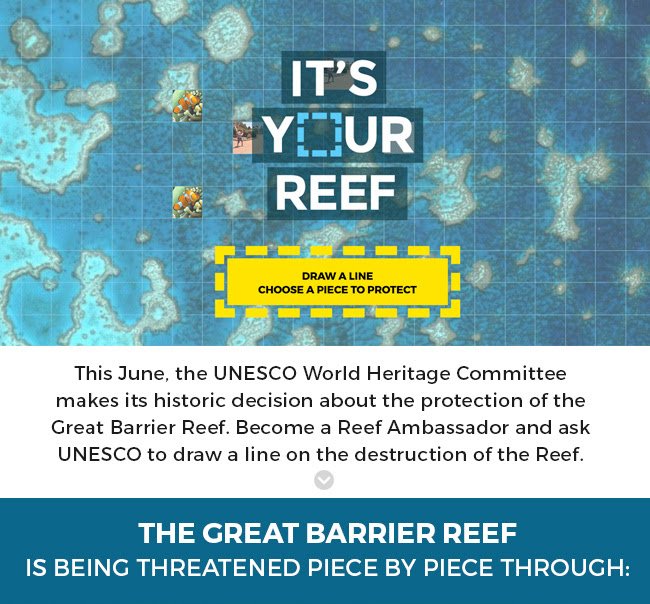
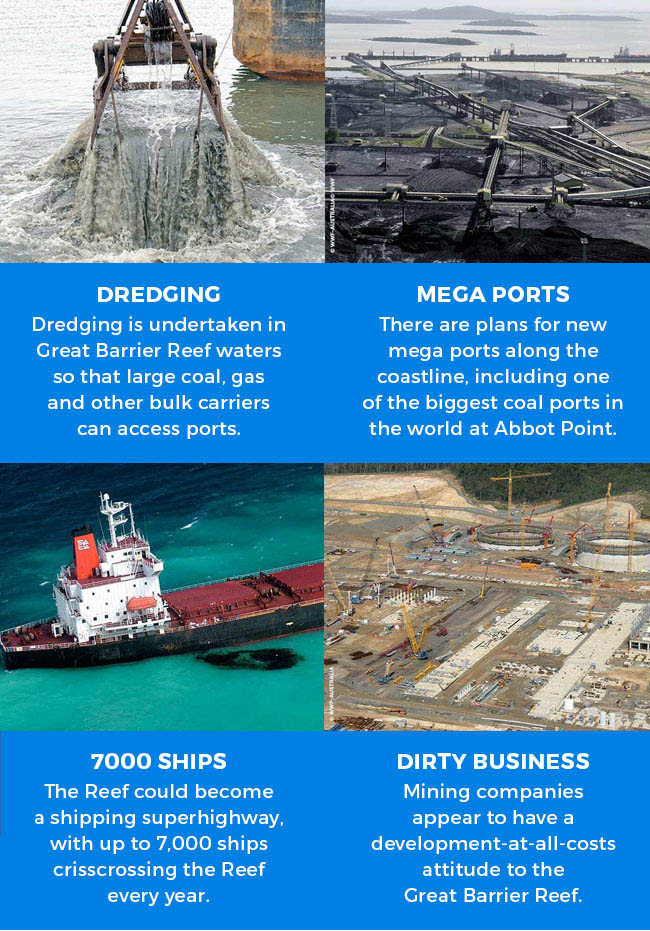
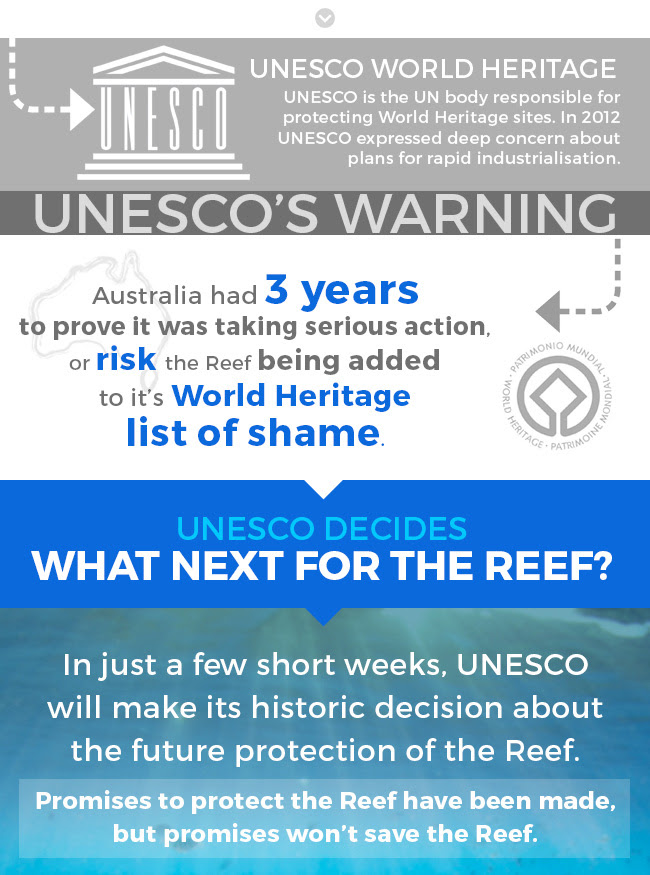
    Check out this infographic we’ve put together to explain what’s happening to the Reef right now and how we need you to stand up for it.

    Click here: http://reef.wwf.org.au to take action immediately

    Thanks for all that you’re doing,

    Richard Leck
    Great Barrier Reef Campaigner
    WWF- Australia