Category: News

Add your news
You can add news from your networks or groups through the website by becoming an author. Simply register as a member of the Generator, and then email Giovanni asking to become an author. He will then work with you to integrate your content into the site as effectively as possible.
Listen to the Generator News online

 
The Generator news service publishes articles on sustainable development, agriculture and energy as well as observations on current affairs. The news service is used on the weekly radio show, The Generator, as well as by a number of monthly and quarterly magazines. A podcast of the Generator news is also available.
As well as Giovanni’s articles it picks up the most pertinent articles from a range of other news services. You can publish the news feed on your website using RSS, free of charge.
 

  • Revealed: BP faces allegations it’s complicit in human rights abuses

    p notifications for Gmail.   Learn more  Hide
    1 of 26

    Revealed: BP faces allegations it’s complicit in human rights abuses

    Inbox
    x

    Alan Rusbridger <info@mail.theguardian.com> Unsubscribe

    9:26 PM (8 minutes ago)

    to me
    Can’t see this email? View in browser
    Dear Neville,

    Following our stories yesterday about BP, we have published a remarkable investigation into a dark period in Colombia’s oil past.

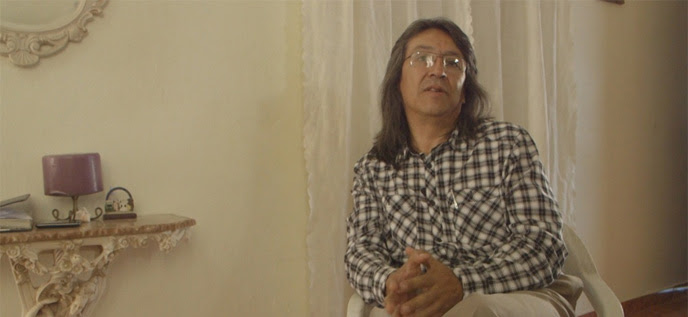
    The story is about a Colombian trade union leader who today begins an unprecedented case against BP in the High Court in London alleging its complicity in his kidnap and torture for 42 days. It is the first time he has spoken about his experiences to international media. BP denies any involvement.

    Here are the stories: “Colombian takes BP to court in UK over alleged complicity in kidnap and torture” and “Gilberto Torres survived Colombia’s death squads. Now he wants justice”.

    Here is the film about the extraordinary case.

    Please share the stories on Facebook and, if you’re on Twitter, retweet @guardianeco.

    Colombian takes BP to UK court over alleged complicity in kidnap & torture #keepitintheground http://t.co/fdQH4sPkBT pic.twitter.com/W4KiRnEpen

    — Guardian Environment (@guardianeco) May 22, 2015

  • VIDEO: Her story needs to be told DOMESTIC VIOLENCE

    nable desktop notifications for Gmail.   Learn more  Hide
    More

    1 of 25

    VIDEO: Her story needs to be told

    Inbox
    x

    Aurora – GetUp! & Renee – Fair Agenda

    3:22 PM (12 minutes ago)

    to me
    **Trigger warning: violence**

    NEVILLE,

    At the start of this year, Prime Minister for Women Tony Abbott promised that solving Australia’s growing domestic violence epidemic would be a national priority.1 Yet, last week’s Federal Budget told a different story.

    Nowhere in the Budget did we see new funding for refuges or homelessness agencies, including refuges, who are forced to turn away hundreds of people every night – many of whom are escaping domestic violence. Nor did we see new funding for women’s community legal services, where a third of the work relates to domestic violence.

    Without fully-funded frontline services, Australia’s domestic violence epidemic will continue to shake the nation. Already this year, 25 Australian women have been killed by a current or former partner, and with current levels of funding for services, women are being turned away from services they rely on.2 This cannot go on.

    We’ve produced a powerful new ad with campaign partner Fair Agenda. Click here to watch the compelling new ad – and chip in to kick off a national ad campaign, to get this in front of the leaders who need to see it most.
    Click here to watch the video and chip in to put it on the air in Parliament, and in front of key voters.

    The Government is coming under more and more pressure to put its money where its mouth is – and we know they’re starting to listen. Over the weekend, the Government announced an extra $4 million in funding for 1800 RESPECT, the helpline for survivors of domestic and sexual violence. This is an important step in the right direction, and a testament to the advocacy groups who are working so hard to put domestic violence on the agenda. But on its own, it’s simply not enough. Some services are still having to turn women away from services that are supposed to help.3

    It will take fully funded frontline services like those shown in this video to address Australia’s domestic violence epidemic. Fully funding community legal centres, women’s refuges, and homelessness agencies would be a good start.

    Let’s show our Prime Minister what it would take to live up to his promise on domestic violence. If you can chip in now, together, we can reach thousands of people with this powerful video – starting today. We’ll direct your donation towards funding online ads in key marginal electorates, where the Coalition is paying close attention to the public’s reaction to their Budget. Any further funds raised will be used to turn the video into an ad for Sky News, where it’ll be aired nationally and beamed right into the halls of Parliament, placed in front of those who need to hear this story most.

    Too many stories are going untold already. Will you help make sure this story is put right in front of the decision-makers who need to see it?

    https://www.getup.org.au/frontline-against-violence

    Thank you for standing up for the services that make Australia safer.

    Aurora and the GetUp team, with Renee at Fair Agenda

    PS – Here’s some of the moving feedback on our Facebook page, from the GetUp members who have already watched the video:

    I don’t think Abbott realises how hard that first step to leave is, it’s devastating. Then to be ignored when you reach out is soul crushing. We need shelters, host families and we need them now. – Toni

    Thank you, this is exactly what it was like. Both having nowhere time go, and fleeing with the support of refuge services. – Lyssa

    Whatever the number of women killed, it’s too many. Shining the light on the need to fully fund frontline services is so important. – Olivia

    Let’s make sure our MPs hear this message too. Click here to watch the video, and chip in to get it on the air.

    References:

    [1] COAG agenda to address ending violence against women, Media release from Prime Minister Tony Abbott, 28 January 2015
    [2] Budget 2015: Funds ‘too little’ to fight domestic violence, The Australian, May 14 2015.
    [3] What Will It Take report, Fair Agenda


    If you or someone you know is experiencing family violence and would like help, please call 1800 RESPECT.

    For confidential counselling, information and referrals to help stop using violent or controlling behaviour, please call 1300 766 491.


    GetUp is an independent, not-for-profit community campaigning group. We use new technology to empower Australians to have their say on important national issues. We receive no political party or government funding, and every campaign we run is entirely supported by voluntary donations. If you’d like to contribute to help fund GetUp’s work, please donate now! To unsubscribe from GetUp, please click here. Our team acknowledges that we meet and work on the land of the Gadigal people of the Eora Nation. We wish to pay respect to their Elders – past, present and future – and acknowledge the important role all Aboriginal and Torres Strait Islander people continue to play within Australia and the GetUp community.

    Authorised by Sam Mclean, Level 14, 338 Pitt Street, Sydney NSW 2000.

  • NUMBERS Protect the Great Barrier Reef WWF

    nable desktop notifications for Gmail.   Learn more  Hide
    1 of 10

    Numbers

    Inbox
    x

    Louise Matthiesson, WWF-Australia noreply@act.wwf.org.au via server8839.e-activist.com 

    9:46 AM (7 minutes ago)

    to me
    Under water coral, Great Barrier Reef  © Troy Mayne

    Dear NEVILLE,Just 4 days ago, the Queensland Government celebrated 3 months in office.
    That’s just over 100 days since the election where they won a mandate to protect the Great Barrier Reef.
    That’s the election where they promised to do 5 specific things to protect the world’s largest living organism.
    And, in less than 40 days, 21 countries will convene at the World Heritage meeting to decide whether or not enough has been done.

    That’s a lot of numbers – but you know what’s an even better one? 231 281.  That’s the number of people who’ve joined the Fight for the Reef.  (You’re 1 of them!)

    Right now, it’s really important, that every single one of those people helps remind the Queensland Government that they were elected with a clear mandate: Protect the Great Barrier Reef and the tourism and jobs that rely on it.

    Can you please remind them of that, by clicking here and urging them to take immediate action to protect the Reef.

    If the Government doesn’t act soon, it will be too late. With less than 2 months until the World Heritage Committee meets on the future of the Reef, there is just no time to waste.

    Queensland’s political leaders need to hear from you right now.  Can you please send a message to the Premier and Minister for the Reef now and urge them to take immediate action on five key Reef commitments?

    It only takes 30 seconds for 1 person to do it.  But if thousands of people do, it’ll send a clear message to the Queensland government: you must act urgently.

    It’s time leaders put their words into action.

    Click here to send a message and tell the Premier and Minister for the Reef actions speak louder than words.

    Thank you so much,

    Louise Matthiesson
    Great Barrier Reef Campaigner
    WWF-Australia

  • The business case for climate talks in Paris Global Footprint Network footprints

    ere to enable desktop notifications for Gmail.   Learn more  Hide
    1 of 15

    The business case for climate talks in Paris; Ontario biodiversity; Designing a Sustainable Japan

    Inbox
    x

    Global Footprint Network footprints@footprintnetwork.org via mail139.wdc02.mcdlv.net 

    4:47 PM (12 minutes ago)

    to me
     

    Ecological Footprint Image Green Footprint Network News

    Issue 42, May 21, 2015

    The business case for climate talks in Paris

    Six months before United Nations (U.N.) climate treaty talks are to unfold in Paris, thousands of business, finance and political leaders are gathering this week in the French capital to “show that low carbon makes good business sense – and a strong global deal means a smart economy.” Convened by The Climate Group, Climate Week Paris features more than 25 high-level events. Tuesday, Global Footprint Network CEO Susan Burns introduced risk metrics and methodology from our ERISC (Environmental Risk in Sovereign Credit) research program to the participants of a full-day event titled “The financial sector and climate change—measuring climate performance and carbon risk.” The event was hosted by ERISC partner la Caisse des Dépôts.

    Burns participated in a panel titled “Sovereign Credit Risks: Integrating Climate, Carbon and Natural Resource Risks,” which also featured Patrice Cochelin from Standard & Poor’s and Rodolphe Bocquet from Beyond Ratings. Others presenting at the event included representatives from Moody’s, Standard & Poor’s, FTSE, MSCI, Mercer, Carbon Tracker, the U.N. Environment Programme Finance Initiative (UNEP FI) and the World Resources Institute.

    The fact that climate change is an increasingly prominent issue on the agenda of institutional investors and banks is an encouraging trend. In March 2015, more than 266 investors with over $20 trillion in assets under management had implemented some form of climate change strategy, according to event organizers. However, a survey by the Asset Owners Disclosure Project found that nearly half of the top 500 global asset owners did nothing to protect investments under their stewardship from the threat of climate change.

    “The bond market has traditionally been an overlooked portion of the market when it comes to environmental risk, although it totals $41 trillion,” Burns noted. “But interest is growing in looking at decarbonization and climate change in this asset class as well.”

    Beyond the societal challenge of transitioning to a low-carbon economy, the finance industry is growing aware of the potential associated financial risks, including stranded assets, such as coal, oil and gas operations, amid mounting pressures to become less reliant on fossil fuels. As the need for metrics and models to measure country risk exposure in this new environment is heating up, Global Footprint Network has been taking research on stranded assets a step further by analyzing which other sectors (in addition to fossil fuel extraction) may be exposed to climate change.

    More News from Our Finance Initiative
    Global Footprint Network researchers have been busy refining our ERISC (Environmental Risk in Sovereign Credit) methodology through a second phase of research, which focuses on the exposure of countries to food price shocks. Along with UNEP FI, we will be organizing one final workshop in June with our technical partner Cambridge Econometrics and our seven partners in the finance industry—Standard & Poor’s, HSBC, European Investment Bank, Caisse des Dépôts in France, Colonial First State in Australia, KfW in Germany and Kempen in the Netherlands—before starting to draft a final report on the methodology to launch this fall.

    In the meantime, Global Footprint Network CEO Susan Burns gave a preview of our work in a short briefing at the end of the Ceres Conference in San Francisco May 14 that included opening remarks by Zoe Knight, head of the Climate Change Centre of Excellence at HSBC, one of our ERISC partners.

    Policy Analyst Martin Halle also will be discussing our country risk research on July 1 at the fifth RICA (Responsible Investment Corporate Access) Zurich Conference, hosted by the SIX Swiss Exchange. Halle will be participating in a morning panel titled “Carbon emissions and other Environmental, Social and Government (ESG) Key Performance Indicators (KPIs) influencing business strategy.”

    Global Footprint Network in the News
    Our benefit-cost methodology for capital investment projects, called Net Present Value Plus (NPV+), is gaining media traction. The business magazine Fast Company recently published an informative article with this crystal-clear teaser: “NPV+ is a method of accounting that allows for environmental and social factors, so you know what things actually cost.”

    Like Governing magazine before it, Fast Company made much of the fact that former Maryland Governor and potential presidential contender Martin O’Malley is an enthusiastic supporter. “We are experiencing a shift in which we measure government not by its input, but by the benefit each service provides to communities. New tools like NPV+ enabled this transition and help make the economic case for sustainable choices in our budget decisions,” O’Malley wrote in an email to Fast Company.

    Ecological Footprint in Action
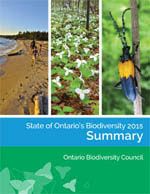
    The Ontario Ministry of Natural Resources and Forestry has turned to the Ecological Footprint as a natural resources accounting framework to build its biodiversity conservation strategy. The ministry asked Global Footprint Network to contribute to the second State of Ontario’s Biodiversity report by providing a technical time-trend analysis on the Ecological Footprint and Biocapacity of the Canadian Province, comparing data for 2005 and 2010.
    Released this week at a special event held during the 2015 Ontario Biodiversity Summit in Niagara Falls, State of Ontario’s Biodiversity 2015 is designed to help the province’s decision-makers and residents understand the current state of Ontario’s biodiversity, the pressures that threaten it and the level of action underway to advance biodiversity conservation. We look forward to seeing what policies Ontario adopts to push that agenda forward.

    From Our Partner Network
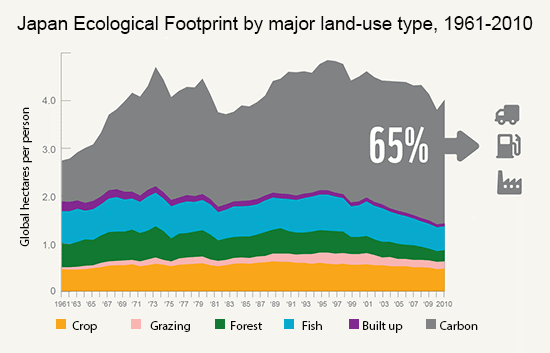
    In collaboration with WWF Japan, Global Footprint Network recently released an eye-catching informational brochure that underscores the role individual behavior change can play in reducing the Ecological Footprint. For instance, almost 70 percent of Japan’s Ecological Footprint comes from daily activities. If food waste was eliminated, the country’s food Footprint could be reduced by 25 percent. The carbon Footprint accounts for 65 percent of Japan’s total Ecological Footprint. Breaking down the Ecological Footprint by components provides guidance on how to more effectively manage ecological resources, whether it is through national policies (for instance related to energy to reduce the carbon Footprint) or lifestyle choices at a local or household level. Be sure to take a look at the brochure, The Ecological Footprint for Sustainable Living in Japan.

    From Our Blog
    May 15 was the International Day of Families, a day marked annually by the U.N. General Assembly to “increase knowledge of the social, economic and demographic processes affecting families.” This year’s focus was gender equality, which we believe is directly linked to women’s empowerment through increased access to education and income-generation opportunities. Poverty aid programs have long understood that empowering women is the best available lever anywhere to lift families out of poverty. It is also a sure path toward smaller families. “Healthy and smaller families are core to creating a world that works for everyone,” says Susan Burns, CEO of Global Footprint Network. “We cannot ignore population growth if we are truly committed to people having secure lives in a world of finite resources.” Read more.
  • Look at the incredible coral in this video WWF AUSTRALIA

    k here to enable desktop notifications for Gmail.   Learn more  Hide
    Something’s not right.
    We’re having trouble connecting to Google. We’ll keep trying…
    Errors: 101
    More

    Look at the incredible coral in this video

    Inbox
    x

    Louise Matthiesson, WWF-Australia noreply@act.wwf.org.au via server8839.e-activist.com 

    1:46 PM (8 minutes ago)

    to me
    Under water coral, Great Barrier Reef  © Troy Mayne

    Dear NEVILLE,

    Sometimes I’m floored by the sheer size of the opponents we’re up against.

    Massive mining interests want to see ports expanded alongside the Reef – and it falls to ordinary Australians to draw a line and say we won’t stand for it. What gives me strength is that what we’re protecting is some of the most beautiful life on the planet.  Once you’ve seen it – you want to save it.

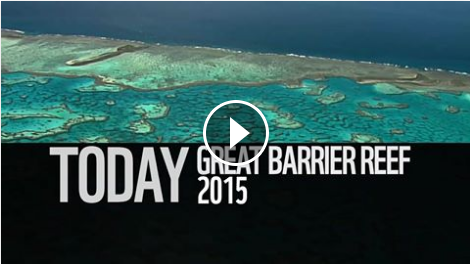
    Check out this new video we’ve put together that shows the stark contrast between what we’re trying to save, and what the threats to the Reef look like.

    LINKTOVIDEO

    Help us get this video seen by as many people as possible – we need them all to see this, then join our campaign at wwf.org.au/reef.

    If thousands more people sign, it’ll give our combined voice the strength we need to make sure the World Heritage Committee makes a decision that demands protection for the Reef in 6 weeks time.

    Click here to see the video – and then share it, and ask your friends to sign the petition too.

    Thanks for your help,

    Louise Matthiesson
    Great Barrier Reef Campaigner
    WWF-Australia

  • Revealed: The truth behind Peabody’s campaign to rebrand coal as a poverty cure

    Click here to enable desktop notifications for Gmail.   Learn more  Hide
    Something’s not right.
    We’re having trouble connecting to Google. We’ll keep trying…
    Errors: 101
    More

    3 of 26

    Revealed: The truth behind Peabody’s campaign to rebrand coal as a poverty cure

    Inbox
    x

    Alan Rusbridger <info@mail.theguardian.com> Unsubscribe

    11:55 PM (9 hours ago)

    to me
    Can’t see this email? View in browser
    Dear NEVILLE,

    Next in our series of investigative pieces is a story about another company the Gates Foundation is invested in, “The truth behind Peabody’s campaign to rebrand coal as a poverty cure.”

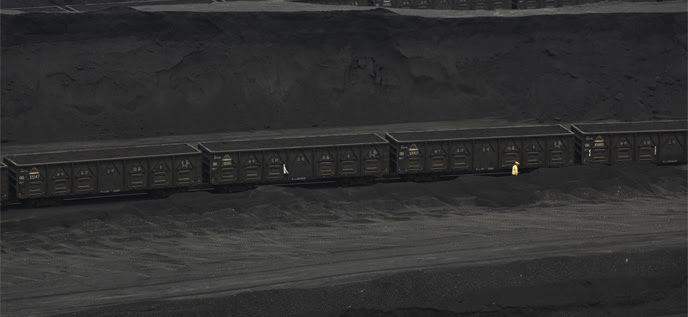
    The world’s largest privately-held coal company has a long history of attacking climate science. Now it is working to change the conversation from a climate crisis to one of global poverty – with coal as the solution. It even pushed coal as part of the solution to the ebola crisis last year.

    Please reshare the Guardian’s Facebook post, which includes a link to the Keep it in the Ground campaign. Or retweet @GuardianEco.

    Should @gatesfoundation stay invested in a company that health experts say exploited ebola crisis? http://t.co/uuZIMaocJt #keepitintheground

    — Guardian Environment (@guardianeco) May 20, 2015