Category: News

Add your news
You can add news from your networks or groups through the website by becoming an author. Simply register as a member of the Generator, and then email Giovanni asking to become an author. He will then work with you to integrate your content into the site as effectively as possible.
Listen to the Generator News online

 
The Generator news service publishes articles on sustainable development, agriculture and energy as well as observations on current affairs. The news service is used on the weekly radio show, The Generator, as well as by a number of monthly and quarterly magazines. A podcast of the Generator news is also available.
As well as Giovanni’s articles it picks up the most pertinent articles from a range of other news services. You can publish the news feed on your website using RSS, free of charge.
 

  • Climate change and the shire’s assets

    Wednesday May 20, 2015

    News

    Larger / SmallerNight Mode
    Climate change and the shire’s assets
    May 19, 2015, 2:05 p.m.

    Climate change, sea level rise (SLR) and tidal inundation have the potential to impact private and public land and assets within the shire with key farmland, unsettled low-lying floodplain areas around Mylestom, and the Urunga Industrial precinct being just a few areas named in a council report.
    See your ad here
    Waterfront properties along the Kalang River at Urunga are susceptible to rising sea levels and tidal inundatuion

    Waterfront properties along the Kalang River at Urunga are susceptible to rising sea levels and tidal inundatuion

    Tabled and adopted at last month’s council meeting, the Bellingen Shire Estuary Inundation Mapping Study looked at the affect of future coastal hazards as a result of climate change. Named in the document were key local areas and assets including:

    – flood-plain areas of Fernmount;

    – a number of rural, residential and primary production properties in the townships of Mylestom, Repton, Raleigh, Urunga, Brierfield, and Bellingen

    – waterfront properties along the Kalang River at Urunga, in particular properties at the Urunga Industrial precinct, Urunga Heads Holiday Park, Urunga Scouts, the Urunga Golf Course / tennis courts and waterfront properties in the immediate vicinity lagoon and Urunga Lagoon;

    – some rural, residential properties located on Newry Island; some major and minor roads in the townships of Mylestom, Repton, Raleigh, Urunga, Newry Island, Brierfield, Fernmount and Bellingen;

    – the Raleigh Waste Management Centre;

    – the sewer and stormwater services at Raleigh, Bellingen and Urunga; and

    – part of the North Coast Railway and Pacific Highway.
    See your ad here

    The study, which complements the Belllingen Shire Coastal Zone Management Plan, comes hot-on-the-heels of new research by CSIRO claiming sea levels are rising faster than previously thought and that Mid North Coast councils should not to cave-in to landholder who are concerned about property values.

    “If we fail to mitigate our emissions, sea level rise will be up to a metre by the end of the century and coastal councils, coastal planners, do need to take this into account,” CSIRO fellow and co-author, John Church, said.

    “We need to think about what are the total implications, not just the short-term implications. Councils and coastal societies will have liabilities if they choose to ignore sea level rise into the future”.

    Mr Church’s sentiments have received support from PRD nationwide managing director, Tony Brasier who said governments have launched a host of sustainability and environmental policies and this has implications for residential and commercial housing.

    “If governments and the key players in the building and construction industry keep climate change front of mind in their master plans … the loss in median house values in these areas would, in most cases, far outweigh the costs associated with better ‘weather proofing’ of the dwellings,” Mr Brasier said.

    “If the (building) industry is to successfully adapt to environmental anomalies attributed to climate change, the methods taken can’t be implemented by pockets of individuals operating in isolation, but has to become a social responsibility, where regions have tailored plans specific to the relationship between people, housing and the wider community in their particular area”.

    In addition, Mr Brasier said buyers and investors using modelling to check out the impact of natural disasters on housing and property and he offered some advice for mitigation against possible global warming affects.

    “Customers are increasingly investigating whether a property is in an area that has previously encountered issues with destructive weather events,” Mr Brasier said.

    “The increased home content and building insurance costs as part of home maintenance and affordability concerns is also being more widely considered.

    “Looking to the future, developers servicing social housing requirements must account for weather-related health risks by incorporating thoughtful urban greening strategies into master-planned communities, using appropriate building materials to withstand extreme climatic events and installing insulation to lessen the impact of temperature fluctuations. These actions will not only protect the residents from the elements, but will go some way to preserving the value of the properties for owners and investors”.

  • Revealed: Meet the oil world’s most secretive operator Inbox x

    Click here to enable desktop notifications for Gmail.   Learn more  Hide
    More

    1 of 20

    Revealed: Meet the oil world’s most secretive operator

    Inbox
    x

    Alan Rusbridger <info@mail.theguardian.com> Unsubscribe

    7:34 PM (49 minutes ago)

    to me
    Can’t see this email? View in browser
    Dear NEVILLE,

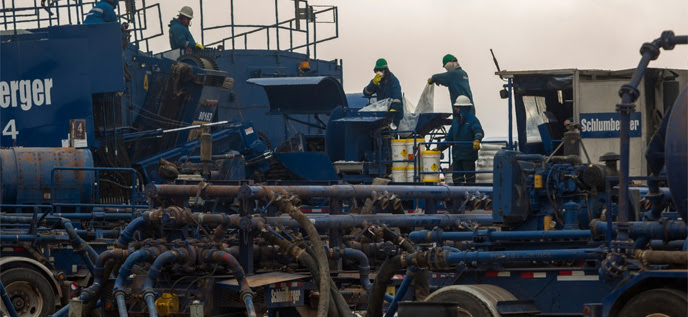
    Next in our Keep it in the Ground investigative series is a story about Schlumberger, a company with a huge £114m investment from the Wellcome Trust. The Gates Foundation Trust also holds a shareholding of more than $3m in the company.

    Schlumberger is ubiquitous in fossil fuel operations across the world, has more staff than Google, turns over more than Goldman Sachs, and is worth more than McDonald’s – yet you won’t have heard of it. Meet the oil world’s most secretive operator.

    Please help us hold the foundations accountable. Share on Facebook, or retweet @guardian below.

    The oil firm that makes $48bn a year – and you’ve probably never even heard of it #keepitintheground http://t.co/9q31bIblQ8

    — The Guardian (@guardian) May 18, 2015


    Retweet @guardian


    Thank you,

    Alan Rusbridger, Editor in chief of the Guardian

  • Without help, they’ll die within days. Graeme, Amnesty International Australia

    1 of 8

    Without help, they’ll die.

    Inbox
    x

    Graeme, Amnesty International Australia <actioncentre@amnesty.org.au> Unsubscribe

    1:04 PM (5 minutes ago)

    to me
    Thousands of people face death, stranded in boats off the coast of South East Asia.

    Tell the governments of the region, they must save the lives of these people.


    Dear Neville,
    This is happening right now, on our doorstep.
    Up to 8,000 men, women and children are stranded at sea off the coasts of Thailand, Malaysia and Indonesia.
    Without help, they’ll die within days.
    We know that many of those stranded in boats, desperately in need of rescue, are Rohingya people — a persecuted ethnic minority from Myanmar and Bangladesh.
    The Rohingya are stateless with no citizenship rights. Because of this, they’re frequently victims of human trafficking. Wherever they go, they face discrimination, violence and hardship.
    It’s no wonder they flee.
    Yet Thai, Indonesian and Malaysian authorities continue to defy international human rights law by refusing to rescue people in trouble. In some cases, they’re pushing boats back into the sea. 
    For those on board, this is a death sentence.
    Many in the boats have been at sea for more than two months and urgently need food, water and medical care.
    Rohingya people are survivors. They’ve been forced from their homes, suffered abominable conditions in camps and braved treacherous journeys across the sea to reach safety.
    Their lives now rest in our hands.
    That’s why we’re issuing a global call for action. As a movement of 7 million people, Amnesty supporters have the power to pressure the governments of the region to do the right thing and save these people’s lives.
    In hope,
    Graeme McGregor
    Refugee Campaign Coordinator
    Amnesty International Australia
    PS. The governments our our region have a choice: save the lives of 8,000 people or watch them die. Call on decision makers to step up search and rescue efforts before it’s too late.
  • Let’s ramp up support for renewables – switch your power now

    Click here to enable desktop notifications for Gmail.   Learn more  Hide
    1 of 11

    Let’s ramp up support for renewables – switch your power now

    Inbox
    x

    James – GetUp!

    9:13 PM (2 minutes ago)

    to me

    Today the Abbott Government cut renewable power to a potential 1.36 million households at the bidding of Australia’s three biggest, dirty energy companies. Switch now to fight back.

    Dear NEVILLE,

    Today the Renewable Energy Target (RET) has been slashed by a government intent on slowing down Australia’s march towards a greener and cleaner future — but the fight’s not over until you say it is. After a year of stalling and fierce lobbying by Australia’s three biggest energy companies — AGL, EnergyAustralia and Origin, the Abbott Government has struck a deal with Labor to slash the RET by 9000 gigawatt-hours, breaking a clear pre-election promise to leave it untouched.

    It may not seem like much, but in real terms that 9000 gigawatt-hours:

      • is the equivalent of six times the capacity of the biggest wind farm in the Southern Hemisphere
      • could have powered another 1.36 million average households with zero carbon emissions
      • could have saved the equivalent of around 10 million tonnes of carbon dioxide and almost 50,000 tonnes of toxic substances from a coal-fired power plant
    • is the same as taking 2 million cars off the road.1

    And not only have the government cut the RET, but they have also insisted on including the burning of native timber under the new reduced target, a measure Labor has rejected, but one which could still pass into law with the backing of senate crossbenchers. Labor and the renewable energy industry have been forced to take this deal to try to kick start Australia’s renewable energy sector after 12 months which has seen investment fall a staggering 90%.2

    Make no mistake, while Labor and the Clean Energy Council have had to compromise, today’s cut to the RET is a big win for the Dirty Three — AGL, EnergyAustralia and Origin, who all campaigned hard for the government to gut the RET or scrap it entirely.3 But here’s how we fight back. If large numbers of customers switch away from the Dirty Three — hurting their bottom line in the process — it sends a loud and powerful message that they will lose both public support and money until they change their policies to genuinely support a strong RET and clean energy future.

    Send them this message by switching to a cleaner power company — Powershop. Click here to find out more.

    Right now, more than 70 per cent of us buy our electricity from one of the Dirty Three, effectively funding their investments in dirty coal power and coal seam gas through our choice of power company. The damage that dirty coal and coal seam gas are doing is extreme. A report from GetUp!, Environmental Justice Australia and Market Forces has revealed power stations operated by the Dirty Three spew out the same amount of carbon each year as 15 million cars on the road.4

    By switching your energy supplier to Powershop you will be redirecting your money to a company that was ranked the greenest retailer in the country by Greenpeace, and is committed to only ever investing in renewables.
    And you’ll likely get a better deal too, with Powershop named one of the cheapest electricity retailers in Victoria by the Victorian Government’s Essential Services Commission. It also has competitive prices in New South Wales and is aiming to be one of the cheapest retailers there too.5

    Switch now to join thousands of others like you.

    GetUp members have taken to the streets with our allies for the RET, funded cut-through ads putting solar and wind jobs front-and-centre, and switched 10,000 customers away from the companies lobbying against renewables in Canberra. The Renewable Energy Target could have been cut all together or slashed much further but because of these actions and those of many other organisations we’ve helped stop the worst from happening.

    More than 10,000 GetUp members have made the switch, and it’s already making the government and the dirty energy producers nervous. Earlier this month they took to the pages of The Australian to try and stop us in our tracks.6 And they have good reason to be worried. Leading investment analysts Credit Suisse and Citibank have reported that GetUp’s Better Power campaign could significantly impact both the reputation and the bottom line of the Dirty Three, reporting that switching just 30,000 AGL customers could cost the company $100 million.7

    Just think, with AGL currently reviewing its coal seam gas operations,8 if 30,000 of us switch, it could force AGL out of the coal seam gas sector for good. And that’s just the start. The government has let us down, and the big energy companies have been using their size and lobbying power to hurt renewables — but together we can show them just how powerful we are.

    Switch and make your voices heard,
    James, Anthony and Lily, for the Better Power team

    PS – Need more reasons to switch?
    Better Power: Powershop is ranked highest in Greenpeace Australia’s Green Electricity Index – making it the greenest electricity retailer in Australia. It also offsets your power so it is 100% carbon neutral at no additional cost to you.
    Cheaper Power: Powershop is rated one of the cheapest retailers in Victoria by the Victorian government’s Essential Services Commission. Its pricing in NSW is competitive with other providers and it is aiming to be one of the cheapest retailers in NSW too.
    Fast and easy: Powershop’s online tool makes it so easy that you can switch in less than 5 minutes.
    No risk: Powershop doesn’t lock you into a contract. And don’t worry if you’re under contract, Powershop will even cover your exit penalty fee (up to $75) on your behalf.
    Grassroots renewables revolution: For each person that switches as part of the Better Power campaign, Powershop will make a fixed payment to GetUp’s campaigns to support renewables and kick start the move from dirty and polluting coal and coal seam gas to cleaner, cheaper renewable energy. So far GetUp has raised over $1 million to support these campaigns through Better Power.
    http://www.getup.org.au/better-power.

    References
    [1] ‘Greenhouse Gas Emissions from a Typical Passenger Vehicle’, United States Environmental Protection Agency, May 2014.
    [2] ‘Investment in large-scale renewable energy falls 90 per cent in 12 months, Bloomberg New Energy Finance report shows’, ABC, 14 April 2015.
    [3] ‘AGL, Origin and EnergyAustralia’s ‘shame’ of self-interest’, Business Spectator, 18 August 2014.
    [4] Greenhouse Gas Equivalencies Calculator, US Environmental Protection Agency; ‘The Truth About the “Dirty 3”, GetUp, Market Forces and Environmental Justice Australia, 15 April 2015; Based on National Pollutant Inventory data from 2008 to 2014.
    [5] The Victorian government’s Essential Services Commission issued a report on electricity prices in the state in October 2014 which said: “taking into account all available discounts, the lowest overall prices were most commonly available from Powershop.” Victorian government’s Essential Services Commission Energy Retailers’ Comparative Performance Report – Pricing, October 2014.
    [6] ‘Renewable energy push sees GetUp! land $1m windfall’, The Australian, 7 May 2015.
    [7] Credit Suisse analysis, July 2014; Credit Suisse Research and Analytics, AGL Energy – I can see clearly now, 19 March 2015; Citi Research, 18 February 2015.
    [8] ‘AGL to review coal seam gas business in wake of Gloucester toxic chemical leak controversy’, ABC, 19 February 2015.


    GetUp is an independent, not-for-profit community campaigning group. We use new technology to empower Australians to have their say on important national issues. We receive no political party or government funding, and every campaign we run is entirely supported by voluntary donations. If you’d like to contribute to help fund GetUp’s work, please donate now! To unsubscribe from GetUp, please click here. Our team acknowledges that we meet and work on the land of the Gadigal people of the Eora Nation. We wish to pay respect to their Elders – past, present and future – and acknowledge the important role all Aboriginal and Torres Strait Islander people continue to play within Australia and the GetUp community.

    Authorised by Sam Mclean, Level 14, 338 Pitt Street, Sydney NSW 2000.

  • Revealed: Shell accused of strategy risking catastrophic climate change

    Click here to enable desktop notifications for Gmail.   Learn more  Hide
    1 of 22

    Revealed: Shell accused of strategy risking catastrophic climate change

    Inbox
    x

    Alan Rusbridger <info@mail.theguardian.com> Unsubscribe

    7:40 PM (1 hour ago)

    to me
    Can’t see this email? View in browser
    Dear NEVILLE,

    The first of our series of investigative stories into some of the world’s biggest fossil fuel companies is now live. We’ll have lots of stories coming out this week.

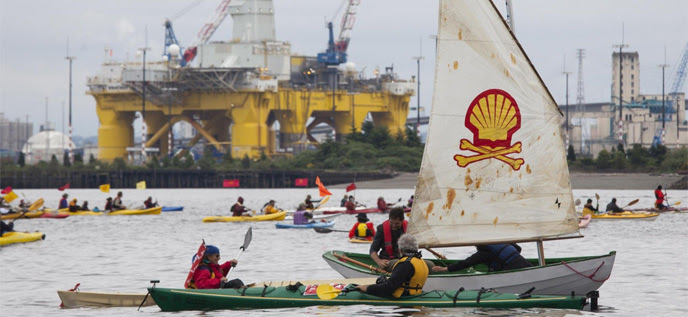
    The CEO of Royal Dutch Shell talks the talk on climate change, but a company document used to guide Shell’s business planning suggests that the company is pursuing a strategy that would mean a catastrophic 4C rise in global temperatures. That is well above the 2C limit considered the threshold for dangerous climate change.

    Both the Gates Foundation and Wellcome Trust are invested in Shell – a company that is clearly not taking the problem of climate change seriously, or its responsibility to do something about it. The foundations also say they carefully screen the companies they invest in to ensure they act in line with their goals. The conclusions will, I think, be unsettling for any investor (and readers) – particularly foundations whose raison d’etre is not to make money for the sake of it, but to make the world a better place.

    Please help make the Gates Foundation and Wellcome Trust sit up and take notice. Ask them to divest from fossil fuels. Here’s what @GuardianEco tweeted:

    Shell strategy = catastrophic climate change. Do @wellcometrust @gatesfoundation want that? http://t.co/YtXfPcnQf4 #keepitintheground

    — Guardian Environment (@guardianeco) May 18, 2015


    Retweet @guardianeco


    This week, we will publish a series of investigations into some of the companies the foundations invest in, revealing how they operate, both environmentally and socially. Stay tuned until tomorrow…

    Best,

    Alan Rusbridger, Editor in chief of the Guardian

  • Deal is done LABOR Party

    1 of 22

    Deal is done

    Inbox
    x

    Mark Butler via sendgrid.info 

    5:20 PM (27 minutes ago)

    to me
    .
    Inga,

    The Abbott Government almost destroyed the renewable energy industry.

    But today the Government has agreed to Labor’s principles for a deal on the Renewable Energy Target, which is supported by the clean energy industry.

    Labor hopes that this deal will ensure the industry can recover and play an important role into the future.

    If you’d like to find out more, you can watch my interview on ABC News 24 below.

    Screen_Shot_2015-05-18_at_4.54.35_pm.png

    It’s Labor’s vision to see Australia return to being a global leader in renewable energy generation, research and development.

    We firmly believe Australia should be at the forefront of renewable energy, not falling further behind.

    Labor believes renewable energy should have a bright future in Australia.

    Mark Butler
    Shadow Minister for the Environment, Climate Change and Water

    A short note on donations With an election now around the corner, we’re relying on your support to get rid of Tony Abbott. The Liberals have the support of the big end of town, but we’re proud to be building a new style of Australian political campaigning: funded by small donations from tens of thousands of passionate community members like you. Will you be one of our generous donors? Whatever you can afford — even if it’s just $3 — will make a difference to the outcome of the next election and future of our country. It takes just two minutes. Thank you.