



Climate Change Will Hit Australia the Hardest, Study Says
By Oliver Milman, The Guardian
Australia could be on track for a temperature rise of more than 5°C by the end of the century, outstripping the rate of warming experienced by the rest of the world, unless drastic action is taken to slash greenhouse gas emissions, according to the most comprehensive analysis ever produced of the country’s future climate.
 Australia may be on track for a temperature rise of more than 5°C by the end of the century, outstripping the rate of warming experienced by the rest of the world.
Credit: Warren/Flickr
The national science agency CSIRO and the Bureau of Meteorology have released the projections based on 40 global climate models, producing what they said was the most robust picture yet of how Australia’s climate would change.
The report stated there was “very high confidence” that temperatures would rise across Australia throughout the century, with the average annual temperature set to be up to 1.3°C warmer in 2030 compared with the average experienced between 1986 and 2005.
Temperature projections for the end of the century depend on how deeply, if at all, greenhouse gas emissions are cut. The world is tracking at the higher emissions scenario, meaning a temperature increase of between 2.8°C and 5.1°C in Australia by 2090.
According to the report, this “business-as-usual” approach to burning fossil fuels is set to cook Australia more than the rest of the world, which will average a temperature increase of 2.6°C to 4.8°C by 2090.
Australia’s surface air temperature has already increased 0.9°C since 1910, with the number of extreme heat records outnumbering extreme cool records nearly three to one since 2001.
Australia experienced its third-warmest year on record in 2014, with 2013 its warmest year on record. The heat experienced in 2013 was “unlikely” to have been caused by natural variability alone, the report stated, with such temperatures now five times more likely due to humans releasing greenhouse gases into the atmosphere.
 A map depicting the median projected changes in temperatures in Australia.
Credit: CSIRO
Other findings of the wide-ranging analysis, the first such Australian climate projection made since 2007, included:
- The interior of Australia is set to warm more rapidly than coastal areas. Alice Springs will experience an average of 83 days a year over 40°C in 2090, up from just 17 in 1995.
- Melbourne will swelter through an average of 24 days above 35°C by 2090, up from 11 in 1995. Sydney will experience 11 days above 35°C by 2090, an increase from three days in 1995.
- Australia is on course for a sea level rise of 45 cm to 82 cm by 2090, if emissions are not curbed. The report warned that if the Antarctic ice sheet was to collapse, sea levels would be a further “several tenths of a meter higher by late in the century”.
- Extreme rainfall events will increase but overall rainfall is expected to drop in southern Australia, apart from Tasmania, during the winter and spring months – by as much as 69 percent by 2090.
- There will be more extreme droughts, with the length of droughts increasing by between 5 percent and 20 percent, depending on how quickly greenhouse gases are cut.
- Rising temperatures will result in a “greater number of days with severe fire danger”. Meanwhile, soil moisture will fall by up to 15 percent in southern Australia in the winter months by 2090.
- Snow cover will decline, with the report stating there was “high confidence that as warming progresses there will be very substantial decreases in snowfall, increase in melt and thus reduced snow cover.”
These changes are likely to produce some benefits, such as enhanced agriculture in Tasmania and fewer deaths from cold weather. But they will be overshadowed by the negatives, such as rising numbers of deaths from heat waves, water resource challenges, impacts upon agriculture and risks posed to coastal infrastructure by rising seas.
Some of the most profound transformations are set to take place in the seas that surround Australia, which will warm by a further 2°C to 4°C unless emissions are cut.
Excess carbon dioxide absorbed by the oceans causes the water’s pH level to drop. This acidification makes it more difficult for corals to form hard reef structures and other creatures such as oysters, clams, lobsters and crabs to develop their shells.
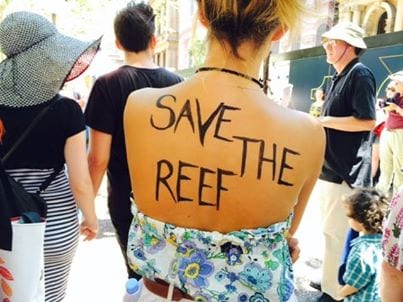
This phenomenon poses a major risk to ecosystems such as the Great Barrier Reef and is, according to the report, “likely to impact the entire marine ecosystem from plankton at the base to fish at the top.”
Kevin Hennessy, a principal research scientist at the CSIRO, said it and the Bureau of Meteorology now had a greater confidence than ever in their forecasts of Australia’s climate.
“We expect land areas to warm faster than ocean areas, and polar regions faster than the tropics,” Hennessy told Guardian Australia.
Given Australia’s geographical position, that would mean much of the country was expected to warm faster than the global average.
“Australia will warm faster than the rest of the world,” Hennessy said. “Warming of 4°C to 5°C would have a very significant effect: there would be increases in extremely high temperatures, much less snow, more intense rainfall, more fires and rapid sea level rises.”
Hennessy said even the internationally agreed limit of 2°C of warming on pre-industrial times would cause severe problems for Australia.
“That intermediate emissions scenario would have significant effects for Australia,” he said. “Coral reefs are sensitive to even small changes in ocean temperature and a 1°C rise would have severe implications for the Great Barrier Reef and Ningaloo reef.
“The situation is looking grim for the Great Barrier Reef unless we can significantly reduce greenhouse gas emissions. A 2°C future would be very challenging.”
Hennessy said Australia should prepare for this altered climate by ensuring hospitals, transport infrastructure, construction codes and fire planning all considered the rising temperatures.
Cutting emissions would also help head off the worst of climate change, with nations set to convene in Paris later this year for crunch talks aimed at agreeing emissions reductions beyond 2020.
“Achieving that intermediate, rather than higher, emissions path would require significant reductions in global greenhouse gases,” Hennessy said. “It’s difficult to say what will be achieved, there are a lot of negotiations to come in Paris. We hope there will be an agreement until 2050 at least, but who knows what will happen in the coming decades.”
Reprinted with permission by The Guardian.


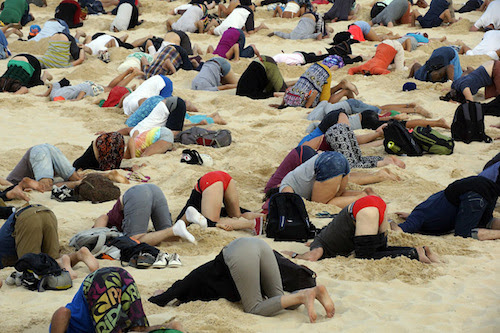

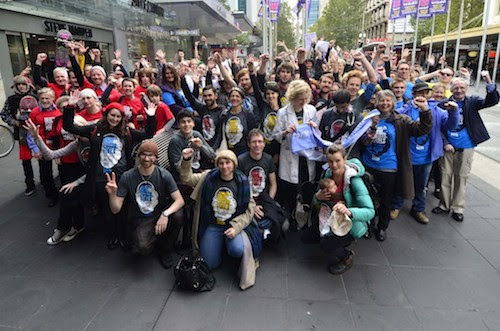


The landmark Queensland state election on Saturday is likely to introduce a new Labor-led government elected with the key policy framework of “Saving the Great Barrier Reef”. The ALP has committed to remove state subsidies for the Galilee coal and associated rail projects, ban reef dumping and to ensure no dredging is undertaken at Abbot Point prior to financial close on any project.
This election result will return the focus of Adani’s $15 billion Carmichael coal mine, plus associated rail and port infrastructure, proposal to the key questions of financial viability and strategic logic in the face of the structural decline of seaborne thermal coal markets.
Central to its “Saving the Great Barrier Reef” policy, the Queensland Labor Party has committed to:
– “Ban the sea dumping of capital dredge spoil within the Great Barrier Reef World Heritage Area”;
– “Labor does not support … plan to dump dredge spoil from Abbot Point onto the Caley Valley Wetlands”;
– “We will ensure that dredging does not go ahead until Adani has demonstrated its project has financial close”;
– “The stewardship of the Great Barrier Reef necessitates that we have a comprehensive climate change policy”;
– “Repeal the Newman Government’s water laws”; and
– “Labor will not spend taxpayer money to build a private rail line for a private commercial project … Labor will not do any secret deals.”
Labor’s policies will see the removal of numerous taxpayer funded subsidies as diverse as buying dredge spoil, co-funding a foreign billionaire-owned private rail line, allocating free water permits and funding a new single-purpose 200km water channel to the Carmichael proposal.
The commercial viability of Adani’s Carmichael proposal without this government support is highly questionable. At the least the port project will not be allowed to commence until financial close, which is currently not scheduled until the end of 2015.
The proposal to open up the Galilee coal basin for up to nine new mega-coal projects would see up to 300 million tonnes per annum of additional thermal coal exports. The 60 per cent decline in coal prices over the last four years reflects significant oversupply and weaker than expected demand. Flooding the seaborne coal market with a further 30 per cent increase in global supply is against Australia’s national interests.
Opening the remote and lower quality Galilee Basin flies in the face of increasing global action on climate change by many of Australia’s major trading partners. Korea has just launched its national emissions trading scheme last month. In November 2014, India committed to a $US100 billion renewable energy program and $US50 billion electricity grid modernisation in the next five years. In the same month the China-US Climate Agreement committed both countries to expand on their significant, sustained efforts to systemically reduce emissions.
There are now serious questions for the incoming executive in Queensland to examine how and why such lavish promises by way of enormous public subsidies were made to the Adani group in the face of conventional economics and our, and many others, continued analysis that showed this proposal was unbankable on commercial terms.
Tim Buckley is the director of Energy Finance Studies, Australasia for the Institute for Energy Economics and Financial Analysis. He has 25 years of financial markets experience, including 17 years with Citigroup culminating in his role as managing director and head of Australasian equity research.