Click here to enable desktop notifications for Gmail. Learn more Hide
1 of 2
|
Web Clip
|
Love, actually.

|
||||||||||||||
Add your news
You can add news from your networks or groups through the website by becoming an author. Simply register as a member of the Generator, and then email Giovanni asking to become an author. He will then work with you to integrate your content into the site as effectively as possible.
Listen to the Generator News online
The Generator news service publishes articles on sustainable development, agriculture and energy as well as observations on current affairs. The news service is used on the weekly radio show, The Generator, as well as by a number of monthly and quarterly magazines. A podcast of the Generator news is also available.
As well as Giovanni’s articles it picks up the most pertinent articles from a range of other news services. You can publish the news feed on your website using RSS, free of charge.
|
Web Clip
|
Love, actually.
|
||||||||||||||
|
Web Clip
CNN.com Recently Published/Updated – Nathaniel Kibby faces hundreds of charges in kidnapping – 2 hours ago
|
RE: Pure desperation
|
||||||||||||||||||||||||||||||||||||||||||||||||||
ktop notifications for Gmail. Learn more Hide
More
1 of 15
| Web Clip
Gmail Blog – Use your cúpla focal on Gmail, now in Irish – 6 days ago |
The John James Newsletter 36 – URGENT – Provocation for WWIII at Cristmas
The John James Newsletter 36 18 December 2014. Three Members of Congress Just Reignited the Cold War While No One Was Looking Pphoto of the chamber of the House of Representatives that shows H.R. 5859 passing by unanimous consent in the span of one second. (Photo: AP/J. Scott Applewhite) Late Thursday night, the House of Representatives unanimously passed a far-reaching Russia sanctions bill, a hydra-headed incubator of poisonous conflict. The second provocative anti-Russian legislation in a week, it further polarizes our relations with Russia, helping to cement a Russia-China alliance against Western hegemony, and undermines long-term America’s financial and physical security by handing the national treasury over to war profiteers. Here’s how the House’s touted “unanimity” was achieved: Under a parliamentary motion termed “unanimous consent,” legislative rules can be suspended and any bill can be called up. If any member of Congress objects, the motion is blocked and the bill dies. At 10:23:54 p.m. on Thursday, a member rose to ask “unanimous consent” for four committees to be relieved of a Russia sanctions bill. At this point the motion, and the legislation, could have been blocked by a single member who would say “I object.” No one objected, because no one was watching for last-minute bills to be slipped through. Most of the House and the media had emptied out of the chambers after passage of the $1.1 trillion government spending package.
The Congressional Record will show only three of 425 members were present on the floor to consider the sanctions bill. Two of the three feigned objection, creating the legislative equivalent of a ‘time out.’ They entered a few words of support, withdrew their “objections” and the clock resumed. According to the clerk’s records, once the bill was considered under unanimous consent, it was passed, at 10:23:55 p.m., without objection, in one recorded, time-stamped second, unanimously. Then the House adjourned. I discovered, in my 16 years in Congress, that many members seldom read the legislation on which they vote. On Oct. 24, 2001, House committees spent long hours debating the Patriot Act. At the last minute, the old bill was swapped out for a version with draconian provisions. I voted against that version of the Patriot Act, because I read it. The legislative process requires attention. Legislation brought before Congress under “unanimous consent” is not read by most members simply because copies of the bill are generally not available. During the closing sessions of Congress I would often camp out in the House chamber, near the clerk’s desk, prepared to say “I object” when something of consequence appeared out of the blue. Dec. 11, 2014, is one of the few times I regret not being in Congress to have the ability to oversee the process. The Russia Sanctions bill that passed “unanimously,” with no scheduled debate, at 10:23:55 p.m. on Dec. 11, 2014, includes:
Read the legislation, which Congress apparently didn’t. As reported on GlobalSecurity.org, earlier that same day in Kiev, the Ukrainian parliament approved a security plan that will:
Under the guise of democratizing, the West stripped Ukraine of its sovereignty with a U.S.-backed coup, employed it as a foil to advance NATO to the Russian border and reignited the Cold War, complete with another nuclear showdown. The people of Ukraine will be less free, as their country becomes a “military state,” goes into hock to international banks, faces structural readjustments, privatization of its public assets, decline of social services, higher prices and an even more severe decline in its standard of living. In its dealings with the European Union, Ukraine could not even get concessions for its citizens to find work throughout Europe. The West does not care about Ukraine, or its people, except for using them to seize a strategic advantage against Russia in the geopolitical game of nations. Once, with the help of the West, Ukraine fully weighs in as a “military state” and joins the NATO gun club, its annual defense budget will be around $3 billion, compared with the current defense budget of Russia, which is over $70 billion. Each Western incitement creates a Russian response, which is then given as further proof that the West must prepare for the very conflict it has created, war as a self-fulfilling prophecy. That the recent Russia sanctions bill was advanced, “unanimously,” without debate in the House, portends that our nation is sleepwalking through the graveyards of history, toward an abyss where controlling factors reside in the realm of chance, what Thomas Hardy termed “crass casualty.” Such are the perils of unanimity. |
|||||||||
|
Web Clip
About Today – Summer Swimsuit Guide: 12 Hot Trends to Try
|
[New post] Brisbane City – redrawing the wards

|
|||||||||||||||||||||||||||||||||||||||||||||||||||


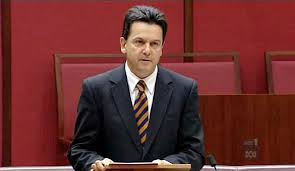
Senator Nick Xenophon has brought back a carbon trading scheme to Australia and nobody seems to have noticed. Quietly tucked behind the headlines from the Palmer United Party and the government was the mention of Senator Xenophon inserting a ‘Safeguard Mechanism’ into the Direct Action legislation.
The mechanism creates the framework for a baseline and credit system which is similar to a cap-and-trade system in that both are market based methods to arrive at a price for carbon. While the specific details of the Safeguard Mechanism have yet to be determined, conceptually any company who currently emits more than 100,000 tonnes of CO2 annually will be required from 1 July 2016 to keep their emissions below a predetermined baseline level or face penalties.
Before proceeding further it is important to understand the mechanics of the government’s Direct Action plan. The central part of the plan is the Emission Reduction Fund (ERF). Initially seeded with $2.55 billion over 10 years, it will be used to help pay for projects that seek to abate carbon emissions.
To be eligible to receive payments from the ERF, a project must first be submitted to the regulator who will vet the project and then issue it Australian Carbon Credit Units (ACCU). Holders of ACCUs can then bid their project into the ERF and receive a fixed payment from the government for their ACCUs or they can offer these credits into a secondary market.
This secondary market is for either projects that had previously agreed to deliver ACCUs into the ERF but for whatever reason fell short (like a wind farm not producing enough power) or for companies that fall under the safeguard mechanism and have exceeded their emissions cap.
The bidding of projects into the ERF and a functioning secondary market for ACCU is expected to allow market forces to determine the price of carbon. While all this sound good in principle we see a number of issues with the plan:
The carbon price will become a political construct not an economic exercise
The regulator has made it clear that it will accept offers to sell credits to it up to a maximum price. For example, a wind farm might generate a certain number of credits annually and then offer these credits to the ERF at $10 each. Another wind farm might offer the same credits for $11 and so forth but ultimately the regulator will accept offers up to a certain price.
The regulator is apparently under tremendous pressure to release what is the price ceiling so potential projects can determine whether it is worth bidding. This is not really a market determined price because the regulator has already set the price. It should also be noted here that the consensus view is the $2.55 billion in the ERF will be awarded on a first-come-best-dressed basis such that once the funds are spent, there will be no further auctions. Also, since the regulator is setting the maximum price, the price of carbon is looking more like a political exercise than an economic process.
The market looks to become flooded with ACCUs
The regulator is seeking as many projects as possible and is actively promoting its flexibility when considering applications. What has caught our attention are energy efficiency projects which include lighting upgrades, heating, ventilation and cooling system upgrades, boiler upgrades, and variable speed drive installations. As long as the project cuts emissions by 5%, it is considered an eligible project. As we have maintained encouraging energy efficiency is an important pillar of energy policy but in this instance many of these projects are economic today without financial assistance and would probably have been performed by a company with or without the existence of the ERF.
When you consider that switching to LEDs will cut power consumption (and by extension emissions) by up to 90%, or the installation of an AC motor drive will cut power usage between 20-50%, the potential for any company or property owner to aggregate these upgrades into large blocks of ACCUs will put significant down pressure on carbon prices. The regulator will even accept commercial building efficiency upgrades based on NABERS ratings as being capable of creating ACCUs. While promoting the breadth of the regulators efforts to curb emissions is well intentioned, it seems likely to us that the price of carbon will remain low for an extended period of time.
ERF could be empty after the first auction
There is speculation that coal-fired power plants will bid their closure as a form of abatement given the excess power capacity in the market. For example, Loy Yang A produces just over 20 million tonnes of CO2 per year. Assuming it bids at the current European carbon price of $10, it could capture $1.4 billion of the fund itself (20 million tonnes x $10 x 7 years – the longest contract period under the ERF). Throw in Bayswater and the entire fund will have been consumed! Admittedly taking out 16% of Australia’s power production overnight is not going to happen but this highlights how closing smaller coal-fired plants could consume large portions of the fund very quickly.
Putting the cynical view aside, we ask whether on balance the ERF is worth it? The coal example above is indicative of what the ERF will achieve. Shutting down both Loy Yang A and Bayswater would cause an immediate 6% reduction in our national emissions, a good start. If all that generating capacity is replaced with lower emission technologies then the ERF could be on track to achieve a reduction in emissions, but where is the follow-through plan? While the safeguard mechanism could, in theory, provide the follow-through to drive structural change, the abundance of ACCUs threatens the economic incentive to make these changes and the lack of detail of the mechanism itself means we need to trust Prime Minister Abbott to do the right thing.
The final rules around the safeguard mechanism are thus the key structural drivers we need to reduce the emissions intensity of Australia
We would like to see the safeguard mechanism include the following principles:
We thank Senator Xenophon for keeping Australia relevant in the fight against climate change but we suspect the real battle is still to come.
Nathan Lim is Portfolio Manager at Australian Ethical Investment.
|
Web Clip
|
The Grinch that Stole Xmas?
Dear friend, With Xmas around the corner, our Government is trying to fast-track plans to construct the world’s largest coal port on the Great Barrier Reef. If they get their way, approvals could be given as early as Xmas eve and construction could start on the 2nd of January! The Abbot Point Coal Terminal would provide a gateway for coal companies to unlock nine mega coal mines in the Galilee. These mines would cook the climate and wreck the Reef. We have a tiny window of time to tell the Government what we think of these disastrous plans. Environment Minister Greg Hunt has given Australians just ten days to comment on over 2300 pages of material about the construction plans and the submission deadline is 5pm tomorrow! Don’t let Greg Hunt be the Grinch that stole Xmas – click here to tell him what you think about these plans to dredge the Reef and open the floodgates to massive new coal mine expansion. These plans are insane in so many ways — ripping up the Great Barrier Reef to exploit what would be the world’s largest carbon bomb at a time when coal prices are plummeting, renewables are punching above their weight, public opposition is skyrocketing and financiers are backing away en masse. What’s more, to construct the Port, Reef sea floor would be dug up and dumped into the internationally significant Caley Valley Wetlands, home to 40,000 water birds including rare and threatened species. As we head into holiday season, let’s not allow these disastrous plans slip through whilst we aren’t watching – click here to voice your opposition today. Wishing you a very happy, safe and coal-free xmas, Charlie and the whole 350.org Australia team PS: Click here to read our blog about the 10 reasons why the Galilee Basin is insane. |
|||||||||||