Category: News

Add your news
You can add news from your networks or groups through the website by becoming an author. Simply register as a member of the Generator, and then email Giovanni asking to become an author. He will then work with you to integrate your content into the site as effectively as possible.
Listen to the Generator News online

 
The Generator news service publishes articles on sustainable development, agriculture and energy as well as observations on current affairs. The news service is used on the weekly radio show, The Generator, as well as by a number of monthly and quarterly magazines. A podcast of the Generator news is also available.
As well as Giovanni’s articles it picks up the most pertinent articles from a range of other news services. You can publish the news feed on your website using RSS, free of charge.
 

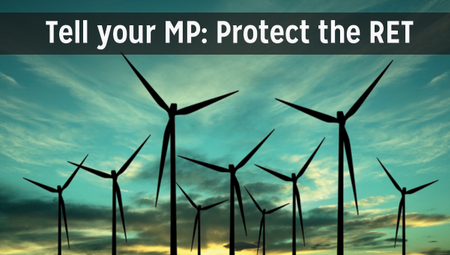
  • NO DEAL Contact your MP

    Click here to enable desktop notifications for Gmail.   Learn more  Hide
    More

    1 of 11
    Web Clip

    No deal

    Inbox
    x

    Kelsey – GetUp!

    11:27 AM (2 hours ago)

    to me
    NEVILLE,

    Yesterday, the Labor Party walked away from weeks of negotiations with the Government over the future of Australia’s renewable energy industry.1 In the face of enormous pressure, Labor stood by its commitment to the Renewable Energy Target (RET) and rejected the Government’s plans to slash the target. This is good news – but it’s not over yet.

    The uncertainty created by the Government’s attack on the RET is already having a devastating impact on business. A report released this week showed investment in the renewable energy industry has dropped this year by a staggering 70 per cent.2 And the longer the Coalition Government leaves the future of renewables in the balance, the more the industry suffers.

    With damning reports like this and strong public support for increased investment in renewable energy, there’s a real chance the Coalition could walk away from its attempts to reduce the RET – but we’ll need backbenchers support to do it.

    And here’s the thing: your electorate is unique. It is one of few seats around the country held by Coalition backbenchers. If your local MP and other backbenchers stand up to Tony Abbott, he’ll get the clear message that critical electorates don’t want the renewables to be tampered with. Let’s deliver hundreds of messages to our local MPs in a way that proves real people, and real constituents, want them to protect the RET.

    It’s not as easy as just clicking a button to take action, but real change often requires real life actions like this – and the rest of the country is counting on you. Click here to pledge to hand-deliver your message to your MP’s local electoral office and make sure your they knows just what’s at stake: https://www.getup.org.au/protect-the-ret

    In the 13 years since the RET was introduced, it’s pumped $20 billion worth of investment into our economy, allowed for the creation of more than 24,000 jobs, and increased competition within the electricity market.3 And from what we’re hearing, many Coalition backbenchers are already unsettled about the thought of cutting the RET.

    Member for Corangamite, Sarah Henderson, has made it clear that she is a “strong supporter of renewable energy”4. Even the Government’s own Environment Minister professed his support for the RET earlier this year, saying:

    “We’re committed to keeping the RET because of the pre-election commitment and because it’s been an effective way of reducing emissions.”5

    But in order to stand up to their colleagues and fight to protect the RET, MPs need to know they have the support of their constituents.

    So here’s the plan. Over the last couple of months, GetUp members have emailed decision-makers, put ads on the air in Canberra, and switched our power to renewable energy companies. We know the pressure is working – so far, no other party has been willing to make a dirty deal with the Coalition and push the RET cuts through Parliament. Critical crossbenchers, including the Palmer United Party and Ricky Muir, have repeatedly stressed their support for the RET.

    Now, let’s give Coalition backbenchers a reason to take the fight to the party room – and prove just how many constituents care enough to deliver handwritten letters urging them to protect the RET.

    Will you help make it happen? Click here to print a message to your MP and deliver it to them before Parliament resumes next Monday:

    https://www.getup.org.au/protect-the-ret

    Without the support of Labor and the Greens, the Government’s position on the RET is looking more and more vulnerable. Right now – today – is our best chance of convincing the Coalition that messing with the RET would be bad for business.

    For our renewable energy future,

    All the people from the GetUp team

    PS – There’s no need to worry if you haven’t visited your local MP’s electoral office before. The more of us who step up to try something new, the more effective this will be. We have everything you need to make it an easy and effective visit. Click here to be a part of it: https://www.getup.org.au/protect-the-ret

    ~ References ~

    [1] Renewable Energy Target: Negotiations between Government and Labor over future of target break down, ABC News, 12 November 2014
    [2] Investment in renewable energy down 70 per cent: Climate Council report, ABC News, 10 November 2014
    [3] Why we need the Renewable Energy Target, Clean Energy Council, 2014
    [4] Renewable Energy Target, Sarah Henderson Federal Member for Corangamite website, 3 September 2014
    [5] Is $15 a year really too much to pay for renewable energy?, The Conversation, 11 February 2014

  • Bill Shorten via sendgrid.info

    Click here to enable desktop notifications for Gmail.   Learn more  Hide
    More

    Hope is a renewable resource

    Inbox
    x

    Bill Shorten via sendgrid.info 

    6:36 PM (4 minutes ago)

    to me
    .

    Hi Neville,

    You’d be forgiven for getting whiplash if you were following the news on climate change today.

    I was just about to update you on Labor’s announcement on the Renewable Energy Target when I got the news of an agreement between China and the US to take dramatic action to reduce carbon emissions.

    It’s a huge announcement and one which gives me real hope that the world will act to prevent irreversible climate change.

    With China and the United States representing around one-third of the global economy and over 40 per cent of global emissions, there will now be significant global momentum to deal with climate change. You can read the White House Statement here.

    This news makes Tony Abbott’s refusal to deal with the issue at the G20 in Brisbane later this week all the more embarrassing and irresponsible.

    More than that, it reveals Tony Abbott’s determination to take Australia backwards, to reverse our action on climate change, as a complete failure of leadership.

    Labor has been desperately trying to drag the Abbott Government back to a position of bi-partisan support for the Renewable Energy Target.

    The Renewable Energy Target has been driving investment in renewable energy. Under Labor, renewable energy jobs tripled, homes with rooftop solar went from 7,400 to 1.3 million and pollution levels declined.

    But Tony Abbott wants to cut the Renewable Energy Target by 40 per cent and Labor won’t stand for that.

    A reduction of the Renewable Energy Target by 40 per cent would cost jobs, stall investment and see Australia’s electricity prices and carbon pollution rise.

    By 2013, Australia was rated one of the four most attractive places to invest in renewable energy, alongside China, the US and Germany.

    The uncertainty caused by Tony Abbott reneging on his commitment to the Renewable Energy Target has already seen Australia to go backwards, to tenth in the world.

    On top of that, Tony Abbott wants to abolish the Australian Renewable Energy Agency and the Clean Energy Finance Corporation.

    Labor will fight for real action on climate change and a strong future for renewables in Australia. And I know you’ll fight with me.

    Thanks for standing with me,

    Bill.

  • Better Dead than Different MONBIOT

    Web Clip
    Forbes.com: Most popular storiesPersonal Branding Is Dead — Here’s Why13 hours ago

    Better Dead Than Different – monbiot.com

    Inbox
    x

    George Monbiot <noreply+feedproxy@google.com>

    6:24 PM (9 minutes ago)

    to me

    Better Dead Than Different – monbiot.com


    Better Dead Than Different

    Posted: 11 Nov 2014 11:35 AM PST

    Our visions of the future are defined, like the film Interstellar, by technological optimism and political defeatism

    By George Monbiot, published in the Guardian 12th November 2014

    “It’s like we’ve forgotten who we are,” the hero of Interstellar complains. “Explorers, pioneers, not caretakers … We’re not meant to save the world. We’re meant to leave it.” It could be the epigraph of our age.

    Don’t get me wrong. Interstellar is a magnificent film, true to the richest traditions of science fiction, visually and auditorally astounding. See past the necessary silliness and you will find a moving exploration of parenthood, separation and ageing. It is also a classic exposition of two of the great themes of our age: technological optimism and political defeatism.

    The Earth and its inhabitants are facing planetary catastrophe, caused by “six billion people, and every one of them trying to have it all”, which weirdly translates into a succession of blights, trashing the world’s crops and sucking the oxygen out of the atmosphere. (When your major receipts are in the US, you can’t afford to earn the hatred of the broadcast media by mentioning climate change. The blight, an obvious substitute, has probably averted millions of dollars of lost takings).

    The civilisational collapse at the start of the film is intercut with interviews with veterans of the Dust Bowl of the 1930s. Their worn faces prefigure the themes of ageing and loss. But they also remind us inadvertently of a world of political agency. Great follies were committed but big, brave things were done to put them right: think of the New Deal and the Civilian Conservation Corps(1). That world is almost as different from our own as the planets visited by Interstellar’s astronauts.

    They leave the Earth to find a place to which humans can escape or, if that fails, one in which a cargo of frozen embryos can be deposited. It takes an effort, when you emerge, to remember that such fantasies are taken seriously by millions of adults, who consider them a realistic alternative to addressing the problems we face on Earth.

    NASA runs a website devoted to the idea(2). It claims that gigantic spaceships, “could be wonderful places to live; about the size of a California beach town and endowed with weightless recreation, fantastic views, freedom, elbow-room in spades, and great wealth.” Of course, no one could leave, except to enter another spaceship, and the slightest malfunction would cause instant annihilation. But “settlements in earth orbit will have one of the most stunning views in our solar system – the living, ever-changing Earth.” We can look back and remember how beautiful it was.

    And then there’s the money to be made. “Space colonization is, at its core, a real estate business. … Those that colonize space will control vast lands, enormous amounts of electrical power, and nearly unlimited material resources. [This] will create wealth beyond our wildest imagination and wield power – hopefully for good rather than for ill.”(3) In other words, we would leave not only the Earth behind but also ourselves.

    That’s a common characteristic of such fantasies: their lack of imagination. Wild flights of technological fancy are accompanied by a stolid incapacity to picture the inner life of those who might inhabit such systems. People who would consider the idea of living in the Gobi Desert intolerable – where, an estate agent might point out, there is oxygen, radiation-screening, atmospheric pressure and 1g of gravity – rhapsodise about living on Mars. People who imagine that human life on Earth will end because of power and greed and oppression imagine we will escape these forces in pressure vessels controlled by technicians, in which we would be trapped like tadpoles in a jamjar.

    If space colonisation is impossible today, when Richard Branson, for all his billions, cannot even propel people safely past the atmosphere(4), how will it look in a world that has fallen so far into disaster that leaving it for a lifeless, airless lump of rock would be perceived as a good option? We’d be lucky in these circumstances to possess the wherewithal to make bricks.

    Only by understanding this as a religious impulse can we avoid the conclusion that those who gleefully await this future are insane. Just as it is easier to pray for life after death than it is to confront oppression, this fantasy permits us to escape the complexities of life of Earth for a starlit wonderland beyond politics. In Interstellar, as in many other versions of the story, space is heaven, overseen by a benign Technology, peopled by delivering angels with oxygen tanks.

    Space colonisation is an extreme version of a common belief: that it is easier to adapt to our problems than to solve them. Earlier this year, the economist Andrew Lilico argued in the Telegraph(5) that we can’t afford to prevent escalating climate change, so instead we must learn to live with it. He was challenged on Twitter to explain how people in the tropics might adapt to a world in which four degrees of global warming had taken place. He replied: “I imagine tropics adapt to 4C world by being wastelands with few folk living in them. Why’s that not an option?”(6)

    Re-reading his article in the light of this comment, I realised that it hinged on the word “we”. When the headline maintained that “We have failed to prevent global warming, so we must adapt to it”(7), the “we” referred in these instances to different people. We in the rich world can brook no taxation to encourage green energy, or regulation to discourage the consumption of fossil fuels. We cannot adapt even to an extra penny of tax. But the other “we”, which turns out to mean “they” – the people of the tropics – can and must adapt to the loss of their homes, their land and their lives, as entire regions become wastelands. Why is that not an option?

    The lives of the poor appear unimaginable to people in his position, like the lives of those who might move to another planet or a space station. So reducing the amount of energy we consume and replacing fossil fuels with other sources, simple and cheap as these are by comparison to all other options, is inconceivable and outrageous, while the mass abandonment of much of the inhabited surface of the world is a realistic and reasonable request. “It is not contrary to reason to prefer the destruction of the whole world to the scratching of my finger”, David Hume noted(8), and here we see his contemplation reified.

    But at least Andrew Lilico could explain what he meant, by contrast to most of those who talk breezily about adapting to climate breakdown. Relocating cities to higher ground? Moving roads and railways, diverting rivers, depopulating nations, leaving the planet? Never mind the details. Technology, our interstellar god, will sort it out, some day, somehow.

    Technological optimism and political defeatism: this is a formula for the deferment of hard choices to an ever-receding neverland of life after planetary death. No wonder it is popular.

    www.monbiot.com

    References:

    1. http://www.cityprojectca.org/blog/archives/5392

    2. http://settlement.arc.nasa.gov

    3. http://settlement.arc.nasa.gov/

    4. http://www.theguardian.com/science/2014/nov/01/sir-richard-branson-space-tourism-project-doubt

    5. http://www.telegraph.co.uk/finance/economics/10644867/We-have-failed-to-prevent-global-warming-so-we-must-adapt-to-it.html

    6. http://www.businessgreen.com/bg/james-blog/2337458/climate-adaptation-lobby-is-reckless-dangerous-and-partly-right

    7. http://www.telegraph.co.uk/finance/economics/10644867/We-have-failed-to-prevent-global-warming-so-we-must-adapt-to-it.html

    8. https://ebooks.adelaide.edu.au/h/hume/david/h92t/B2.3.3.html

  • BREAKING ; They’ve been exposed

    1 of 8
    Web Clip
    CNN.com Recently Published/UpdatedJesse Ventura: Military doesn’t ‘fight for our freedom’1 hour ago

    BREAKING: They’ve been exposed

    Inbox
    x

    Claire, Solar Citizens

    11:34 AM (0 minutes ago)

    to me

    NEVILLE —

    This is big.

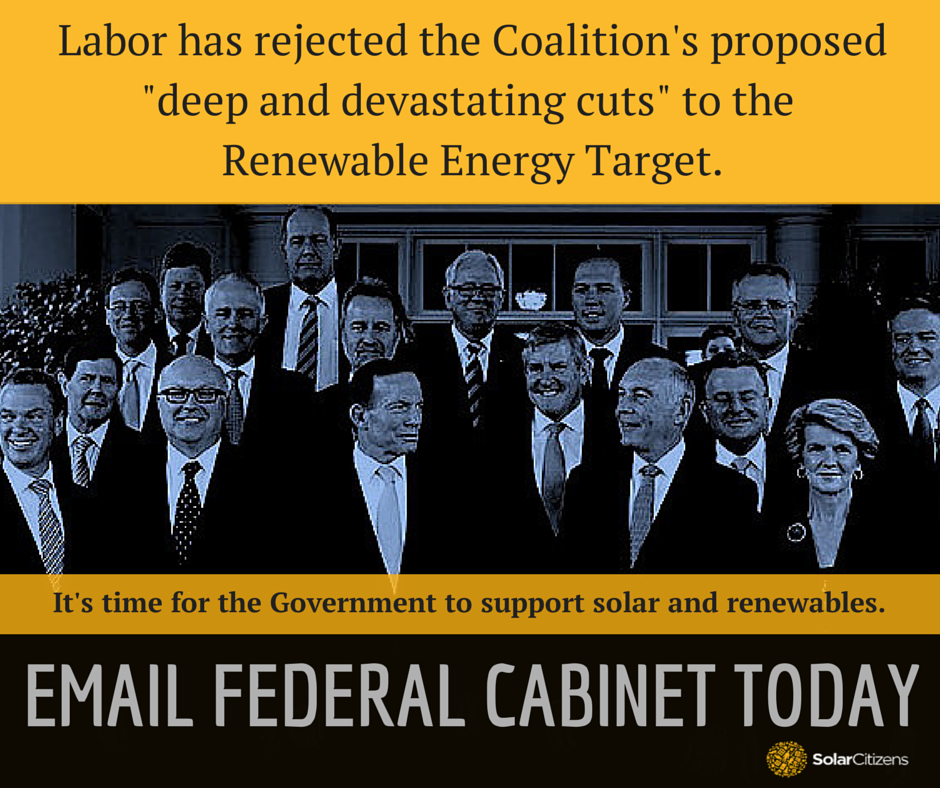
    Labor has called out the government’s heinous attempts to destroy solar and walked away from Renewable Energy Target negotiations, saying it could not accept the government’s proposed “deep and devastating cut to the sector”*.

    This development has lifted the curtain on the government’s true intentions for solar and renewable energy. By failing to come to an agreement with Labor to restore bipartisan support for the Target’s future, the government has exposed the fact it wants to keep pushing on with its attempt to put renewables at grave risk.

    The government needs to hear loud and clear that people will support politicians who keep their promises. Will you email Federal Cabinet ministers and call on them to back the full 41,000 gigawatt hour Target?

    Labor’s Environment spokesman Mark Butler’s statement today says he “raised serious concerns about restrictions on the rooftop solar industry”** in negotiations.

    On top of this, we’ve been hearing persistent talk that the government wants to drastically reduce the small-scale part of the scheme that covers rooftop solar. This is in stark contrast to Ian Macfarlane’s public statements last month that household solar was in the clear.***

    Email your Federal Cabinet ministers – it only takes a minute – and tell them cuts to the Renewable Energy Target are unacceptable, plain and simple.

    The Coalition broke its election promise as soon as they walked through Parliament’s door as the new Government, setting up the bogus Warburton review that has undermined the renewable energy industry and sent billions in investment offshore.

    The Target will bring power prices down for everyone, create more than 15,000 solar jobs and make it easier for people to go solar. But the big power companies are fighting tooth and nail to protect their huge profits and we all know who they expect to pay – every Australian power user. But together we won’t let them get away with it.

    The Federal Cabinet is meeting soon and the people sitting around the large table can resolve to back the Target and restore confidence in Australia’s most innovative new industry.

    Ask your politicians whose interests they’re backing – yours or those of the big power companies? Send your personal message to Cabinet right now and show them that you’ll support politicians that support lower power prices and create more Aussie jobs.

    For a strong solar future, for every Australian,

    Claire, National Director

    PS: A year is a long time in politics, but we need to remember how this began. The Coalition promised to support the Renewable Energy Target, but soon after the 2013 election it announced an unnecessary review that undermined the industry and cost billions in investment. Even the Warburton review found the Target will bring down power prices for Australians by 2020. So stop reading this email and write to Federal Cabinet using our easy online tool – tell the Government to get back in touch so Australia can get on with the job growing solar and renewables .

    http://www.theguardian.com/australia-news/2014/nov/11/renewable-energy-target-in-confusion-as-negotiations-collapse
    ** http://markbutler.net.au/news/2014/11/12/labor-rejects-abbott-government-plan-to-destroy-renewable-energy
    *** http://www.minister.industry.gov.au/ministers/macfarlane/speeches/qa-press-club-address

    Solar Citizens
    http://www.solarcitizens.org.au/

  • Fact Check. Can Clean Coal Tehnology halve emissions within 5 years

    Fact check: Can clean coal technology halve emissions within 5 years?

    Posted about an hour agoWed 12 Nov 2014, 10:06am

    More than half a billion tonnes of coal is mined in Australia each year from national reserves that are the fourth largest in the world, behind the United States, Russia and China.

    Coal exports have added, on average, $44 billion to the national annual income over the past five years, with Australia predicted to be one of the biggest beneficiaries on increasing global trade in coal. Prime Minister Tony Abbott says coal is “good for humanity” and that he is confident about the future of the industry.

    But the latest ‘synthesis report‘ from the United Nations Intergovernmental Panel on Climate Change, released in November, warns that without, among other things, reducing the carbon intensity of electricity generation, global warming is on track to exceed current temperatures by 4 degrees Celsius by 2100.

    Environment Minister Greg Hunt says the Government’s “direct action” plan will underpin research into clean coal technology, which will “significantly” reduce emissions from current coal-fired power generators.

    “What we have to focus on is reducing emissions and the best thing that we can do is to actually clean up existing power stations. What we’re proposing right now is to work with power stations. We have the research of the CSIRO which is talking about a 30 to 50 per cent reduction in emissions from brown coal power stations through their direct injection combustion engine research,” he told ABC radio on November 3.

    Mr Hunt told the ABC’s Four Corners in July that: “The technology which is emerging now and which I think will be available over the next three to five years cleans up very significantly – not perfectly, but very significantly, by up to 30 to 50 per cent the emissions from current generation.”

    Can clean coal technology halve emissions from current power generators within five years?

    • The claim: Greg Hunt says technology which will be available over the next three to five years will reduce emissions from coal-fired power stations by up to 30 to 50 per cent.
    • The verdict: The technology remains in a development phase and is not realistically expected to be commercially operative and rolled out within three to five years. No other clean coal technology sufficient to cut emissions from current generators by up to 50 per cent is economically viable at industrial scale in Australia, or expected to become viable within the next five years.

    Available technology for ‘clean coal’

    In October 2012, the federal Parliamentary Library summarised the options for reducing emissions in power generation. It stated: “Designation of a technology as a ‘clean coal’ technology does not imply that it reduces emissions to zero or near zero. For this reason, the term has been criticised as being misleading; it might be more appropriate to refer to ‘cleaner coal’.”

    Australia has about 25 coal-fired power stations in operation which burn black and brown coal. According to the Climate Council, 65 per cent of Australia’s coal-fired power stations will be over 40 years old by 2030.

    All but four of Australia’s power stations are what are known as older, “subcritical” plants, which waste 65 per cent, or more, of the coal they burn.

    Four “supercritical” plants were built in Australia in the late 1990s to replace old plants from the 1970s and emit less greenhouse gases than the subcritical plants.

    According to the International Energy Agency (IEA), state-of-the-art, ultra-supercritical (USC) plants can run at up to 46 per cent efficiency. On World Coal Association estimates, those efficiency gains mean a USC plant could emit up to 40 per cent less than a regular, existing power station. Advanced-USC plants, which are even more efficient, are being developed overseas.

    The association’s website estimates that for every one percentage point gain in efficiency, there is a 2 to 3 per cent reduction in the amount of greenhouse gasses produced. So, a USC plant running at 46 per cent efficiency would produce 22 to 33 per cent lower emissions than an existing plant running at 35 per cent efficiency.

    University of Queensland Energy Initiative director Chris Greig says it is reasonable to suggest that any new high-efficiency, low-emissions technology would produce 30 per cent to 50 per cent lower emissions than the current subcritical plants. “But 50 per cent would be a stretch. It would be comparing the best replacement technology with the worst existing plant,” he told Fact Check.

    But Australia is unlikely to implement either the USC or Advanced-USC technology because the cost of retrofitting existing plants is prohibitively expensive, almost equal to building an entirely new plant, according to Professor Greig, and Bloomberg New Energy Finance (BNEF) head of Australia Kobad Bhavnagri.

    This means the supercritical or ultra-supercritical technology will likely only be used if a new plant is built, and according to an August report from the National Electricity Market Operator, for the first time in history, Australia will not need any more coal or gas power capacity to maintain adequate supply over the next decade.

    BNEF also says in its Asia Pacific 2030 Market Outlook report, released in June, that new coal generation projects “are unlikely in Australia, as lenders are reluctant to contribute finance citing significant reputational risk”.

    Future technology – DICE

    With USC technology too expensive to retrofit, CSIRO researchers are investigating cheaper, more effective technologies to reduce emissions created from burning coal. Those technologies include carbon capture and storage, and intense gasification technologies. But Mr Hunt says it is direct injection carbon engine (DICE) technology which will clean up Australia’s coal industry.

    The CSIRO’s head of the Advanced Carbon Power division, and principal scientist working on DICE, Louis Wibberley, says that it would be “absolutely possible” for DICE to cut emissions by 30 per cent, or up to 50 per cent respectively, when compared to old black and brown coal generators, if the technology could be developed to a commercial roll-out stage.

    “But we are struggling to get the funding from the coal industry,” he told Fact Check.

    Dr Wibberley says DICE technology, which is essentially a diesel engine about the same size as those used on ships, uses a liquid slurry of water and brown or black coal (and bio-char if available) to create energy.

    He says the technology to create the right type of liquid is at commercial stage, but the first fully-sized engine to power a commercial plant won’t be available until 2020, as a best-case scenario.

    He says while Australia has one laboratory small-scale prototype engine, the Japanese should be ready to test a 1,000 kilowatt single cylinder engine some time over the next 18 months, which would be big enough to power about 1,000 homes.

    He notes that a 12,000 to 30,000 kilowatt prototype demonstration engine could be possible overseas by 2018.

    German company MAN Diesel & Turbo estimates it can manufacture an engine within three to five years.

    Dr Wibberley says Australia is about a year behind that schedule for implementation, because of funding and administrative issues which have delayed development of the technology.

    The benefit of DICE technology over other clean coal systems is that individual engine units can be inserted into existing power plants, and could produce between 5,000 and 7,000 kilowatts each.

    Dr Wibberley says the expectation is that existing coal generators could be systematically decommissioned and replaced with DICE units in a planned, staged rollout, which could be cheaper and easier than retrofitting plants with other technologies.

    A commercial DICE power plant is expected to cost about $1.4 million per 1,000 kilowatts to build, and could also assist in the uptake of carbon capture and storage, “delivering a 30 to 40 per cent cost advantage (in terms of $/t CO2 abated) compared to conventional coal and gas power generation technology,” Dr Wibberley said in a paper presented to the International Energy Agency in May.

    “The cost to commercialisation…would be comparatively low (say $75 million) and far less than most other cleaner coal technologies,” it said.

    Is DICE the answer?

    The CSIRO says that unlike traditional generators, DICE technology:

    • can provide rapid response power when renewable generators aren’t meeting demand;
    • is modular, meaning it can be added to existing plants when old units are scrapped;
    • requires half the capital investment of conventional technology; and
    • could encourage a new export market for the coal slurry, which is non-flammable, environmentally benign and can be safely transported and stored.

    Mr Bhavnagri says that putting aside DICE technology, which is still in an early research phase, Mr Hunt’s statements about clean coal technologies making a significant impact on reducing global warming “aren’t supported by the evidence and lack substance”.

    He says BNEF doesn’t focus on clean coal anymore, “which is indicative of the fact it doesn’t really have that much of a future”.

    BNEF expects that emissions from Australia’s power generation sector will remain high for at least 15 years, despite more renewable energy technology coming on line. Its Market Outlook report states that power sector emissions in Australia are only expected to fall by 6 per cent between 2013 and 2030.

    The report says coal will persist as an energy source, and with the incumbent coal fleet likely to be long-lived and remain cheap to operate, output – and emissions – will stay high.

    “To decarbonise the power sector in the absence of cost-effective sequestration technologies, policy measures will be needed that raise the short-run cost of coal and force larger amounts of retirements [of subcritical generators],” it said.

    Climate advisory panel

    • This piece was reviewed by all members of Fact Check’s climate advisory panel.
    • Meet the panel here.

    The verdict

    While Mr Hunt did not specifically mention DICE during his Four Corners interview, the Environment Minister subsequently confirmed publicly that his statement about reducing emissions by up to 50 per cent was based on the CSIRO’s technology.

    That technology remains in a development phase and is not realistically expected to be commercially operative and rolled out within three to five years. Funding issues and lack of widespread industry support have put development of DICE technology in Australia behind the rest of the world by about a year.

    No other clean coal technology sufficient to cut emissions from current generators by up to 50 per cent is economically viable at industrial scale in Australia, or expected to become viable within the next five years.

    Whatever the technological developments, forecast demand for coal-fired electricity in Australia is not expected to make implementation of the new clean coal technologies economically viable domestically.

    Mr Hunt’s statement is highly ambitious.

    Sources

  • Fact check: Can clean coal technology halve emissions within 5 years?

    Posted 26 minutes agoWed 12 Nov 2014, 10:06am

    More than half a billion tonnes of coal is mined in Australia each year from national reserves that are the fourth largest in the world, behind the United States, Russia and China.

    Coal exports have added, on average, $44 billion to the national annual income over the past five years, with Australia predicted to be one of the biggest beneficiaries on increasing global trade in coal. Prime Minister Tony Abbott says coal is “good for humanity” and that he is confident about the future of the industry.

    But the latest ‘synthesis report‘ from the United Nations Intergovernmental Panel on Climate Change, released in November, warns that without, among other things, reducing the carbon intensity of electricity generation, global warming is on track to exceed current temperatures by 4 degrees Celsius by 2100.

    Environment Minister Greg Hunt says the Government’s “direct action” plan will underpin research into clean coal technology, which will “significantly” reduce emissions from current coal-fired power generators.

    “What we have to focus on is reducing emissions and the best thing that we can do is to actually clean up existing power stations. What we’re proposing right now is to work with power stations. We have the research of the CSIRO which is talking about a 30 to 50 per cent reduction in emissions from brown coal power stations through their direct injection combustion engine research,” he told ABC radio on November 3.

    Mr Hunt told the ABC’s Four Corners in July that: “The technology which is emerging now and which I think will be available over the next three to five years cleans up very significantly – not perfectly, but very significantly, by up to 30 to 50 per cent the emissions from current generation.”

    Can clean coal technology halve emissions from current power generators within five years?

    • The claim: Greg Hunt says technology which will be available over the next three to five years will reduce emissions from coal-fired power stations by up to 30 to 50 per cent.
    • The verdict: The technology remains in a development phase and is not realistically expected to be commercially operative and rolled out within three to five years. No other clean coal technology sufficient to cut emissions from current generators by up to 50 per cent is economically viable at industrial scale in Australia, or expected to become viable within the next five years.

    Available technology for ‘clean coal’

    In October 2012, the federal Parliamentary Library summarised the options for reducing emissions in power generation. It stated: “Designation of a technology as a ‘clean coal’ technology does not imply that it reduces emissions to zero or near zero. For this reason, the term has been criticised as being misleading; it might be more appropriate to refer to ‘cleaner coal’.”

    Australia has about 25 coal-fired power stations in operation which burn black and brown coal. According to the Climate Council, 65 per cent of Australia’s coal-fired power stations will be over 40 years old by 2030.

    All but four of Australia’s power stations are what are known as older, “subcritical” plants, which waste 65 per cent, or more, of the coal they burn.

    Four “supercritical” plants were built in Australia in the late 1990s to replace old plants from the 1970s and emit less greenhouse gases than the subcritical plants.

    According to the International Energy Agency (IEA), state-of-the-art, ultra-supercritical (USC) plants can run at up to 46 per cent efficiency. On World Coal Association estimates, those efficiency gains mean a USC plant could emit up to 40 per cent less than a regular, existing power station. Advanced-USC plants, which are even more efficient, are being developed overseas.

    The association’s website estimates that for every one percentage point gain in efficiency, there is a 2 to 3 per cent reduction in the amount of greenhouse gasses produced. So, a USC plant running at 46 per cent efficiency would produce 22 to 33 per cent lower emissions than an existing plant running at 35 per cent efficiency.

    University of Queensland Energy Initiative director Chris Greig says it is reasonable to suggest that any new high-efficiency, low-emissions technology would produce 30 per cent to 50 per cent lower emissions than the current subcritical plants. “But 50 per cent would be a stretch. It would be comparing the best replacement technology with the worst existing plant,” he told Fact Check.

    But Australia is unlikely to implement either the USC or Advanced-USC technology because the cost of retrofitting existing plants is prohibitively expensive, almost equal to building an entirely new plant, according to Professor Greig, and Bloomberg New Energy Finance (BNEF) head of Australia Kobad Bhavnagri.

    This means the supercritical or ultra-supercritical technology will likely only be used if a new plant is built, and according to an August report from the National Electricity Market Operator, for the first time in history, Australia will not need any more coal or gas power capacity to maintain adequate supply over the next decade.

    BNEF also says in its Asia Pacific 2030 Market Outlook report, released in June, that new coal generation projects “are unlikely in Australia, as lenders are reluctant to contribute finance citing significant reputational risk”.

    Future technology – DICE

    With USC technology too expensive to retrofit, CSIRO researchers are investigating cheaper, more effective technologies to reduce emissions created from burning coal. Those technologies include carbon capture and storage, and intense gasification technologies. But Mr Hunt says it is direct injection carbon engine (DICE) technology which will clean up Australia’s coal industry.

    The CSIRO’s head of the Advanced Carbon Power division, and principal scientist working on DICE, Louis Wibberley, says that it would be “absolutely possible” for DICE to cut emissions by 30 per cent, or up to 50 per cent respectively, when compared to old black and brown coal generators, if the technology could be developed to a commercial roll-out stage.

    “But we are struggling to get the funding from the coal industry,” he told Fact Check.

    Dr Wibberley says DICE technology, which is essentially a diesel engine about the same size as those used on ships, uses a liquid slurry of water and brown or black coal (and bio-char if available) to create energy.

    He says the technology to create the right type of liquid is at commercial stage, but the first fully-sized engine to power a commercial plant won’t be available until 2020, as a best-case scenario.

    He says while Australia has one laboratory small-scale prototype engine, the Japanese should be ready to test a 1,000 kilowatt single cylinder engine some time over the next 18 months, which would be big enough to power about 1,000 homes.

    He notes that a 12,000 to 30,000 kilowatt prototype demonstration engine could be possible overseas by 2018.

    German company MAN Diesel & Turbo estimates it can manufacture an engine within three to five years.

    Dr Wibberley says Australia is about a year behind that schedule for implementation, because of funding and administrative issues which have delayed development of the technology.

    The benefit of DICE technology over other clean coal systems is that individual engine units can be inserted into existing power plants, and could produce between 5,000 and 7,000 kilowatts each.

    Dr Wibberley says the expectation is that existing coal generators could be systematically decommissioned and replaced with DICE units in a planned, staged rollout, which could be cheaper and easier than retrofitting plants with other technologies.

    A commercial DICE power plant is expected to cost about $1.4 million per 1,000 kilowatts to build, and could also assist in the uptake of carbon capture and storage, “delivering a 30 to 40 per cent cost advantage (in terms of $/t CO2 abated) compared to conventional coal and gas power generation technology,” Dr Wibberley said in a paper presented to the International Energy Agency in May.

    “The cost to commercialisation…would be comparatively low (say $75 million) and far less than most other cleaner coal technologies,” it said.

    Is DICE the answer?

    The CSIRO says that unlike traditional generators, DICE technology:

    • can provide rapid response power when renewable generators aren’t meeting demand;
    • is modular, meaning it can be added to existing plants when old units are scrapped;
    • requires half the capital investment of conventional technology; and
    • could encourage a new export market for the coal slurry, which is non-flammable, environmentally benign and can be safely transported and stored.

    Mr Bhavnagri says that putting aside DICE technology, which is still in an early research phase, Mr Hunt’s statements about clean coal technologies making a significant impact on reducing global warming “aren’t supported by the evidence and lack substance”.

    He says BNEF doesn’t focus on clean coal anymore, “which is indicative of the fact it doesn’t really have that much of a future”.

    BNEF expects that emissions from Australia’s power generation sector will remain high for at least 15 years, despite more renewable energy technology coming on line. Its Market Outlook report states that power sector emissions in Australia are only expected to fall by 6 per cent between 2013 and 2030.

    The report says coal will persist as an energy source, and with the incumbent coal fleet likely to be long-lived and remain cheap to operate, output – and emissions – will stay high.

    “To decarbonise the power sector in the absence of cost-effective sequestration technologies, policy measures will be needed that raise the short-run cost of coal and force larger amounts of retirements [of subcritical generators],” it said.

    Climate advisory panel

    • This piece was reviewed by all members of Fact Check’s climate advisory panel.
    • Meet the panel here.

    The verdict

    While Mr Hunt did not specifically mention DICE during his Four Corners interview, the Environment Minister subsequently confirmed publicly that his statement about reducing emissions by up to 50 per cent was based on the CSIRO’s technology.

    That technology remains in a development phase and is not realistically expected to be commercially operative and rolled out within three to five years. Funding issues and lack of widespread industry support have put development of DICE technology in Australia behind the rest of the world by about a year.

    No other clean coal technology sufficient to cut emissions from current generators by up to 50 per cent is economically viable at industrial scale in Australia, or expected to become viable within the next five years.

    Whatever the technological developments, forecast demand for coal-fired electricity in Australia is not expected to make implementation of the new clean coal technologies economically viable domestically.

    Mr Hunt’s statement is highly ambitious.

    Sources