Click here to enable desktop notifications for Gmail. Learn more Hide
More
1 of 12
 AdANZ – Balance Transfer Offer – 0% p.a for the first 16 months on balance transfers. T&Cs, fees & charges apply.
|
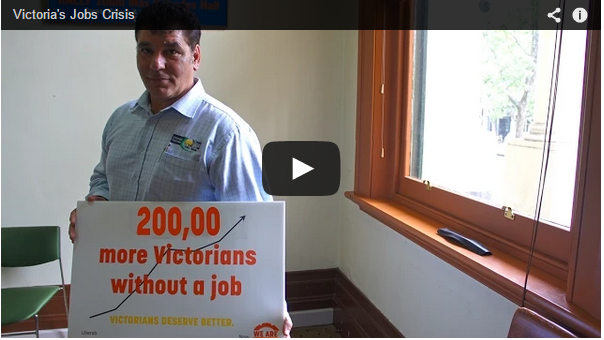
210,000 Victorians out of work

|
||||||||||||||
Add your news
You can add news from your networks or groups through the website by becoming an author. Simply register as a member of the Generator, and then email Giovanni asking to become an author. He will then work with you to integrate your content into the site as effectively as possible.
Listen to the Generator News online
The Generator news service publishes articles on sustainable development, agriculture and energy as well as observations on current affairs. The news service is used on the weekly radio show, The Generator, as well as by a number of monthly and quarterly magazines. A podcast of the Generator news is also available.
As well as Giovanni’s articles it picks up the most pertinent articles from a range of other news services. You can publish the news feed on your website using RSS, free of charge.
|
AdANZ – Balance Transfer Offer – 0% p.a for the first 16 months on balance transfers. T&Cs, fees & charges apply.
|
210,000 Victorians out of work
|
||||||||||||||
|
AdSolar Panels Newcastle – www.electroysolar.com.au/newcastle – Electroy Solar are in your area! Free assesment and solar quote
|
Daily update: Big Coal takes control of the US Congress
|
||||||||||||||||||||||||||||||||||||||||||||
|
AdCaritas Australia – www.caritas.org.au – Help end poverty so the world’s poor don’t need to rely on charity.
|
Billboard banned – you won’t believe why!
|
|||||||||||||
|
AdShocking New ATO Rules – www.pursuitofhappiness.com.au – Find out how to stop the govt. from stealing your life savings
|
Four ways for you to defend our valley this November
|
|||||||||||||||||
1 of 11
| AdTraveller – Let Your Mind Roam – Explore at traveller.com.au to find your destination for travel inspiration. |
The John James Newsletter 26
The John James Newsletter 26 6 November 2014. Hope is the companion of power, and the mother of success; for whosoever hopes has within him the gift of miracles. – Samuel Smiles
UN panel warns opportunity to stop climate change fading fast This requires “substantial” cuts to greenhouse gas emissions over the next few decades, and “near zero” emissions by the end of the century.Two degrees warming is considered a threshold beyond which the impacts of climate change become much worse. On current emission trends, the world would warm by 4 degrees by 2100 – and keep getting warmer thereafter. A Gunpowder Plot Against Democracy This bill of rights for corporations will blow up the sovereignty of parliaments. The TTIP treaty would allow corporations to sue governments before an arbitration panel composed of corporate lawyers, at which other people have no representation, and which is not subject to judicial review. So outrageous is this arrangement that even the Economist, usually the champion of corporate power and trade treaties, has now come out against it as “a way to let multinational companies get rich at the expense of ordinary people”. http://www.monbiot.com/2014/11/04/a-gunpowder-plot-against-democracy/ AND WHAT ABOUT THE PACIFIC VERSION? Climate Depression Is For Real. Just Ask A Scientist It’s only natural then that many climate scientists and activists often feel an extreme pressure to keep their emotions in check. Part of being on the front line means being outspoken and passionate about the cause, the personal toll of the work goes largely undiscussed. “You don’t just start talking about unbelievably fast sea-level rise at a cocktail party at a friend’s house. So having to deny the emotional need to talk about what’s on your mind is a burden. Nobody talks about how it makes them feel personally.” http://www.countercurrents.org/thomas041114.htm Gaza isn’t just a physical wreck: the psychological damage is worse. Gaza feels like the Day of Judgement. Houses are as squashed and scattered as paper cups. A water tower is torn up close to the ground like a stalk of corn. Mosques, schools and factories are blasted, useless shells. Olive trees that were almost ready to yield their fruit are reduced to kindling. It goes on, block after block. Altogether 20,000 homes are destroyed and uninhabitable, 39,000 people are still living in UN shelters, and perhaps 100,000 more are homeless, crowded in with relatives. Building materials promised by the UN and international donors are stalled or unavailable. Gaza cut off: Israel closes border crossings indefinitely Israel has said it’s shutting the only two operating Gaza border crossings indefinitely. This comes a day after a projectile hit Israel from the strip, with no damage. Border closures have now isolated Gaza completely. http://rt.com/news/201579-israel-gaza-border-crossing/ CEFC in discussions on 30 new projects worth $3bn The Clean Energy Finance Corporation shows no sign of packing its bags as the Abbott government would wish. The Corporation reports “active discussions” with developers of more than 30 new projects with a total value of more than $3 billion. This is on top of the $931 million it has already invested in projects worth a total of $3.2 billion. http://reneweconomy.com.au/2014/cefc-says-discussions-30-new-projects-3-bln-77144 Opioid wars The US consumes more than 80 percent of the global supply of opioids, and overdoses from prescription opioid drugs kill nearly 17,000 Americans every year, which is one overdose death every 30 minutes. http://www.aljazeera.com/programmes/faultlines/2014/10/opioid-wars-20141027122237180634.html Entire villages disappeared: Ebola deaths in Sierra Leone ‘underreported’ Ebola’s toll on Sierra Leone is much greater than previously thought, with entire villages killed off by the virus. This means up to 20,000 people could have succumbed to the disease by now. http://rt.com/news/201567-ebola-sierra-leone-toll-underreported/ Fracking Wells Abandoned in Boom/Bust Cycle. Who Will Pay to Cap Them? The companies that once operated the wells have all but vanished into the prairie, many seeking bankruptcy protection and unable to pay the cost of reclaiming the land they leased. Renewable Energy Can Cost 70% Less Than Diesel Power At Mining Sites Electricity from solar and wind power can cost up to 70% less than when it is generated by diesel power at mining sites, especially for sites that are located remotely. http://cleantechnica.com/2014/11/01/renewable-energy-can-cost-70-less-diesel-power-mining-sites/ Government-controlled Syria defiant amid war Rebels hold some suburbs in the countryside around Damascus and parts of the northwest. The extremist Islamic State group has imposed its rule over territory encompassing a third of both Syria and neighbouring Iraq. http://www.cp24.com/world/government-controlled-syria-defiant-amid-war-1.2083213 |
|||||||||


Scientists have identified a mechanism that could turn out to be a big contributor to warming in the Arctic region and melting sea ice.
The research was led by scientists from the US Department of Energy’s Lawrence Berkeley National Laboratory (Berkeley Lab). They studied a long-wavelength region of the electromagnetic spectrum called far infrared. It’s invisible to our eyes but accounts for about half the energy emitted by Earth’s surface. This process balances out incoming solar energy.
Despite its importance in the planet’s energy budget, it’s difficult to measure a surface’s effectiveness in emitting far-infrared energy. In addition, its influence on the planet’s climate is not well represented in climate models. The models assume that all surfaces are 100 percent efficient in emitting far-infrared energy.
That’s not the case. The scientists found that open oceans are much less efficient than sea ice when it comes to emitting in the far-infrared region of the spectrum. This means that the Arctic Ocean traps much of the energy in far-infrared radiation, a previously unknown phenomenon that is likely contributing to the warming of the polar climate.
Their research appears in the online early edition of the Proceedings of the National Academy of Sciences.
“Far-infrared surface emissivity is an unexplored topic, but it deserves more attention. Our research found that non-frozen surfaces are poor emitters compared to frozen surfaces. And this discrepancy has a much bigger impact on the polar climate than today’s models indicate,” says Daniel Feldman, a scientist in Berkeley Lab’s Earth Sciences Division and lead author of the paper.
“Based on our findings, we recommend that more efforts be made to measure far-infrared surface emissivity. These measurements will help climate models better simulate the effects of this phenomenon on Earth’s climate,” Feldman says.
He conducted the research with Bill Collins, who is head of Earth Sciences Division’s Climate Sciences Department. Scientists from the University of Colorado, Boulder and the University of Michigan also contributed to the research.
The far-infrared region of the electromagnetic spectrum spans wavelengths that are between 15 and 100 microns (a micron is one-millionth of a meter). It’s a subset of infrared radiation, which spans wavelengths between 5 and 100 microns. In comparison, visible light, which is another form of electromagnetic radiation, has a much shorter wavelength of between 390 and 700 nanometers (a nanometer is one billionth of a meter).
Many of today’s spectrometers cannot detect far-infrared wavelengths, which explains the dearth of field measurements. Because of this, scientists have extrapolated the effects of far-infrared surface emissions based on what’s known at the wavelengths measured by today’s spectrometers.
Feldman and colleagues suspected this approach is overly simplistic, so they refined the numbers by reviewing published studies of far-infrared surface properties. They used this information to develop calculations that were run on a global atmosphere climate model called the Community Earth System Model, which is closely tied to the Department of Energy’s Accelerated Climate Model for Energy (ACME).
The simulations revealed that far-infrared surface emissions have the biggest impact on the climates of arid high-latitude and high-altitude regions.
In the Arctic, the simulations found that open oceans hold more far-infrared energy than sea ice, resulting in warmer oceans, melting sea ice, and a 2-degree Celsius increase in the polar climate after only a 25-year run.
This could help explain why polar warming is most pronounced during the three-month winter when there is no sun. It also complements a process in which darker oceans absorb more solar energy than sea ice.
“Earth continues to emit energy in the far infrared during the polar winter,” Feldman says. “And because ocean surfaces trap this energy, the system is warmer throughout the year as opposed to only when the sun is out.”
The simulations revealed a similar warming affect on the Tibetan plateau, where there was five percent less snowpack after a 25-year run. This means more non-frozen surface area to trap far-infrared energy, which further contributes to warming in the region.
“We found that in very arid areas, the extent to which the surface emits far-infrared energy really matters. It controls the thermal energy budget for the entire region, so we need to measure and model it better,” says Feldman.
Story Source:
The above story is based on materials provided by DOE/Lawrence Berkeley National Laboratory. Note: Materials may be edited for content and length.
Journal Reference: